Updated July 10, 2026

3D Roofs Editorial Team
Editorial Standards
There is no single best roof for every Indiana home. For an Indiana property, start with its actual weather exposure and roof geometry, then compare complete assemblies on water control, attachment, ventilation, repairability, local availability, warranty terms, and installed cost. The sections below use Indiana-specific guidance to show which questions matter before choosing a material. For a roof system comparison in Indiana, use the linked Indiana Department of Insurance, Insurance Claim Tips reference as the state-reference checkpoint and test the recommendation against the address's freeze-thaw cycles, snow or ice at eaves, warm-season wind or impact, tree debris, and attic moisture.
What roof offers stronger impact resistance in Indiana weather?
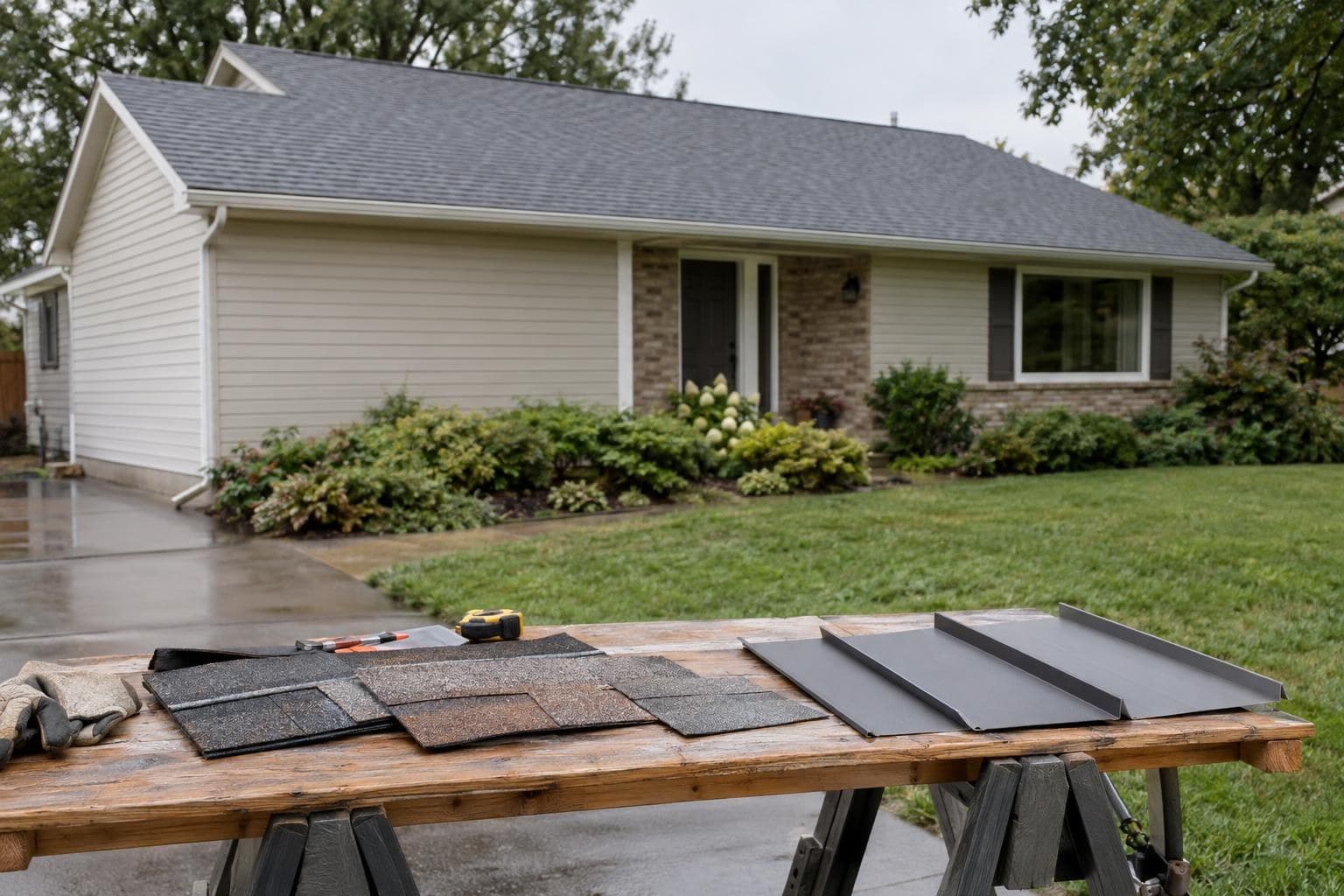
Class 4 shingles usually make the most sense for Indiana weather because they directly address the hail and storm exposure many homeowners worry about, while still keeping the look and installation style of an asphalt roof. If your main goal is the strongest impact resistance in a shingle roof, Class 4 is the clear upgrade. If your goal is simply to keep replacement cost lower, Class 3 can still be a practical fit. If you want to pay for a premium material, standing seam metal is another strong option for handling year-round weather stress.
- Choose Class 3 if you want a lower entry price and solid all-around performance
- Choose Class 4 if you want stronger impact resistance and want to ask your carrier about a possible premium discount
- Choose standing seam metal if you want a premium roof material and accept a much higher upfront cost
- No matter which material you pick, proper flashing, sealants, and installation details matter because Indiana's freeze-thaw cycles and seasonal swings wear on roof components over time
How much does the best roof for Indiana cost in current planning prices?
For an early budget on a roof-system comparison in Indiana, compare the Indiana cost page with a proposal that identifies measurements, products, accessories, and exclusions. That means the jump from Class 3 to Class 4 is meaningful but still manageable for many homeowners, while the jump from shingles to standing seam metal is much larger. The proposal for a roof-system comparison in Indiana should price steep-slope access and slower material handling directly instead of hiding them in a standard percentage.
Is Class 3 or Class 4 better for Indiana hail and wind?
Class 4 is better if hail resistance is your priority. Class 3 is better if price is your priority. In Indiana, where wind, hail, and heavy rain can all turn a weak spot into a leak, many homeowners see Class 4 as the smart middle ground between standard shingle pricing and metal pricing.
There is also an insurance angle worth checking before you buy. When comparing a roof-system comparison in Indiana, use a written insurer response rather than a sales estimate for any impact-resistant roof credit. If you are considering a Class 4 impact-resistant shingle, it is reasonable to ask your carrier whether it offers a homeowners premium discount for that upgrade. Discounts and underwriting decisions are carrier-specific, so you should confirm the details with your insurer before you buy. A local contractor whose credentials you verified can also help you compare product options that fit your home and storm exposure.
Talk to a roofer today
Planning ranges, scope details, and a direct path to request a roofing quote.
Is metal roofing worth it in Indiana?
Standing seam metal can be worth it in Indiana if you want a premium roof and are prepared for the higher upfront spend. That price gap means metal is usually not the value choice for most homeowners deciding strictly on storm protection per dollar. For many homes, Class 4 is the more balanced buy because it addresses hail concerns at a much lower cost than metal.
- Class 3: best if you want to limit upfront cost
- Class 4: best if you want stronger impact resistance without moving into metal pricing
- Standing seam metal: best if you want a premium material and the budget is secondary
What should you do after storm damage in Indiana?
Protect the home temporarily, document everything, and wait on permanent repairs until the insurance company inspects the damage. That is the safest way to handle a storm claim in Indiana. If your roof takes storm damage, quick temporary protection and good documentation matter, but you should hold off on permanent repairs until the insurance company has inspected the damage.
- The Indiana Department of Insurance says your policy is a contract between you and your insurance company, and you should understand what is covered, what is excluded, and what the deductibles are before and during a claim.
- The Indiana Department of Insurance tells homeowners to file claims as soon as possible, provide complete and correct information, and keep copies of all correspondence. It also says you should write down details from phone and in-person conversations, including the date, name, title, and what was said.
- For homeowners claims, the Indiana Department of Insurance says your policy might require temporary repairs to protect your property from further damage, and your policy should cover the cost of these temporary repairs if you keep receipts. It also says not to make permanent repairs before the insurance company's inspection, because an insurance company may deny a claim if permanent repairs are made before the damage is inspected.
How long does roof replacement take in Indiana, and what do repairs usually cost?
The schedule for a roof-system comparison in Indiana should explain access, material staging, weather protection, inspections, and the process for discovered deck work. Those ranges help with planning, but your actual scope still depends on the material, roof shape, pitch, and how much storm damage is present. In Indiana, a small issue can spread faster when heavy rain, snow, ice, and freeze-thaw cycles keep working on the same vulnerable spot, so waiting too long can make a repair larger than it needs to be.
How do you choose a roofer in Indiana without getting burned?
Keep it practical: get a clear written scope, read the contract closely, ask how your roofer will document storm damage, and keep copies of every estimate, invoice, text, and email. If a sales pitch feels rushed or misleading, slow the deal down. Indiana's consumer protection agencies put the focus on smart buying and complaint options, not on a statewide roofing license standard in the cited state guidance.
The Attorney General's Consumer Protection Division says it educates consumers about deceptive and predatory business practices, mediates and investigates consumer complaints against businesses and other organizations, and takes legal action on behalf of the state against parties that violate Indiana's Deceptive Consumer Sales Act. The Indiana Department of Insurance also warns that while Indiana law outlines specific allowable reasons for cancellation of homeowners policies, there are no such protections in place that require insurance companies to offer renewal of the homeowners policy once the contract is over. It also says insurance companies are allowed to consider claims activity when deciding whether to renew your policy.
So what is the best roof for your Indiana home?
For most homeowners, the best roof for Indiana is Class 4 because it fits the state's hail, wind, rain, snow, ice, and freeze-thaw exposure better than a lower-tier shingle without jumping all the way to standing seam metal pricing. If you want to narrow it down by roof size and local conditions, check the Indiana cost page and the calculator for full local pricing.
Sources
Reviewed technical references for Indiana
Related Indiana roofing guides
Related services
Updated July 10, 2026
3D Roofs Editorial Team
Editorial Standards