Updated July 10, 2026

3D Roofs Editorial Team
Editorial Standards
When you need wind damage roof repair
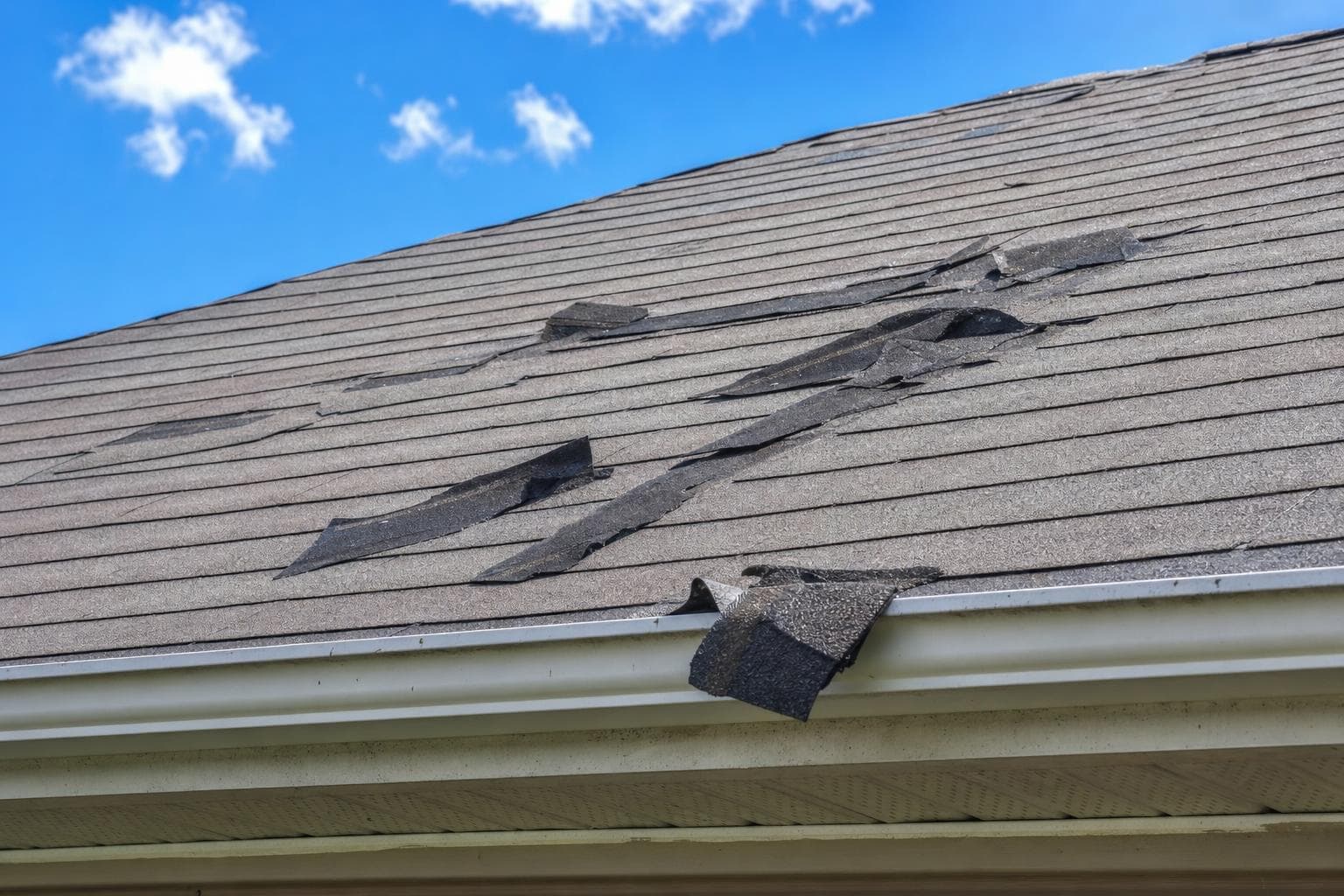
Wind damage repair starts with a fact homeowners can miss: the wind does not have to remove the roof to compromise it. It can lift and crease shingles, break adhesive seals, peel ridge caps, and loosen drip edge, rake edge, and flashing where driven rain enters. Some conditions are obvious from the yard; others settle back into place. A roof-area-by-roof-area inspection should document what moved, distinguish observed wind effects from age or prior repairs, and show whether the surrounding roof can support a durable repair.
Start with the reported storm timing, visible movement, interior water, prior repairs, and any temporary work. The inspection should follow the wind path across slopes, ridge, edges, and flashing before anyone decides whether the damage is contained or distributed.
What a wind-damage repair should document
Wind repair should map how uplift moved across the roof. Missing shingles are obvious, but creases, broken seals, lifted ridge, loose edge metal, displaced flashing, and wind-driven rain can extend beyond the area visible from the yard.
Work the repair scope should include
- Inspection by roof area, including slopes, ridge, rakes, eaves, and edges
- Photographs of lifted, creased, missing, or displaced materials before repair
- Flashing, vent, penetration, and interior water-path review
- Named repair areas, matching material, fastening, sealing, and tie-in method
- Temporary protection and completion photographs when those steps are needed
Conditions that change repairability and cost
- Number and distribution of affected roof areas
- Ridge, edge metal, flashing, vent, or penetration work
- Roof pitch, stories, access, debris, and temporary protection
- Matching material and the condition of adjacent seals
- Exposed decking, structural damage, or interior moisture
Questions to resolve before permanent work
Before permanent work, confirm the affected roof areas, damage pattern, tie-in method, matching material, and condition of adjacent seals. The proposal should explain whether one repair restores the roof or whether distributed damage makes repeated spot work unreliable.
Warning signs in a wind-damage proposal
- The proposal counts only missing shingles from the ground
- Photographs are not identified by roof area
- The contractor promises an insurance outcome
- The repair does not explain adjacent attachment, edge, or flashing conditions
Questions the inspection should answer
- Which roof areas show observed wind effects, and what moved in each one?
- Can the surrounding material accept a durable repair without breaking?
- How will the work restore attachment and water shedding?
- Which temporary, concealed, or non-roofing work is priced separately?
What wind-damage repair costs
Wind repair commonly starts around $350-$1,600 for a contained area and reaches $1,200-$6,600 when a larger section, ridge, edge metal, or flashing needs restoration. Decking or structural work sits above that range.
- Missing or creased shingles
- A contained area with serviceable matching material around it
- $350-$1,600
- Roof section plus flashing
- A wider repair with displaced transitions or broken seals
- $1,200-$6,600
- Ridge cap or vent damage
- Accessory replacement and tie-in at the roof peak
- $450-$2,600
- Decking or structural damage
- Carpentry plus roofing after wind exposes or moves the substrate
- $2,900-$15,200
Cost ranges are estimates developed from standardized project scopes and reviewed pricing inputs. Government labor and regional cost data are used where applicable. See our Pricing Methodology for the exact sources, calculations, and review date. Actual prices vary by property, scope, materials or equipment, location, and provider.
For size tables, worked examples, and the assumptions behind this range, open the wind damage roof repair cost guide.
How wind damage should be inspected and repaired
The repair needs to restore attachment and water shedding without disturbing sound roofing unnecessarily. Documentation comes first when a storm claim may be involved.
- 1
Document the wind path
Photograph missing material, creases, lifted edges, ridge, rake, drip edge, flashing, vents, debris impacts, and interior water by roof area before temporary or permanent work covers it.
- 2
Check adjacent attachment
Inspect surrounding seals, fasteners, underlayment, and deck condition. Wind can break the bond on shingles that settle back into place and look normal from the ground.
- 3
Restore the damaged section
Replace creased or missing roofing, rebuild displaced edges or flashing, and tie the repair into serviceable material using the specified fastening and sealing method.
- 4
Set the broader decision
Explain whether damage is isolated, repeated across roof areas, or combined with aging material that cannot accept a durable repair. Keep the construction recommendation separate from the insurer's coverage decision.
Lifted vs missing shingles
Missing shingles are obvious, but lifted and creased shingles are the sneakier problem. Wind can break the adhesive seal and fold a shingle back, and even after it lays flat again the seal may be broken, leaving a path for wind-driven rain. A repair checks for both the gaps you can see and the broken seals you can't, because a shingle that lifted once and never resealed is a leak waiting for the next storm.
Ridge, edges, and flashing
High wind concentrates at the ridge, the rake and eave edges, and the flashing details, which is why those are where wind damage usually shows up. Peeled ridge caps, lifted drip edge, and loosened wall or chimney flashing all open the roof to water even when the field of shingles looks fine. A thorough wind repair inspects these transition points, not just the open slopes, because that's where wind-driven rain actually gets in.
Common questions about wind damage roof repair
How do I know if my roof has wind damage?+
Look for missing shingles and tabs, shingles that are lifted or creased, peeled or displaced ridge caps, and lifted drip edge or flashing along the edges. Debris in the yard, granules in the gutters, and a ceiling stain after a windy storm are also tells. A lot of wind damage isn't visible from the ground, especially broken seals on shingles that laid back down, which is why a slope-by-slope inspection is the reliable check.
What's the difference between lifted and missing shingles?+
Missing shingles are gone and obvious. Lifted or creased shingles are the sneakier problem: wind breaks the adhesive seal and folds the shingle back, and even after it lays flat again the seal can stay broken, leaving a path for wind-driven rain. A thorough repair checks for both the gaps you can see and the broken seals you can't, because a shingle that lifted once and never resealed is a future leak.
Is wind damage covered by insurance?+
Coverage depends on the reported cause of loss and the policy, including the deductible, limits, exclusions, valuation method, roof provisions, and insurer investigation. Document each affected roof area before permanent work when it is safe, and ask the carrier to explain any coverage decision in writing.
Should I repair or replace a wind-damaged roof?+
Repair when the damage is contained, a section of lifted or missing shingles, a run of ridge cap, a loosened flashing detail, on a roof that's otherwise healthy. Replacement deserves a closer look when the wind exposed brittle shingles, widespread broken seals, damage across multiple slopes, or a roof that cannot accept a durable tie-in. A repair should restore the damaged area, not merely delay the same failure by a season.
Can wind cause a leak if no shingles are missing?+
Yes, and it's common. Wind breaks the seal between shingles and lifts the edges just enough for wind-driven rain to get underneath and reach the underlayment or a nail hole, even though the shingle is still in place. It also loosens flashing and ridge caps, which open the roof at the transitions. The field of shingles can look intact from the ground while the actual entry point is a broken seal or a lifted edge you can't see.
How should wind damage be documented for a claim?+
Document it by roof area with dated photographs taken before permanent work covers the condition when safe access allows. Include lifted, creased, and missing roofing, displaced ridge or edge details, flashing, debris impacts, temporary protection, and interior water. Record the reported storm date and keep the roofer's construction findings separate from the insurer's coverage decision.
Get a Wind Damage Repair Quote
Call to discuss wind damage to your roof, or share what happened to start a repair quote request.