

Updated July 10, 2026

3D Roofs Editorial Team
Editorial Standards
Oregon roofing is shaped by wet winters, wind events, mountain snow in some areas, and wildfire risk in parts of the state. For you as a homeowner, that means roof decisions usually come down to water management, storm repair scope, and making sure the company you hire is properly set up to do roofing work in Oregon. The state also gives you a few practical consumer protections, including help with insurance claim questions and a contractor licensing system you can check before you sign anything.
12
Cities covered
12
Roofing services
20
OR guides
What homeowners run into on Oregon roofs
Across the Oregon markets we serve, roofers repeatedly see the same inspection patterns. If one of these shows up after a storm or a leak, start with documentation and an inspection before approving a full replacement quote.
- Moss and algae growth on shaded slopes
- Persistent rain wear at flashings
- Wind damage from atmospheric river events
- Older shingle moisture damage
- Cedar shake maintenance
- Moss and algae growth
- Wildfire smoke deposition staining
- Moss and algae growth from persistent rain
What Oregon weather does to roofs
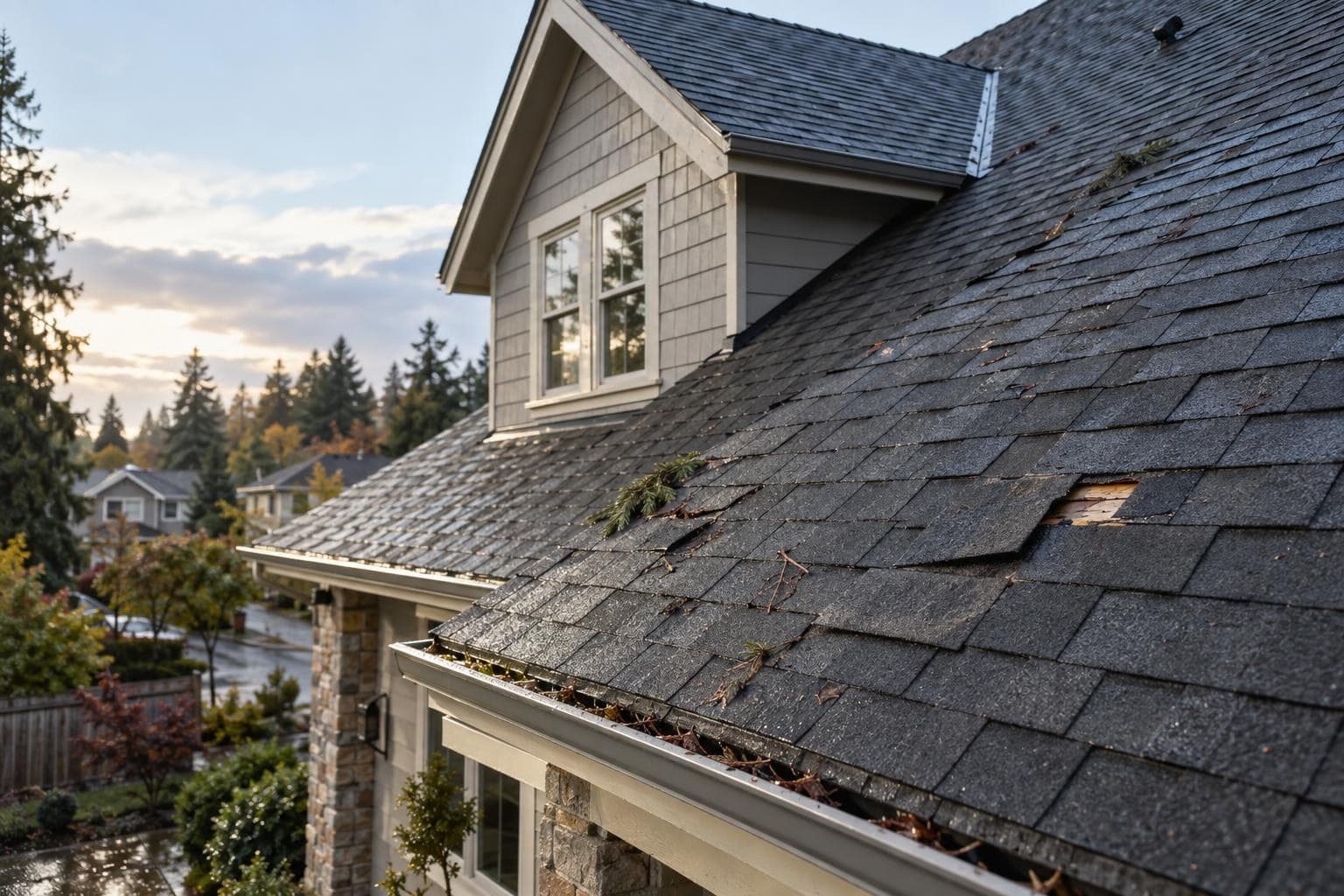
Rain, wind, tree impact, ice, snow load, and freeze-related water problems all matter in Oregon. Wind can tear off shingles or drop branches and trees onto a roof. Snow and ice can add weight, and sudden cold can contribute to ice dam or burst-pipe damage that affects the roof system and interior. In wildfire-prone areas, ember exposure and debris management also matter. Because Oregon weather can damage only part of a roof, you should expect many claims and repair decisions to focus on the specific damaged area, not automatically a full replacement.
Portland
Portland's primary roofing stresses are moisture, moss, and occasional wind events. Atmospheric river events bring heavy rain. Rare hail or snow.
Portland roofingEugene
Eugene shares the Pacific Northwest moisture profile. Recent wildfire seasons have added smoke deposition concerns. Atmospheric river events bring heavy rain.
Eugene roofingSalem
Salem's Willamette Valley climate brings persistent winter rain and moss growth as the primary roofing challenge, plus occasional wind storms and regional wildfire smoke.
Salem roofingWhat roofing costs in Oregon
Roof replacement cost in Oregon depends on roof size, pitch, material, decking, ventilation, code requirements, and storm upgrades. The state cost guide gives you the broad range; your city page adds the local weather and market context.
Start with the right number.
Use the roof replacement cost guide for statewide pricing, then compare repair pricing when the roof may not need a full tear-off.
Materials that make sense in Oregon
The sources provided do not give a state-specific Oregon rule on Class 4 roof discounts. If you are considering an impact-resistant roof, ask your carrier whether it offers a discount for a Class 4 rated product and what documentation it requires. Carriers set their own underwriting rules and discounts.
- Algae-resistant architectural shingles
- Standing-seam metal for moisture defense
- Zinc strips at the ridge for moss prevention
- Synthetic underlayment with high moisture resistance
Storm claims, deductibles, and insurance rules
Storm claims are shaped by state law, policy language, and the way contractors are allowed to work with insurance proceeds. These are the rules worth knowing before a claim turns into a signed roofing contract.
Filing a claim is a cost-benefit decision
Oregon’s Division of Financial Regulation tells homeowners to weigh the benefits of filing a claim against the costs, including your deductible. The state also warns that a reported claim could affect your future premium or ability to get coverage. If you need help understanding the claims process or your consumer options, the Division of Financial Regulation provides free help, and if phone help does not resolve the issue, a consumer can file a complaint.
Wind damage claims may be limited to the damaged roof area
Oregon’s storm guidance says if wind blows a few shingles off your house, homeowners insurance will likely replace the damaged shingles, but will not provide an entire new roof. It also says insurers pay to repair damage from a covered loss, and if wind damage is only on one side of the roof, the insurer normally will pay only for the one slope of the roof to be replaced.
Some water losses may be covered, others usually are not
Oregon’s storm guidance says sudden and accidental events from an ice dam on the roof or pipes bursting due to freezing may be covered. It also says policies generally will not cover groundwater seepage or water damage from backed-up drains or sewers, though some insurers offer limited coverage or endorsements for water backup.
Flood and earth movement are separate issues from standard homeowners coverage
Oregon’s storm guidance says most homeowners and renters policies do not cover flood damage. It also says a homeowners policy does not cover earth movement, including landslides, mudflows, and erosion. The same guidance notes that earthquake coverage can usually be added for an additional premium, but earthquake insurance does not cover a loss caused by landslides or erosion.
Roofers, roofing contractors, and roofing companies in Oregon
In Oregon, roofing is work that generally requires a Construction Contractors Board license. The state warns that anyone can pretend to be a contractor and tells consumers to check licenses. For you, that means you should confirm your roofer has an active CCB license before work starts, and make sure the business name on the contract matches the license record. Oregon also requires contractors to carry general liability insurance and surety bonds as part of licensing, but your safest move is still to verify the license status directly and review the contractor details before you sign. If you are comparing bids, ask who will supervise the job and whether the business is set up for residential roofing work under the proper endorsement structure.