Updated July 10, 2026

3D Roofs Editorial Team
Editorial Standards
When you need emergency roof repair
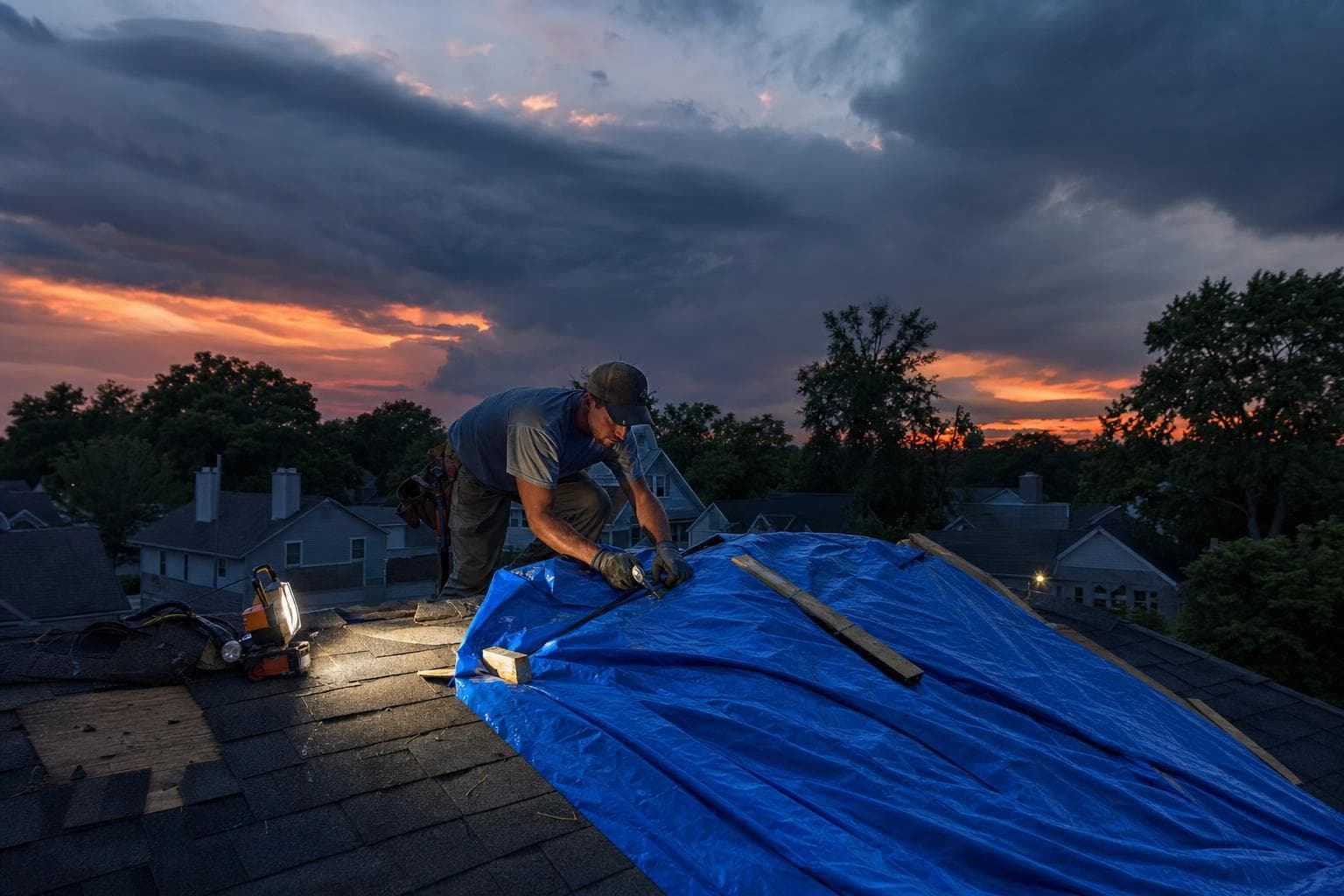
Emergency roof repair is about immediate protection, not the whole project. When water is actively entering or the roof is open after a storm, a properly installed tarp or temporary seal can limit additional damage while preserving photographs and a record of the uncovered condition. The permanent repair is inspected and scheduled once the home is protected and access is safe; keep the emergency scope separate from any larger replacement decision.
On the first call, describe active water, the visible opening or debris, affected rooms, when the damage happened, and current weather. The immediate decision is what can be protected safely; the complete repair or replacement decision follows after the roof and moisture path can be inspected.
What an emergency roof response should accomplish
Emergency work has two scopes, immediate protection and the permanent fix. Keeping them separate prevents an urgent tarp or temporary seal from turning into an unexamined replacement contract while rain is still entering the home.
Immediate work to define
- Active leak containment
- Emergency tarping when a permanent fix can't happen immediately
- Damage photos before anything is covered
- Temporary sealing of openings and punctures
- A permanent repair or replacement scope with pricing
Conditions that change the response
- After-hours or storm-week timing
- Whether water is actively coming in
- Size of the opening and tarp coverage needed
- Roof pitch, height, and wet-condition access
- Whether the permanent fix is a repair or a replacement
What to confirm before the emergency visit ends
During the first visit, compare response time, access and safety plan, temporary materials, anchoring method, documentation, and the fee for protection. Compare permanent repair proposals later, once the damage can be inspected in safe conditions.
Warning signs during an emergency visit
- The contractor pushes a full replacement contract during the emergency visit
- No photos are taken before the damage is covered
- The emergency charge is vague or quoted only verbally
- A loose tarp is thrown on without anchoring that sheds water
Questions the first visit should answer
- What will tonight's visit accomplish, protection or permanent repair?
- Is the emergency charge credited toward the permanent fix?
- Will you document the damage before covering it?
- When can the permanent repair happen, and what will it cost?
What emergency roof work costs
Emergency pricing separates the urgent protection visit from the permanent work. A temporary response commonly falls around $350-$1,550 nationally; the follow-up repair is then priced from the damage found after safe access is available.
- Emergency protection visit
- Response, documentation, and temporary protection before the permanent diagnosis
- $350-$1,550
- Standard roof tarp
- Protected area, pitch, height, anchoring, and timing drive the number
- $500-$2,150
- Typical permanent repair
- Priced separately once the failed component and repair boundary are known
- $450-$2,700
- Repair with limited decking replacement
- Contained carpentry plus restoration of the roofing assembly above it
- $1,200-$7,500
Cost ranges are estimates developed from standardized project scopes and reviewed pricing inputs. Government labor and regional cost data are used where applicable. See our Pricing Methodology for the exact sources, calculations, and review date. Actual prices vary by property, scope, materials or equipment, location, and provider.
For size tables, worked examples, and the assumptions behind this range, open the emergency roof repair cost guide.
What should happen during an emergency roof call
The priority is to stop additional damage without hiding the evidence needed to diagnose the roof. Permanent decisions follow after the structure is protected and conditions are safe.
- 1
Protect people and interiors
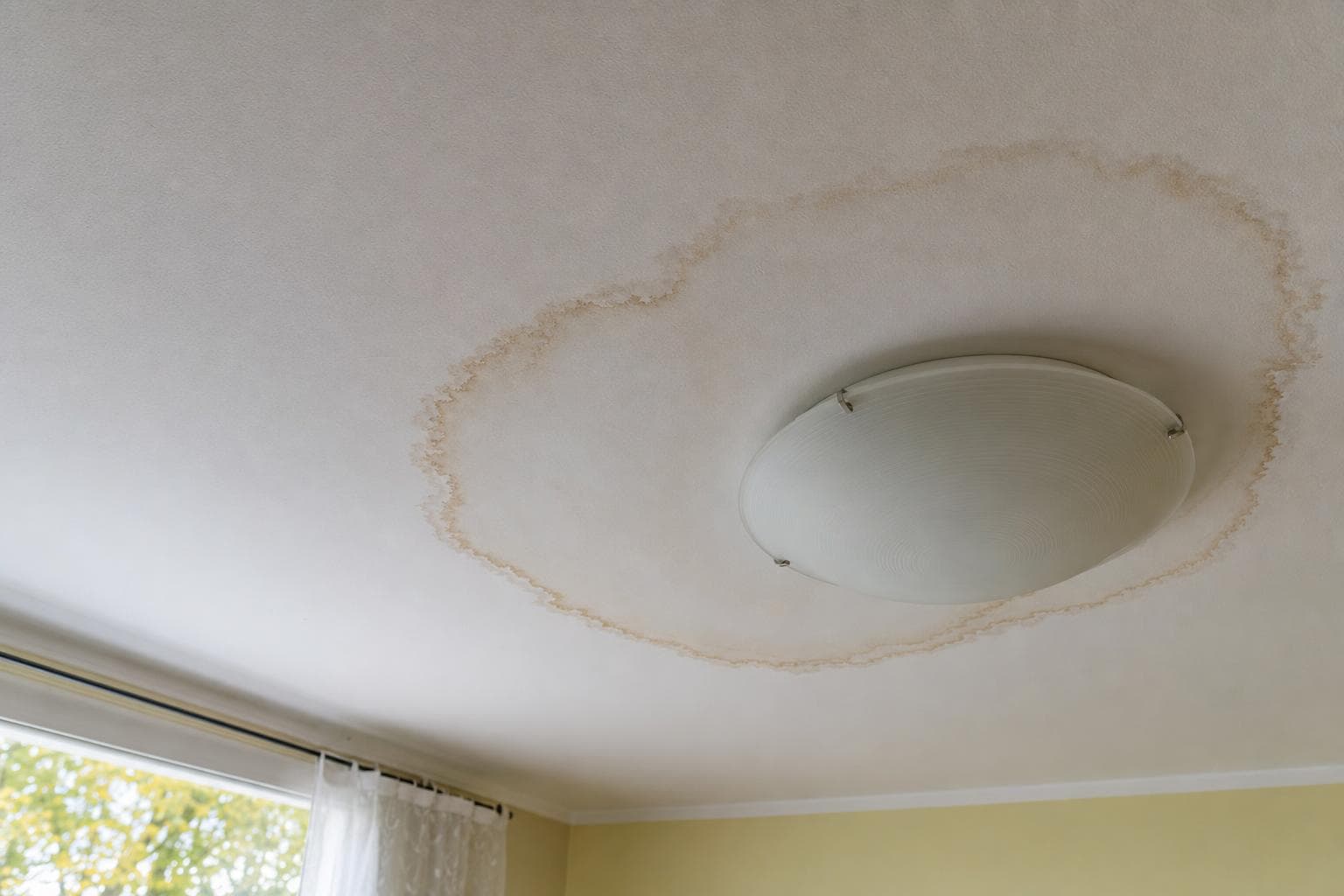
Move occupants away from active ceiling collapse, electrical, or structural hazards and control interior water where it is safe. Exterior roof access should wait when wind, lightning, ice, darkness, or unstable decking makes it dangerous.
- 2
Document before covering
Photograph visible openings, displaced materials, fallen limbs, interior water, and affected roof areas before temporary work hides them. Record the date, weather, and work completed.
- 3
Install temporary protection
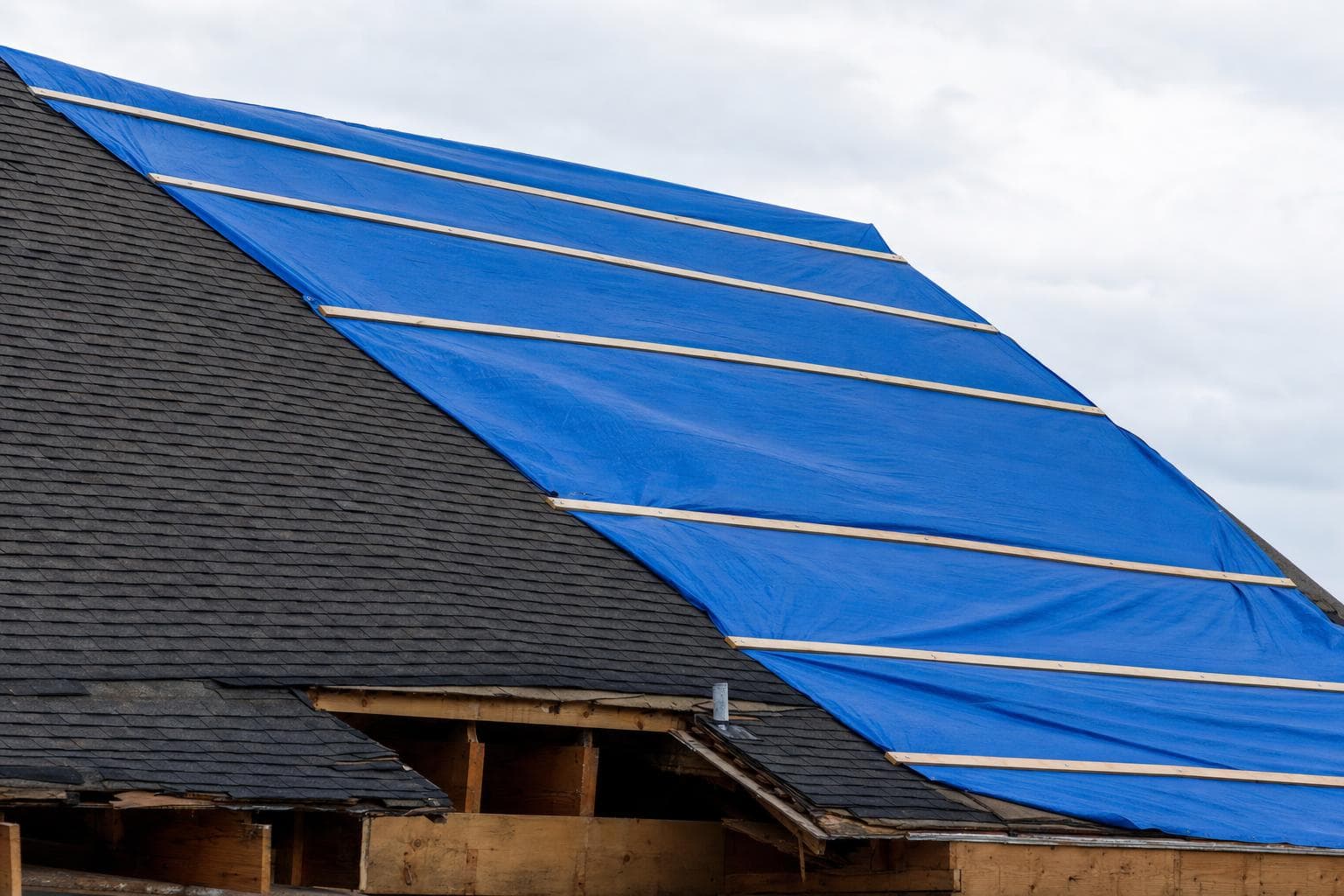
Cover beyond the damaged area, anchor against expected wind, and direct water downslope without creating a new ponding or drainage problem. The invoice should distinguish emergency protection from permanent repair.
- 4
Return for the permanent scope
Once conditions improve, inspect the covering, flashing, deck, structure, and interior moisture. Then price the repair or replacement from the documented damage rather than treating the emergency visit as the final diagnosis.
Emergency roof tarping
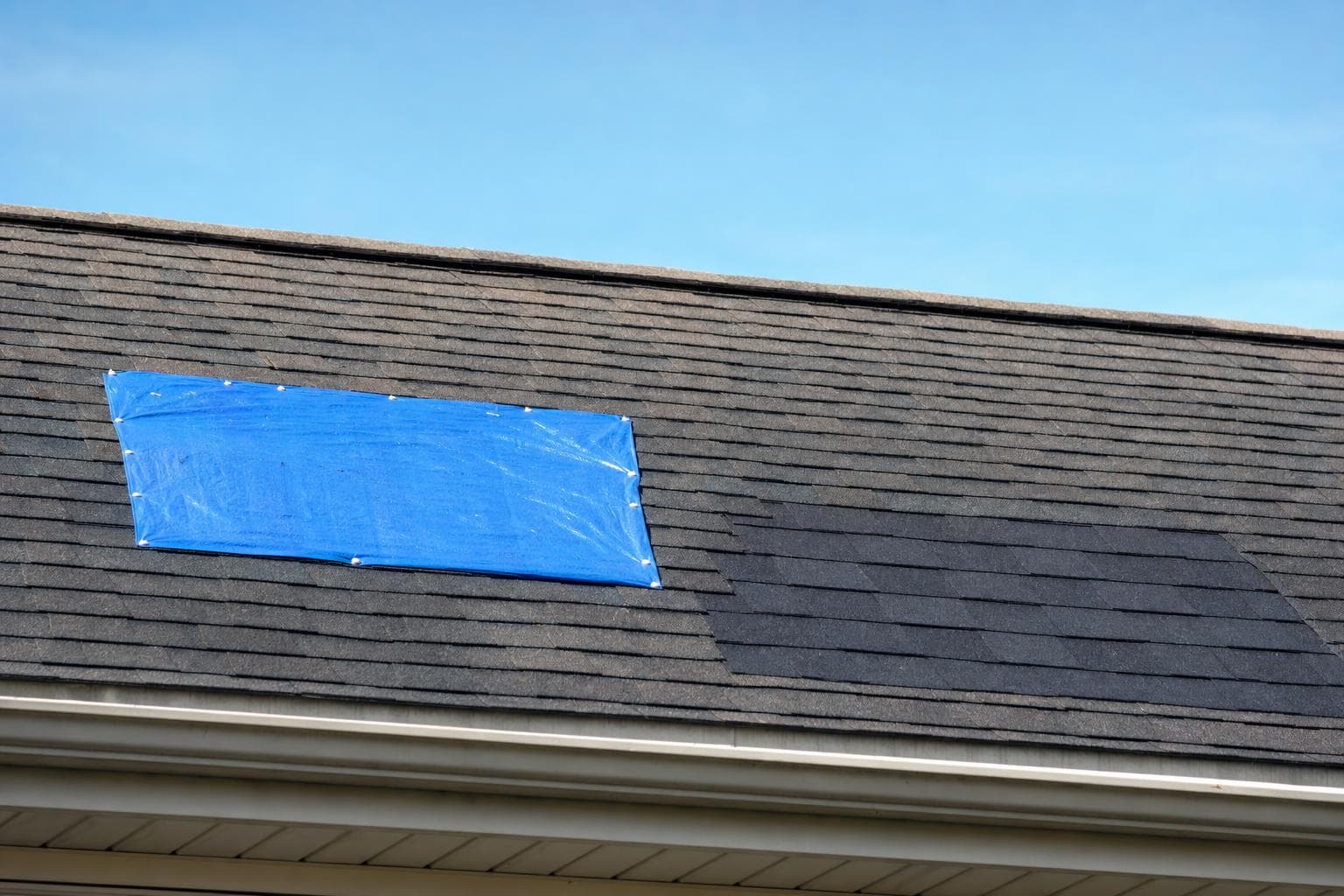
When the roof is open and rain is on the way, the first move is temporary protection that can be installed safely. A properly anchored tarp can limit additional interior water while the permanent repair or replacement is inspected and scheduled. Photograph the uncovered condition when safe access allows, keep the tarp invoice, and make sure the cover sheds water rather than creating a new ponding or drainage problem.
Common questions about emergency roof repair
How much does emergency roof repair cost?+
It's the cost of the underlying repair plus a premium for fast, after-hours response in bad conditions, and the first visit is usually protection (a tarp and documentation) rather than the permanent fix. Ask whether the emergency charge is credited toward the permanent repair. The emergency roof repair cost guide explains what drives the premium.
What should I do right now if my roof is leaking?+
Contain the water with a bucket and move anything it can damage, photograph the leak and the date for your claim, and call for emergency help. Don't get on the roof yourself, wet, storm-damaged roofs are how homeowners get hurt.
Will insurance cover emergency roof repair?+
Coverage depends on the cause of loss and the policy. Protect the home from additional damage when it is safe, photograph conditions before temporary work, save receipts, and notify the carrier promptly. Ask the insurer how emergency mitigation will be handled before assuming any charge will be reimbursed.
Is a tarp enough, or do I need the repair right away?+
A tarp can limit additional water while safe access, weather, materials, or a complete diagnosis delay permanent work. It is a bridge, not a repair. Ask when the tarp should be checked, inspect it after severe weather from a safe position, and schedule the permanent roof and moisture assessment promptly.
Should I sign a contract during the emergency visit?+
Authorize only the emergency protection you understand. The paperwork should identify the response charge, protected area, work completed, and any follow-up. A full replacement decision can wait until the roof is stable, the damage is documented, and the permanent scope can be reviewed in normal conditions.
Get Emergency Roof Help
Call to explain the damage and ask about emergency roof repair options in your area.