
Updated July 10, 2026

3D Roofs Editorial Team
Editorial Standards
Emergency roof repairs commonly run an amount that must be confirmed for the written scope to an amount that must be confirmed for the written scope for the initial response, with after-hours, storm-week, steep-access, and unsafe-condition work landing toward the high end or above it. The first visit is usually about stopping additional water with a tarp or temporary seal, commonly $450 to $2,700, while the permanent repair is inspected and priced separately once conditions are safe.
What it costs
$450 – $2,700
what an emergency roof repair typically costs, before the permanent fix
Emergency timing changes the price because the crew is responding quickly and may be working around weather, darkness, difficult access, or active water. Ask for the response or call-out charge before dispatch and keep temporary protection separate from the permanent scope. A first visit often stops the water with a an amount that must be confirmed for the written scope to an amount that must be confirmed for the written scope tarp or temporary seal; confirm in writing whether any part of that charge is credited toward later work.
| Emergency response | Typical cost | What you are paying for |
|---|---|---|
| After-hours / weekend call-out fee | $450–$2,700 | A crew dispatched outside normal hours |
| Emergency tarp to stop the water | $450–$2,700 | Temporary cover until a permanent repair is possible |
| Temporary leak seal | $450–$2,700 | A spot patch to hold through the storm |
| Permanent repair (after drying out) | $450–$2,700 | The real fix, scoped once the roof is dry |
| Urgency premium vs scheduled work | Quoted before dispatch | Response time, weather, access, crew availability, and safety conditions change the charge |
Typical 2026 national emergency-repair ranges, drawn from industry roofing cost data. The first call stops the damage; the permanent repair is scoped once it is safe.
Cost ranges are estimates developed from standardized project scopes and reviewed pricing inputs. Government labor and regional cost data are used where applicable. See our Pricing Methodology for the exact sources, calculations, and review date. Actual prices vary by property, scope, materials or equipment, location, and provider.
What affects emergency roof repair cost
Emergency pricing is the cost of the underlying repair plus a premium for doing it fast, in bad conditions, when demand is high. These are the factors that decide how big that premium is.
- Timing, nights, weekends, and the days right after a major storm carry the biggest premiums
- Active water intrusion, stopping a live leak in the rain is harder than a dry-day repair
- Size of the opening, a few lifted shingles versus a limb through the decking are different jobs
- Tarp size and anchoring, bigger openings and steep slopes need more material and labor to cover safely
- Storm demand surge, after regional hail or wind events, every roofing crew is booked and prices reflect it
- Access and safety, wet, steep, or damaged roofs slow everything down
What the first emergency visit should include
A good emergency visit is about protection and documentation first, permanent repair second. Here's what you should expect for the money before anyone talks about a full fix.
- Stopping or containing the active water intrusion
- Emergency tarping or temporary sealing when a permanent repair can't happen immediately
- Photos and notes documenting the condition before temporary work covers it, when safe access allows
- A clear scope and price for the permanent repair or replacement
- Straight answers about what is urgent tonight versus what can wait for daylight
How to keep emergency costs under control
The goal is to pay for protection now and make the big decisions later, in daylight, with quotes in hand. These moves keep an emergency from turning into an overpriced rush job.
- Pay for protection now, decisions later, tarping buys time to compare quotes for the permanent fix
- Don't sign a full replacement contract during the emergency visit
- Get the damage documented before it's covered or repaired
- Ask whether the emergency charge is credited toward the permanent repair
- If a storm caused the damage, loop in your insurance before authorizing major work
A worked example: what the first night actually costs
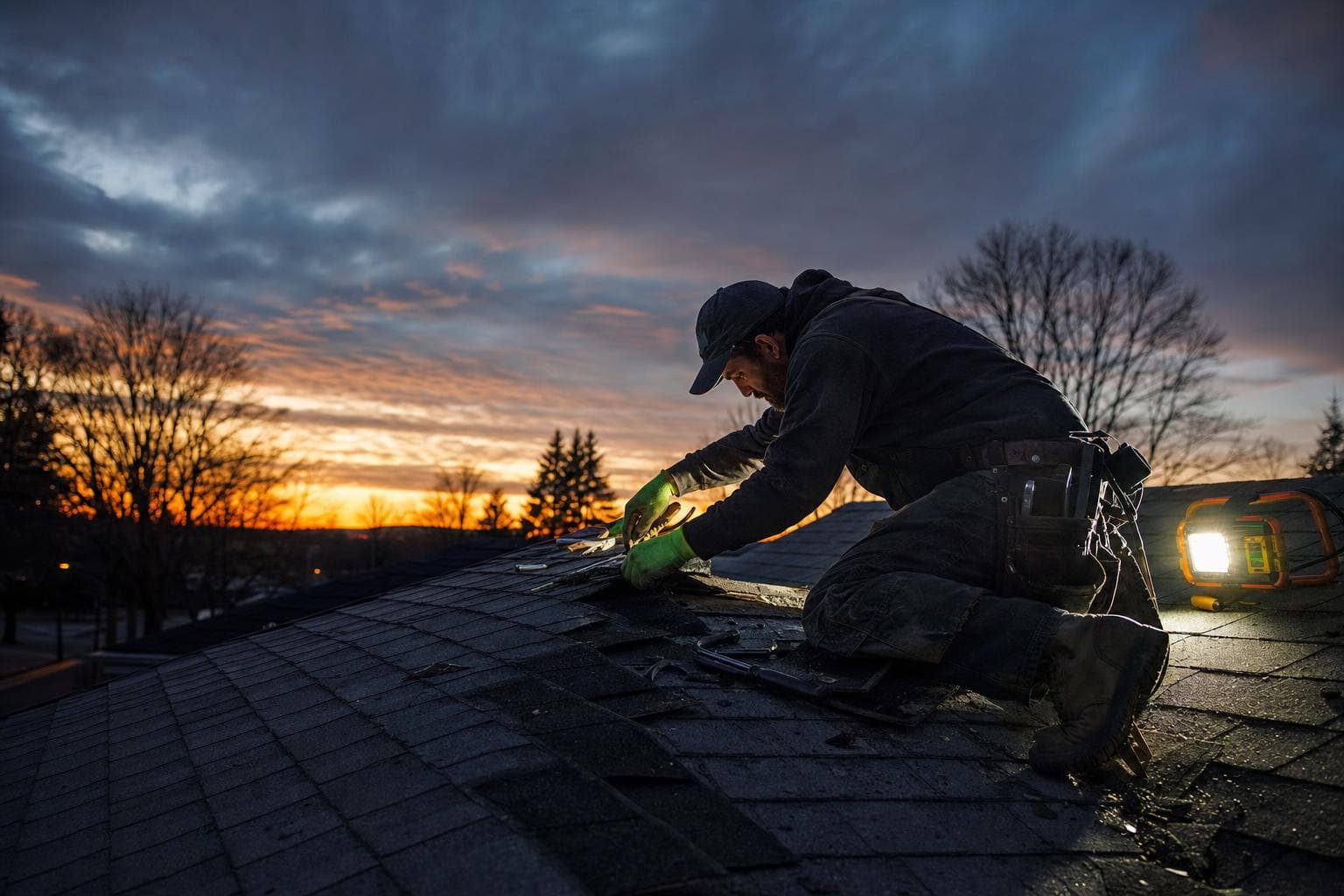
A storm lifts a section of shingles at 9 p.m. and rain is forecast overnight. The emergency call isn't a roof repair yet, it's protection: a roofer tarps the open area so the attic and ceilings don't take on water, photographs the damage for the insurance file, and leaves you with a scope and price for the permanent fix once it's dry. That tarp-and-document visit carries the urgency premium; the permanent repair is then priced normally in daylight, often with the emergency charge credited toward it. The expensive mistake is signing a full replacement contract at the door, in the dark, under pressure.
Common questions
How much does emergency roof repair cost?+
Emergency repairs carry a premium over the same fix on normal scheduling, you're paying for fast, after-hours response in bad conditions, often during a storm-week surge in demand. The first visit is usually protection (a tarp and documentation) rather than the permanent repair, which is scoped once the weather clears. Ask whether the emergency charge is credited toward the permanent fix.
How much does emergency roof tarping cost?+
Tarping is priced by the protected area, roof pitch and height, access, anchoring, weather, and response timing. A small, walkable area costs less than a large or steep section during a storm response. It is temporary protection rather than the permanent repair, so document the uncovered condition when it is safe, keep the invoice, and schedule the permanent inspection promptly.
Should I file insurance for an emergency roof repair?+
If a sudden event caused the opening, photograph the condition before temporary work when it is safe and keep the tarp invoice. Policy duties and reimbursement depend on the cause of loss, wording, limits, deductible, and whether the work was reasonable under the circumstances. Ask the carrier how to submit the temporary expense, then compare the documented permanent scope with the applicable deductible before deciding how to proceed.
Is it safe to wait until morning for a roof repair?+
If water is actively coming in, no, every hour of intrusion adds to the interior damage. But the right answer is rarely a permanent repair in the dark; it's a properly installed tarp tonight and the permanent fix in daylight. Anyone pushing you to sign a full replacement during an emergency visit is using the pressure against you.
Will the emergency charge count toward the permanent repair?+
Reputable roofers often credit the emergency response toward the permanent repair, ask before you authorize the work. Get both numbers in writing (tonight's protection and the permanent scope), and set the date for the permanent fix before the crew leaves.
Get a Quote for Your Roof
Call to discuss your project, or use the calculator to explore estimated roofing costs.
