Updated July 10, 2026

3D Roofs Editorial Team
Editorial Standards
When you need R-panel metal roofing
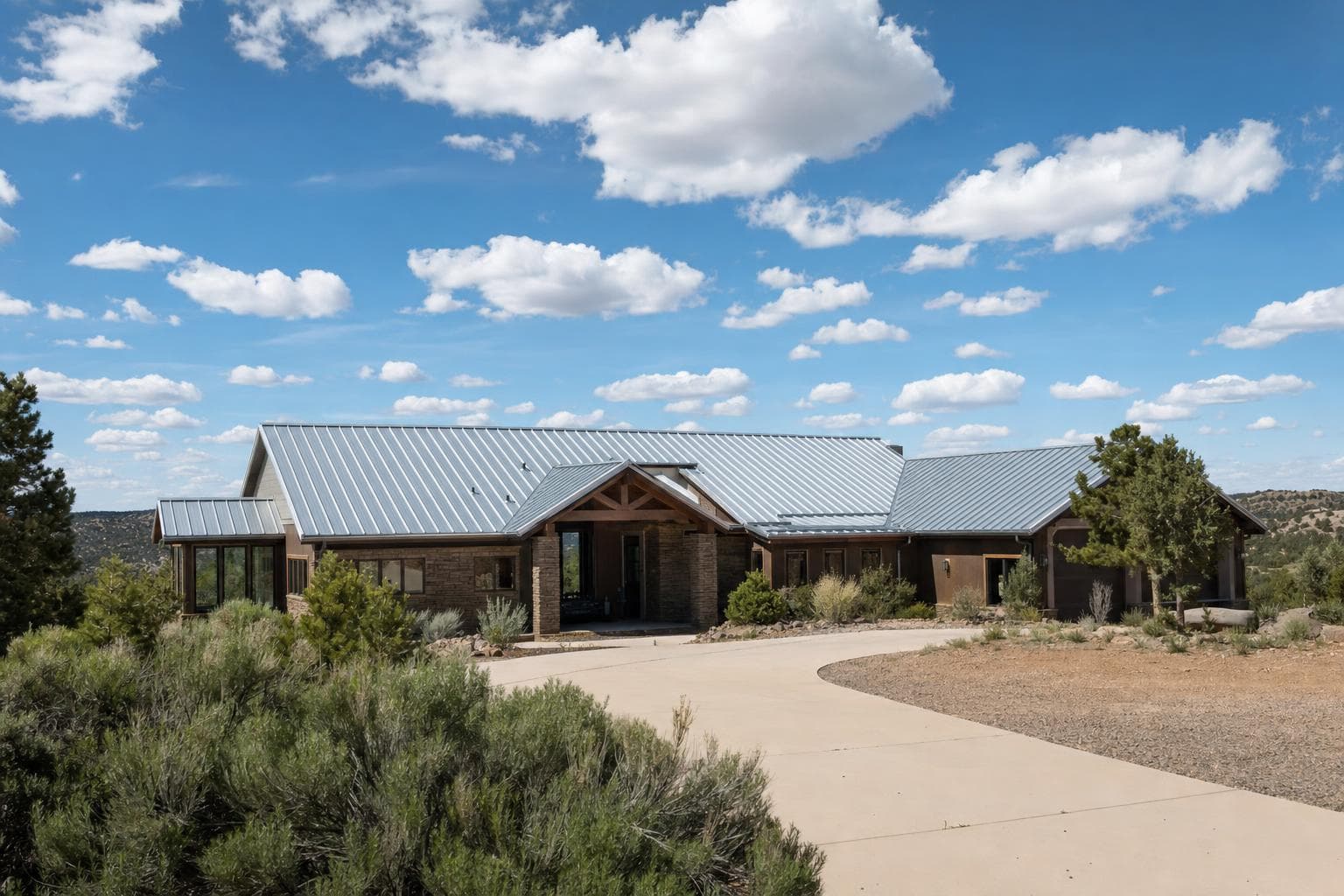
R-panel is an exposed-fastener metal roof system in which ribbed panels are attached through the panel face with specified screws and sealing washers. Whether it fits a particular building depends on the named product's slope, substrate, use, exposure, and approval requirements. The proposal should define the panel profile, metal, thickness, coating, underlayment, fastening pattern, laps, sealants, closures, trim, and flashing. Its inspection plan should address exposed fasteners, washers, sealants, coating damage, corrosion, and later penetrations instead of relying on a generic metal-roof lifespan.
Exposed-fastener panels can be economical when the named system fits the building and its maintenance needs are understood. Verify roof slope and product eligibility, then compare attachment, washer seating, panel movement, corrosion control, edges, laps, penetrations, and future service access.
What a complete R-panel scope should cover
R-panel value comes from a simpler exposed-fastener system, but the screws, washers, laps, closures, trim, and sealants become part of its maintenance plan. The proposal should define those details rather than presenting R-panel as maintenance-free metal.
Exposed-fastener details to define
- Verification of roof slope, building use, substrate, geometry, and the named panel system's eligibility
- Specified panel profile, metal, thickness, coating, color, and warranty documents
- Underlayment or condensation strategy coordinated with the roof and attic assembly
- Specified screw, washer, spacing, panel-lap, sealant, closure, and attachment requirements
- Edge, ridge, valley, wall, curb, penetration, trim, and drainage details
- Tear-off and deck rules, installation photographs, cleanup, and a written inspection plan
Conditions that change R-panel cost
- Measured roof area, slope, height, access, and panel handling
- Panel profile, metal, thickness, coating, color, and order quantities
- Substrate, underlayment, insulation, and condensation-control requirements
- Fastener, washer, sealant, lap, closure, trim, and flashing specification
- Roof geometry, penetrations, transitions, drainage, and custom fabrication
- Tear-off, concealed deck work, approvals, tested-assembly requirements, and qualified labor
What to resolve before panels are ordered
Compare panel thickness, coating, substrate, fastener type and spacing, lap treatment, closures, trim, penetrations, and installer experience. Reconcile price gaps against the same measured roof and named system so product and scope differences are visible.
Warning signs in an R-panel proposal
- The quote says only 'metal roof' or 'R-panel' without naming the manufacturer and panel profile
- Roof slope, building use, substrate, exposure, and product eligibility are not checked
- The screw and washer system, spacing, laps, sealants, and panel attachment pattern are unspecified
- Closures, edges, transitions, penetrations, drainage, and trim details are omitted
- Visible fasteners and sealants are described as maintenance-free, with no inspection guidance
Questions the panel specification should answer
- Which manufacturer, panel profile, metal, thickness, coating, and color are specified?
- Is this exact system eligible for my slope, substrate, building use, wind exposure, and jurisdiction?
- Which screws and washers are specified, what is the attachment pattern, and how will seating be inspected?
- How are panel laps, sealants, closures, edges, valleys, walls, and penetrations detailed?
- What inspection access and maintenance do exposed fasteners, sealants, scratches, and corrosion require?
- How do the written product, finish, and workmanship terms divide responsibility?
What R-panel metal roofing costs
R-panel is about $11.25 per sq ft in the current planning model, or $22,267 on a 2,000 sq ft reference roof. Metal thickness, coating, roof geometry, closures, trim, tear-off, deck work, and fastener details change the installed price.
- Exposed-fastener R-panel metal
- $11.25 per sq ft before project-specific complexity
- $22,267
- Standing-seam metal
- $17.50 per sq ft before project-specific complexity
- $34,967
- Class 3 architectural shingles
- $6.75 per sq ft on a 2,000 sq ft reference roof
- $13,500
Cost ranges are estimates developed from standardized project scopes and reviewed pricing inputs. Government labor and regional cost data are used where applicable. See our Pricing Methodology for the exact sources, calculations, and review date. Actual prices vary by property, scope, materials or equipment, location, and provider.
For size tables, worked examples, and the assumptions behind this range, open the r-panel metal roof cost guide.
How an R-panel roof should be planned
Exposed fasteners make installation efficient, but placement and compression have to be consistent. The system also needs a realistic inspection plan for washers, sealants, corrosion, and penetrations.
- 1
Confirm where R-panel fits
Review roof slope, building use, appearance, substrate, existing layers, condensation control, access, and tested wind requirements. Compare standing seam when concealed attachment or a different inspection plan matters to the project.
- 2
Specify panel and fasteners
Name the panel profile, metal type, thickness, coating, color, fastener and washer, spacing, lap method, closures, trim, and underlayment. Avoid a proposal that says only metal roof.
- 3
Install consistent laps and attachments
Set panels square, maintain designed sidelaps and endlaps, seat fasteners without under- or over-compressing washers, and complete edges, ridges, valleys, and penetrations with compatible details.
- 4
Plan inspection and maintenance
Record the installed system and establish product-specific checks for loose or damaged fasteners, failed washers, sealants, corrosion, coating damage, debris, and later penetrations.
Verify where the named R-panel system is eligible
R-panel is not automatically suitable for every low-slope roof, residence, substrate, or wind exposure. Check the selected manufacturer's minimum slope, lap and sealant requirements, substrate, fastening pattern, tested assembly, local approvals, and building-use limitations. Compare appearance and maintenance access as well as price. When those conditions do not fit the property, a different exposed-fastener profile, standing seam, or another roof assembly may be the more defensible specification.
Fastener installation is part of the water-control system
Each exposed screw depends on the correct fastener, washer, location, angle, seating pressure, substrate engagement, and surrounding panel condition. Underdriven, overdriven, angled, misplaced, or incompatible fasteners can leave weak attachment or compromise the gasket. The proposal should define screw and washer type, spacing, lap fastening, closures, edge zones, sealants, and inspection. Completion photographs should show representative fastener seating and the details at edges, ridge, walls, and penetrations.
Price the inspection and maintenance tradeoff
Exposed-fastener systems may carry a lower initial price than a differently specified standing-seam roof, but the comparison should include access and product-specific inspection needs. Thermal movement, ultraviolet exposure, washer condition, sealants, scratches, corrosion, debris, and later penetrations can all require attention. Ask for written maintenance guidance, compatible repair methods, finish-care requirements, and the party responsible for responding when a fastener, lap, closure, or flashing detail changes.
Common questions about R-panel metal roofing
How much does an R-panel metal roof cost?+
In the maintained 2026 planning model, exposed-fastener R-panel is about $9.00 per square foot, or $18,000 on a 2,000 sq ft reference roof, compared with about $28,000 for standing seam. A property quote should replace those assumptions with profile, metal, thickness, coating, substrate, underlayment, screw and washer system, roof geometry, laps, closures, trim, tear-off, deck work, access, and approvals.
What is R-panel, and how is it installed?+
R-panel is a ribbed metal panel commonly attached through the panel face with screws that use sealing washers. The named system determines panel profile, metal, thickness, coating, substrate, underlayment, screw type, spacing, laps, closures, trim, slope eligibility, and tested assembly. Compared with concealed-clip standing seam, exposed attachment changes installation, appearance, thermal movement, inspection needs, and price.
Where does R-panel make the most sense?+
R-panel can fit agricultural, utility, commercial, accessory, and residential buildings when the selected product is eligible for the roof slope, substrate, building use, wind exposure, appearance, and jurisdiction. Compare its lower initial scope with visible fasteners, inspection access, washer and sealant maintenance, finish, transitions, and ownership plans. Standing seam is a different system, not an automatic upgrade for every building.
What's the fastener-maintenance tradeoff with R-panel?+
Each exposed fastener relies on its seating, washer, and surrounding panel condition. Thermal movement, installation error, ultraviolet exposure, corrosion, and foot traffic can loosen or damage those details over time. The inspection interval should follow the panel and fastener manufacturer's guidance and the building's exposure. Maintenance may involve correcting loose or overdriven screws, replacing failed washers, treating corrosion, or renewing sealants rather than waiting for a generic age milestone.
R-panel vs standing seam, which should I choose?+
Choose between them by roof slope, building use, appearance, tested wind requirements, maintenance access, budget, and ownership horizon. R-panel can be economical where an exposed-fastener system is appropriate and its inspection needs are understood. Standing seam moves most fasteners out of the field and accommodates thermal movement differently, but costs more and still needs qualified detailing and maintenance. Compare named systems, not just the two category labels.
How long does an R-panel roof last?+
Service life varies with the steel and coating, panel profile, fasteners, substrate, installation, environment, and maintenance. The exposed fasteners and sealants deserve particular attention, but edges, laps, penetrations, scratches, and corrosion matter too. Ask for the exact product warranty and a written inspection schedule; those documents are more useful than a broad lifespan assigned to every R-panel roof.
Get an R-Panel Roofing Quote
Call to discuss R-panel roofing and installation costs, or share your project details to start a quote request.