Updated July 10, 2026

3D Roofs Editorial Team
Editorial Standards
When you need metal roofing
Metal roofing is a category, not one product. Standing seam, exposed-fastener panels, steel, aluminum, coatings, profiles, substrates, and tested assemblies create different prices and maintenance needs. Start with the roof slope, geometry, exposure, deck, ventilation or condensation strategy, and appearance requirements, then compare named systems. Clips, fasteners, seams, closures, edges, valleys, penetrations, and dissimilar-metal details matter as much as the panel field, so installer experience with the specified system belongs in the decision.
Choose standing seam, exposed-fastener, or another named system before comparing totals. The proposal should identify profile, metal, thickness, finish, substrate, underlayment, clips or screws, seams or laps, closures, trim, flashing, penetrations, ventilation or condensation control, fabrication, and maintenance.
What a complete metal-roofing scope should cover
Metal roofing decisions begin with the system, not the color. Panel profile, metal type and thickness, coating, attachment, substrate, underlayment, ventilation or condensation strategy, closures, flashing, tested assembly, and installer experience all change performance and price.
System details to define
- Roof slope, geometry, structure, substrate, existing-layer, and moisture-strategy review
- Named standing-seam, exposed-fastener, or other panel profile and attachment system
- Metal type, thickness, finish, seam or lap, clips or screws, spacing, and tested assembly
- Underlayment, ventilation or condensation control, closures, sealants, and dissimilar-metal separation
- Edges, ridge, hips, valleys, end laps, walls, curbs, chimneys, and penetrations
- Fabrication, delivery, equipment, property protection, cleanup, approvals, and closeout records
- Product-specific maintenance plus separate finish, material, and workmanship obligations
Conditions that change metal-roof cost
- Panel profile, attachment system, metal, thickness, finish, and fabrication
- Roof area, slope, height, access, staging, and equipment
- Roof geometry, long panel lengths, hips, valleys, walls, curbs, and penetrations
- Tear-off, substrate, deck repair, underlayment, and moisture strategy
- Closures, trim, flashing, sealants, cut edges, and corrosion-control details
- Tested-assembly, approval, permit, inspection, and documentation requirements
- Installer specialization, lead time, delivery, maintenance, and closeout scope
What to resolve before panels are ordered
Compare named systems on the same roof conditions. A proposal that says only metal roof leaves too much undefined, especially when exposed-fastener R-panel and concealed-fastener standing seam have different details, maintenance needs, appearances, and costs.
Warning signs in a metal-roof proposal
- The quote says metal roof without naming the panel, metal, thickness, finish, or attachment
- Substrate, underlayment, ventilation, and condensation strategy are absent
- Edges, valleys, walls, curbs, penetrations, closures, and flashing are not described
- The proposed assembly or installer experience cannot be connected to the actual system
- Maintenance, finish care, future penetrations, and warranty roles are unexplained
Questions the system specification should answer
- Which panel profile, metal, thickness, finish, and attachment system are specified?
- What substrate, underlayment, ventilation, and condensation strategy does this roof use?
- How are movement, edges, valleys, walls, curbs, penetrations, closures, and drainage detailed?
- Which tested assembly and local approvals apply to the actual roof?
- What maintenance, finish, material, and workmanship responsibilities remain after installation?
What metal roofing costs
On a 2,000 sq ft reference roof nationally, exposed-fastener R-panel is about $22,267 and standing seam is about $34,967. The gap reflects different panels, attachments, trim, labor, appearance, and maintenance plans.
- Exposed-fastener R-panel metal
- $11.25 per sq ft before project-specific complexity
- $22,267
- Standing-seam metal
- $17.50 per sq ft before project-specific complexity
- $34,967
Cost ranges are estimates developed from standardized project scopes and reviewed pricing inputs. Government labor and regional cost data are used where applicable. See our Pricing Methodology for the exact sources, calculations, and review date. Actual prices vary by property, scope, materials or equipment, location, and provider.
For size tables, worked examples, and the assumptions behind this range, open the metal roof cost guide.
How to specify a metal roof before installation
The durable part of a metal roof is the interaction between panels and details. The process should resolve roof suitability, movement, water control, and penetrations before panels are ordered.
- 1
Confirm the roof can receive the system
Review slope, geometry, deck or substrate, existing layers, structure, ventilation or condensation needs, access, and local requirements. Not every panel profile fits every roof.
- 2
Name the panel and finish
Specify manufacturer, profile, metal type, thickness, coating, color, seam or rib configuration, fastener system, and relevant tested assembly. Confirm lead times before removing the old roof.
- 3
Detail the transitions
Resolve eaves, rakes, ridges, hips, valleys, walls, curbs, pipes, chimneys, skylights, closures, penetrations, and dissimilar-metal contact. These details carry more leak risk than the open field of panel.
- 4
Install and document the assembly
Follow the specified substrate, underlayment, clip or fastener spacing, panel engagement, sealant, and trim details, then record the completed work and deliver finish, product, and workmanship warranty information.
Choose the panel system before comparing prices
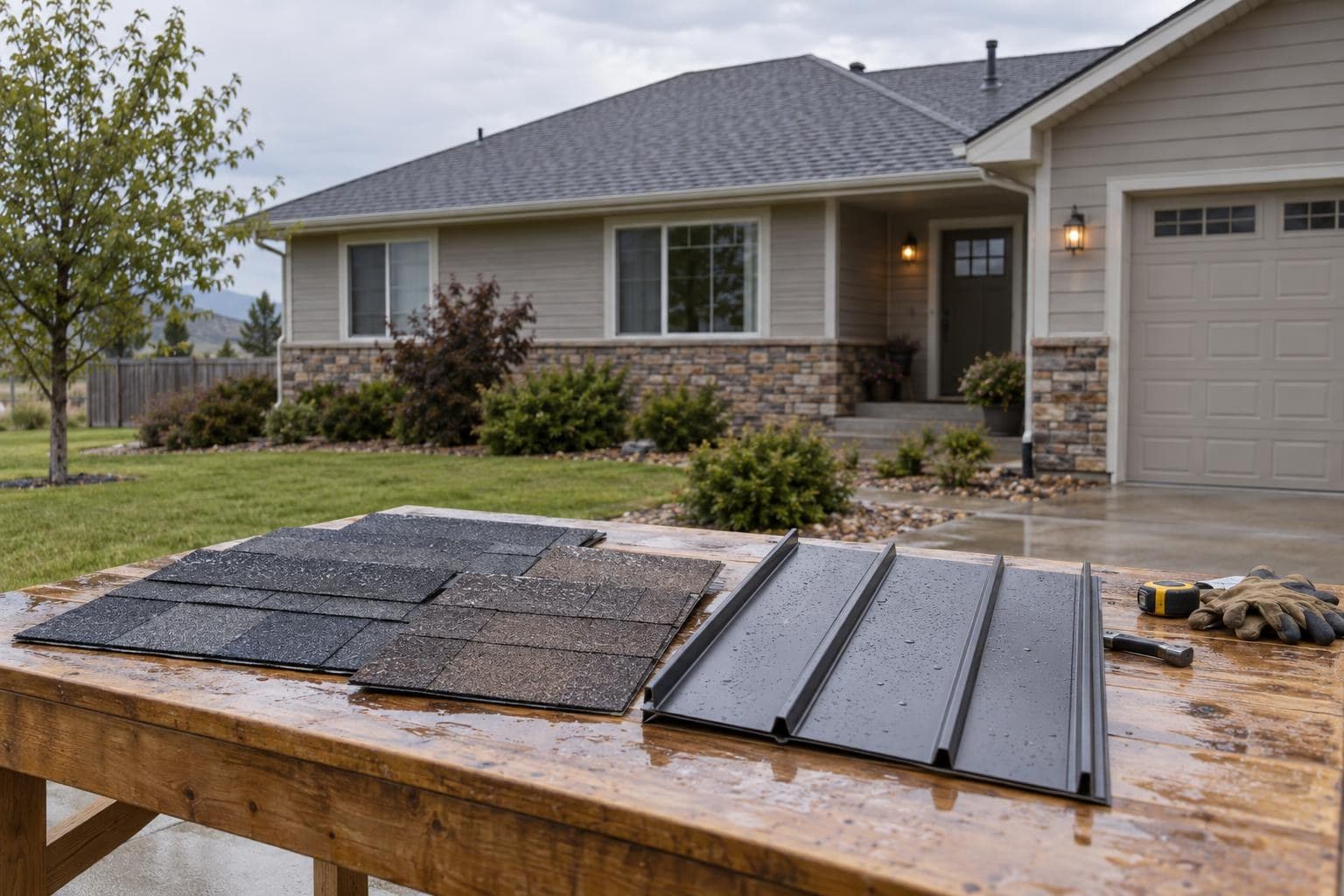
Standing seam and exposed-fastener panels solve different budget and maintenance problems. Compare how each system attaches, handles thermal movement, manages seams and penetrations, and fits the roof slope and architecture. The quote should identify the panel profile, metal thickness, coating, fastening method, substrate, and tested assembly. A price labeled only as metal roofing does not contain enough information to compare systems.
Metal roofing succeeds or fails at the details
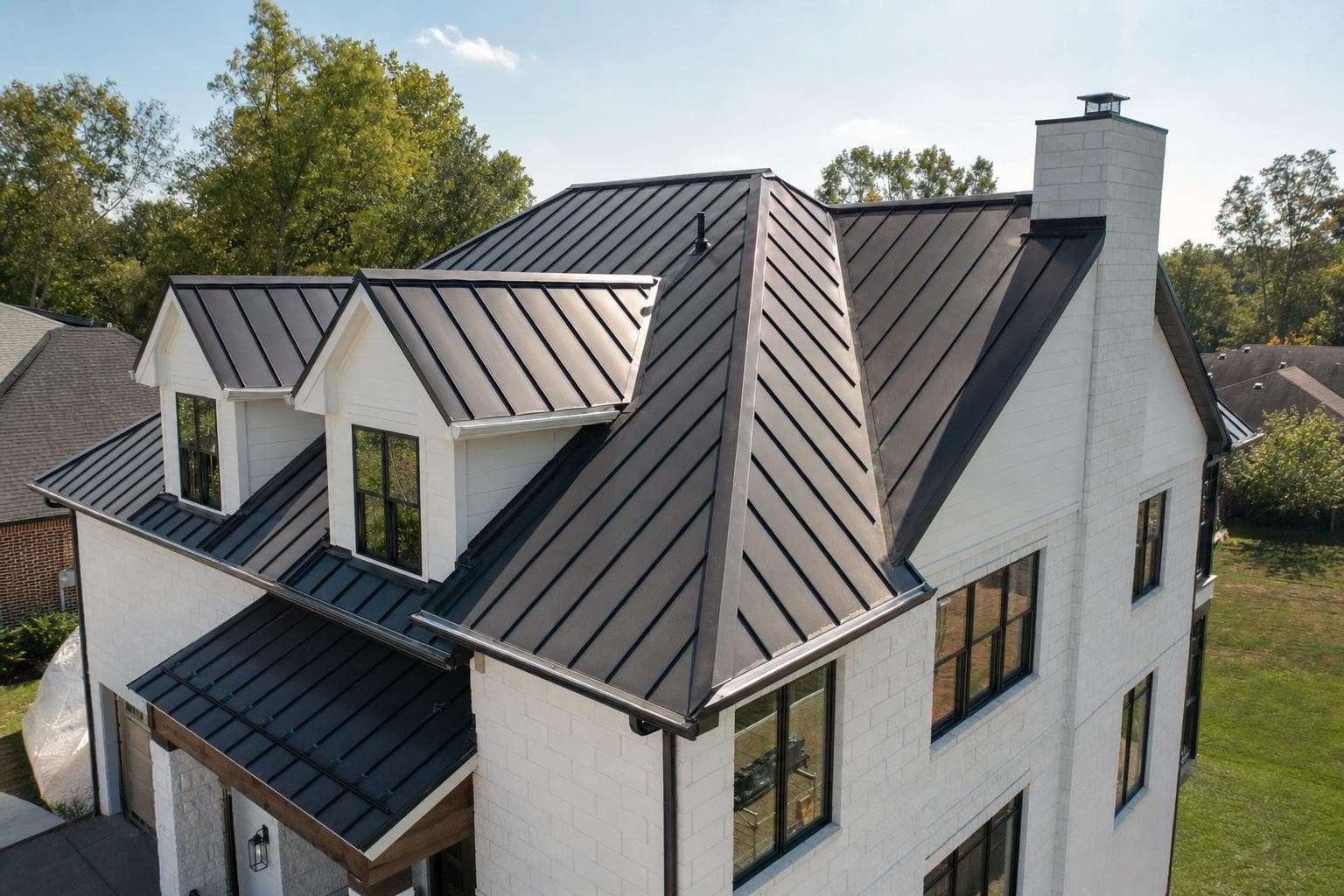
Long panels expand and contract, so clips, fasteners, seams, closures, sealants, and flashing have to work together. Valleys, end laps, curbs, chimneys, walls, eaves, and ridge transitions should be drawn or described clearly in the scope. Ask how dissimilar metals are separated, how cut edges are treated, what underlayment is specified, and how ventilation and condensation are handled for the actual roof assembly.
Plan maintenance around the system you buy
No roof is maintenance-free. Exposed-fastener roofs need periodic attention to fasteners and washers; standing-seam roofs still need checks at sealants, flashings, penetrations, coatings, and attachments. Keep drainage paths clear, address scratches or corrosion, and avoid adding equipment in ways that restrict panel movement or damage coatings. The contractor should explain the product-specific inspection guidance and which service methods remain compatible with the written warranty requirements.
Common questions about metal roofing
How much does a metal roof cost?+
At 2026 market rates, exposed-fastener R-panel runs about $9.00 per square foot installed and standing seam runs $14.00, about $18,000 and $28,000 on a typical 2,000 sq ft roof. Roofline complexity, gauge, and trim details move the number. The metal roof cost guide breaks it down by size.
What's the difference between standing seam and R-panel?+
R-panel is commonly attached through the panel face with gasketed screws; standing seam commonly uses raised seams and concealed clips. That changes price, appearance, thermal movement, and maintenance, but neither label defines the entire system. Compare panel profile, thickness, coating, substrate, fastening, tested assembly, flashing, and the manufacturer's inspection guidance.
Is a metal roof worth it over shingles?+
It can be when the named metal system fits the roof, climate, budget, appearance, maintenance plan, and ownership horizon. Compare installed assemblies, not category averages: tear-off, deck work, underlayment, ventilation or condensation control, trim, penetrations, finish, tested ratings, and warranties all matter. A longer ownership horizon may make the higher initial cost easier to justify, but it does not guarantee lower lifetime cost.
Are metal roofs noisy or do they attract lightning?+
Sound depends on the complete assembly. Metal over solid decking, underlayment, insulation, and finished ceilings behaves differently from panels over an open structure. Metal does not cause lightning to strike a building, but lightning protection and grounding questions belong to a qualified professional and the applicable code. Metal is noncombustible, while the fire rating still depends on the tested roof assembly.
How long does a metal roof last?+
Metal roofs can serve for decades, but service life varies by metal, coating, panel profile, fastening, substrate, installation, exposure, penetrations, and maintenance. Standing seam and exposed-fastener panels also have different inspection needs. Use the exact product warranty, workmanship terms, and maintenance guidance to compare proposals instead of assigning one lifespan to every metal roof.
Get a Metal Roofing Quote
Call to discuss metal roofing options and pricing, or start by sharing your project details.