

Updated July 10, 2026

3D Roofs Editorial Team
Editorial Standards
Roofing in New Mexico is shaped by sun, wind, hail, wildfire risk, and big temperature swings. Your roof takes year-round exposure, so material choice, attic ventilation, flashing, and ongoing maintenance matter. Insurance can also play a bigger role here than in milder states, especially when an older roof, wildfire exposure, or storm damage affects coverage options. The state also requires licensure for construction contracting, which gives you a concrete starting point when you choose your roofer.
7
Cities covered
12
Roofing services
24
NM guides
What homeowners run into on New Mexico roofs
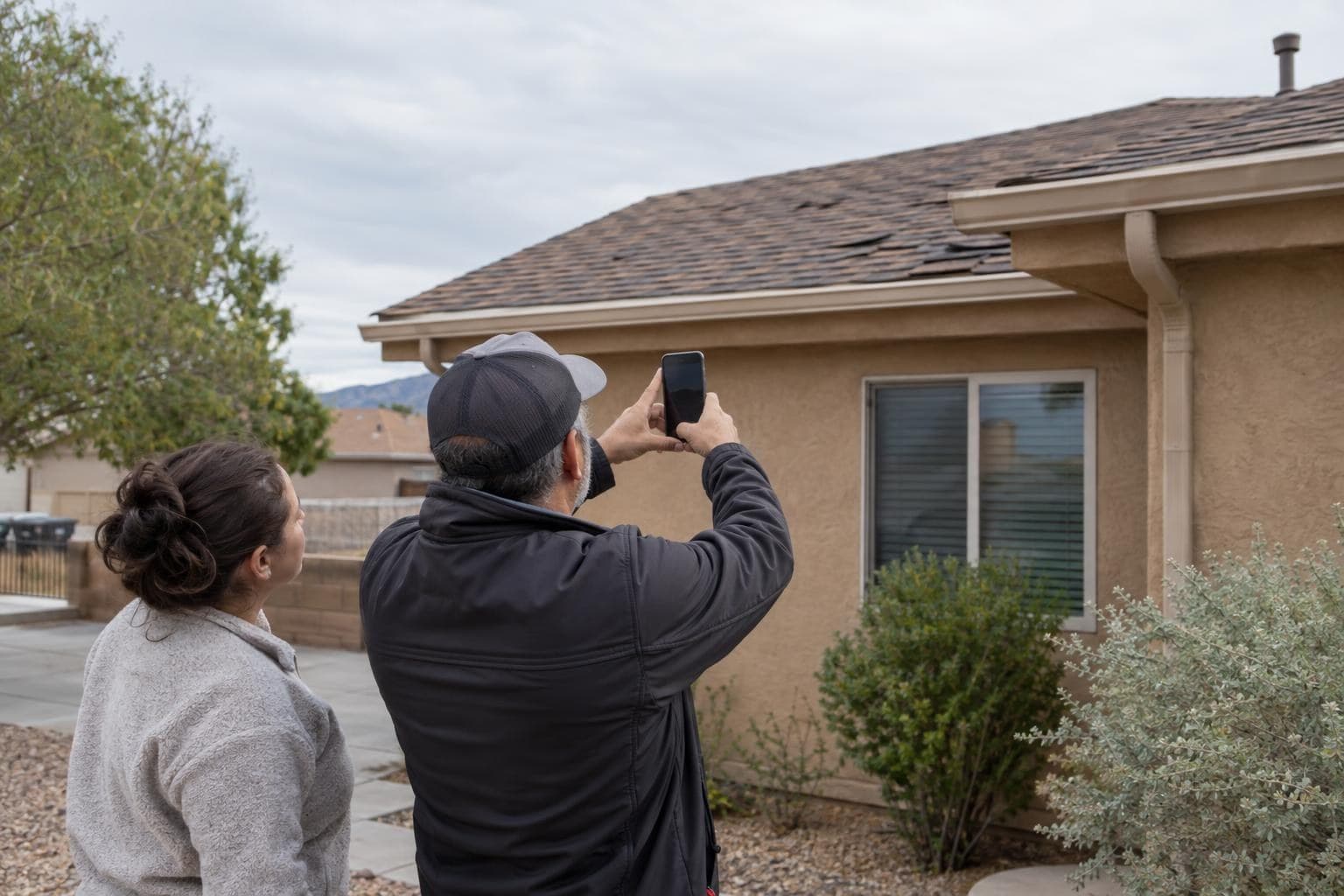
Across the New Mexico markets we serve, roofers repeatedly see the same inspection patterns. If one of these shows up after a storm or a leak, start with documentation and an inspection before approving a full replacement quote.
- Intense high-altitude UV degradation
- Flat-roof membrane and foam wear
- Monsoon wind and hail damage
- Stucco parapet flashing leaks
- Underlayment failure on heat-aged systems
- Extreme high-altitude UV degradation
- Snow load on flat roofs in winter
- Historic-district material restrictions
What New Mexico weather does to roofs
New Mexico roofs deal with intense UV exposure, dry heat, wind-driven rain, hail, mountain snow in some areas, and wildfire conditions in many parts of the state. That mix can dry out roofing materials, stress sealants and flashing, and make small weak spots turn into leaks after a storm. The state insurance guidance also highlights winter storm, flood, wildfire, and wind and hail readiness, which matches the risks many homeowners plan around. If your roof is older, storm-worn, or surrounded by combustible debris, those issues can affect both performance and insurability.
Albuquerque
Albuquerque's primary roofing stresses are intense high-altitude UV, monsoon-season storms (July-September), and the maintenance demands of the flat and low-slope adobe-style roofs common in the Southwest.
Albuquerque roofingSanta Fe
Santa Fe's high elevation brings extreme UV plus real winter snow loads. Monsoon storms add summer wind and hail. Flat adobe roofs dominate.
Santa Fe roofingLas Cruces
Las Cruces's desert climate brings extreme heat and intense UV that age roofs fast, plus monsoon-season wind and flash rain. Flat adobe-style and tile roofs common.
Las Cruces roofingWhat roofing costs in New Mexico
Roof replacement cost in New Mexico depends on roof size, pitch, material, decking, ventilation, code requirements, and storm upgrades. The state cost guide gives you the broad range; your city page adds the local weather and market context.
Start with the right number.
Use the roof replacement cost guide for statewide pricing, then compare repair pricing when the roof may not need a full tear-off.
Materials that make sense in New Mexico
The New Mexico homeowners insurance guidance says homeowners may share a wildfire preparedness certificate with their insurance agent or insurance company to ask if any discounts, credits, or other benefits may be available. Your best read-across for impact-resistant roofing is the same practical rule: ask your carrier directly before you buy. If you are considering a Class 4 impact-resistant shingle for hail resilience, ask whether your policy offers any discount, credit, or underwriting benefit, what documentation is required, and whether the benefit applies at issue or renewal. Carriers set their own discounts and eligibility rules, so do not assume a Class 4 label automatically changes your premium.
- TPO or foam (SPF) for flat adobe-style roofs
- Cool-roof rated reflective materials
- Standing-seam metal for pitched sections
- Tile for traditional Southwest aesthetic
Storm claims, deductibles, and insurance rules
Storm claims are shaped by state law, policy language, and the way contractors are allowed to work with insurance proceeds. These are the rules worth knowing before a claim turns into a signed roofing contract.
You can file an insurance complaint with the state
If you run into trouble with a homeowners claim, policy issuance, or cancellation, the Consumer Assistance Bureau says it assists consumers who are having difficulty with an insurance issue. Consumers may submit complaints involving insurance companies concerning the issuance or cancellation of policies and the processing of claims. The Bureau also says it can help with complaints against insurance companies, agents, and adjusters operating within New Mexico.
The state can review complaints, but it does not act as your lawyer
The Consumer Assistance Bureau says it processes complaints by assisting the consumer in resolving disputes in a fair and impartial manner. It also states that the Bureau does not have the regulatory authority to determine damages or make settlement decisions on your behalf, cannot give legal advice, and cannot act as your representative. If a complaint raises concern about possible Insurance Code violations, the Bureau says a referral may be made to the Investigations Bureau or Office of Legal Counsel.
Home insurers must give notice before cancellation or non-renewal
The homeowners insurance guidance says companies shall give policyholders at least ten days notice prior to the date of cancellation and 30 days notice prior to the date of non-renewal. It also explains that cancellation and non-renewal are different, and lists examples of reasons a company can cancel a policy, including failure to pay premium, fraud or serious misrepresentations, and certain hazard-increasing acts or violations.
If you cannot get coverage in the normal market, there is a FAIR Plan path
The homeowners insurance guidance says the New Mexico Property Insurance Program is the underwriting association for the New Mexico F.A.I.R. plan and that the FAIR Plan Act was enacted to provide essential property insurance to qualified applicants in the State of New Mexico who are unable to secure such insurance in the normal market. The guidance says applicants may apply directly to the program for coverage or use a representative or insurance agent to act on the applicant’s behalf.
Roofers, roofing contractors, and roofing companies in New Mexico
Start with the state licensing reality. The Construction Industries Division says it requires licensure for any person practicing or offering to practice construction contracting, and it offers tools to obtain, verify, or renew a license, plus a complaint option. For you, that means a basic screening step is simple: verify your roofer through the state license lookup before you sign anything. Then ask your roofer to explain the exact scope, materials, ventilation changes, flashing details, permit needs, cleanup plan, and who will handle any inspection steps. On the insurance side, the state insurance office also provides a way to look up a licensee and file a complaint if an issue involves an insurance company, agent, or adjuster. If a contractor conversation starts drifting into claim handling promises, keep the paper trail clear and make sure your insurer decisions come through the proper insurance channels.