

Updated July 10, 2026

3D Roofs Editorial Team
Editorial Standards
Roofing in West Virginia is shaped by mountain weather, heavy rain, winter snow, and storm-driven wear that can shorten the life of shingles, flashing, and roof penetrations. If you are planning a repair or replacement, it helps to know that West Virginia has a state contractor licensing system and a state insurance consumer office you can use if a claim goes sideways.
7
Cities covered
12
Roofing services
20
WV guides
What homeowners run into on West Virginia roofs
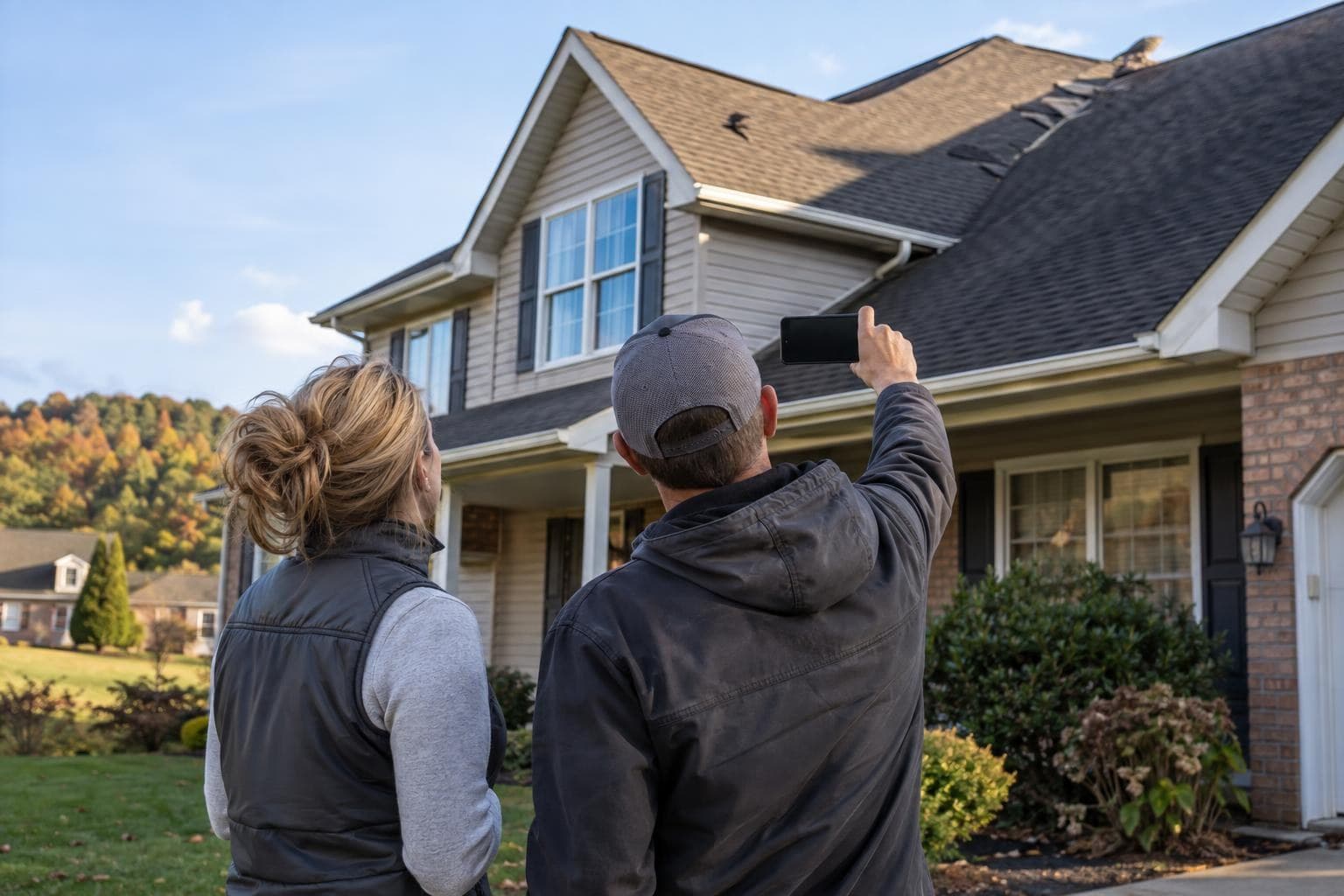
Across the West Virginia markets we serve, roofers repeatedly see the same inspection patterns. If one of these shows up after a storm or a leak, start with documentation and an inspection before approving a full replacement quote.
- Snow load and ice damming
- Heavy rain wear at flashings
- Freeze-thaw aging
- Wind damage in valleys
- Tree debris from heavy Appalachian canopy
- Tree debris from canopy
- Wind damage in river valleys
- Tree debris from Appalachian canopy
What West Virginia weather does to roofs
Your roof in West Virginia has to handle frequent moisture, freeze-thaw cycles, snow load in winter, and wind-driven rain during storms. Those conditions can show up as lifted shingles, granule loss, flashing leaks, ice-related damage around eaves, and faster wear around chimneys, valleys, and vents. In lower-slope or shaded areas, lingering moisture can also make drainage and ventilation more important.
Charleston
Charleston WV's mountain valley setting brings heavy rain, winter snow and ice, severe summer storms, and occasional flooding. Steep terrain affects wind exposure.
Charleston roofingMorgantown
Morgantown's mountain setting brings winter snow and ice, heavy rain, severe summer storms, and steep-terrain wind variation.
Morgantown roofingHuntington
Huntington, on the Ohio River, sees winter snow and ice, heavy rain, severe summer storms, and occasional flooding. Steep terrain affects wind exposure.
Huntington roofingWhat roofing costs in West Virginia
Roof replacement cost in West Virginia depends on roof size, pitch, material, decking, ventilation, code requirements, and storm upgrades. The state cost guide gives you the broad range; your city page adds the local weather and market context.
Start with the right number.
Use the roof replacement cost guide for statewide pricing, then compare repair pricing when the roof may not need a full tear-off.
Materials that make sense in West Virginia
If you are considering impact-resistant shingles, ask your carrier whether it offers a discount for a Class 4 rated roof and what documentation it requires. Discounts and underwriting rules are set by the carrier, so you should confirm eligibility before you buy. If you move forward, your roofer can help you gather the product information your carrier asks for.
- Class 4 impact-resistant shingles
- Standing-seam metal for steep mountain roofs
- Ice and water shield at eaves
- Strong valley flashing for heavy rain
Storm claims, deductibles, and insurance rules
Storm claims are shaped by state law, policy language, and the way contractors are allowed to work with insurance proceeds. These are the rules worth knowing before a claim turns into a signed roofing contract.
You can file a homeowners insurance complaint with the state
West Virginia's Property and Casualty Consumer Services Unit helps consumers with homeowners insurance questions and concerns. The office says it can help with insurance complaints involving sales and policyholder services, premium rates and refunds, cancellations and non-renewals, and claim delays and denials. You may file a complaint online or by paper form, and the office will investigate once you authorize it to proceed.
The insurance office explains what it can, and cannot, do for you
The state says it can protect you by enforcing West Virginia laws and help with insurance complaints. It also says it cannot give legal advice, act as your lawyer, interfere with a pending lawsuit, recommend an insurance company or agent, or decide disputes based on who is negligent or at fault. That matters if you are fighting over roof damage, because the complaint process can help with claim handling issues, but it is not a substitute for legal advice.
There is a defined complaint process and timeline guidance
After you file, you will receive an acknowledgement letter with the file number and the name of your complaint specialist. The state says a copy of your complaint will be forwarded to the appropriate parties, and the Offices of the Insurance Commissioner will respond with the results. The source also states: "An inquiry usually takes about 60 days, depending on the complexity of the case."
A FAIR Plan exists if you cannot secure property insurance in the voluntary market
The state says the West Virginia FAIR Plan began operating in 1986 to make basic property insurance available to persons with an insurable interest in real or tangible personal property located in West Virginia who have been unable to secure such insurance from the voluntary insurance market. The source also says the Plan issues a simplified language policy on habitational and commercial property for direct loss caused by limited perils.
Roofers, roofing contractors, and roofing companies in West Virginia
West Virginia does have a contractor licensing system. The Division of Labor says the Licensing Section includes the Contractor Licensing Board and that each program has an inspection and licensing mechanism. The Contractor Licensing Board also provides a public contractor license search and a Request for Investigation or Consumer Complaint page. For you, that means a smart first step is to ask your roofer for the exact business name they use for licensing records, confirm the record in the public search, and keep copies of the contract, scope, and any claim correspondence. If a dispute comes up over contractor conduct, you can use the board's complaint process. If the dispute is with your homeowners carrier, use the insurance complaint process through the state insurance office.