Updated July 10, 2026

3D Roofs Editorial Team
Editorial Standards
When you need roof tarping
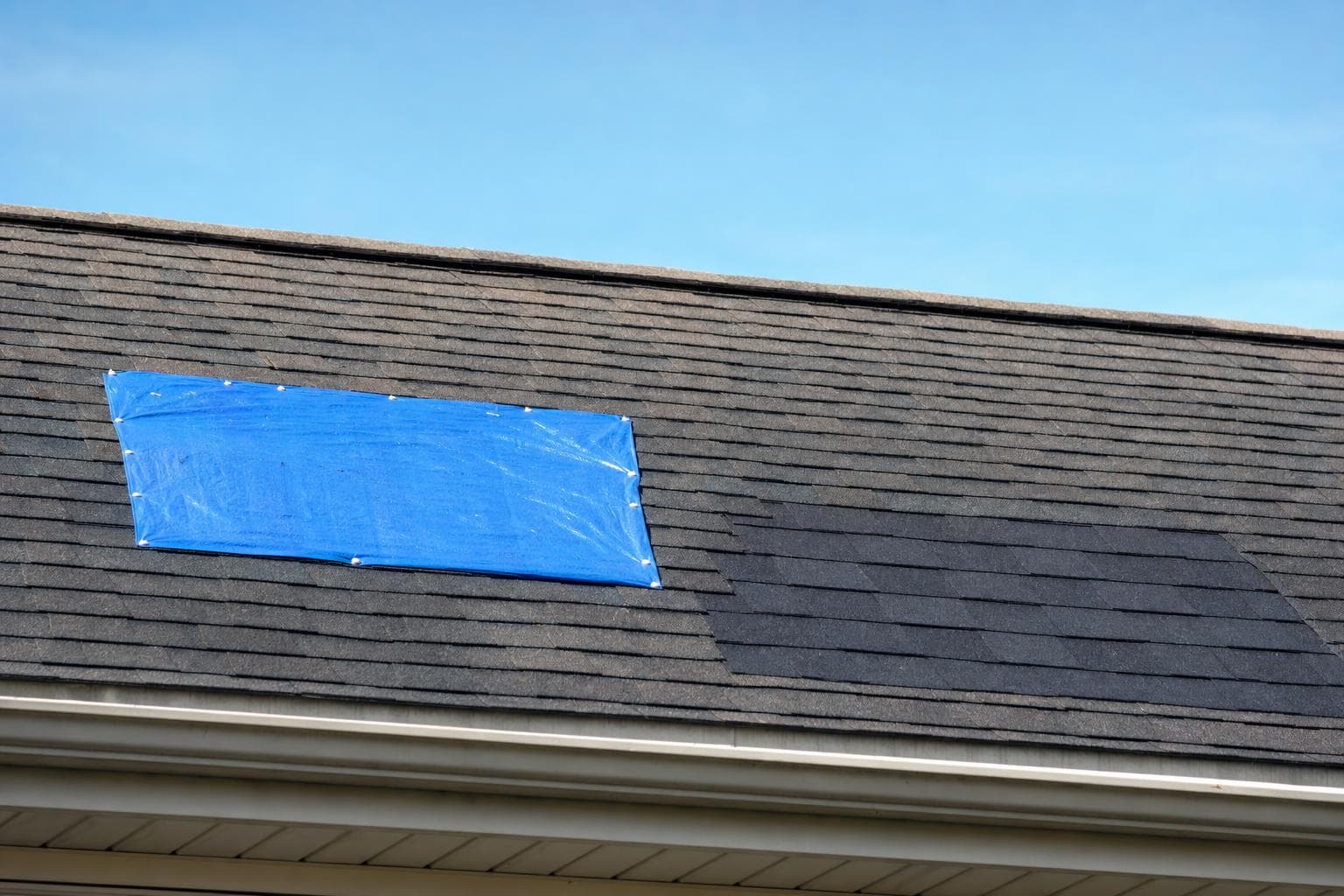
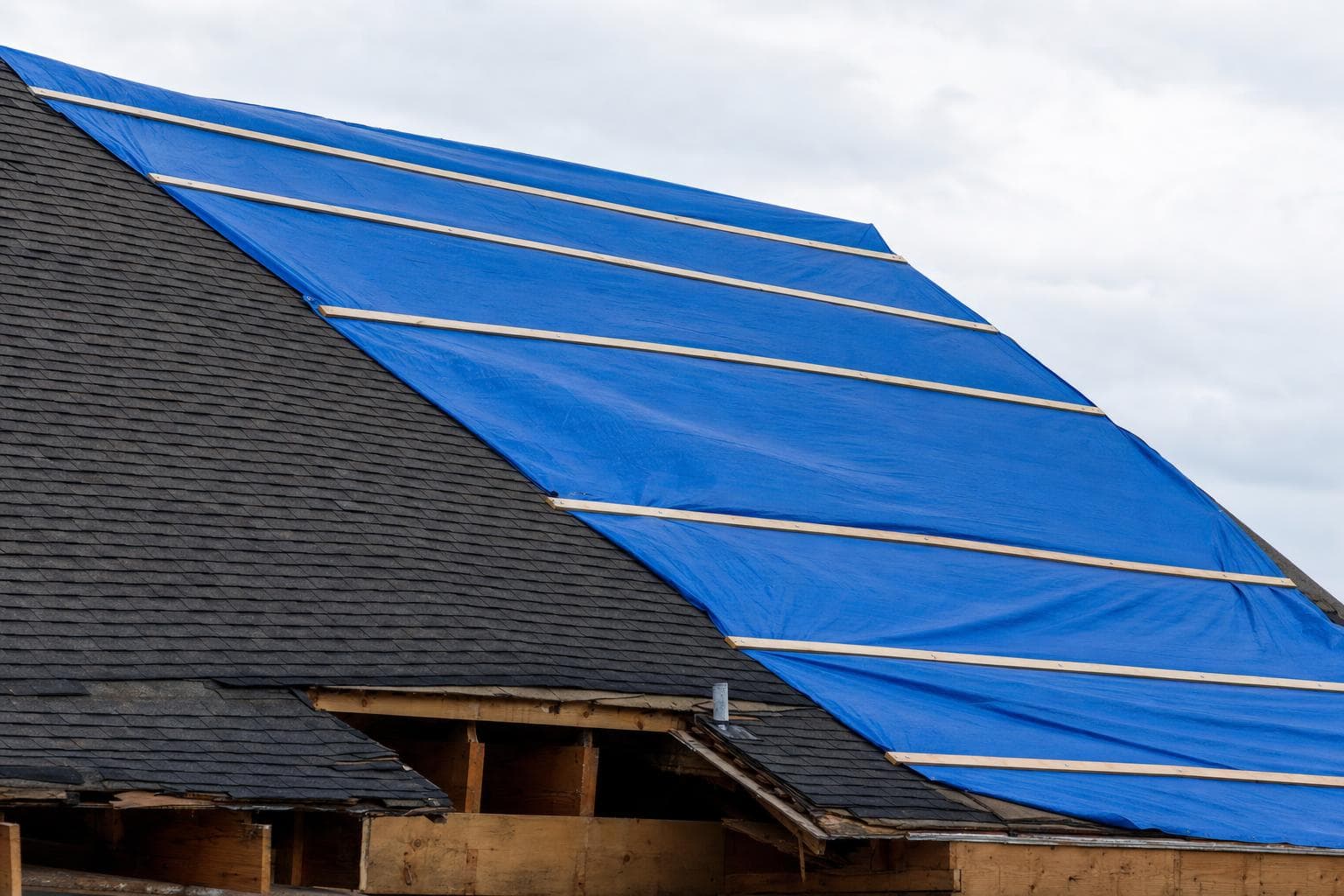
Roof tarping is the bridge between a storm opening your roof and the permanent repair that cannot happen immediately. A proper tarp extends well past the damage, anchors against wind, and sheds water downslope while the uncovered condition is documented. It is protection, not a fix: useful duration depends on the tarp, anchoring, roof geometry, sun, wind, and weather, so plan the permanent inspection as soon as the home is secure.
When you call, share whether water is actively entering, what opened the roof, when the damage happened, and whether rain or wind is continuing. That helps the crew plan safe access and temporary protection; the permanent roof decision comes after the home is stabilized.
What a professional roof tarp installation should cover
A roof tarp has one job: keep weather out until permanent work can begin. The scope should identify the opening, extend protection beyond it, anchor the material against wind, preserve drainage, and set a clear plan for inspection and removal.
Work the crew should complete
- Open-area and active-leak assessment
- Photo documentation before the damage is covered
- A tarp sized past the damaged area
- Wind-rated anchoring that sheds water downslope
- A plan for the permanent repair or replacement
Conditions that affect the response
- Size of the area that needs cover
- Roof pitch and access in storm conditions
- After-hours or storm-surge timing
- Anchoring method and tarp grade
- Whether debris removal is needed first
What to confirm before the crew leaves
Before the crew leaves, confirm what area was covered, how the tarp is anchored, which roof areas could not be inspected, and when it should be checked or removed. The immediate decision is whether the opening is protected safely; the permanent repair can be diagnosed once the roof is stable and conditions allow a complete inspection.
Signs the temporary protection may fail
- The tarp stops at the damage edge instead of extending past it
- No documentation is taken before the roof is covered
- The tarp traps water instead of shedding it downslope
- The contractor treats the tarp as the final fix
Questions to ask on site
- When should this tarp be checked, and after what weather?
- Will you photograph the damage before covering it?
- How is the tarp anchored against wind?
- When should the tarp be checked or removed, and when will the permanent inspection happen?
What roof tarping costs
For planning, professional roof tarping often falls between $500-$2,150 nationally. When water is entering or the roof is open, the first question is whether a crew can reach it safely and stabilize the opening. Protected area, pitch, stories, access, anchoring, weather, and response timing determine the final charge.
- Small accessible opening
- One limited roof area with straightforward access and anchoring
- $250-$1,000
- Standard tarp installation
- Typical protected area on an average residential roof
- $500-$2,150
- Large, steep, or high roof
- More material, time, anchors, and difficult access
- $1,200-$6,300
Cost ranges are estimates developed from standardized project scopes and reviewed pricing inputs. Government labor and regional cost data are used where applicable. See our Pricing Methodology for the exact sources, calculations, and review date. Actual prices vary by property, scope, materials or equipment, location, and provider.
For size tables, worked examples, and the assumptions behind this range, open the roof tarping cost guide.
How professional roof tarping should work
Tarping is temporary construction, not a loose sheet laid over a hole. A reliable installation is sized to the damage, secured to resist weather, and handed off to a permanent repair plan.
- 1
Locate the full opening
Inspect from a safe position to find exposed decking, missing material, punctures, failed valleys, and the uphill path water can use. The protected area often needs to extend beyond what is visible from the ground.
- 2
Record the uncovered condition
Take clear exterior and interior photographs before the tarp hides the roof. Note the date, damaged components, active water, and any limits caused by unsafe access or continuing weather.
- 3
Anchor a water-shedding cover
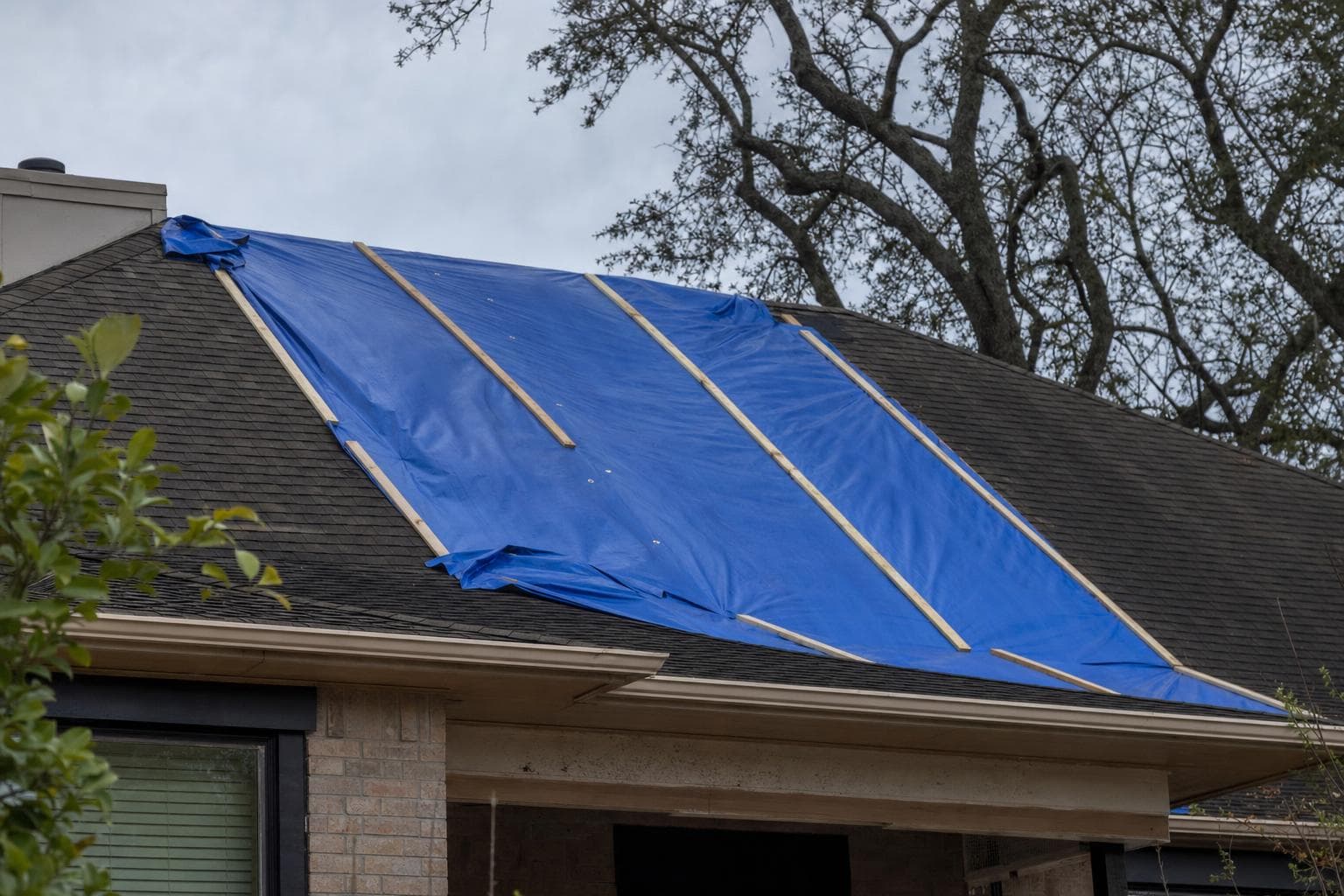
Extend the tarp beyond the damage and secure it so expected wind cannot lift the edges. The surface should stay taut and drain downslope without directing water into a valley, wall, or neighboring opening.
- 4
Schedule the permanent work
Set a follow-up inspection rather than treating the tarp as the finished repair. The next scope should address damaged roofing, flashing, decking, structure, and interior moisture before the temporary cover degrades.
Common questions about roof tarping
How much does roof tarping cost?+
Price depends on the area that needs protection, roof pitch and height, access, anchoring method, weather, and after-hours demand. If a covered event may be involved, photograph the damage and save the receipt, then ask the insurer whether the temporary work is eligible under the policy rather than assuming reimbursement.
How long will a roof tarp last?+
There is no dependable fixed lifespan. Tarp material, anchoring, roof slope, ultraviolet exposure, wind, rain, snow, debris, and later movement all matter. Ask when it should be checked, review it after severe weather from a safe position, and schedule permanent work promptly.
Will insurance pay for roof tarping?+
It may, depending on the cause of loss, policy language, limits, and whether the work was reasonable and necessary. Document the damage before the tarp goes on when it is safe, keep the invoice and photos, and ask the carrier how to submit the expense.
Can I tarp my own roof?+
It's risky, wet, steep, or storm-damaged roofs cause falls, and a loose tarp thrown over a hole fails in the first gust and can create more water damage than it prevents. A proper tarp extends past the damage, is anchored against wind, and sheds water downslope.
What does a properly installed tarp do?+
It extends well past the damaged area, is secured so expected wind cannot lift the edges, and lies flat so water runs off instead of ponding. Done correctly, it can limit additional interior water while preserving photographs and a record of the uncovered condition until the permanent repair.
Get Roof Tarping Help
Call to ask about roof tarping, or tell us about the damage to start a quote request.