

Updated July 10, 2026

3D Roofs Editorial Team
Editorial Standards
Arizona is a desert roofing market, and two forces define it: relentless heat and the summer monsoon. Your roof bakes under some of the most intense sun and UV in the country for months, then gets hammered by monsoon microburst winds, blowing dust, and sudden downpours from June into September. The rules that protect you, from who is legally allowed to do the work to how your monsoon claim gets handled, are set at the state level. Here is what actually matters for an Arizona roof, and how to hire someone who will not leave you exposed.
21
Cities covered
12
Roofing services
26
AZ guides
What homeowners run into on Arizona roofs
Across the Arizona markets we serve, roofers repeatedly see the same inspection patterns. If one of these shows up after a storm or a leak, start with documentation and an inspection before approving a full replacement quote.
- Extreme heat aging on dark shingles and underlayment
- Monsoon wind damage (microbursts up to 80+ mph)
- UV degradation accelerated by 300+ sunny days per year
- Hail damage during monsoon storms
- Foam roof maintenance failures on flat sections
- Extreme heat aging on dark materials
- Monsoon wind and hail damage
- UV degradation on south- and west-facing slopes
What Arizona weather does to roofs
Arizona roofs fail where the desert hits hardest. Extreme heat and UV are the constant: roof surfaces can top 150 degrees in summer, and that thermal cycling and ultraviolet load break down shingles, sealants, coatings, and the elastomeric topcoat on foam roofs faster than almost anywhere else. Then the monsoon arrives, and microburst winds, wind-driven dust, and intense short downpours find any weak flashing, fastener, or seam, with some areas seeing hail too. Flat and low-slope homes here often run spray-foam or tile systems, and the right roof for your home depends on how much sun, wind, and water it actually takes.
Phoenix
Phoenix's primary roofing stress is sustained extreme heat plus monsoon-season severe weather, microbursts, hail, dust storms, and flash floods between July and September.
Phoenix roofingTucson
Tucson's monsoon season (July-September) brings severe thunderstorms, microbursts, hail, and dust storms. Outside monsoon, the primary stress is sustained heat and UV.
Tucson roofingMesa
Mesa shares the Phoenix metro storm profile, sustained heat plus monsoon-season thunderstorms with microbursts, hail, and dust storms.
Mesa roofingWhat roofing costs in Arizona
Roof replacement cost in Arizona depends on roof size, pitch, material, decking, ventilation, code requirements, and storm upgrades. The state cost guide gives you the broad range; your city page adds the local weather and market context.
Start with the right number.
Use the roof replacement cost guide for statewide pricing, then compare repair pricing when the roof may not need a full tear-off.
Materials that make sense in Arizona
Arizona material priorities change with elevation, roof type, and exposure. In low-desert areas, verify reflectance, coating or underlayment maintenance, drainage, flashing, and thermal-movement details. Where monsoon hail is a concern, a verified Class 4 shingle may be worth comparing. Any insurance credit is carrier- and policy-specific, so ask the insurer about the exact product and required documentation before using a credit in the budget.
- Tile (concrete or clay) for sustained heat performance
- Cool-roof rated reflective shingles or metal
- Standing-seam metal for heat reflection and longevity
- Spray foam or single-ply membranes for flat-roof sections
Storm claims, deductibles, and insurance rules
Storm claims are shaped by state law, policy language, and the way contractors are allowed to work with insurance proceeds. These are the rules worth knowing before a claim turns into a signed roofing contract.
In Arizona your roofer has to be licensed, by law
Arizona requires a contractor license from the Registrar of Contractors (ROC) for any roofing job of $1,000 or more, or any job that needs a building permit, no matter the price. Roofing is its own classification: R-42 for residential work, C-42 for commercial, and CR-42 for both. Doing licensed-level work without a license is a Class 1 misdemeanor in Arizona, so a roofer who is not licensed for your job is not a deal, it is a risk.
The ROC Recovery Fund only protects you if you hired a licensed contractor
Arizona runs a Residential Contractors' Recovery Fund (A.R.S. 32-1132), paid for by contractor assessments, that can reimburse an owner-occupant harmed by a licensed residential contractor's poor work, abandonment, or failure to perform, up to a statutory maximum (currently $30,000 per residence). The catch is right there in the statute: it only covers contractors who were properly licensed when you signed, paid, or started. Hire an unlicensed roofer and this safety net does not exist.
Read the deductible and roof terms before monsoon season
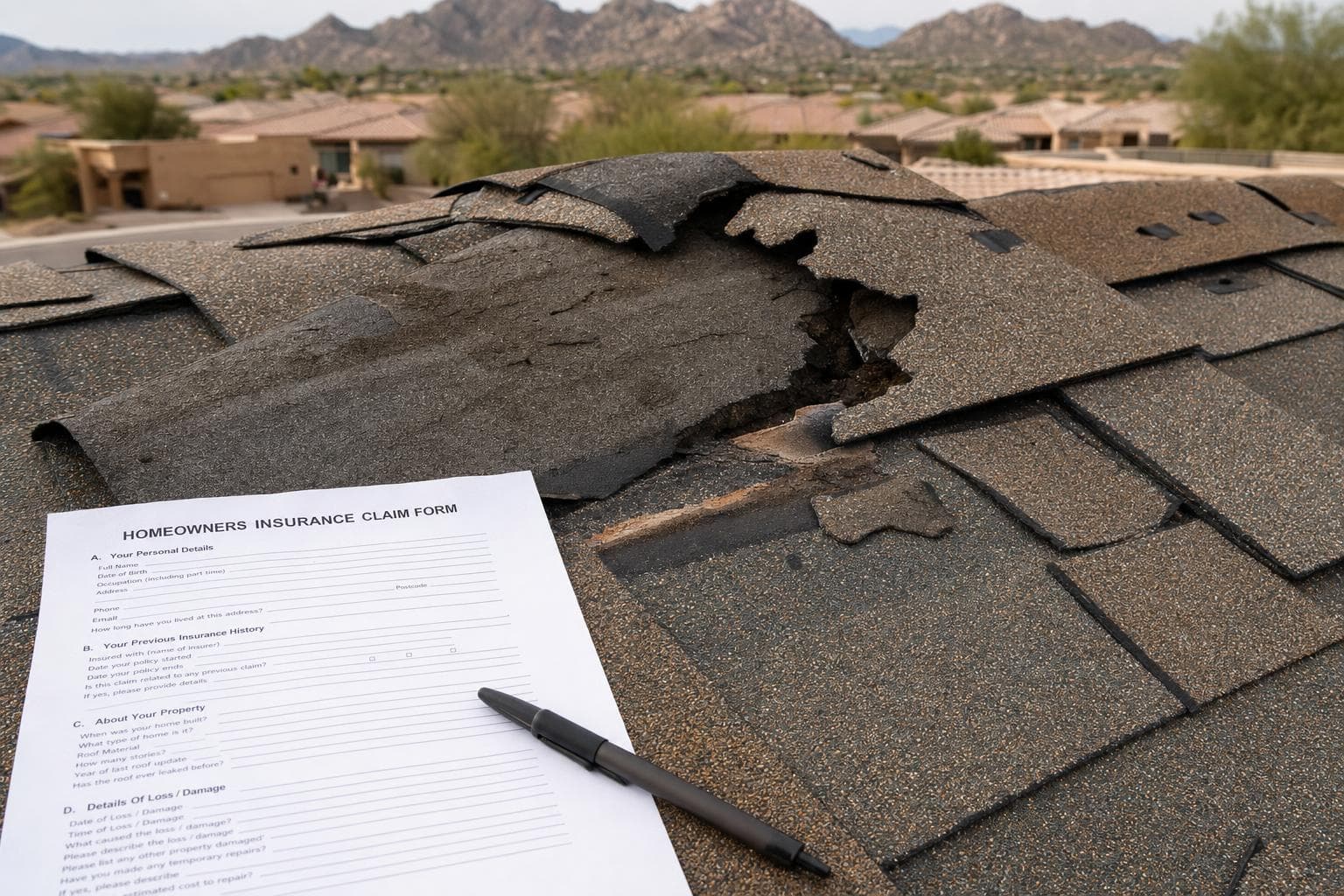
Arizona roof coverage depends on the reported cause and the policy's deductible, exclusions, roof provisions, and valuation method. Review the declarations page for any wind or hail deductible, flood exclusion, roof schedule, and replacement-cost or actual-cash-value term. After damage, document visible conditions safely, take reasonable temporary steps required to prevent additional loss, keep receipts, and contact the insurer about notice and inspection requirements before permanent repairs. Ask the Arizona Department of Insurance and Financial Institutions for consumer assistance if the carrier's explanation remains unclear.
Roofers, roofing contractors, and roofing companies in Arizona
Arizona does license roofers, so here "licensed" is something you can verify, and you should. Look the contractor up on the ROC's free contractor search and confirm three things before you sign: the license is active (not expired, suspended, or revoked), the classification covers roofing (R-42, C-42, or CR-42), and the bond is current. The same search shows the qualifying party and any complaint history. Remember the Recovery Fund only backs licensed contractors, so this check is also what protects your recourse if a job goes wrong. Then confirm general-liability insurance, real local references, and a written scope that spells out tear-off, decking, underlayment, flashing, ventilation, and cleanup.