Updated July 27, 2026

3D Roofs Editorial Team
Editorial Standards
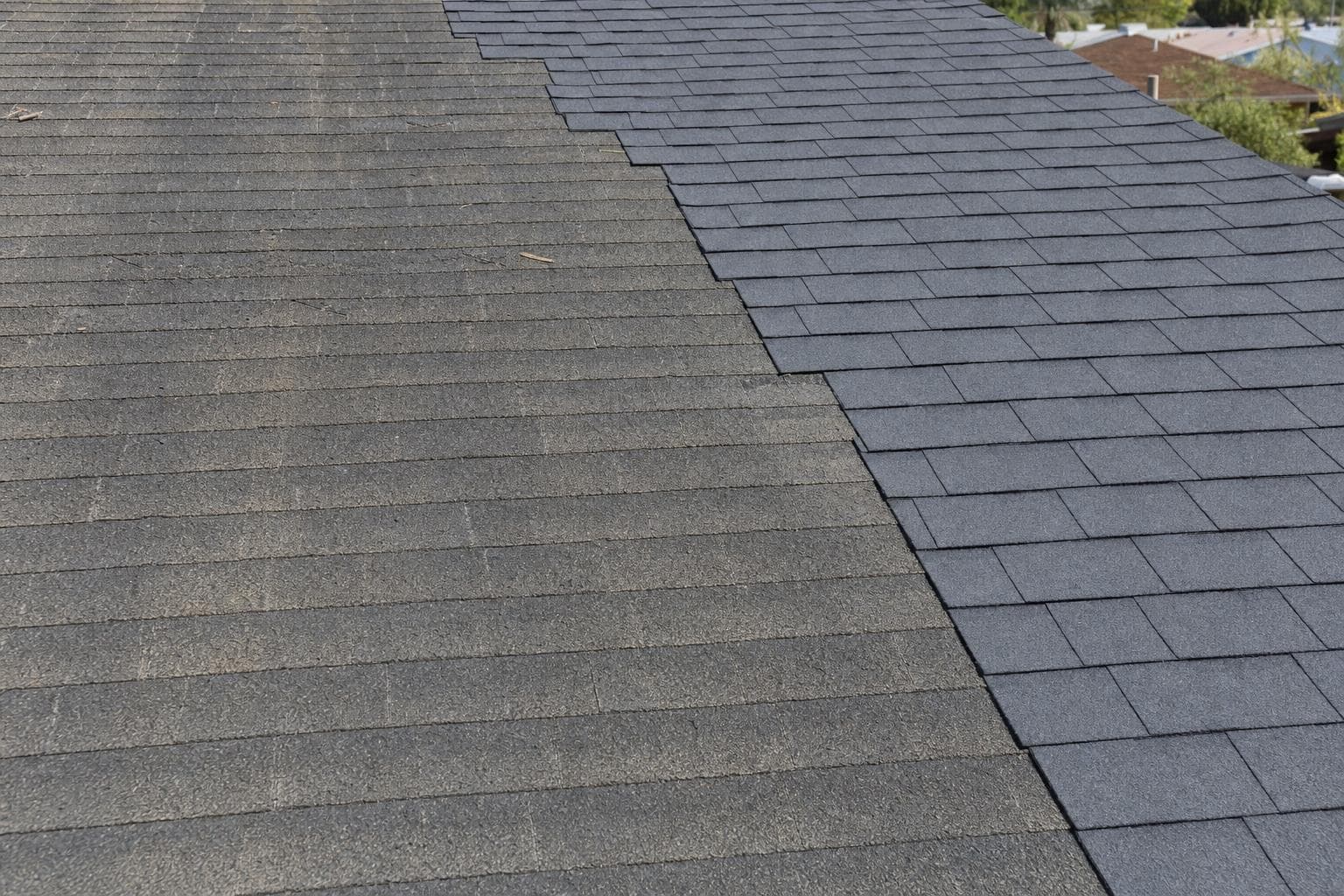
If your roof damage is isolated, repair is usually the cheaper move. For roof repair vs replacement in Arizona, do not use a fixed damage percentage as the decision rule; compare the repairable area, roof condition, material availability, code requirements, and written scopes. In Arizona, that decision gets sharper because roofs here age under extreme heat and UV, then get tested by monsoon wind, dust, heavy bursts of rain, and in some areas hail. That means a roof that looks repairable from the ground may already have brittle materials, weak flashing, or worn seams in multiple spots.
Should you repair or replace your Arizona roof?
Start with this answer: repair makes sense when the problem is limited and the rest of the roof is still in solid shape. Replacement makes sense when the roof has broad wear, repeat leaks, or damage that signals the system is breaking down, not just one spot. For current Arizona repair planning related to roof repair vs replacement, use the maintained cost guide, then compare the contractor's measured scope and unit prices. Full replacement uses 2026 market pricing, and the material choice matters a lot. For a typical 2,000 sq ft roof, Class 3 shingles are about $6.25 at $6.25 per sq ft, Class 4 shingles are about $14,503 at $7.25, and standing seam metal is about $32,048 at $16.00. If you want the bigger pricing picture for your area and roof type, full local pricing lives on the Arizona cost page and the calculator.
How do you tell if the damage is isolated or widespread?
If damage is confined to one area, a repair is often enough. If you are seeing issues in multiple slopes, around several penetrations, along valleys, or across large sections of the field shingles or low-slope surface, the roof is usually telling you the wear is system-wide. In Arizona, the desert hits roofs hard. Roof surfaces can top 150 degrees in summer, and that thermal cycling and ultraviolet load break down shingles, sealants, coatings, and the elastomeric topcoat on foam roofs faster than almost anywhere else. Then monsoon weather finds the weak points. Microburst winds, wind-driven dust, and intense downpours can turn small age cracks or lifted edges into active leaks.
- Repair usually fits: one leak source, a small section of missing or torn material, one flashing problem, or a limited area of storm damage.
- Replacement usually fits: repeated leaks, cracking or wear in several areas, widespread granule loss, recurring seam or flashing failures, or patchwork from multiple past repairs.
- On flat and low-slope roofs, look for drainage issues, coating wear, seam stress, and spots where standing water or sun exposure keeps coming back to the same weak area.
What is a fixed damage threshold for roof replacement?
The reason is simple. Once repairs spread that far, you are no longer fixing one problem, you are paying to extend a roof that may keep failing in the next stressed area. Arizona weather makes that more important because heat and UV usually do not wear out one square neatly. They age the whole assembly, even if the leak only shows up in one place today.
It is a decision tool. What matters is whether you are fixing an event or chasing the next failure.
Talk to a roofer today
Planning ranges, scope details, and a direct path to request a roofing quote.
How much does roof age matter in Arizona?
Roof age matters more in Arizona than many homeowners expect because constant heat and UV wear everything down, even before a storm exposes it. An older roof with a new leak is often not just a leak problem. It can be a sign that sealants have dried out, shingles have become brittle, fasteners have loosened, underlayment has aged, or low-slope coatings have thinned beyond their useful protection. If your roof is already in the later part of its life, a repair can become short-term spending on a roof that is close to broader failure.
That does not mean every older roof needs replacement right away. It means age should weigh heavily with damage spread and repair history. If your roofer is proposing repairs in several different places on an older roof, ask the plain question: are you solving this issue, or buying time before replacement. In Arizona, that answer matters because the next long heat stretch or monsoon storm can test every weak point at once.
How does Arizona weather change the repair vs replacement decision?
Arizona weather pushes many borderline roofs toward replacement sooner. Extreme heat and UV quietly degrade roofing materials every day, then monsoon wind and rain test flashings, fasteners, seams, and edges all at once. In some areas, hail adds another layer to the decision. If the roof already has broad age wear, a storm repair may not restore reliable performance for long. If the roof is otherwise sound, storm damage may still be a clean repair job.
- Heat and UV favor replacement when materials are brittle, dried out, or worn across wide areas.
- Monsoon wind favors replacement when edge details, flashing, or attachment points are failing in more than one location.
- Short heavy rain favors replacement when leaks show up in multiple rooms or around several penetrations, because that often points to system wear rather than one isolated opening.
- Hail can make a Class 4 shingle worth comparing in hail-prone areas. For roof repair vs replacement in Arizona, any insurance credit depends on the carrier, policy, address, and exact product; get the amount and documentation requirements from the insurer in writing.
What does roof replacement cost in Arizona compared with repair?
If the issue is truly isolated, repair is usually the budget play at mostly $12,401 to $12,401. If the roof is broadly worn, replacement may cost more now but less over the next few years than repeated service calls and interior damage risk. Using 2026 market pricing, Class 3 shingles run $6.25 per sq ft, or about $12,401 on a typical 2,000 sq ft roof. Class 4 runs $7.25, or about $14,503. Standing seam metal runs $16.00, or about $32,048. For roof repair vs replacement in Arizona, treat a steep or difficult-to-access roof as a scope variable that the contractor should measure and price explicitly. For roof repair vs replacement in Arizona, ask the contractor to put the expected working days and weather plan in writing; timing depends on roof size, material, access, crew scheduling, and conditions found after tear-off. For more detailed local pricing by material and roof size, check the Arizona cost page and the calculator.
What should you know about insurance and Arizona roofing rules?
If monsoon wind or hail caused sudden damage, your homeowners policy generally covers that roof damage, though not flooding. For roof repair vs replacement in Arizona, review the declarations and endorsements for any wind, hail, hurricane, or named-storm deductible. Ask the insurer to show the policy-specific calculation in writing instead of relying on a generic percentage. For roof repair vs replacement in Arizona, ask the insurer and state insurance regulator for the current notice, proof-of-loss, inspection, acknowledgment, and decision deadlines that apply to the claim.
Arizona also requires a contractor license from the Registrar of Contractors for any roofing job of an amount that must be confirmed for the written scope or more, or any job that needs a building permit, no matter the price. Roofing is its own classification: R-42 for residential work, C-42 for commercial, and CR-42 for both. If you hire a roofing contractor you are considering, verify the license is active, the classification covers roofing, and the bond is current. Arizona runs a Residential Contractors' Recovery Fund that can reimburse an owner-occupant harmed by a licensed residential contractor's poor work, abandonment, or failure to perform, up to a statutory maximum, currently an amount that must be confirmed for the written scope per residence. That protection only applies if the contractor was properly licensed when you signed, paid, or started.
What is the smartest next step if you are on the fence?
If you are unsure, decide from the roof's condition, not just the latest leak. If the answer points to one bad spot on an otherwise healthy roof, repair is usually right. If the answer points to broad wear and repeat risk, replacement is usually the smarter spend. Then compare 2026 market pricing for the materials that fit your home, especially if you are weighing a Class 4 upgrade in a hail concern area.
Sources reviewed
- Arizona DIFI (homeowners insurance, storms & claims)
- Arizona Registrar of Contractors (license classifications & requirement)
- Insurance Institute for Business & Home Safety: RICOWI Roof Guide
- Florida Department of Financial Services: Homeowners Insurance Overview
- Insurance Institute for Business & Home Safety: Roof 101
Cost ranges are estimates developed from standardized project scopes and reviewed pricing inputs. Government labor and regional cost data are used where applicable. See our Pricing Methodology for the exact sources, calculations, and review date. Actual prices vary by property, scope, materials or equipment, location, and provider.
Related services
Updated July 27, 2026
3D Roofs Editorial Team
Editorial Standards