

Updated July 10, 2026

3D Roofs Editorial Team
Editorial Standards
California is a roofing market shaped less by storms than by sun, fire, and energy law. Roofs here bake under intense year-round UV, and a growing share of homes sit in wildfire country where what you put on your roof is governed by building code, not just preference. Just as important, the rules that affect you, from who is licensed to do the work to which materials the state and your insurer will accept, are set in Sacramento. Here is what actually matters for a California roof, and how to vet the contractor doing it.
179
Cities covered
12
Roofing services
26
CA guides
What homeowners run into on California roofs
Across the California markets we serve, roofers repeatedly see the same inspection patterns. If one of these shows up after a storm or a leak, start with documentation and an inspection before approving a full replacement quote.
- Wildfire ember intrusion through gaps and vents
- UV degradation on dark south-facing slopes
- Santa Ana wind damage on aging tile and shingle systems
- Atmospheric river atmospheric pressure changes lifting older roofs
- Heat-aged underlayment failure
- UV degradation on south- and west-facing slopes
- Salt-air corrosion on metal flashings near the coast
- Wildfire ember intrusion in eastern foothill neighborhoods
What California weather does to roofs
California roofs fail from different stressors depending on where you live. Statewide, the heavy UV and heat load ages shingles and dries out asphalt faster than in cooler, cloudier climates. In the foothills, mountains, and much of the wildland-urban interface, the real threat is fire and wind-blown embers landing on the roof. Winter atmospheric-river storms drive heavy rain and wind-driven water that find any weak flashing or worn underlayment, and homes near the coast take salt air that corrodes metal fasteners and components. Hard freezes are rare across most of the state, so freeze-thaw damage is far less of a factor than fire and sun. The right roof for your home depends on which of these your area actually sees.
Los Angeles
LA doesn't see hurricanes or hail, but Santa Ana winds (60-100 mph gusts), atmospheric rivers, and wildfire ember showers all stress roof systems differently from the rest of the US.
Los Angeles roofingSan Diego
San Diego is one of the mildest weather climates in the US, but Santa Ana winds, atmospheric rivers, and wildfire are still meaningful risks especially for inland and foothill homes.
San Diego roofingSan Francisco
SF doesn't see hurricanes, hail, or wildfire directly, but Pacific storms, fog moisture, salt-air, and the city's stock of older flat/low-slope roofs create distinct maintenance challenges.
San Francisco roofingWhat roofing costs in California
Roof replacement cost in California depends on roof size, pitch, material, decking, ventilation, code requirements, and storm upgrades. The state cost guide gives you the broad range; your city page adds the local weather and market context.
Start with the right number.
Use the roof replacement cost guide for statewide pricing, then compare repair pricing when the roof may not need a full tear-off.
Materials that make sense in California
In California the roof rating that matters most is fire, not hail: a Class A fire-rated assembly (asphalt shingle, concrete or clay tile, or metal) is required in WUI and high fire hazard zones, and a Class A roof is one of the home-hardening measures that can earn an insurance discount under the state's Safer from Wildfires program. In hotter inland climate zones, a CRRC-rated cool roof can also be required by Title 24 and may lower attic and cooling loads.
- Class A fire-rated tile, metal, or shingles (required in WUI zones)
- Cool-roof rated materials per Title 24 energy code
- Ember-resistant ridge vents and roof accessories
- Synthetic underlayment with high-temp rating
Storm claims, deductibles, and insurance rules
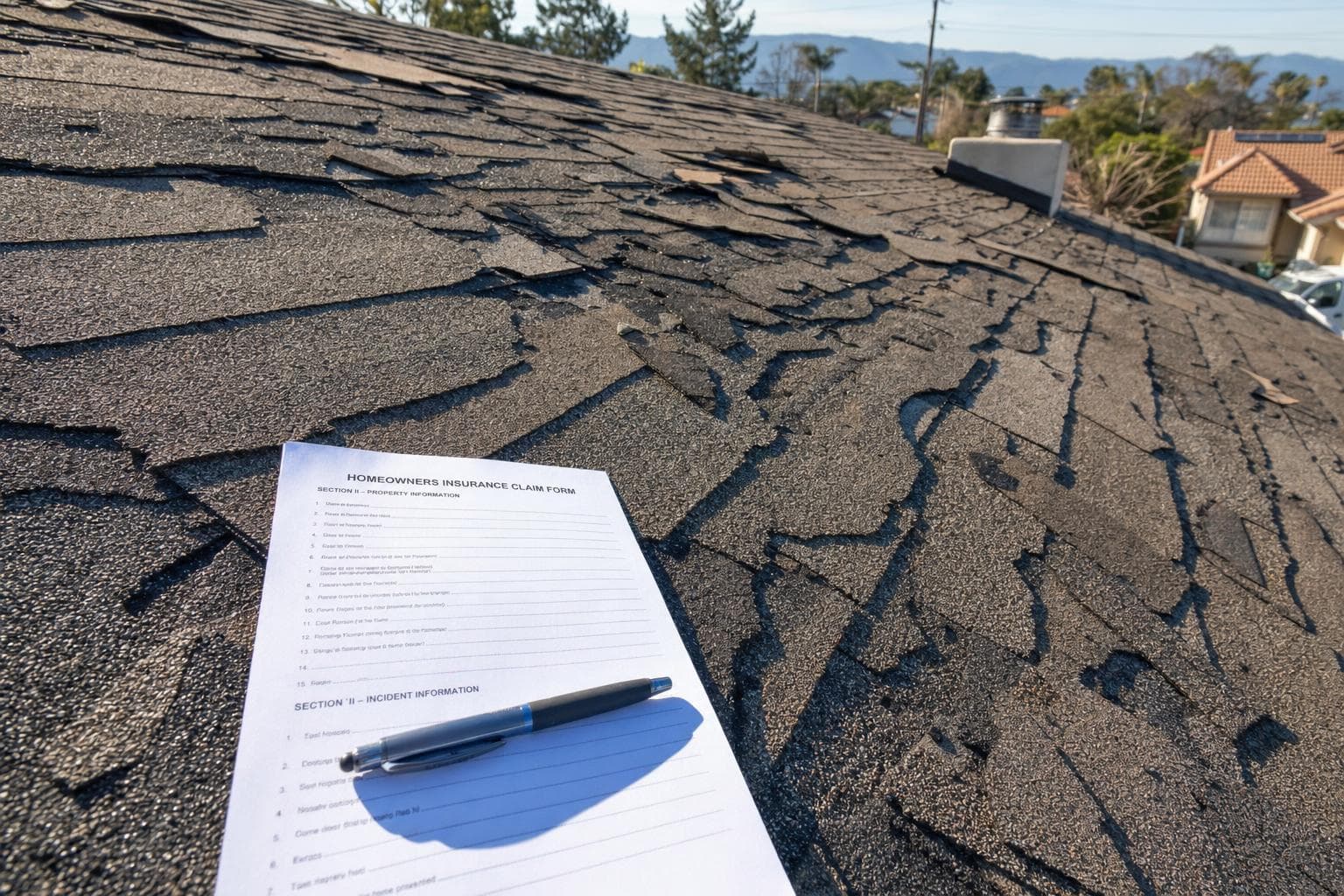
Storm claims are shaped by state law, policy language, and the way contractors are allowed to work with insurance proceeds. These are the rules worth knowing before a claim turns into a signed roofing contract.
Your roofer must hold a California state license (C-39)
California licenses contractors at the state level through the Contractors State License Board (CSLB), and roofing is its own classification: the C-39 Roofing Contractor license. A license is required for any job where labor and materials total $1,000 or more (a threshold raised from $500 by AB 2622 on January 1, 2025), and for any job that needs a building permit, regardless of price. Because a re-roof needs a permit, a legitimate roofer on a full roof must be licensed. "Unlicensed roofer" is not a gray area in California, it is a red flag.
In fire zones, code dictates your roof: Class A under Chapter 7A
If your home is in a Wildland-Urban Interface (WUI) Fire Area or a high or very-high fire hazard severity zone, California building code (Chapter 7A of the California Building and Residential Codes, enforced through the State Fire Marshal) requires a Class A roof assembly, the highest fire rating tested under ASTM E108 / UL 790. Eaves, valleys, and roof penetrations also have to resist ember intrusion. Most asphalt shingle, concrete or clay tile, and metal roofs qualify; wood shake does not. Check whether your address falls in one of these zones before you choose a material.
Energy law (Title 24) can require a "cool roof" on a re-roof
California's Building Energy Efficiency Standards (Title 24, Part 6) regulate roofing on a re-roof that replaces 50% or more of the roof surface. In certain climate zones, the standards set minimum solar reflectance and thermal emittance, which a "cool roof" product meets, and any roofing used to comply has to be rated by the Cool Roof Rating Council (CRRC). Whether it applies to you depends on your climate zone and roof slope, so confirm the requirement with your contractor or building department before the tear-off.
Roofers, roofing contractors, and roofing companies in California
Because California does license roofers, "licensed" actually means something here, so verify it. Look up your contractor on the CSLB website (cslb.ca.gov) and confirm they hold an active C-39 Roofing license, that the license is in good standing, and that they carry workers' compensation coverage and the required contractor bond. From there, vet the rest the way you would anywhere: a real local track record and references, manufacturer certifications, and a written scope that spells out tear-off, decking, underlayment, flashing, ventilation, and cleanup. If your home is in a fire zone, make sure the scope names a Class A assembly.