Updated July 27, 2026

3D Roofs Editorial Team
Editorial Standards
Yes, homeowners insurance may cover a roof replacement in California when the damage comes from a sudden covered event, not normal aging. The key issue is cause. If wind-driven rain, a storm, or another covered event caused functional damage that makes the roof fail, you may have a claim. If the roof is simply worn out from sun, heat, old age, poor maintenance, or long-term deterioration, insurance usually does not pay to replace it.
Does homeowners insurance cover roof replacement in California?
Yes, it can, but only when a covered loss caused the problem. California roofs are exposed to heavy UV, heat, winter storms, wind-driven water, and in some areas salt air and fire exposure. That does not mean every leak is an insurance claim. Insurance is generally there for sudden, accidental damage. A roof that has reached the end of its service life from sun-baked shingles, dried-out asphalt, worn flashing, or neglected upkeep is usually a maintenance issue, not a covered replacement.
How does the policy distinguish event damage from wear?
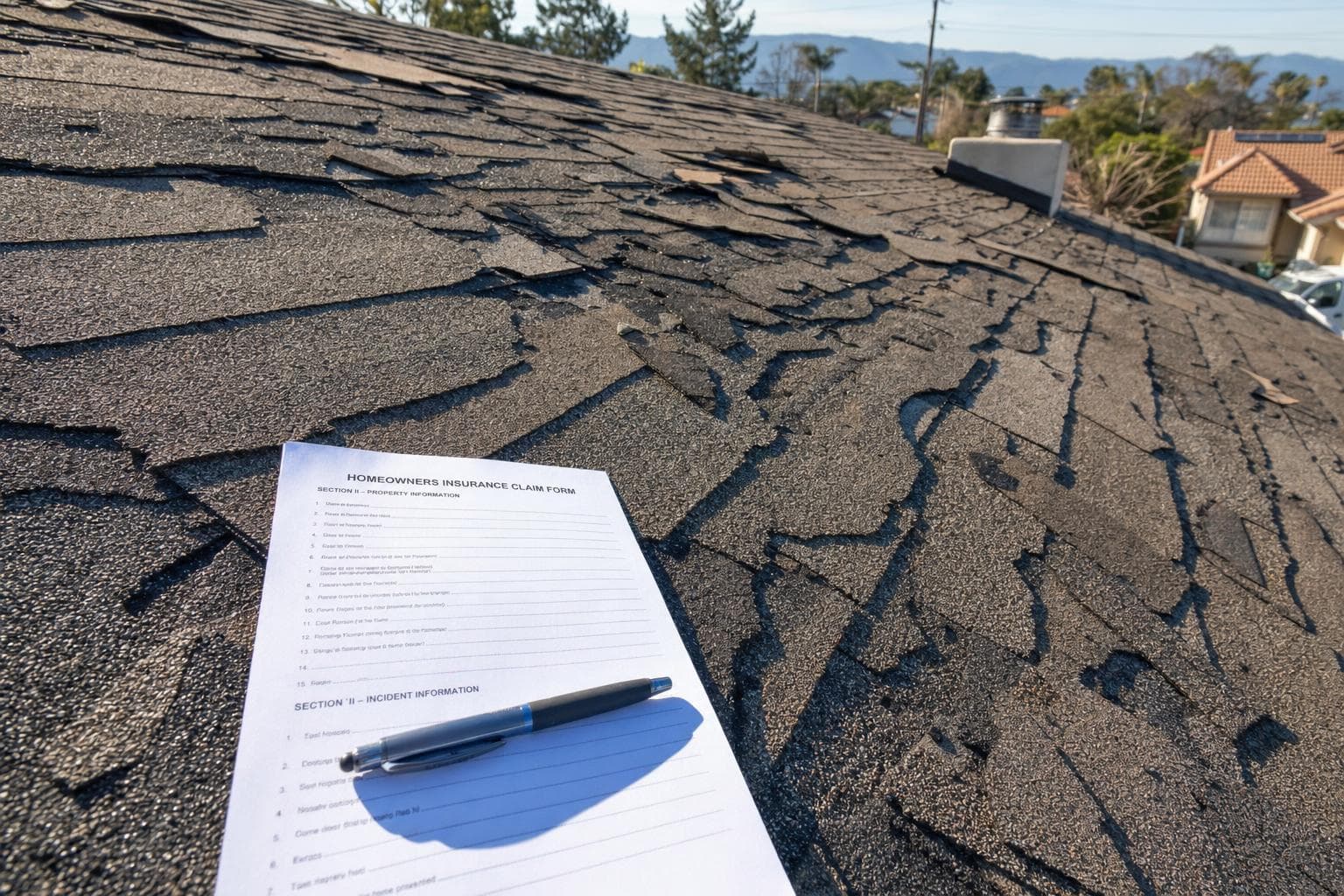
Covered damage is usually functional damage from a specific event. That means damage that affects the roof's ability to shed water or protect the home. In California, that often means storm-driven rain getting past flashing after high wind, wind damage that lifts or tears roofing, or a sudden event that creates an opening and leads to interior water damage. By contrast, wear from heat and UV, brittle shingles, granule loss from age, minor cosmetic issues, old underlayment, corrosion from long coastal exposure, and deferred maintenance are usually not the kind of losses insurance is meant to cover.
- Usually points toward coverage: sudden storm damage, wind-created openings, damage that causes active leaking, and other functional damage from a covered event.
- Usually points away from coverage: old age, sun and heat breakdown, repeated leaking from worn materials, neglected flashing, and long-term deterioration.
- Mixed cases happen: a storm may expose a weak area on an older roof. In those cases, the insurer often focuses on what was damaged by the event versus what was already worn out.
How do you tell functional storm damage from normal roof wear?
The short answer is this: functional damage changes how the roof performs, while wear shows the roof is aging. Functional damage may include torn, missing, or displaced roofing, punctures, failed flashing after a storm, or damage that allows water intrusion. Normal wear looks more like gradual drying, cracking, fading, brittleness, surface wear, and materials simply reaching the end of life. In California, this distinction matters because statewide sun and heat age shingles faster than in cooler, cloudier climates, while winter storms often reveal weak points in flashing or underlayment. A claim is stronger when you can tie the failure to a specific event and visible functional damage.
Talk to a roofer today
Planning ranges, scope details, and a direct path to request a roofing quote.
Will insurance pay for a full replacement or just a repair?
It depends on the extent of the covered damage. If the damage is limited and repairable, the insurer may pay for repair instead of full replacement. For current California planning prices related to does insurance cover roof replacement, use the cost guide and calculator, then compare the contractor's property-specific written scope. If the covered damage is broad enough that the roof cannot be properly restored with a repair, a full replacement may be the practical path. For does insurance cover roof replacement in California, ask the contractor to put the expected working days and weather plan in writing; timing depends on roof size, material, access, crew scheduling, and conditions found after tear-off. For deeper local numbers, your area's cost page and the calculator are the best places to compare current California pricing.
How does the deductible affect a California roof claim?
Your deductible is the amount you pay before insurance pays the covered portion. That means even when a roof claim is approved, you still owe your deductible. If the damage is minor, the claim may not make financial sense once you compare the repair cost with your deductible. This is one reason many homeowners pay out of pocket for smaller roof work and reserve claims for larger functional damage. The practical question is not just whether damage exists, but whether the covered value of the loss is high enough to justify filing.
What is the roof insurance claim process in California?
The basic flow is straightforward: document the damage, prevent further interior damage if you can do so safely, notify your carrier, and have the roof inspected. Start with photos of the roof issues, interior leaks, stains, fallen materials, and anything tied to the storm event. Then have a roofing contractor you are considering inspect the roof and explain whether the problem looks like storm-caused functional damage or normal wear. Your insurer may send an adjuster to inspect as well. If the claim is approved, the scope may call for repair or replacement. Before work starts, make sure the written scope matches what was actually damaged, including flashing, underlayment, ventilation, and cleanup where applicable.
- Document the date of the event and the damage you can see.
- Use photos and notes to connect the leak or failure to the storm, if possible.
- Get a roof inspection so you understand whether the damage looks functional and sudden, or simply old and worn.
- Review the insurer's scope carefully before work begins.
- Keep records of communications, photos, and the final contract.
Does California law change what roof you can install after an insurance claim?
Yes, in some homes, code rules can shape your replacement options. If your home is in a Wildland-Urban Interface Fire Area or a high or very-high fire hazard severity zone, California building code Chapter 7A requires a Class A roof assembly. Eaves, valleys, and roof penetrations also have to resist ember intrusion. Most asphalt shingle, concrete or clay tile, and metal roofs qualify, while wood shake does not. California's Title 24 can also require a cool roof on a re-roof that replaces 50% or more of the roof surface, depending on your climate zone and roof slope. If a replacement follows a covered claim, you still need the roof system to meet current applicable code.
Can a better roof lower your insurance costs in California?
Sometimes, yes. In California, the rating that matters most is fire, not hail. In fire-prone areas, a Class A fire-rated assembly can be part of home hardening, and a Class A roof is one of the home-hardening measures that can earn an insurance discount under the state's Safer from Wildfires program. For does insurance cover roof replacement in California, any insurance credit depends on the carrier, policy, address, and exact product; get the amount and documentation requirements from the insurer in writing. In hotter inland climate zones, a CRRC-rated cool roof can also be required by Title 24 and may help lower attic and cooling loads. The right choice depends on where you live, what your policy offers, and what code requires.
How do you choose the right roofer for an insurance job in California?
Start with the basics: for a full roof in California, your roofer must hold a California state license, the C-39 Roofing Contractor license. A license is required for any job where labor and materials total an amount that must be confirmed for the written scope or more, and for any job that needs a building permit, regardless of price. Because a re-roof needs a permit, a legitimate roofer on a full roof must be licensed. Check that the scope is clear on tear-off, decking, underlayment, flashing, ventilation, and cleanup. If your home is in a fire zone, make sure the scope names a Class A assembly. A roofing contractor you are considering can also help you separate storm damage from simple wear, which is often the main issue in a roof claim.
Should you file a roof insurance claim or pay out of pocket?
File a claim when you have a good reason to believe a covered event caused functional damage and the cost is likely to exceed your deductible by enough to matter. Pay out of pocket when the issue is small, clearly maintenance-related, or mostly age and wear. If you are unsure, start with an inspection and a plain assessment of cause. The wrong move is waiting too long while a leak gets worse or filing blindly on an old roof that is simply worn out. If you need to compare replacement options after an inspection, check your local California cost page and the calculator for full 2026 market pricing by roof type.
Sources reviewed
- California Dept. of Insurance - Safer from Wildfires (roof & home-hardening discounts)
- CAL FIRE / State Fire Marshal - Wildland-Urban Interface building standards (Chapter 7A)
- Georgia Attorney General Consumer Protection Division: Beware of Roofers Scamming Storm Victims
- Illinois Department of Financial and Professional Regulation: Find a Licensed Roofer: State Law and Consumer Guidance
- Arizona Department of Insurance and Financial Institutions: Homeowners Insurance
Plan with current pricing
Related services
Updated July 27, 2026
3D Roofs Editorial Team
Editorial Standards