

Updated July 10, 2026

3D Roofs Editorial Team
Editorial Standards
Georgia is a heavy-weather roofing state, and the storms that age a roof here are not subtle. Severe spring and summer thunderstorms drive hail and straight-line wind across the state, the Atlanta metro sits in a corridor that gets hammered by hail year after year, and tornadoes are a real risk. Year-round heat and humidity do slower damage on top of that. Just as important, the rules that protect you, from how a contractor can handle your deductible to how fast your insurer has to answer a claim, are set at the state level. Here is what actually matters for a Georgia roof, and how to avoid the scams that chase every big storm.
20
Cities covered
12
Roofing services
26
GA guides
What homeowners run into on Georgia roofs
Across the Georgia markets we serve, roofers repeatedly see the same inspection patterns. If one of these shows up after a storm or a leak, start with documentation and an inspection before approving a full replacement quote.
- Hail damage from spring/summer thunderstorms
- Wind damage from severe storm and occasional tornado
- Ice storm damage on aging shingles
- Heat-aged shingle granule loss
- Tree debris and limb damage from Atlanta's dense canopy
- Hurricane wind damage on aging shingle systems
- Salt-air corrosion on metal flashings near the coast
- Wind-driven rain at historic-home transitions
What Georgia weather does to roofs
Georgia roofs take their worst beating from severe thunderstorms that bring hail and damaging straight-line winds, with the Atlanta metro and north Georgia seeing repeated hail seasons and the whole state exposed to tornado risk. Long, hot, humid summers add a second kind of wear: heat ages shingles faster than in cooler climates, and the moisture feeds the dark algae streaking you see on so many southern roofs. North Georgia can pick up occasional winter ice that stresses flashing and gutters, and the Savannah coast can catch wind and wind-driven rain from tropical systems. The right roof for your home depends on which of these your area actually sees.
Atlanta
Atlanta sits in a moderate tornado and hail belt with severe thunderstorms in spring and summer. Ice storms in winter can cause major roof damage on aging systems.
Atlanta roofingSavannah
Savannah is exposed to Atlantic hurricane risk. Matthew (2016) and Irma (2017) brought significant impacts. Storm surge and wind both factor into roof system planning.
Savannah roofingAugusta
Augusta sits in central Georgia's storm belt with hail, wind, and tornado exposure during spring/summer severe weather and ice storm risk in winter.
Augusta roofingWhat roofing costs in Georgia
Roof replacement cost in Georgia depends on roof size, pitch, material, decking, ventilation, code requirements, and storm upgrades. The state cost guide gives you the broad range; your city page adds the local weather and market context.
Start with the right number.
Use the roof replacement cost guide for statewide pricing, then compare repair pricing when the roof may not need a full tear-off.
Materials that make sense in Georgia
A Class 4 impact-resistant roof (rated under UL Standard 2218, the highest of four classes) is built to take Georgia hail, and several insurers, including State Farm, offer a premium discount for it here. There is no fixed statewide percentage, though, because each carrier sets its own credit, so ask your company what they actually discount before you count on a number. Class 4 resists puncture from hail, but the shingles can still dent cosmetically.
- Class 4 impact-resistant shingles for hail durability
- Architectural shingles with high wind ratings
- Standing-seam metal for storm performance
- Algae-resistant granules for humid shaded sections
Storm claims, deductibles, and insurance rules
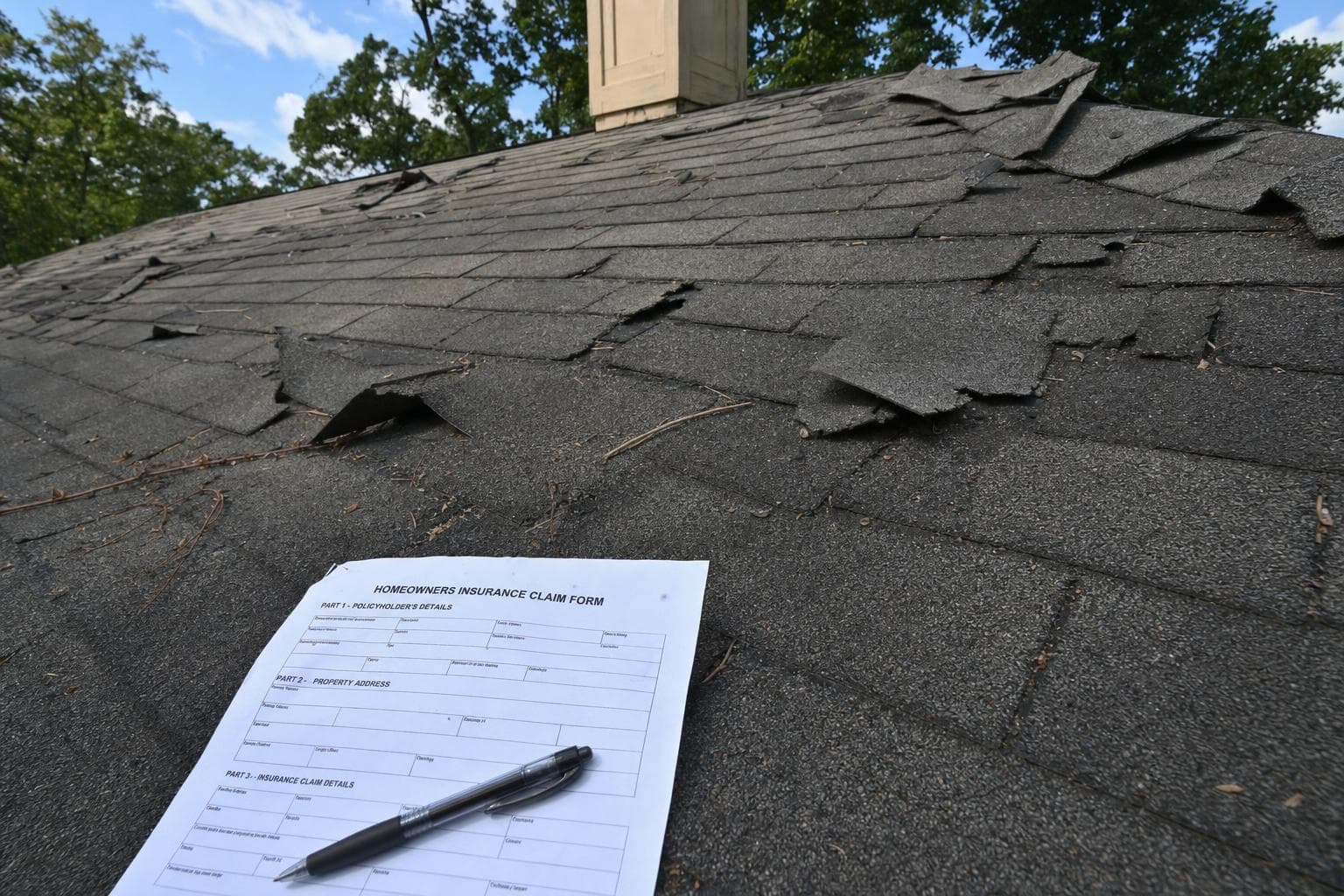
Storm claims are shaped by state law, policy language, and the way contractors are allowed to work with insurance proceeds. These are the rules worth knowing before a claim turns into a signed roofing contract.
A "licensed roofer" doesn't mean much on its own in Georgia
Georgia does not issue a standalone roofing license, so there is no state roofing credential to check. Roofing falls under the general contractor system run by the State Licensing Board for Residential and General Contractors at the Georgia Secretary of State, and a contractor only needs a residential or general contractor license once a job tops $2,500 in combined labor and materials. That means most full roof replacements should be done by a licensed contractor, but "licensed" alone says little about quality, so verify the rest before you sign.
Your roofer can't pay your deductible, and shouldn't offer to
Under Georgia law (O.C.G.A. Sec. 33-24-9.1, from House Bill 423), it is unlawful for a contractor to pay, waive, rebate, or absorb your insurance deductible to get you to file a claim or buy their services. The Georgia Insurance Commissioner's Bulletin 18-EX-3 spells out that doing so is insurance fraud, and both the contractor and the homeowner can be exposed. So a roofer pitching a "free roof" by eating your deductible is steering you toward fraud, not handing you a deal.
Your insurer is on a clock once you file
Georgia regulates how fast carriers handle first-party property claims. After you submit a completed proof of loss, your insurer generally has to confirm or deny the claim within 15 days, and within 30 days of the claim being reported if no proof of loss is required. Many Georgia policies follow the state's standard fire-policy language and ask for that proof of loss within 60 days of the loss, so document hail and wind damage early. If a carrier mishandles your claim, you can file a complaint with the Georgia Office of Commissioner of Insurance and Safety Fire.
Roofers, roofing contractors, and roofing companies in Georgia
Because Georgia has no standalone roofing license, vet a roofer on what you can actually verify. Confirm the company holds the right residential or general contractor license for a replacement (jobs over $2,500), and ask for proof of current general-liability and workers'-compensation insurance so you are not on the hook if someone is hurt on your roof. Then check a real local track record: references, recent addresses you can drive past, and manufacturer certifications. Be especially wary of out-of-town "storm chasers" who appear right after a hail or wind event, push you to sign fast, and offer to handle your whole claim. The Georgia Attorney General's Consumer Protection Division warns about exactly this after every major storm.
Sources used for this state guide
- Georgia Secretary of State (State Licensing Board for Residential and General Contractors)
- Georgia Secretary of State (Public Adjusters, Roofing Contractors and Homeowners; HB 423 / deductible law)
- Georgia Office of Commissioner of Insurance and Safety Fire (file a consumer complaint)
- Georgia Attorney General's Consumer Protection Division (storms and fraud / storm chasers)