

Updated July 10, 2026

3D Roofs Editorial Team
Editorial Standards
Roofing in Maine is shaped by long winters, coastal exposure in some areas, and a consumer landscape where roofing contractors are not licensed or regulated by the state. For you as a homeowner, that means two things matter right away: your roof system needs to handle harsh weather, and your paperwork needs to be solid before work starts. Maine also gives you useful contract protections on larger home repair jobs, so a clear written scope, materials list, and change-order process matter as much as the shingles themselves.
7
Cities covered
12
Roofing services
24
ME guides
What homeowners run into on Maine roofs
Across the Maine markets we serve, roofers repeatedly see the same inspection patterns. If one of these shows up after a storm or a leak, start with documentation and an inspection before approving a full replacement quote.
- Heavy nor'easter snow loads and ice damming
- Salt-air corrosion near the coast
- Freeze-thaw aging
- Nor'easter wind damage
- Older home decking concerns
- Extreme snow loads and ice damming
- Freeze-thaw aging in extreme cold
- Ice dam water intrusion at eaves
What Maine weather does to roofs
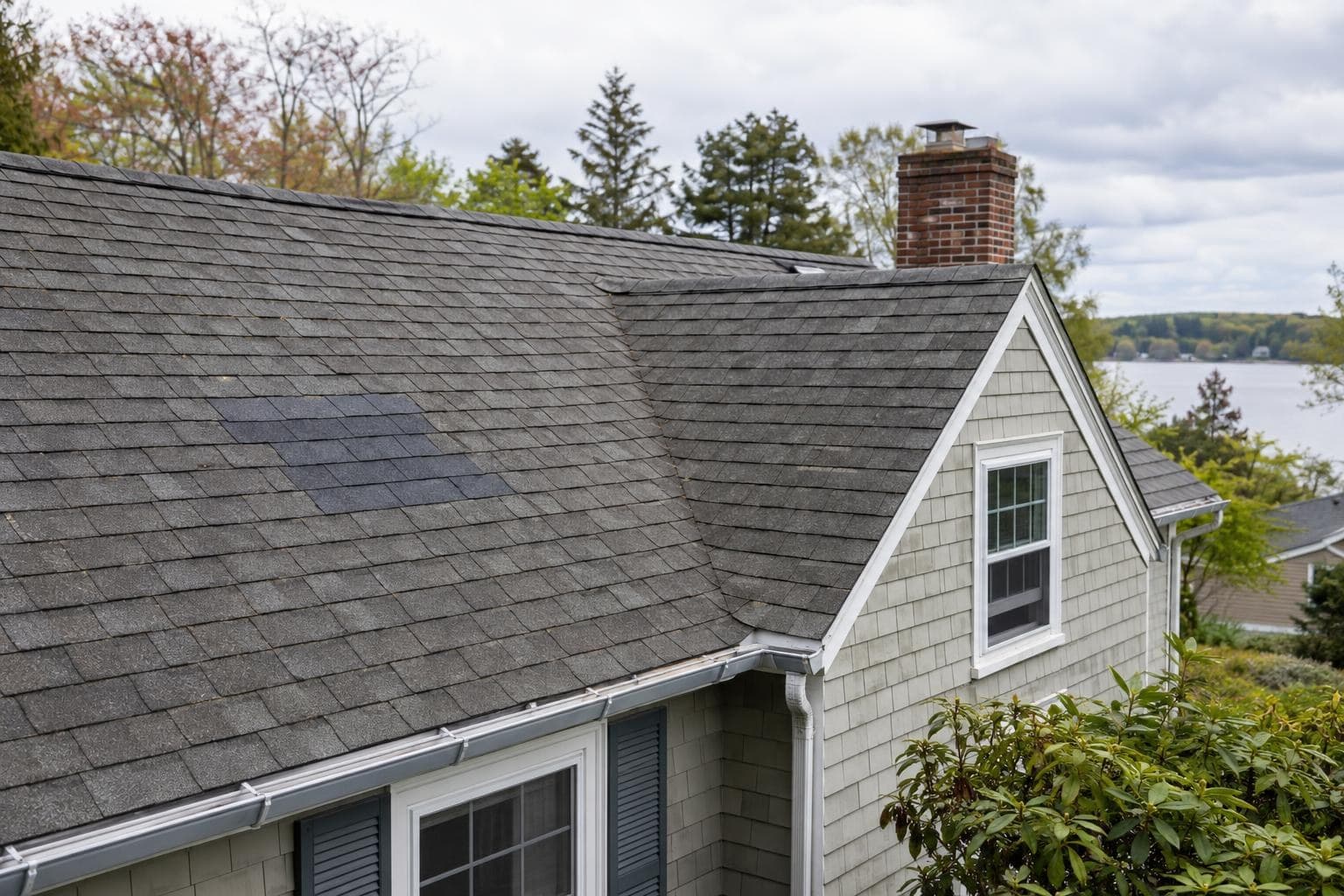
Maine roofs deal with snow load, wind-driven rain, freeze-thaw cycles, and storm debris. Those conditions can loosen shingles, open pathways for water at flashing and roof penetrations, and turn small defects into interior leaks. In coastal areas, wind exposure and salt air can add more wear. In wooded parts of the state, falling limbs and tree impact are also part of the risk picture. If you are replacing a roof here, it makes sense to focus on durable materials, clean flashing details, and attic ventilation that helps manage moisture and winter ice issues.
Portland
Portland Maine sees heavy nor'easter snow, ice damming, coastal wind and salt exposure, and freeze-thaw cycles. Snow and ice dominate the roofing challenge.
Portland roofingBangor
Bangor's interior location brings even heavier snow than coastal Maine. Snow loads and ice damming are the dominant roofing stresses.
Bangor roofingAugusta
Augusta, Maine's capital, sees extreme cold and very heavy snow. Snow loads and severe ice damming are the dominant roofing stresses.
Augusta roofingWhat roofing costs in Maine
Roof replacement cost in Maine depends on roof size, pitch, material, decking, ventilation, code requirements, and storm upgrades. The state cost guide gives you the broad range; your city page adds the local weather and market context.
Start with the right number.
Use the roof replacement cost guide for statewide pricing, then compare repair pricing when the roof may not need a full tear-off.
Materials that make sense in Maine
If you are considering a Class 4 impact-resistant shingle, ask your carrier whether it offers a homeowners discount for that product and what documentation it requires. Discounts are set by each carrier and policy, so you should not assume a standard savings amount. A roofing contractor can help you gather product information for your insurer, but your carrier decides eligibility and any discount.
- Standing-seam metal for snow shedding
- Class 4 impact-resistant shingles
- Ice-and-water membrane at eaves and valleys as required by local code and the roofing manufacturer
- Stainless or coated fasteners near the coast
Storm claims, deductibles, and insurance rules
Storm claims are shaped by state law, policy language, and the way contractors are allowed to work with insurance proceeds. These are the rules worth knowing before a claim turns into a signed roofing contract.
Wind damage is generally covered, but water coverage can depend on how the opening happened
Maine says homeowners and property insurance generally cover storm damage, including wind. For roof losses, homeowners policies generally will cover wind damage to the roof. Coverage for interior water damage can depend on the policy type. The most common policy will cover the interior water damage, while another type will only cover water damage to the structure if the wind has made an actual opening through the roof or wall. Water damage to personal belongings caused by a windstorm is generally only covered if there is an actual opening through the roof or wall, unless you purchased additional coverage.
You need to make temporary repairs and document the damage
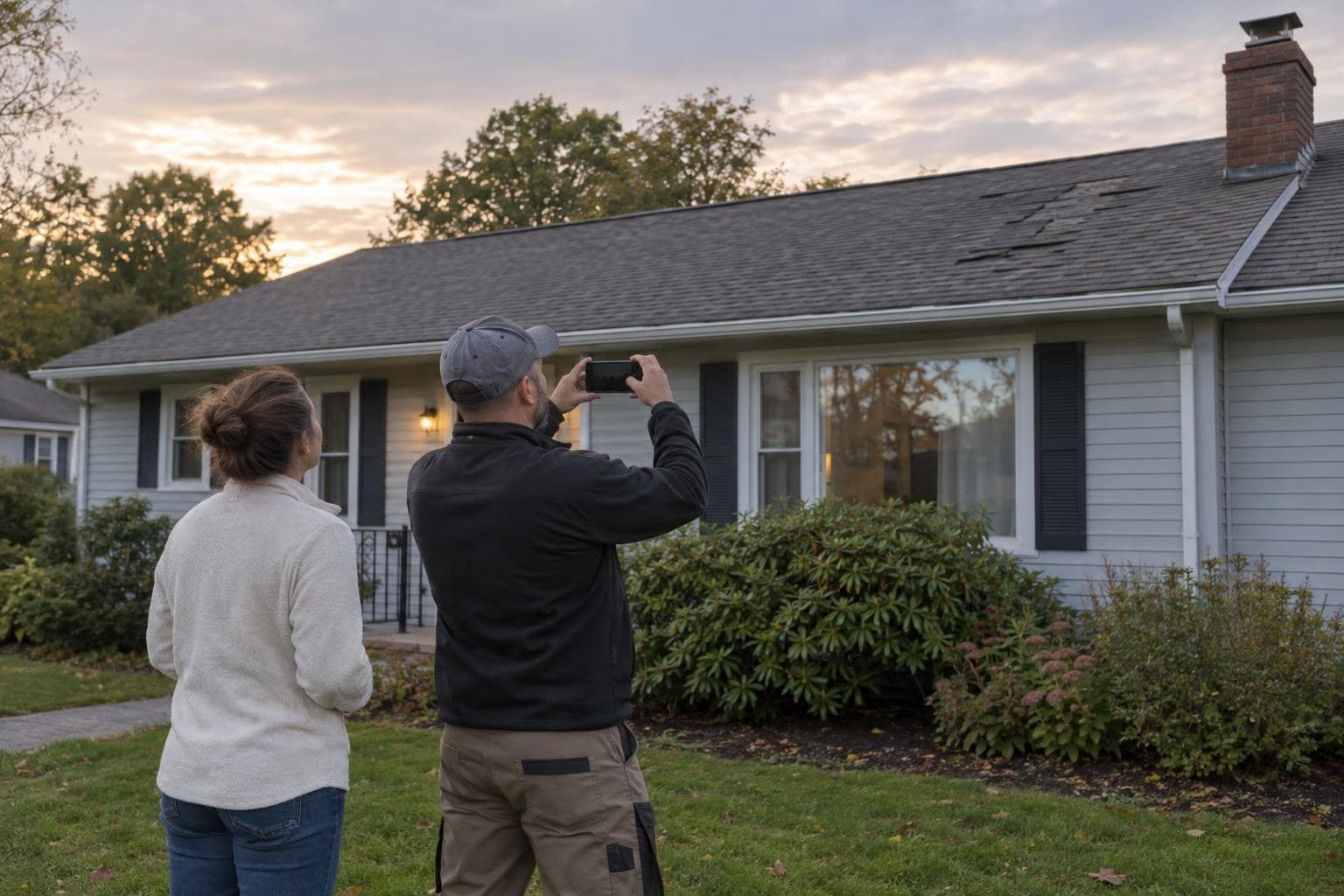
Maine says most policies require you to mitigate your damages by making reasonable and necessary repairs to protect the property temporarily from further damage. Temporary repairs can include boarding up broken windows and covering holes in the roof. Keep your receipts to document to your insurer the cost of materials and labor. Permanent repairs must wait until the insurance adjuster has had a chance to inspect the damage, or the claim may be denied. If possible, take photos or videos before making repairs.
Claim payments may start at actual cash value, with replacement cost paid later if you bought that coverage
Maine explains that a claim may be subject to depreciation and describes actual cash value as replacement cost minus depreciation. If the policy includes replacement cost coverage, ask the carrier what proof of repair or replacement is required, whether depreciation can be recovered, and what deadline applies. Keep contracts, receipts, invoices, and completion records so the carrier can evaluate any additional payment under the policy.
Maine has contract protections for larger home repair jobs
Maine says a written contract is required for any home construction or repair work that costs more than {{PRICE_UNAVAILABLE}}. The contract must include certain provisions, including the total contract price, estimated dates when the work will begin and end, a description of the work and materials, and an express warranty of good workmanship. The contractor cannot require more than 1/3 of the contract price as a down payment unless you both agree to exempt yourselves from that requirement. Any change in work or materials that changes the contract price must be stated in a written change order signed by both parties.
Roofers, roofing contractors, and roofing companies in Maine
In Maine, general contractors, and trades such as roofing and framing, are not licensed or regulated by the state. That makes your own screening process important. Start with a detailed written estimate that clearly spells out cost, scope of work, and materials. If your project costs more than {{PRICE_UNAVAILABLE}}, make sure you get the written contract Maine requires, with the total price, estimated start and end dates, description of work and materials, and warranty language required by state guidance. Ask that any change in scope or price be handled in a written change order signed by both sides. If storm damage is involved, ask your roofer for line-item detail that matches what your insurer will need. Maine says estimates and invoices should be detailed so the insurer can see that the work is in line with policy coverage. You should also keep photos, receipts, and all claim documents in one file.