Updated July 27, 2026

3D Roofs Editorial Team
Editorial Standards
Yes, homeowners insurance in Maine may cover roof replacement when a storm causes functional damage to your roof. For does insurance cover roof replacement in Maine, coverage depends on the policy language, cause of loss, exclusions, and the insurer's decision; verify those terms in your own documents. The key question is not whether your roof leaked, it is why it leaked. If wind or another covered storm event damaged shingles, flashing, or another part of the roof system, you may have a claim. If the roof was already at the end of its life and weather only exposed that condition, your insurer may treat it as wear rather than a covered loss.
Does homeowners insurance cover roof replacement in Maine?
Often, yes, if a covered storm caused functional damage. Maine says homeowners and property insurance generally cover storm damage, including wind. For roof losses, homeowners policies generally will cover wind damage to the roof. That matters because many Maine roof claims start with missing shingles, lifted tabs, damaged flashing, or tree and debris impact after a storm. Interior water damage may also be covered, but Maine says that can depend on the policy type and on how the opening happened. The most common policy will cover the interior water damage, while another type will only cover water damage to the structure if the wind made an actual opening through the roof or wall. Water damage to personal belongings caused by a windstorm is generally only covered if there is an actual opening through the roof or wall, unless you purchased additional coverage.
How does the policy distinguish event damage from wear?
Covered damage is usually sudden, storm-driven, and functional. Denied damage is usually tied to age, wear, rot, neglect, or old problems that got worse over time. In practical terms, insurance is more likely to respond when wind breaks the roof's ability to shed water, when debris punctures the surface, or when flashing is damaged in a storm and creates a real pathway for water. It is less likely to pay when shingles are brittle from age, granules have worn away over years, or a long-term ventilation or moisture problem led to deterioration. Maine roofs deal with snow load, wind-driven rain, freeze-thaw cycles, and storm debris. Those conditions can loosen shingles, open pathways for water at flashing and roof penetrations, and turn small defects into interior leaks. In coastal areas, wind exposure and salt air can add more wear. In wooded parts of the state, falling limbs and tree impact are also part of the risk picture. That is why the line between storm damage and wear can be the whole claim.
How do you tell the difference between storm damage and normal wear?
The fastest answer is this: storm damage changes the roof in a way that affects function, while wear is gradual decline. A roof with storm damage may show lifted or creased shingles, torn or missing sections, impact marks, bent metal, displaced ridge pieces, or damaged flashing around chimneys, valleys, and vents. Wear usually looks more uniform and age-related, such as widespread granule loss, drying, cracking, or general brittleness without a clear storm pattern. This matters in Maine because freeze-thaw cycles and wind-driven rain can take a small storm-created defect and turn it into an interior leak. A roofing contractor you are considering can document what happened, show where water entered, and give line-item detail that matches what your insurer will need.
Talk to a roofer today
Planning ranges, scope details, and a direct path to request a roofing quote.
Will insurance pay for a full roof replacement or just a repair?
It depends on the scope of functional damage. If only one area is damaged and the rest of the roof is still serviceable, the claim may be written as a repair. For current Maine planning prices related to does insurance cover roof replacement, use the cost guide and calculator, then compare the contractor's property-specific written scope. If the damage is widespread, if key roof components are compromised across multiple slopes, or if repair will not restore the roof's function, the claim may support replacement instead. For does insurance cover roof replacement in Maine, treat a steep or difficult-to-access roof as a scope variable that the contractor should measure and price explicitly.
Do you still pay a deductible on a Maine roof claim?
Yes, in most cases you still pay your deductible. Insurance does not usually cover that portion for you. Think of the deductible as your share of the covered loss before policy funds apply. If the approved repair or replacement amount is not much higher than your deductible, filing a claim may not change your out-of-pocket cost much. That is one reason many homeowners start with a roof inspection and a scope review before they decide how to proceed. The goal is to understand whether you are looking at a small repair, a larger storm claim, or a roof that is failing mainly from age and wear.
What should you do right after storm damage in Maine?
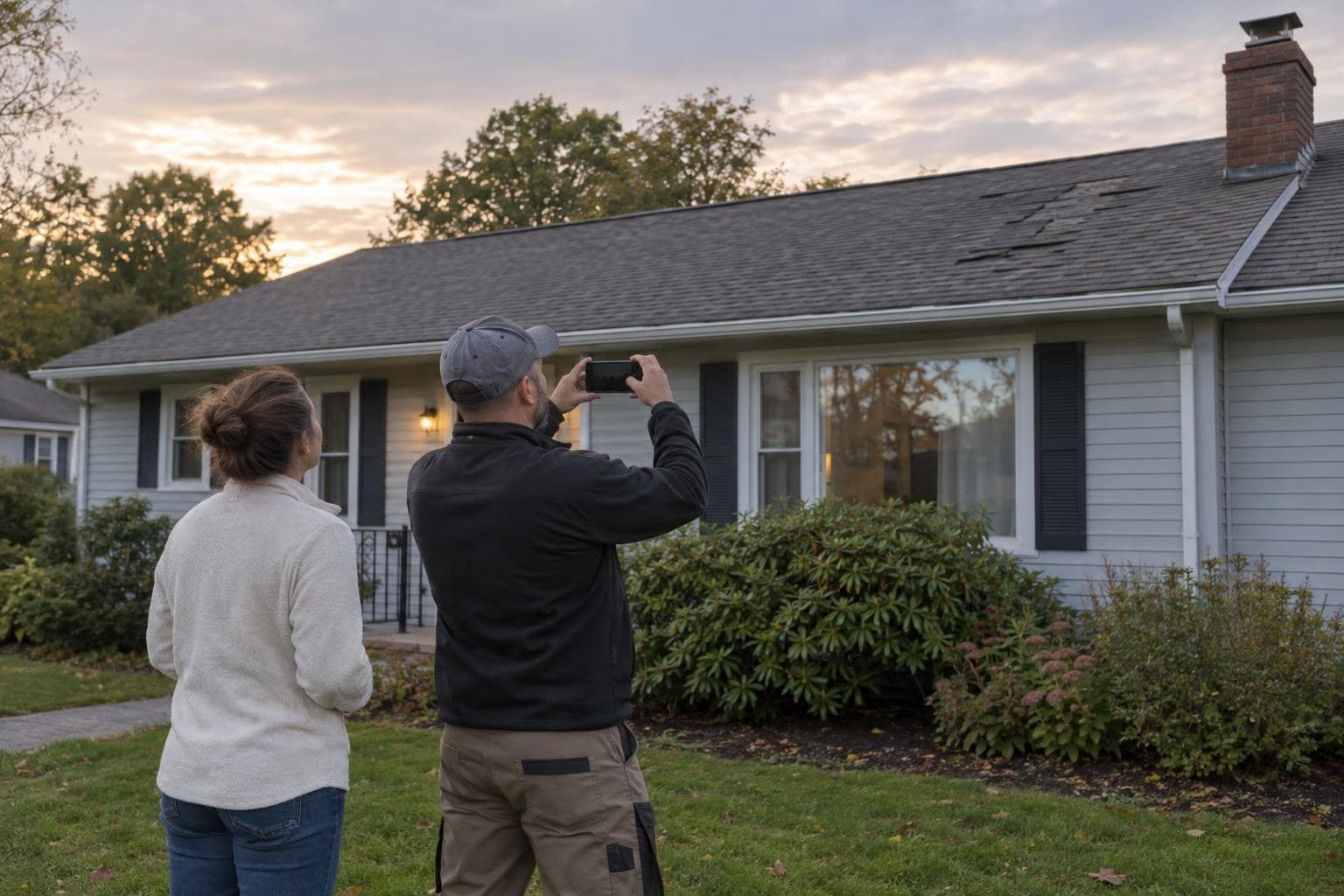
Protect the house first, then document everything. Temporary repairs can include boarding up broken windows and covering holes in the roof. Keep your receipts to document to your insurer the cost of materials and labor. Permanent repairs must wait until the insurance adjuster has had a chance to inspect the damage, or the claim may be denied. If possible, take photos or videos before making repairs.
- Take photos and video of roof damage, attic moisture, ceiling stains, debris, and any interior leak areas before temporary work starts.
- Use temporary protection to limit further damage, such as tarping an exposed section or covering an opening.
- Save receipts for materials and labor used for temporary protection.
- Contact your insurer to start the claim and ask what documentation it wants first.
- Have your roofer prepare a detailed, line-item estimate so the carrier can compare the work to your policy coverage.
How does the roof insurance claim process usually work?
Usually, it moves in a simple sequence: inspect, document, file, adjust, approve, build, and close out. You notice damage or a leak after a storm. A roofing contractor you are considering inspects the roof and documents the functional damage. You file the claim with your insurer. The carrier sends an adjuster or another representative to inspect. After that, the carrier decides what is covered, what is not, and whether the scope is a repair or replacement. Once the scope and payment path are clear, your roofer schedules the work. For does insurance cover roof replacement in Maine, ask the contractor to put the expected working days and weather plan in writing; timing depends on roof size, material, access, crew scheduling, and conditions found after tear-off. When the work is complete, you may need to send invoices, completion photos, and receipts to support final payment under your policy terms.
Why is the first insurance payment sometimes lower than expected?
Because the initial payment may be based on actual cash value rather than full replacement cost. Maine says each claim may be subject to depreciation. The initial claim amount will be paid based on the actual cash value of the damaged property, which it describes as the replacement cost minus depreciation. If you purchased replacement cost coverage, the difference between the replacement cost and the actual cash value is typically paid once the company receives proof that the damaged property has been repaired or replaced. In plain terms, your first check may not be the final amount. Your policy type and your documentation affect what comes next.
What contract rules matter if your Maine roof job is part of an insurance claim?
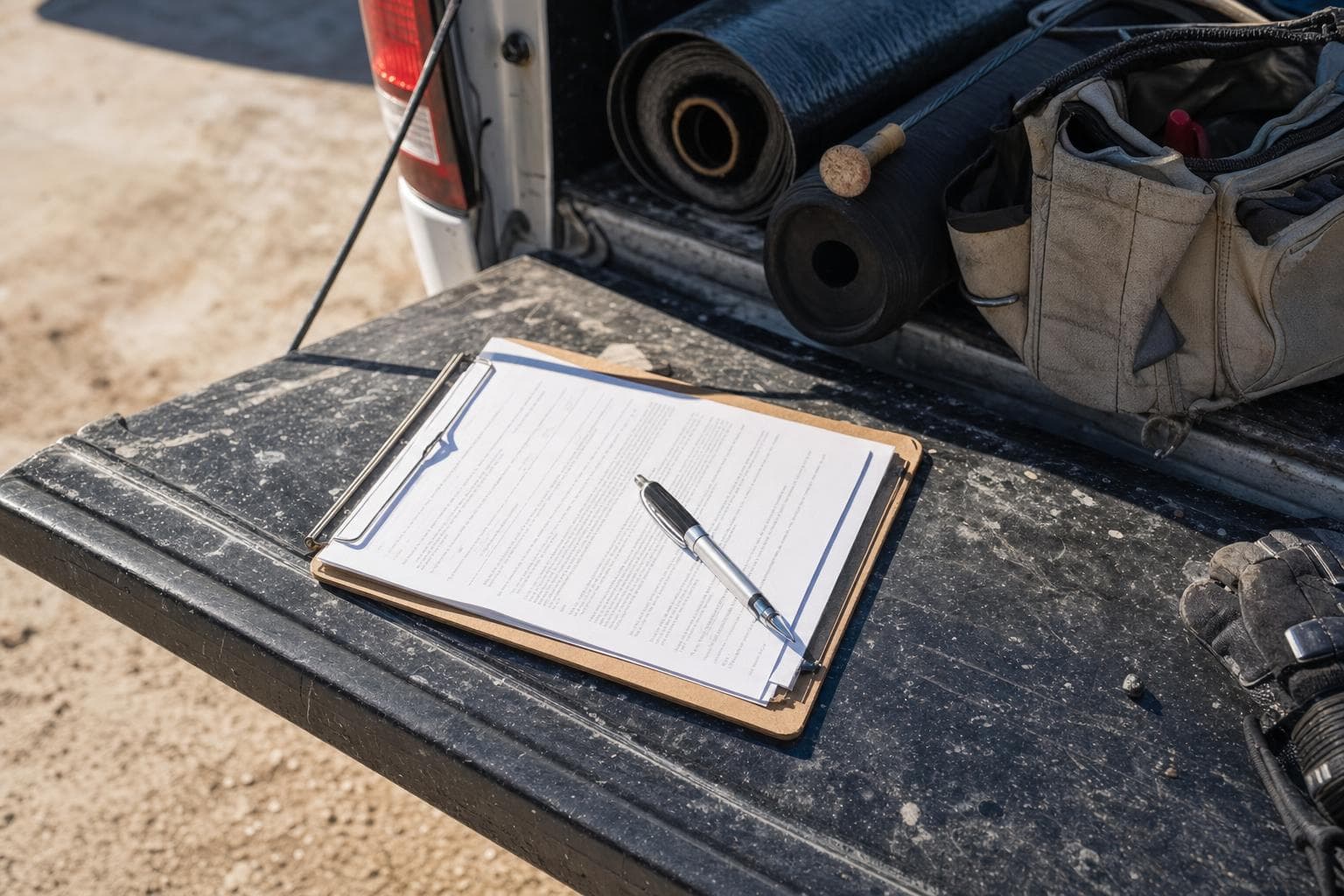
If the job costs more than an amount that must be confirmed for the written scope, Maine requires a written contract. Maine says a written contract is required for any home construction or repair work that costs more than an amount that must be confirmed for the written scope. The contract must include certain provisions, including the total contract price, estimated dates when the work will begin and end, a description of the work and materials, and an express warranty of good workmanship. The contractor cannot require more than 1/3 of the contract price as a down payment unless you both agree to exempt yourselves from that requirement. Any change in work or materials that changes the contract price must be stated in a written change order signed by both parties. That matters on an insurance job because scope can shift after tear-off or after the carrier revises the claim. Get every change in writing.
Should you upgrade materials if insurance is paying for the roof?
You can, but upgrades usually change your out-of-pocket cost. If your approved claim is based on one roofing material and you choose a higher-cost option, you usually pay the difference unless your carrier agrees otherwise. In Maine, some homeowners look at tougher shingles because of wind, debris, and freeze-thaw exposure. If you are considering a Class 4 impact-resistant shingle, ask your carrier whether it offers a homeowners discount for that product and what documentation it requires. Discounts are set by each carrier and policy, so you should not assume a standard savings amount. A roofing contractor you are considering can help you gather product information for your insurer, but your carrier decides eligibility and any discount. For does insurance cover roof replacement in Maine, any insurance credit depends on the carrier, policy, address, and exact product; get the amount and documentation requirements from the insurer in writing.
The bottom line is simple: insurance in Maine may cover your roof when a storm caused real functional damage, but not when the roof is worn out from age or neglect. If you think you have storm damage, start with photos, temporary protection, and a detailed inspection. Then compare the likely claim value to your deductible and review whether your policy pays actual cash value first or includes replacement cost coverage. If you move ahead with the work, keep every receipt, estimate, and claim document in one file. If you are budgeting repair versus replacement, or comparing Class 3, Class 4, and standing seam options, you can review fuller local pricing on the Maine cost page and the calculator.
Maine roofing costs
Sources reviewed
- Maine Bureau of Insurance, Homeowners/Renters Claims
- Maine Bureau of Insurance, Storm Related Claims FAQs
- Georgia Attorney General Consumer Protection Division: Beware of Roofers Scamming Storm Victims
- Illinois Department of Financial and Professional Regulation: Find a Licensed Roofer: State Law and Consumer Guidance
- Arizona Department of Insurance and Financial Institutions: Homeowners Insurance
Related services
Updated July 27, 2026
3D Roofs Editorial Team
Editorial Standards