

Updated July 10, 2026

3D Roofs Editorial Team
Editorial Standards
North Carolina puts a roof through a lot, and what it faces depends on where you live. The coast and Outer Banks take hurricanes and tropical systems with punishing wind, while the Piedmont and foothills sit in a busy severe-storm corridor that delivers hail and straight-line winds every spring and summer. Just as important, the rules that protect you, from who is licensed to do the work to how windstorm coverage is handled on the coast, are set at the state level. Here is what actually matters for a North Carolina roof, and how to avoid the storm-chasers who show up after every big system.
23
Cities covered
12
Roofing services
26
NC guides
What homeowners run into on North Carolina roofs
Across the North Carolina markets we serve, roofers repeatedly see the same inspection patterns. If one of these shows up after a storm or a leak, start with documentation and an inspection before approving a full replacement quote.
- Hail damage from spring storms
- Wind damage from severe thunderstorms and tornadoes
- Ice storm damage in winter
- Heat-aged shingle wear
- Tree debris from canopy neighborhoods
- Wind damage from severe storms and hurricane remnants
- Wind damage from severe storms
- Heat and humidity-aged shingles
What North Carolina weather does to roofs
North Carolina roofs fail where the weather hits hardest, and that varies across the state. On the coast and the Outer Banks, hurricanes and tropical storms drive wind uplift and wind-driven rain that find any weak seam or loose flashing. Inland, across the Piedmont and the foothills, spring and summer thunderstorms bring hail and damaging winds that bruise shingles and break their factory seals. The warm, humid climate also feeds dark algae streaking and can rot decking and trap moisture where ventilation is poor, and the Piedmont and mountains see occasional ice and freeze-thaw swings in winter. The right roof for your home depends on which of these your area actually sees.
Charlotte
Charlotte sits in the southeastern tornado and hail belt. Spring/summer severe storms bring damaging wind, hail, and occasional tornadoes. Ice storms in winter affect aging roofs.
Charlotte roofingRaleigh
Raleigh sees both Piedmont severe weather and indirect hurricane impacts from Atlantic storms (Florence 2018, Matthew 2016). Hail and wind from spring storms are the most frequent threats.
Raleigh roofingGreensboro
Greensboro sees severe spring and summer storms with hail and wind, occasional winter ice storms, and inland-moving hurricane remnants from Atlantic systems.
Greensboro roofingWhat roofing costs in North Carolina
Roof replacement cost in North Carolina depends on roof size, pitch, material, decking, ventilation, code requirements, and storm upgrades. The state cost guide gives you the broad range; your city page adds the local weather and market context.
Start with the right number.
Use the roof replacement cost guide for statewide pricing, then compare repair pricing when the roof may not need a full tear-off.
Materials that make sense in North Carolina
Class 4 shingles are worth comparing where North Carolina hail exposure makes impact resistance a priority. Verify the exact product and ask the carrier in writing whether it qualifies for a credit and what documentation is required. On the coast, wind attachment, roof-to-wall connections, sealed roof-deck details, product approvals, and the property's insurance market can matter more than the impact classification alone. Treat grants or policy credits as program- and property-specific until eligibility is confirmed.
- Class 4 impact-resistant shingles for hail durability
- Architectural shingles with high wind ratings
- Standing-seam metal for long-term performance
- Algae-resistant materials for humid shaded sections
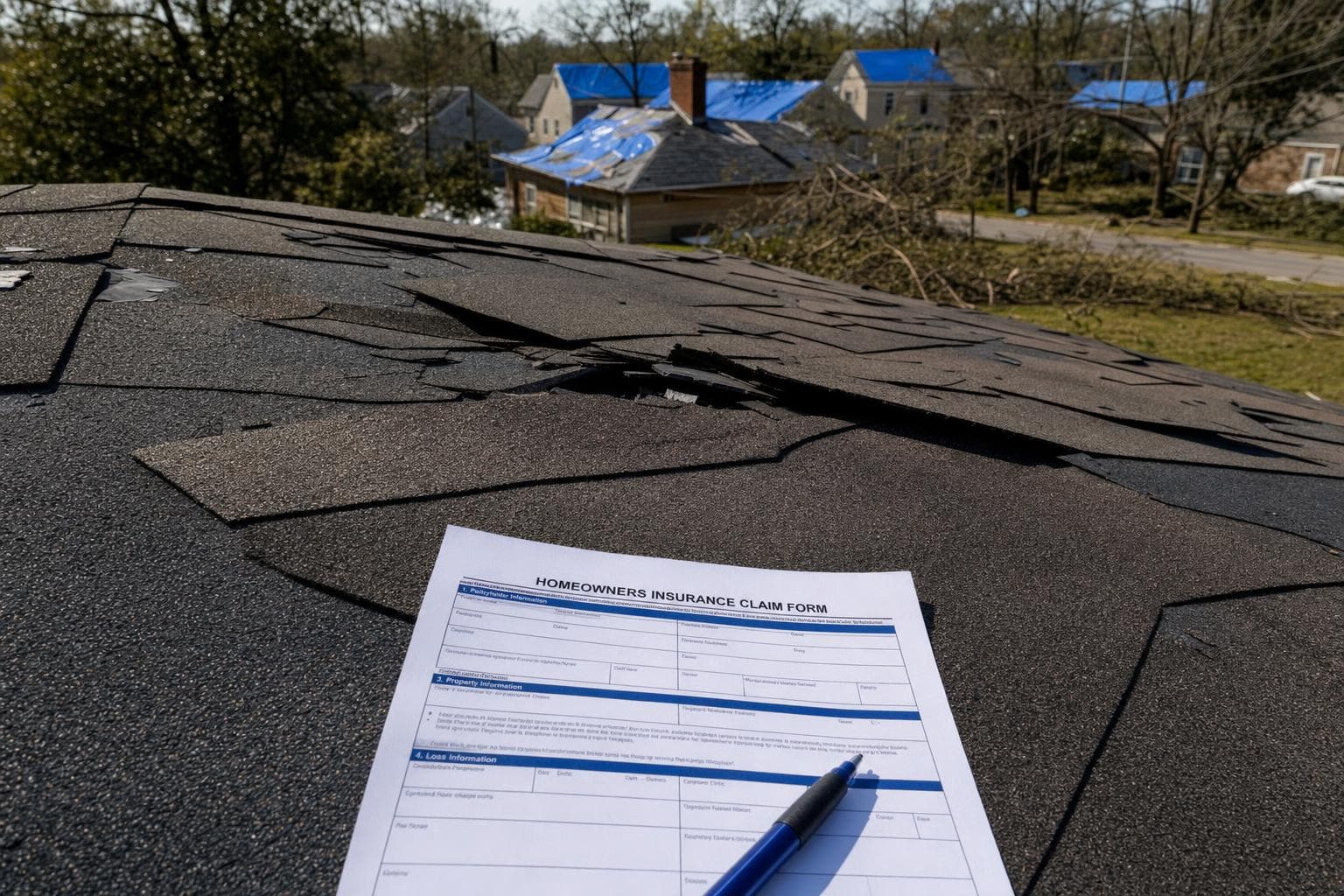
Storm claims, deductibles, and insurance rules
Storm claims are shaped by state law, policy language, and the way contractors are allowed to work with insurance proceeds. These are the rules worth knowing before a claim turns into a signed roofing contract.
Big roofing jobs require a licensed general contractor
North Carolina law (General Statute 87-1) requires a license from the NC Licensing Board for General Contractors on any construction project where the cost of the work is $40,000 or more (a threshold raised from $30,000 effective October 1, 2023). Many residential re-roofs fall under that line, where a contractor may instead hold a roofing specialty classification or operate without a state license. Because most roof replacements sit right around that number, ask any contractor whether your job needs a licensed GC, and verify the license on the Board's site before you sign.
Your roofer can't pay your deductible
Your deductible is the part of a covered claim you are responsible for paying, and in North Carolina a contractor cannot legally pay, waive, rebate, or absorb it. The NC Department of Justice and Department of Insurance treat a roofer who offers a "free roof" by eating your deductible as a red flag, because pulling it off usually means inflating the invoice to your insurer, which is insurance fraud. Treat that pitch as a reason to walk away, not a deal.
On the coast, wind and hail may be a separate policy with its own deductible
Standard homeowners policies near the coast often exclude windstorm and hail, so that coverage is written separately, frequently through the NC Insurance Underwriting Association (the Coastal Property Insurance Pool, commonly called the Beach Plan). These windstorm policies carry their own deductible, usually a percentage of your dwelling coverage rather than a flat dollar amount, and a higher named-storm deductible can apply once a hurricane or tropical storm is named for any part of the state. Know which policy actually covers your roof, and what the deductible is, before storm season.
Coastal and windstorm note
Along the North Carolina coast and on the Outer Banks barrier islands, wind and hail are often insured separately from the rest of your homeowners policy, frequently through the NC Insurance Underwriting Association (the Coastal Property Insurance Pool, or Beach Plan), the insurer of last resort for windstorm coverage in the eligible coastal counties. That coverage carries its own percentage deductible and an even higher named-storm deductible once a hurricane or tropical storm is named, and it covers wind and hail only, so you still need a separate homeowners policy and flood insurance. Make sure a coastal roofer understands these requirements and builds to the wind exposure your barrier-island or oceanfront home actually faces.
Roofers, roofing contractors, and roofing companies in North Carolina
North Carolina only licenses contractors for larger projects, so "licensed" means different things depending on the size of your job. Vet a North Carolina roofer on what you can actually verify: a current NC general contractor license if your project is at or above the $40,000 threshold, proof of general-liability and workers'-compensation insurance, a real local track record and references, and a written scope that spells out tear-off, decking, underlayment, flashing, ventilation, and cleanup. The state Attorney General's office specifically warns against roofers who knock on your door after a storm, so be wary of anyone soliciting door-to-door and pressuring you to sign on the spot.