Updated July 27, 2026

3D Roofs Editorial Team
Editorial Standards
If your roof damage is limited, a repair often makes sense. If the damage is spread across large sections, the roof is older, or storms have weakened the system in multiple places, replacement is usually the better long-term move. In North Carolina, that decision also depends on where you live. Coastal homes deal with hurricanes, tropical storms, wind uplift, and wind-driven rain. Inland homes across the Piedmont and foothills see thunderstorms, hail, and damaging winds. Across much of the state, heat, humidity, algae, poor ventilation, and occasional winter freeze-thaw cycles can all shorten roof life. The right call is not just repair versus replacement. It is whether your current roof still has enough life left to justify another fix.
Should you repair or replace a roof with isolated damage?
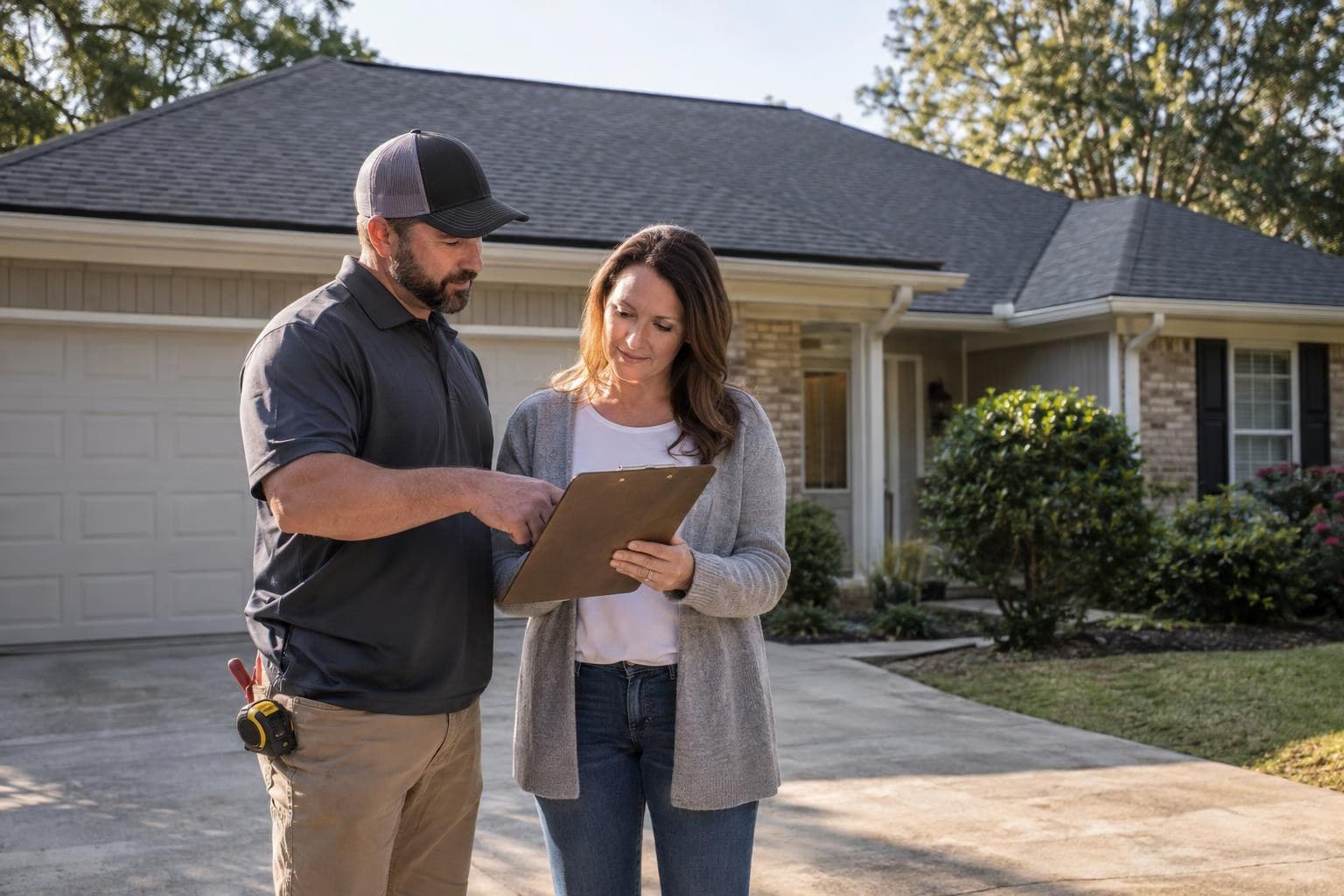
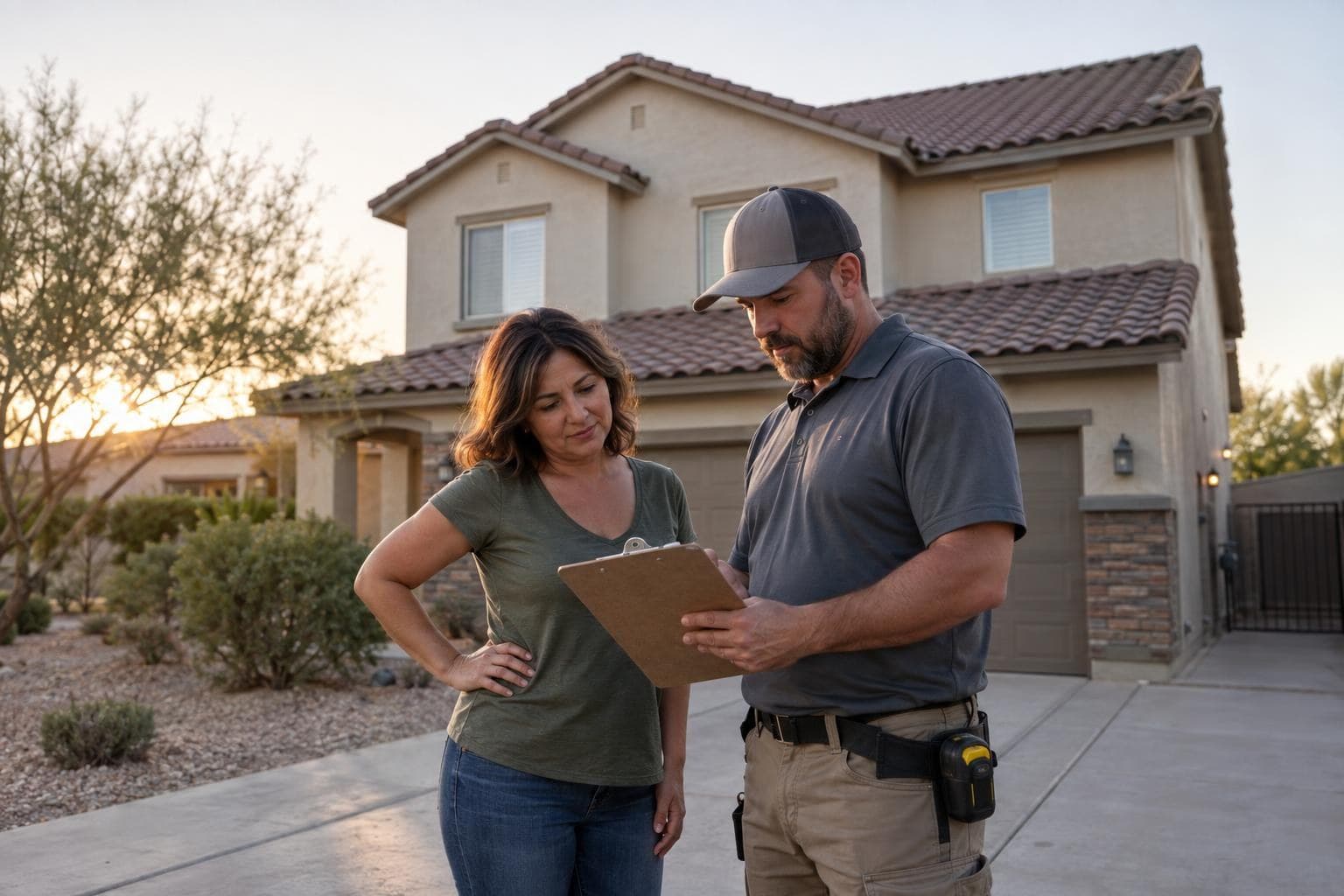
Repair is usually the right answer when the damage is isolated and the rest of the roof is still in solid shape. A few missing shingles, one leak around flashing, or a small area damaged by a branch can often be handled without replacing the whole roof. For current North Carolina repair planning related to roof repair vs replacement, use the maintained cost guide, then compare the contractor's measured scope and unit prices. The key is making sure the issue is actually isolated, not just the first visible symptom of broader wear.
- Choose repair when the damage is confined to a small area
- Choose repair when shingles around the damaged spot still seal properly
- Choose repair when the decking under the affected area is still sound
- Choose repair when the roof is not already showing widespread age or storm wear
When is replacement the better choice?
Replacement is the better choice when damage shows up in many areas, when leaks keep returning, or when the roof system has started failing as a whole. In North Carolina, that often happens after repeated wind events, hail bruising across multiple slopes, or long-term moisture problems tied to heat and humidity. If one repair leads to another, you can end up spending money on a roof that is already near the end of its useful run. A full replacement also gives you the chance to address underlayment, flashing, ventilation, and any damaged decking at the same time.
What is a fixed damage threshold for roof repair vs. replacement?
For roof repair vs replacement in North Carolina, do not use a fixed damage percentage as the decision rule; compare the repairable area, roof condition, material availability, code requirements, and written scopes. That is because widespread repairs can leave you with a roof that still has old weak points all around the new work. It is not a law or insurance rule. It is a homeowner rule of thumb that helps you avoid putting repair money into a roof with broad system failure.
Talk to a roofer today
Planning ranges, scope details, and a direct path to request a roofing quote.
How does roof age change the decision?
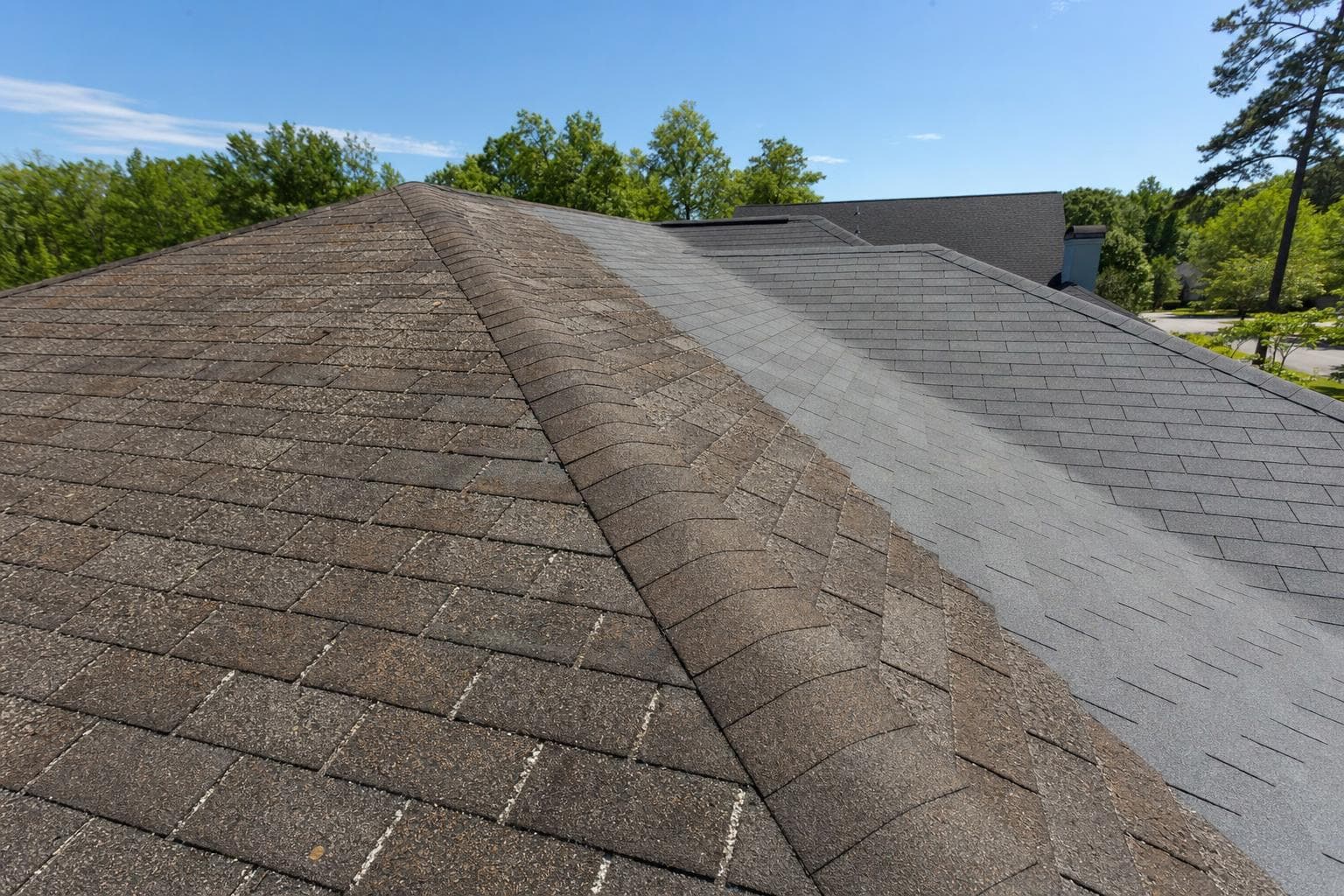
An older roof is harder to justify repairing, especially when new damage appears on top of visible wear. Even if a repair is possible, matching materials can be difficult and the surrounding shingles may already be brittle, loose, or losing their seal. A newer roof with one problem area is a much better repair candidate than an older roof with repeated trouble spots. Age matters because you are not just paying to stop today's leak. You are deciding whether the rest of the roof is likely to hold up after the repair is done.
How does North Carolina weather affect the repair-or-replace call?
North Carolina weather changes the answer because roofs fail differently across the state. On the coast and the Outer Banks, hurricanes and tropical storms drive wind uplift and wind-driven rain that find any weak seam or loose flashing. Inland, across the Piedmont and the foothills, spring and summer thunderstorms bring hail and damaging winds that bruise shingles and break their factory seals. The warm, humid climate also feeds dark algae streaking and can rot decking and trap moisture where ventilation is poor, and the Piedmont and mountains see occasional ice and freeze-thaw swings in winter. If your area gets repeated wind exposure, hidden lifted shingles can make a roof look more repairable than it really is. If your area gets hail, damage may be spread farther than the obvious missing-shingle spots.
How much does replacement cost in North Carolina?
For 2026 market pricing in North Carolina, Class 3 runs $6.25/sq ft ($6.25 on a typical 2,000 sq ft roof), Class 4 runs $7.25 ($14,562), and standing seam runs $16.00 ($32,134). For roof repair vs replacement in North Carolina, treat a steep or difficult-to-access roof as a scope variable that the contractor should measure and price explicitly. For roof repair vs replacement in North Carolina, ask the contractor to put the expected working days and weather plan in writing; timing depends on roof size, material, access, crew scheduling, and conditions found after tear-off. If you want a broader breakdown for your area, full local pricing lives on the North Carolina cost page and the calculator.
Are Class 4 shingles worth it in North Carolina?
Class 4 shingles are worth comparing if your part of North Carolina sees enough hail that impact resistance is a real concern. For roof repair vs replacement in North Carolina, any insurance credit depends on the carrier, policy, address, and exact product; get the amount and documentation requirements from the insurer in writing. That can help offset the higher 2026 market pricing compared with Class 3. But the choice is not just about hail. On the coast, wind attachment, roof-to-wall connections, sealed roof-deck details, product approvals, and the property's insurance market can matter more than the impact classification alone. Ask your carrier in writing whether the exact product qualifies for a credit and what documentation is required.
What insurance and legal details should North Carolina homeowners know before signing?
First, know who is actually covering the roof and what deductible applies. Standard homeowners policies near the coast often exclude windstorm and hail, so that coverage is written separately, frequently through the NC Insurance Underwriting Association, commonly called the Beach Plan. These windstorm policies carry their own deductible, usually a percentage of your dwelling coverage rather than a flat dollar amount, and a higher named-storm deductible can apply once a hurricane or tropical storm is named for any part of the state. Also, your deductible is your responsibility. In North Carolina a contractor cannot legally pay, waive, rebate, or absorb it. If someone promises a free roof by covering your deductible, treat that pitch as a reason to walk away.
How do you choose the right roofer for a big replacement?
Ask direct questions and verify what applies to your job. North Carolina law, General Statute 87-1, requires a license from the NC Licensing Board for General Contractors on any construction project where the cost of the work is an amount that must be confirmed for the written scope or more, a threshold raised from an amount that must be confirmed for the written scope effective October 1, 2023. Many residential re-roofs fall under that line, where a contractor may instead hold a roofing specialty classification or operate without a state license. Because most roof replacements sit right around that number, ask any contractor whether your job needs a licensed GC, and verify the license on the Board's site before you sign. You should also ask for proof of general-liability and workers'-compensation insurance, check local references, and get a written scope covering tear-off, decking, underlayment, flashing, ventilation, and cleanup. Be wary of door-to-door storm solicitors who pressure you to sign on the spot.
What is the simplest way to make the final decision?
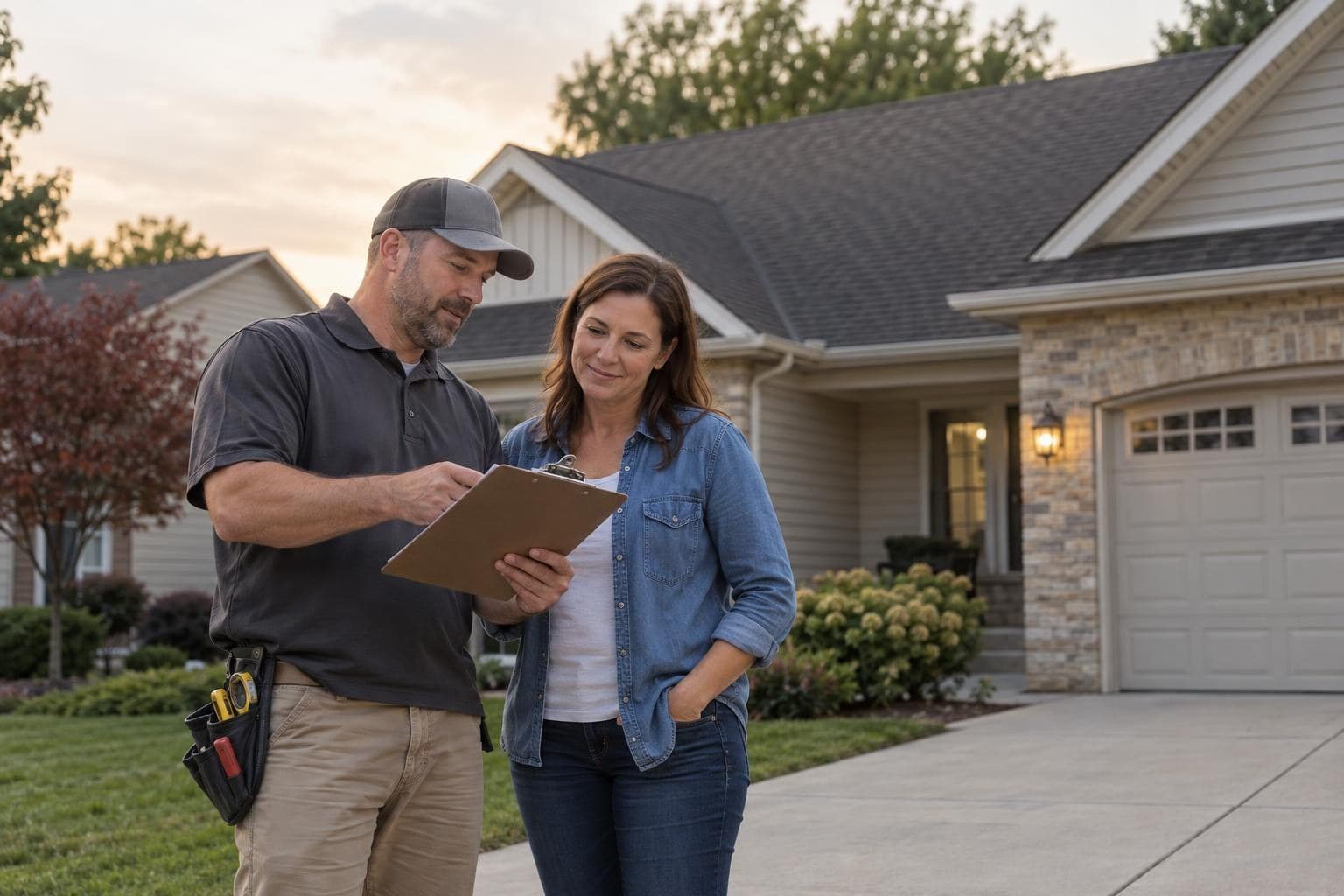
If the problem is small, the roof is otherwise healthy, and your roofer confirms the damage is limited, repair is usually the smart move. In North Carolina, your location matters because coastal wind damage and inland hail damage often spread farther than they first appear. The best next step is a roof inspection that tells you whether you are dealing with one fixable problem or a roof that is starting to fail in stages.
Sources reviewed
- NC Dept. of Insurance (windstorm & hail / NCIUA Beach Plan)
- NC Dept. of Justice (roofers & storm-chaser consumer warnings)
- Insurance Institute for Business & Home Safety: RICOWI Roof Guide
- Florida Department of Financial Services: Homeowners Insurance Overview
- Insurance Institute for Business & Home Safety: Roof 101
Cost ranges are estimates developed from standardized project scopes and reviewed pricing inputs. Government labor and regional cost data are used where applicable. See our Pricing Methodology for the exact sources, calculations, and review date. Actual prices vary by property, scope, materials or equipment, location, and provider.
Related services
Updated July 27, 2026
3D Roofs Editorial Team
Editorial Standards