

Updated July 10, 2026

3D Roofs Editorial Team
Editorial Standards
Illinois sits in the heart of the country's severe-storm belt, and your roof takes the brunt of it. Spring and summer bring violent thunderstorms with hail and damaging straight-line winds, the occasional derecho, and one of the higher tornado counts in the nation, while winters pile on heavy snow, ice, and brutal freeze-thaw cycles. Just as important, Illinois is one of the states that licenses roofers at the state level and writes specific rules to protect you after a storm, so knowing those rules is half the battle.
30
Cities covered
12
Roofing services
25
IL guides
What homeowners run into on Illinois roofs
Across the Illinois markets we serve, roofers repeatedly see the same inspection patterns. If one of these shows up after a storm or a leak, start with documentation and an inspection before approving a full replacement quote.
- Snow load wear and ice damming
- Hail damage from spring/summer storms
- Wind damage from severe storms and lake effect
- Freeze-thaw aging on shingles
- Flat-roof membrane wear on urban properties
- Snow load and ice damming
- Hail damage from spring storms
- Wind damage from severe storms
What Illinois weather does to roofs
Illinois roofs get worked from both ends of the calendar. Warm-season thunderstorms drive hail and damaging straight-line winds that bruise shingles and strip granules, and the state ranks among the most tornado-prone in the country. Then winter takes over with heavy snow loads, ice dams along the eaves, and repeated freeze-thaw swings that pry at seams, flashing, and any shingle that is already worn. Humid summers add heat and moisture that age a roof faster, so ventilation and flashing detail matter as much as the shingle you pick.
Chicago
Chicago sits where lake-effect winter weather meets the Midwest severe storm corridor. Hail and tornadoes from spring/summer plus heavy snow loads and ice damming in winter both stress roof systems.
Chicago roofingNaperville
Naperville shares the Chicago metro storm profile, heavy snow and ice damming in winter, hail and severe storms in spring/summer.
Naperville roofingAurora
Aurora shares the Chicago metro storm profile, heavy winter weather plus spring/summer severe storms.
Aurora roofingWhat roofing costs in Illinois
Roof replacement cost in Illinois depends on roof size, pitch, material, decking, ventilation, code requirements, and storm upgrades. The state cost guide gives you the broad range; your city page adds the local weather and market context.
Start with the right number.
Use the roof replacement cost guide for statewide pricing, then compare repair pricing when the roof may not need a full tear-off.
Materials that make sense in Illinois
Class 4 shingles are worth comparing on Illinois homes with meaningful hail exposure. Verify the exact product's current UL 2218 classification and ask how starter, ridge products, underlayment, flashing, and ventilation are specified. The rating does not guarantee freedom from all damage or establish a policy credit. Ask the carrier in writing about product eligibility, documentation, cosmetic-damage terms, and any separate wind or hail deductible before choosing the upgrade.
- Class 4 impact-resistant shingles for hail durability
- Standing-seam metal for snow shedding and longevity
- TPO or modified bitumen for flat-roof sections
- Ice-and-water membrane at eaves and valleys as required by local code and the roofing manufacturer
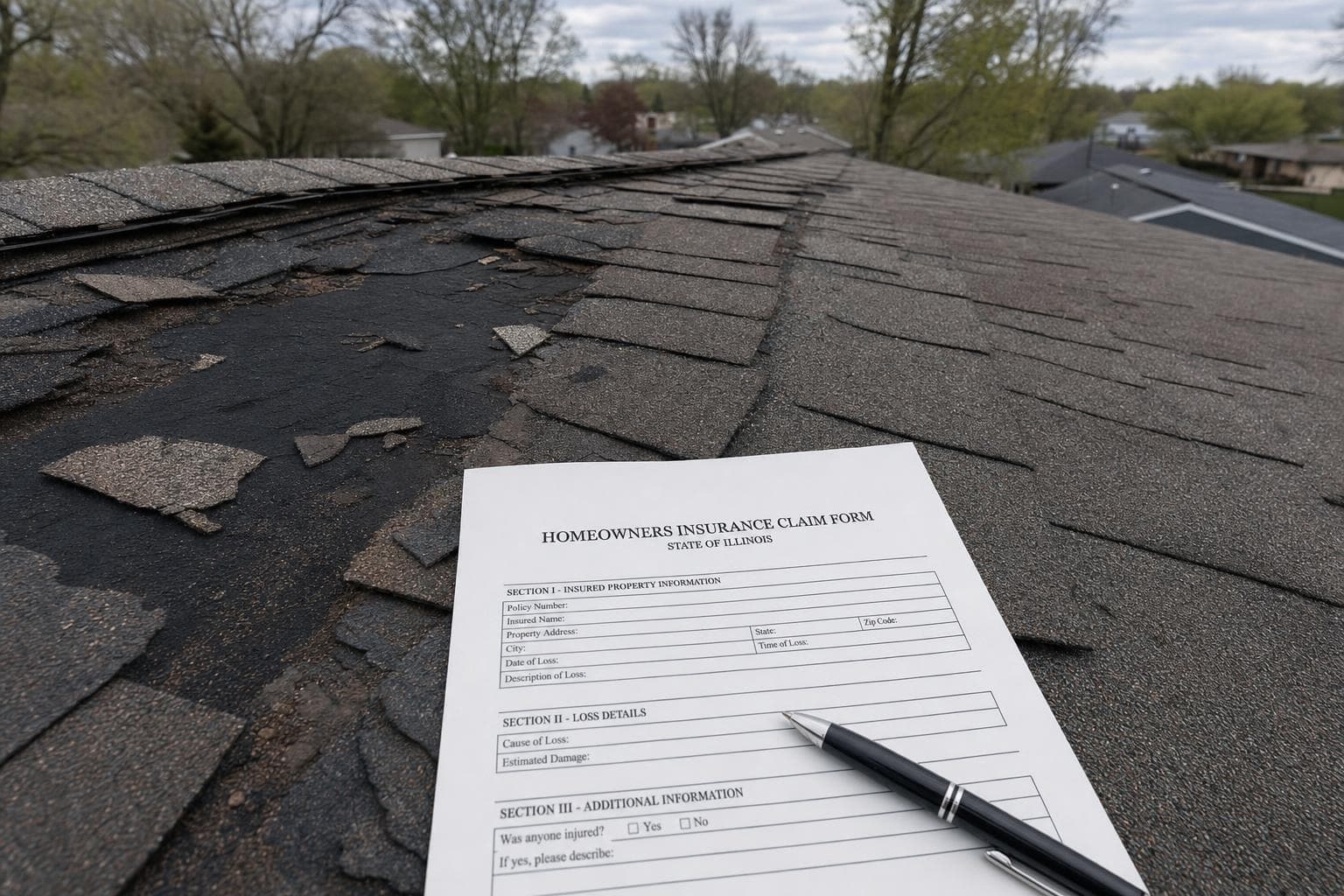
Storm claims, deductibles, and insurance rules
Storm claims are shaped by state law, policy language, and the way contractors are allowed to work with insurance proceeds. These are the rules worth knowing before a claim turns into a signed roofing contract.
Illinois actually licenses roofers, and the license is required
Under the Illinois Roofing Industry Licensing Act (225 ILCS 335), anyone doing roofing work in Illinois must hold a state roofing contractor license issued by the Illinois Department of Financial and Professional Regulation (IDFPR). Licenses come in two flavors: Limited (residential buildings of eight units or fewer) and Unlimited (residential, commercial, and industrial). Working without one is illegal and can draw fines and cease-and-desist orders, so this is a real, checkable credential, not a marketing word.
Your roofer can't pay your deductible, or run your claim for you
Illinois's Home Repair and Remodeling Act (815 ILCS 513/18) bars a contractor from advertising or promising to pay or rebate any part of your insurance deductible to win the job, and it bars them from representing you on a roofing insurance claim. They can give you an estimate, meet with your adjuster, and walk you through options, but a "free roof, we'll eat your deductible" pitch is against the law and a classic storm-chaser red flag.
Get it in writing, and know your insurer's clock
For any home repair or remodeling job over $1,000, Illinois requires a written contract spelling out the cost, materials, and the contractor's contact details, plus a signed copy of the state's "Home Repair: Know Your Consumer Rights" brochure. On the claim side, the Illinois Insurance Code (215 ILCS 5/154.6) requires your insurer to handle hail and wind claims with reasonable promptness, generally acknowledging communications within about 15 working days and investigating without unreasonable delay.
Roofers, roofing contractors, and roofing companies in Illinois
Because Illinois issues a real state roofing license, vetting starts with one concrete step: get the contractor's IDFPR roofing contractor license number and verify it yourself on the IDFPR License Lookup. Confirm the status is active and unexpired, the name matches, and there is no disciplinary history, then check that they carry the general-liability and property-damage insurance the state requires. From there, look for a local track record and references, manufacturer certifications, and a written scope that covers tear-off, decking, underlayment, flashing, ventilation, and cleanup.