Updated July 27, 2026

3D Roofs Editorial Team
Editorial Standards
If the damage is isolated, repair is usually the cheaper move. If the damage is widespread, the roof is older, or storm stress has exposed weak spots across multiple areas, replacement often saves you from repeated patch jobs. In Illinois, that decision is not just about what you see from the yard. Hail, straight-line wind, snow load, ice dams, and freeze-thaw cycles can turn a small-looking problem into a roof-wide one.
Should you repair or replace your roof in Illinois?
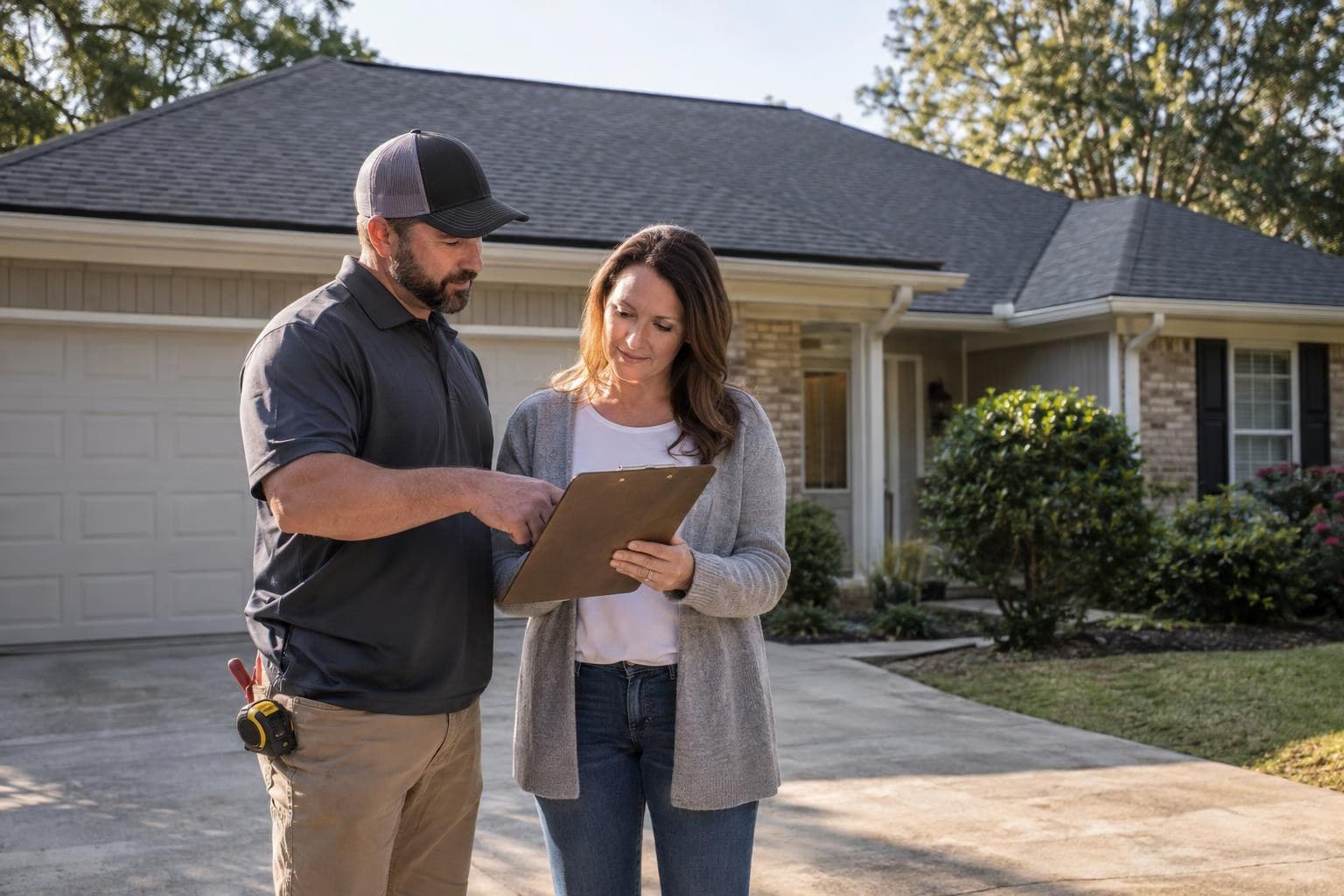
Repair is the right call when the problem is limited to one area and the rest of the roof is still doing its job. Replacement is the better call when damage shows up across many slopes, around multiple penetrations, or along eaves and valleys where Illinois weather tends to hit hardest. For current Illinois repair planning related to roof repair vs replacement, use the maintained cost guide, then compare the contractor's measured scope and unit prices. For roof repair vs replacement in Illinois, ask the contractor to put the expected working days and weather plan in writing; timing depends on roof size, material, access, crew scheduling, and conditions found after tear-off. If you want a bigger pricing picture, full local pricing lives on the Illinois cost page and the calculator.
How do you tell if the damage is isolated or widespread?
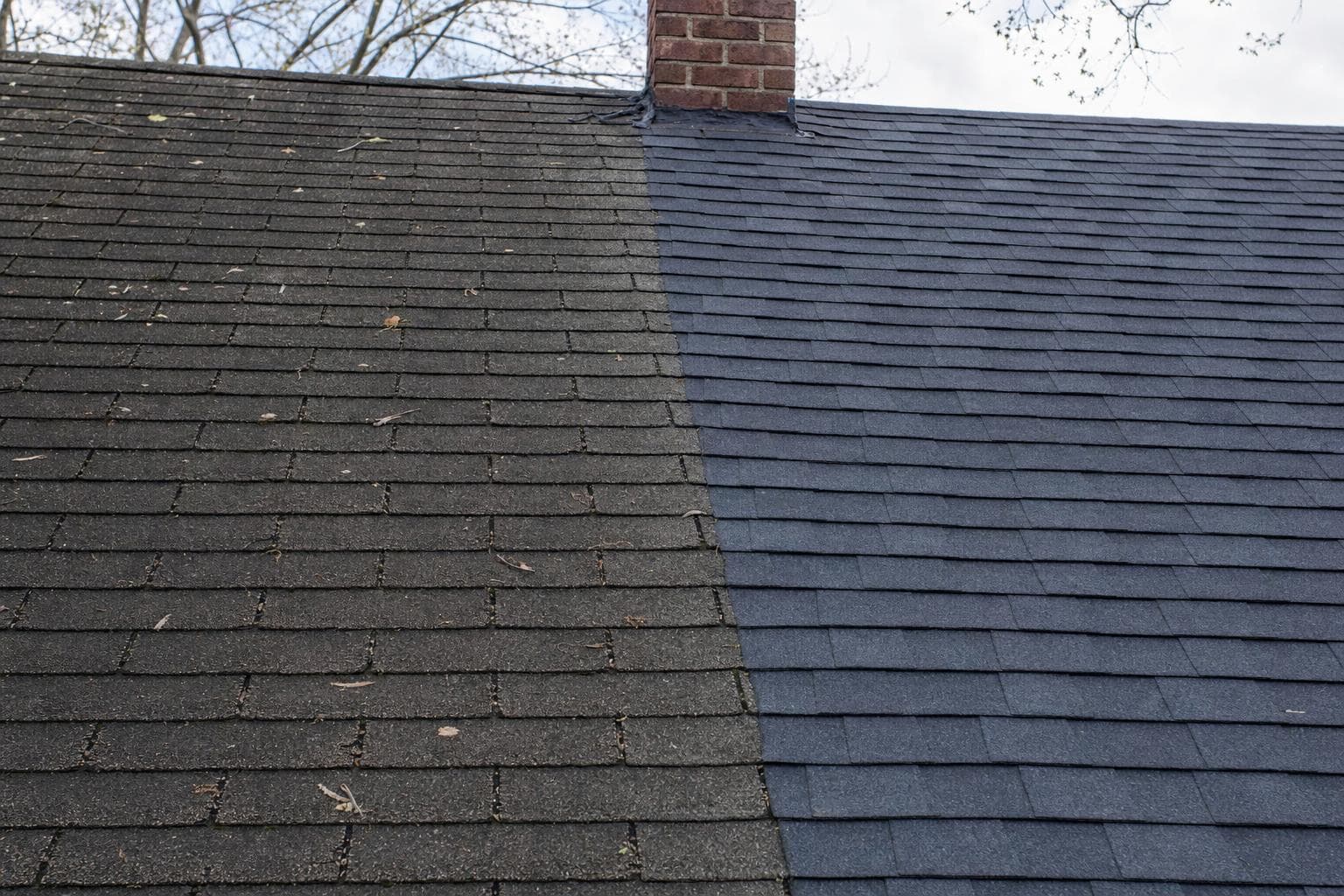
Look for whether the issue is truly confined to one spot or repeated in several places. One missing shingle section after a wind event, one flashing failure around a vent, or a small leak tied to one penetration often points to repair. Granule loss on many slopes, bruising from hail across broad areas, lifted tabs on multiple edges, repeated leaks in different rooms, or ice-dam damage along long stretches of eaves usually points toward replacement. In Illinois, roofs get worked from both ends of the calendar, so one visible leak can be the symptom while hidden wear is spread much farther.
- Signs repair may be enough: one small leak, one damaged flashing area, a limited shingle blow-off, or damage confined to one roof section
- Signs replacement may make more sense: damage on several slopes, repeated leaks, broad hail bruising, widespread granule loss, curling or brittle shingles, or recurring ice-dam trouble along the eaves
What is a fixed damage threshold for roof repair versus replacement?
For roof repair vs replacement in Illinois, do not use a fixed damage percentage as the decision rule; compare the repairable area, roof condition, material availability, code requirements, and written scopes. The reason is simple: once that much of the system is compromised, patching scattered areas can cost you again and again without solving the underlying problem. It is a practical decision rule homeowners use to avoid spending repair money on a roof that is already near the point where failures will keep spreading.
A roof can have obvious damage on one side and less visible bruising on another. Winter can then widen those weak spots through freeze-thaw movement, snow load, and ice buildup.
Talk to a roofer today
Planning ranges, scope details, and a direct path to request a roofing quote.
Does the age of your roof change the answer?
Yes. The older the roof, the more likely replacement is the better value. Even if today's problem looks repairable, older shingles are harder to match, more brittle to work around, and more likely to fail in the next storm season. Age also matters because Illinois combines humid summers, hail, wind, snow, and freeze-thaw swings. That mix can age a roof faster, especially where ventilation or flashing details were not ideal. If a newer roof has one clean, isolated problem, repair often makes sense. If an older roof has multiple weak areas, replacement is often the cleaner and cheaper long-term move.
How does Illinois weather change the repair versus replacement decision?
Illinois weather pushes many borderline roofs toward replacement. Warm-season thunderstorms bring hail and damaging straight-line winds that bruise shingles and strip granules. The state also ranks among the most tornado-prone in the country. Then winter brings heavy snow loads, ice dams along the eaves, and repeated freeze-thaw swings that pry at seams, flashing, and worn shingles. That means a roof that might be patched and watched in a milder climate can keep breaking down here.
Weather exposure also affects what you replace with. For asphalt, 2026 Illinois market prices are Class 3 $8.00/sq ft, $15,846 on a typical 2,000 sq ft roof, and Class 4 $9.25, $18,298. Standing seam is $20.75, $41,282. For roof repair vs replacement in Illinois, treat a steep or difficult-to-access roof as a scope variable that the contractor should measure and price explicitly. Class 4 shingles are worth comparing on Illinois homes with meaningful hail exposure. For roof repair vs replacement in Illinois, any insurance credit depends on the carrier, policy, address, and exact product; get the amount and documentation requirements from the insurer in writing. That said, the rating does not guarantee freedom from all damage or establish a policy credit, so ask your carrier in writing about eligibility, documentation, cosmetic-damage terms, and any separate wind or hail deductible before you choose the upgrade.
When is a repair enough after hail, wind, snow, or ice damage?
A repair is enough when the storm damage is limited and the surrounding materials are still sound. After wind, that might mean replacing a small section of torn or lifted shingles. After ice, it might mean fixing damaged flashing or a short stretch of eave area, then correcting the ventilation or drainage issue that helped cause it. After hail, the key question is spread. If impact marks are isolated and the shingle mat still has life, repair may work. If hail bruising, granule loss, or cracked tabs show up across multiple slopes, replacement is often the more durable answer.
What Illinois rules should you know before hiring a roofer?
Start by checking the state roofing license. Under the Illinois Roofing Industry Licensing Act, 225 ILCS 335, anyone doing roofing work in Illinois must hold a state roofing contractor license issued by the Illinois Department of Financial and Professional Regulation. Licenses come in two flavors: Limited, for residential buildings of eight units or fewer, and Unlimited, for residential, commercial, and industrial. Working without one is illegal and can draw fines and cease-and-desist orders, so this is a real, checkable credential.
You should also know that your roofer cannot pay your deductible or run your claim for you. Illinois's Home Repair and Remodeling Act, 815 ILCS 513/18, bars a contractor from advertising or promising to pay or rebate any part of your insurance deductible to win the job, and it bars them from representing you on a roofing insurance claim. They can give you an estimate, meet with your adjuster, and walk you through options, but a pitch that says they will eat your deductible is against the law and a storm-chaser red flag.
For any home repair or remodeling job over an amount that must be confirmed for the written scope, Illinois requires a written contract spelling out the cost, materials, and the contractor's contact details, plus a signed copy of the state's Home Repair: Know Your Consumer Rights brochure. For roof repair vs replacement in Illinois, ask the insurer and state insurance regulator for the current notice, proof-of-loss, inspection, acknowledgment, and decision deadlines that apply to the claim.
How should you compare replacement options if your roof is past repair?
Compare the roof system, not just the shingle line. Ask how tear-off, decking, underlayment, flashing, ventilation, starter, ridge products, and cleanup are specified. If hail exposure is a concern, compare Class 3 and Class 4 with your carrier's written terms in hand. Because Illinois issues a real state roofing license, one concrete first step is to get the contractor's IDFPR roofing contractor license number and verify it yourself on the IDFPR License Lookup. Confirm the status is active and unexpired, the name matches, and there is no disciplinary history, then check that they carry the general-liability and property-damage insurance the state requires. From there, look for a local track record, references, manufacturer certifications, and a written scope that covers the full roof system.
What is the simplest way to make the right call?
If the problem is small, contained, and on a roof with plenty of life left, repair is usually the right move. The goal is not to buy more roof than you need. It is to stop paying twice for a roof that is already telling you it is near the end of the road. For current 2026 market pricing by material and roof size, check the Illinois cost page and the calculator, then talk through the condition of your roof with a roofing contractor you are considering.
Sources reviewed
Cost ranges are estimates developed from standardized project scopes and reviewed pricing inputs. Government labor and regional cost data are used where applicable. See our Pricing Methodology for the exact sources, calculations, and review date. Actual prices vary by property, scope, materials or equipment, location, and provider.
Related services
Updated July 27, 2026
3D Roofs Editorial Team
Editorial Standards