Updated July 10, 2026

3D Roofs Editorial Team
Editorial Standards
When you need hail damage roofing
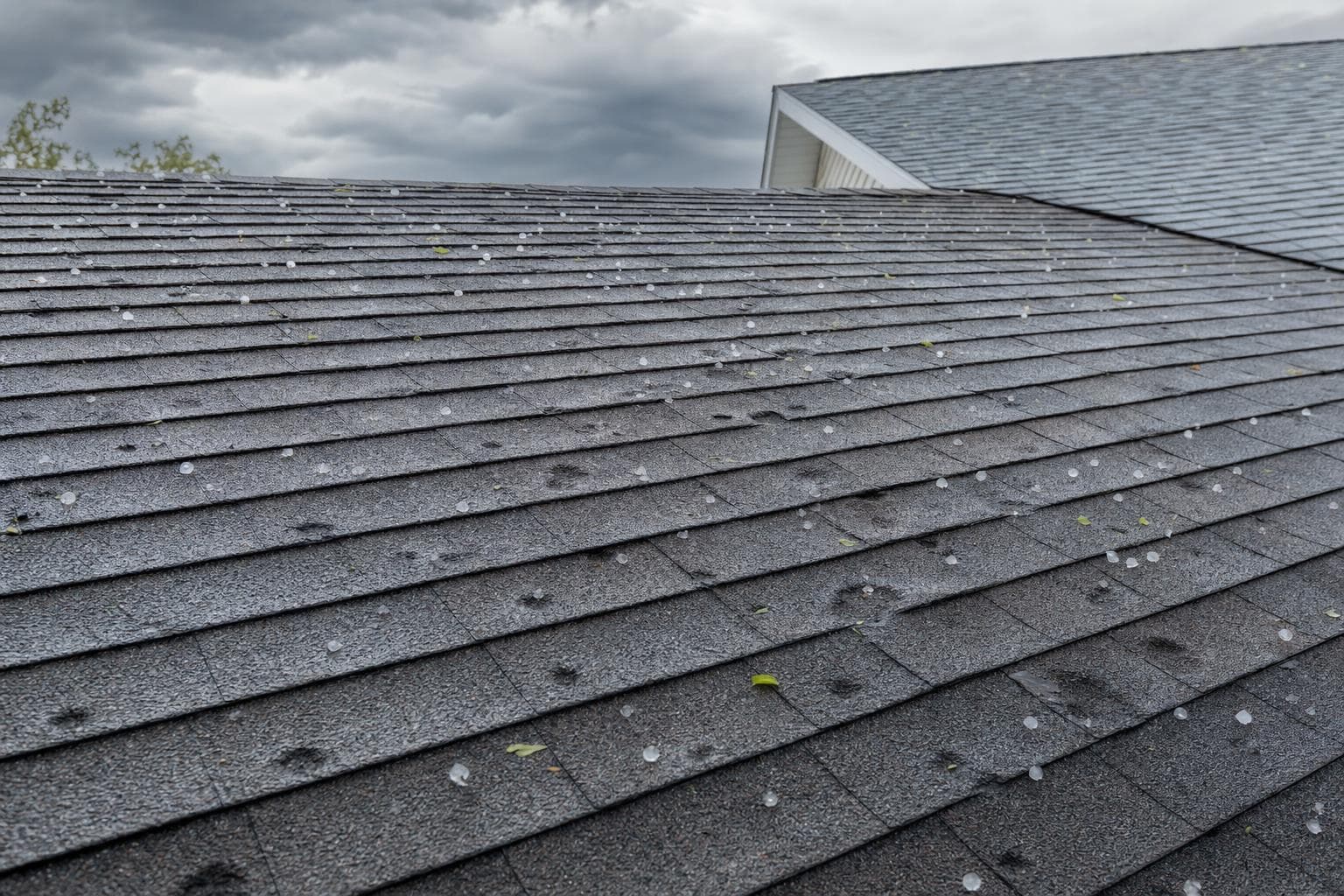
Hail assessment is a material-specific inspection, not a conclusion drawn from a few dents. Exposed metals, gutters, vents, ridge materials, shingles, panels, tile, seams, coatings, and prior repairs can respond differently to the same event. A useful report maps impact direction and distribution by roof area, describes the observed effect, distinguishes functional conditions from cosmetic marks and unrelated wear, and explains whether the affected assembly can accept a durable repair. Product impact classifications belong in the replacement comparison only after the current roof scope is justified.
Begin with the reported event and broad indicators, then connect close-up findings to a slope or roof section. The report should distinguish functional effects from cosmetic marks, age, blistering, manufacturing conditions, foot traffic, ordinary granule loss, and prior repairs.
What a hail-damage assessment should document
Hail assessment is pattern recognition, not spot counting. The inspection should identify impact direction and distribution, document each roof area and accessory, and distinguish functional damage from cosmetic marks, age, blistering, traffic, and ordinary granule loss.
Work the hail scope should include
- Overview and close-up photographs mapped to every roof area
- Material-specific review of covering, ridge, hips, valleys, seams, and coatings
- Vents, flashing, gutters, and other exposed impact indicators
- Impact direction, distribution, and prior-condition documentation
- Functional, cosmetic, unrelated-wear, and uncertain findings kept separate
- Repairability and replacement logic tied to the documented pattern
Conditions that change repairability and cost
- Inspection access, method, roof-area mapping, and written deliverable
- Material type and the distribution of functional findings
- Damaged ridge, vents, flashing, gutters, seams, or coatings
- Matching material and whether surrounding roofing can accept a repair
- Decking or moisture work discovered with the roof condition
- Optional impact-resistant product cost kept separate from the required scope
Questions to resolve before hail-related roof work
Compare hail findings by location, pattern, material, and observed effect. Close-up photographs should be tied to a roof diagram or slope, and any replacement recommendation should explain why a repair cannot restore the affected assembly.
Warning signs in a hail proposal
- A full-roof conclusion is based only on dented gutters or vents
- Close-up photographs are not tied to a slope or roof section
- Every mark is labeled hail without considering material, pattern, or other causes
- A Class 4 label is presented as damage-proof or as a guaranteed insurance credit
Questions the hail report should answer
- Where is each representative finding located, and what material is affected?
- What observed effect makes the condition functional, cosmetic, or uncertain?
- Can the affected roof areas accept a durable repair?
- What does the proposed impact classification test, and what does it not establish?
Hail-damage cost paths
Hail does not create one standard bill. The financial decision may be an inspection, a targeted $450-$2,700 repair, or a full replacement when functional damage is distributed across the roof and cannot be restored reliably.
- Documented roof inspection
- The price changes with access, method, and the written deliverable
- $100-$1,475
- Typical targeted repair
- Appropriate only when damage is contained and repairable
- $450-$2,700
- Class 3 replacement reference
- 2,000 sq ft reference roof before project-specific conditions
- $13,500
- Class 4 replacement reference
- Use the exact product and installed upgrade, not the class label alone
- $15,733
Cost ranges are estimates developed from standardized project scopes and reviewed pricing inputs. Government labor and regional cost data are used where applicable. See our Pricing Methodology for the exact sources, calculations, and review date. Actual prices vary by property, scope, materials or equipment, location, and provider.
For size tables, worked examples, and the assumptions behind this range, open the class 4 shingles cost guide.
How a hail inspection becomes a roofing decision
A careful hail scope moves from broad storm evidence to material-specific findings. It avoids promising coverage and gives the homeowner enough detail to compare repair, replacement, and impact-resistant upgrade options.
- 1
Confirm the storm pattern
Review the reported event and inspect directional indicators such as gutters, vents, screens, downspouts, and other exposed surfaces. Those indicators provide context but do not replace inspection of the roof covering.
- 2
Document every roof area
Record representative conditions on each slope or section, including ridges, hips, valleys, vents, flashing, and prior repairs. Note the material and the observed effect rather than labeling every mark as damage.
- 3
Test repairability
Consider how widespread the functional condition is, whether matching material is available, and whether surrounding roofing can accept a durable tie-in. The answer may differ from one roof area to another.
- 4
Choose the next system deliberately
If replacement is justified, compare the exact shingle or panel, tested impact classification, full installed assembly, upgrade cost, warranty, and any product-specific insurance eligibility before ordering.
Put hail findings in roof-area context
A hail report should begin with overview photographs of every slope or roof section, then tie representative close-ups to those locations. Ridge, hips, valleys, vents, flashing, gutters, and other exposed surfaces add event context, but dents on accessories do not automatically establish functional damage to the covering. Direction, distribution, material type, prior repairs, and access limits all belong in the record.
Separate function from appearance and ordinary wear
The inspection should describe the material, location, pattern, and observed effect before calling a condition functional or cosmetic. It should also distinguish impact from age, blistering, manufacturing marks, foot traffic, algae, prior repairs, and ordinary granule loss. Functional damage changes how the material sheds water, remains attached, protects lower layers, or performs as designed; appearance alone does not establish that conclusion.
Test repairability before recommending replacement
A contained functional condition may be repairable when matching material is available and the surrounding roofing and deck can accept a durable tie-in. Replacement deserves a closer look when functional findings are distributed, repair would damage brittle neighboring material, or no sound repair boundary remains. If an impact-resistant upgrade is considered, compare the exact product, complete assembly, test classification, price, warranty, and limitations separately from the required scope.
Common questions about hail damage roofing
How do I know if my roof has hail damage?+
Fresh dents on gutters, vents, flashing, or other exposed surfaces can provide event context, but they do not automatically establish functional damage to the roof covering. Look for missing material or active water from a safe location, then use a roof-area report that maps impact distribution and describes the material-specific effect. Access limits should be stated when direct inspection is unsafe.
Is hail damage covered by insurance?+
Coverage depends on the policy, cause of loss, exclusions, deductible, roof-surface provisions, and the insurer's inspection. Document each slope and affected accessory, and separate observed damage from age, manufacturing conditions, and normal wear. Cosmetic-damage limitations may apply, so read the policy before assuming a mark is covered or excluded.
What's the difference between functional and cosmetic hail damage?+
Functional damage affects the roof covering or a detail's ability to perform; cosmetic damage changes appearance without an identified loss of function. The distinction is product- and policy-specific, and not every dark spot or dent proves hail damage. A useful inspection documents the location, pattern, material, and observed effect without declaring coverage.
Should I upgrade to Class 4 shingles after hail?+
It is worth comparing when hail exposure is meaningful and you plan to keep the home. Class 4 identifies performance in a standardized impact test; it is not a promise that the roof cannot be damaged. Compare the exact product, installed upgrade cost, warranty, and local availability, then ask your insurer whether that product qualifies for a credit before counting insurance savings.
A roofer offered to handle my hail claim and cover the deductible, is that legit?+
Treat that offer as a serious warning. Deductible and claim-representation rules vary by state, and disguising a deductible rebate can create legal and coverage problems. Keep control of the claim, require an accurate contract and invoice, and verify the rule with your state insurance regulator before signing.
Get a Hail Damage Repair Quote
Call to discuss possible hail damage, or share your roof concerns to start a quote request.