
Updated July 10, 2026

3D Roofs Editorial Team
Editorial Standards
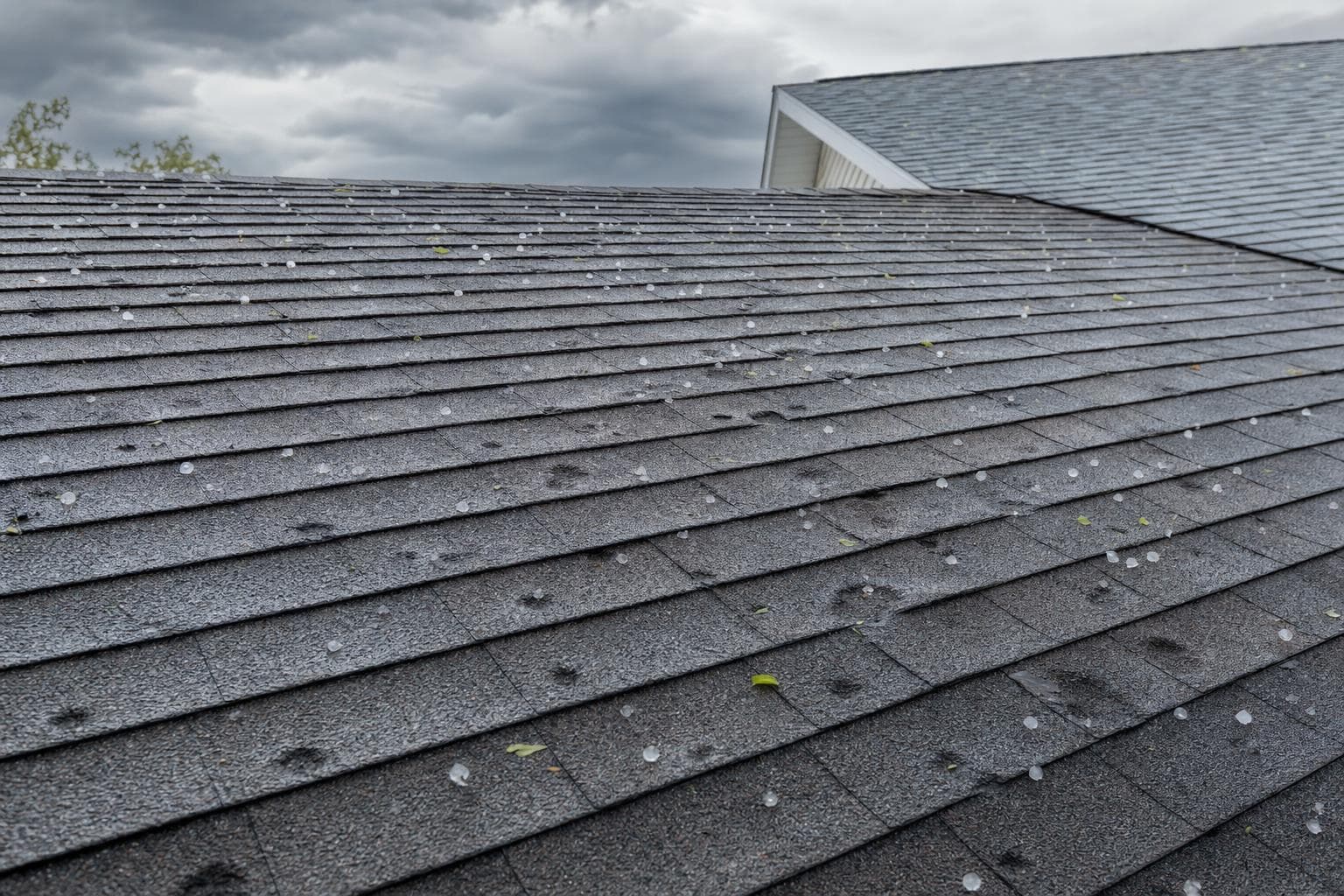
A hail inspection in Harrisonburg should document impact patterns and material response across the roof. It should also separate functional damage from cosmetic marks, age, and ordinary wear. Harrisonburg sits inland in the Shenandoah Valley with a humid subtropical-to-continental climate, warm summers, cold winters with real snow and ice, and frequent freeze-thaw cycles. The inspection should map impact distribution, describe the material-specific effect, separate functional findings from cosmetic marks and ordinary wear, and test whether each affected roof area remains repairable.
What a hail inspection should prove in Harrisonburg
Hail assessment should document material-specific effects and their pattern across the roof. It should not turn every dark mark, dent, or patch of granule loss into the same conclusion.
Establish direction and distribution
Check each roof area along with ridge, vents, gutters, flashing, and other exposed surfaces. Your roof in Harrisonburg deals with winter snow loads, ice dams, and repeated freeze-thaw stress, along with summer thunderstorms that bring hail, gusty wind, and the occasional remnant of a tropical system pushing into the valley. That broader pattern helps place close-up findings in context. Photographs should identify their roof area instead of showing anonymous marks with no location.
Separate function from appearance
The report should describe the material, location, pattern, and observed effect, then distinguish impact from age, blistering, traffic, manufacturing marks, prior repairs, and cosmetic-only conditions. Coverage remains the insurer's decision.
Compare repair and upgrade value
If damage is repairable, confirm matching material and tie-in quality. If replacement is justified, compare architectural shingles rated for cold-weather and freeze-thaw durability, the exact impact classification, full installed cost, warranty, and any product-specific insurance eligibility before ordering.
Hail-damage cost paths in Harrisonburg
Hail does not create one standard bill. The financial decision may be an inspection, a targeted $400-$2,300 repair, or a full replacement when functional damage is distributed across the roof and cannot be restored reliably.
- Documented roof inspection
- The price changes with access, method, and the written deliverable
- $75-$1,225
- Typical targeted repair
- Appropriate only when damage is contained and repairable
- $400-$2,300
- Class 3 replacement reference
- 2,000 sq ft reference roof before project-specific conditions
- $12,018
- Class 4 replacement reference
- Use the exact product and installed upgrade, not the class label alone
- $14,112
Cost ranges are estimates developed from standardized project scopes and reviewed pricing inputs. Government labor and regional cost data are used where applicable. See our Pricing Methodology for the exact sources, calculations, and review date. Actual prices vary by property, scope, materials or equipment, location, and provider.
For a deeper breakdown, open the class 4 shingles cost guide. Treat inspection, targeted repair, full replacement, and any optional impact-resistant upgrade as separate amounts. A Class 4 label describes a product test classification; it does not make a roof damage-proof or guarantee a policy credit.
How to evaluate hail findings on a Harrisonburg roof
Hail assessment in Harrisonburg should move from broad event indicators to roof-area findings, then explain what each mark, dent, fracture, or loss of material means for water shedding and repairability.
Evidence that puts close-ups in context
- Overview photographs of every slope or roof section
- Ridge, hips, valleys, vents, flashing, gutters, and other exposed surfaces
- Impact direction, distribution, material type, and prior repairs
- Close-up findings labeled with their exact roof area
What each finding should explain
In Harrisonburg, the inspection should account for ice dams and freeze-thaw cracking along eaves and valleys. It should also check snow-load stress on aging or under-supported roofs. The report should distinguish impact effects from age, blistering, manufacturing marks, foot traffic, ordinary granule loss, and cosmetic conditions.
- Whether the covering, seam, coating, or accessory still performs its water-shedding job
- Whether the affected area can accept a durable repair
- Which conclusion is observed and which remains uncertain or outside the inspection
Anonymous close-ups do not establish a roof-wide conclusion. The report should connect every representative finding to a roof area, material, pattern, and observed effect.
How Harrisonburg hail exposure changes the inspection
Your roof in Harrisonburg deals with winter snow loads, ice dams, and repeated freeze-thaw stress, along with summer thunderstorms that bring hail, gusty wind, and the occasional remnant of a tropical system pushing into the valley.
NOAA storm reports logged 11 hail events and 91 damaging thunderstorm-wind events in Rockingham County from 2020 through 2025.
Hail does not strike every roof area uniformly
Roof direction, slope, shelter, neighboring structures, trees, and wind can change impact distribution. Each roof area should be reviewed on its own instead of copying one test area across the entire roof.
Different materials show impact differently
Asphalt shingles, metal panels, tile, ridge materials, coatings, vents, flashing, and gutters do not display or tolerate impact in the same way. The report should describe the material-specific effect rather than applying one visual rule to every surface.
Ground-level evidence has limits
Missing material, debris, or dented accessories may justify a closer inspection, but subtle roof-covering conditions usually require direct or camera-assisted review when access is safe. Any access limit should be stated in the report.
Documenting hail findings in Harrisonburg when insurance may be involved
The roof report should identify material, location, pattern, and observed effect while keeping coverage conclusions separate. The roofer explains construction and repairability; the insurer interprets the policy and decides whether the documented condition is covered.
Document storm, hail, and ice damage with dated photos before any temporary repair.
Ice-dam water damage may be covered, so report interior staining promptly and keep records.
After a hail or wind event, request a documented inspection before filing if the damage is unclear.
What Virginia law means before you approve hail-related roof work
Review contractor, deductible, claim, and cancellation rules before signing. The permanent contract should identify the approved construction scope, exact product, optional upgrades, uncovered amounts, payment terms, change orders, and separate product and workmanship warranties.
Your insurer must acknowledge your claim within 10 working days
Virginia’s consumer guidance says insurance companies are required to acknowledge receipt of your claim within 10 working days. They are also required to provide the appropriate forms to file a claim. If your company has not responded within the required period of time, or you have experienced unreasonable delays, the Bureau of Insurance can provide assistance.
You should make temporary repairs to stop further damage
Virginia’s consumer guidance says you should make necessary temporary repairs as soon as possible to protect your property from further damage, including boarding up openings and patching holes in walls or roofs. It also says most homeowners policies cover the reasonable costs of emergency clean-up and temporary repairs. Take photographs before cleanup and keep receipts for your expenses.
Do not rush into a major repair contract before the claim damage is set
The state’s guidance tells you to obtain written estimates before repairs begin, and not to sign any contracts for major repair until the company representative has determined how much damage there is and how much the company will pay. It also warns against signing your insurance check over to a contractor in advance, and says a contract should specify that payments will be made as the work is completed.
Wind or hurricane deductibles may be separate from your standard deductible
Virginia’s consumer guidance says some homeowners policies contain a special deductible for wind or hurricane losses, separate from other deductibles on the policy. It also explains that wind deductibles and hurricane deductibles are not always the same, and whether they apply depends on how the policy describes them. Review your policy language closely after a storm so you know which deductible may apply to your roof claim.
Choosing a hail-damage roofer in Harrisonburg
Virginia licenses contractor businesses through the Board for Contractors, and the Board says contractor licenses include a class of license and a classification or specialty. For you, the practical move is to confirm that your roofer’s business is properly licensed through the state lookup, ask for a signed contract, and get written estimates before work begins. The state’s insurance guidance also says to work with established firms or individuals who can provide references and are willing to give you a signed contract. If the job came from door-to-door solicitation, Virginia also has a Consumer Protections Statement required for residential door-to-door solicitations. If you run into misconduct, the Board for Contractors has a complaint process, and the Contractor Transaction Recovery Act provides relief to eligible consumers who have incurred losses through the improper and dishonest conduct of a licensed contractor. Filing a claim does not guarantee payment.
If you are considering impact-resistant roofing materials, ask your insurer about any available Class 4 discount before you choose the product. Discounts are set by individual carriers and policy terms, so they can vary. The key step for you is to confirm with your carrier what proof they require and whether the specific roof system you are considering qualifies.
Sources: Virginia SCC, Disaster Strikes, Insured Homeowners Loss · Virginia DPOR, Board for Contractors
Hail-damage questions Harrisonburg homeowners ask
How soon should I have my Harrisonburg roof checked after hail?+
Arrange an inspection after conditions are safe when you see missing material, active water, debris, or fresh dents on exposed accessories, or when the reported event was significant enough to raise concern. Photograph what is visible from safe locations and protect active openings, but do not climb onto a wet or potentially damaged roof.
Do dented gutters or vents prove my Harrisonburg roof has hail damage?+
They can confirm that exposed surfaces experienced impact and help establish direction or distribution, but they do not automatically prove functional damage to the roof covering. The shingles, panels, tile, ridge material, seams, coatings, and flashing still need material-specific findings tied to their exact roof area.
What is the difference between functional and cosmetic hail damage?+
Functional damage changes the material's ability to shed water, remain attached, protect underlying layers, or perform as designed. Cosmetic damage changes appearance without establishing that loss of function. The report should describe the material, location, pattern, and observed effect rather than applying either label to every dent or dark mark.
What should a hail inspection report show in Harrisonburg?+
It should map overview and close-up photographs to each roof area, identify the material and impact pattern, document ridge, hips, valleys, vents, flashing, gutters, and prior repairs, and distinguish hail effects from blistering, age, manufacturing marks, foot traffic, and ordinary granule loss. Access limits and uncertain findings should be stated clearly.
How much does hail-damage roof work cost in Harrisonburg?+
The 3D Roofs planning model puts a documented inspection in Harrisonburg around $75-$1,225 and a targeted repair around $400-$2,300. On a 2,000 sq ft reference roof, Class 3 replacement is $12,018 and Class 4 is $14,112; those replacement amounts apply only when the documented roof condition justifies that scope.
Can hail damage be repaired instead of replacing the roof?+
Yes, when functional damage is contained and matching material can be tied into roofing and decking that remain serviceable. Replacement deserves a closer look when functional conditions are distributed across roof areas, repair would damage brittle surrounding material, or the affected assembly cannot be restored reliably. The report should show which condition exists.
What does a Class 4 shingle rating mean after a hailstorm?+
Class 4 describes performance in a specific product impact test; it does not make a roof hail-proof, predict every real storm, or guarantee an insurance credit. Compare the exact product, complete installed assembly, upgrade price, written warranty, local exposure, and any carrier-specific eligibility before treating the classification as a replacement decision.
