Updated July 27, 2026

3D Roofs Editorial Team
Editorial Standards
If your area sees hail, impact resistance is one useful shingle comparison point, but it should not replace a review of installation details, wind rating, ventilation, warranty terms, and total installed cost. UL 2218 Class 4 is the highest impact-resistance test classification in that standard. It does not make a roof hail-proof, guarantee a longer service life, or ensure an insurance discount. Ask the insurer about product-specific eligibility in writing and compare the exact shingle documentation before paying for an upgrade.
What Class 4 actually tests
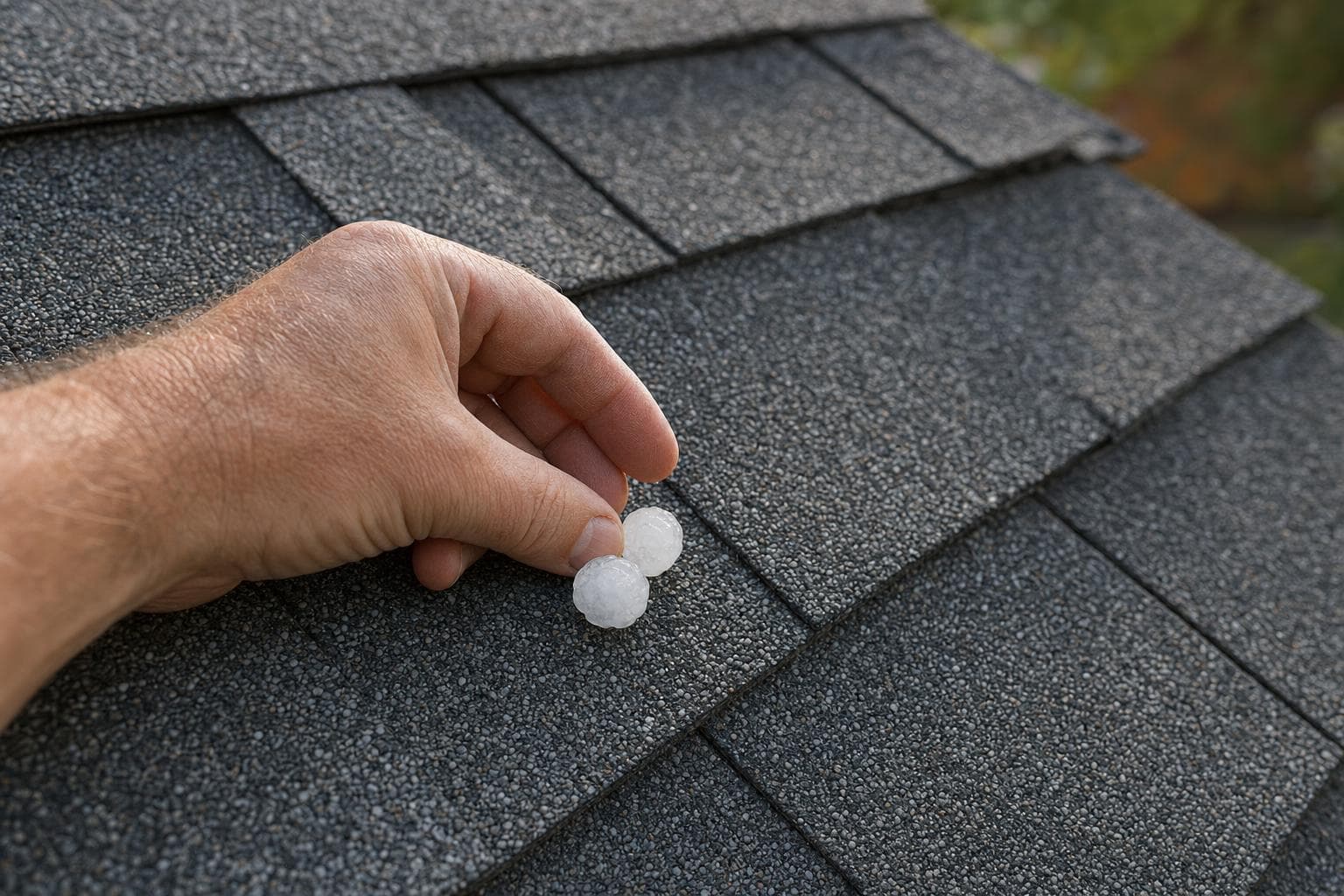
UL 2218 drops a 2-inch steel ball from 20 feet onto the shingle, twice in the same spot, and passes products whose mat shows no fracture. It's a lab proxy for severe hail, and a good one, with one caveat: the test uses new shingles. Installed shingles change with age, heat, weathering, ventilation, and exposure, so a test on a new specimen does not predict every field result. That's why the construction style behind the rating matters as much as the rating itself.
The two roads to a Class 4 rating
- SBS polymer-modified asphalt ('rubberized'), the asphalt itself is blended with rubber polymers, so the whole shingle stays flexible and absorbs impact. Tends to hold its impact resistance better as it ages. The hail-belt favorite.
- Reinforced construction, standard asphalt over a stronger or doubled mat that resists fracture mechanically. Genuinely Class 4 on test day; some lose more impact margin with age as the asphalt around the reinforcement embrittles.
- Either way: verify the specific product line carries the rating, manufacturers sell Class 3 and Class 4 lines side by side with similar names.
- Get the certification documented at install, your insurance discount depends on the paperwork, not the shingle.
Install details that protect the rating
A Class 4 shingle nailed wrong is an expensive Class 3. High-nailing misses the reinforcement zone; under-driven and over-driven nails create stress points; skipping the manufacturer's pattern can undermine tested performance and warranty eligibility. Wind can accompany hail, so verify the product-specific nailing pattern, starter, ridge, underlayment, edge details, and tested assembly for the project rather than assuming one fastening pattern applies. Hips and ridges are exposed roof areas. Ask whether the selected system includes compatible impact-classified accessories and how those components are installed.
Talk to a roofer today
Planning ranges, scope details, and a direct path to request a roofing quote.
The money side
Check current cost data for an impact-resistant shingle decision, then replace the range with an assembly-specific proposal based on measured conditions. Some insurers may offer a credit for a qualifying impact-resistant roof, but the product, paperwork, covered premium portion, eligibility, and amount are policy-specific. In hail country, it's less an upgrade than the correct default.
What the impact rating can and cannot tell you
UL 2218 is a product impact test, not a promise that a finished roof cannot be damaged. A Class 4 listing tells you that the named product met the highest classification in that test method. It does not grade the deck, flashing, fastener placement, ventilation, or workmanship, and it does not decide whether an insurer will cover cosmetic marks or offer a credit. Ask for the exact manufacturer and product line so you can verify the listing instead of accepting 'Class 4' as a generic sales label. For the hail-shingle shortlist, verify the named product and written insurer answer together; neither a generic rating nor an assumed credit completes the decision.
- Put the exact shingle manufacturer, product line, color, and impact classification in the proposal.
- Compare the required nail pattern, starter, hip and ridge products, underlayment, and deck repairs as one installed system.
- Ask your insurer in writing whether this exact product qualifies for a credit and what documentation must be submitted.
- Read the policy and product warranty for cosmetic-damage language, exclusions, transfer rules, and required maintenance.
- Confirm local availability for future repairs; a discontinued or hard-to-match shingle can turn a small repair into a larger decision.
- For the hail-shingle shortlist, attach the exact certification and the insurer's written eligibility answer to the bid comparison.
How to decide whether the upgrade fits a your area roof
Build a hail-resistant shingle shortlist from verified products, not marketing labels. Confirm the exact manufacturer and product line, its current impact classification, required starter and ridge components, nailing instructions, warranty exclusions, and local availability for later repairs. Ask the insurer in writing whether that exact product qualifies for a credit and whether cosmetic damage is treated differently under the policy. Then compare the upgrade price with roof condition, ownership horizon, flashing and ventilation scope, and the quality of the proposed installation.
Sources
In a hail-prone area, compare the installed price with repairability, product availability, inspection needs, maintenance, and policy-specific insurance treatment. Class 4 is how you stop paying the second bill.
Related reading and source material
Additional reviewed references
Related roofing resources
Updated July 27, 2026
3D Roofs Editorial Team
Editorial Standards