
Updated July 10, 2026

3D Roofs Editorial Team
Editorial Standards
How to evaluate hail findings on a Montana roof
Hail can affect shingles, metal panels, ridge products, vents, flashing, gutters, skylights, and other materials differently. Size alone does not determine the result; hardness, wind, impact angle, material, age, support, and prior condition all matter. A useful report shows the evidence and avoids declaring every mark a total loss.
Record the storm date, photograph ground-level evidence such as damaged accessories when safe, and arrange a roof inspection before permanent work. Ask the contractor to label each photograph by roof area and explain whether the finding is functional, cosmetic, unrelated, or uncertain.
How Montana hail exposure changes the inspection
Your roof in Montana can take a beating from hail, wind-driven rain, and fast-moving storms. Hail is a standout risk in the state guidance, and even when damage looks minor from the ground, it can leave bruising, punctures, lifted roofing materials, and openings that let water in later. Weather here also pushes you to act quickly on temporary protection after a storm, such as covering roof openings, while still documenting everything before cleanup so you do not make the claim process harder on yourself.
Hail exposure within Montana can vary by season and market. The inspection should compare roof patterns with other exposed materials and the reported storm rather than relying on a neighborhood claim or a single test square. Product test ratings help compare materials but do not reproduce every real storm.
What a hail-damage assessment should document
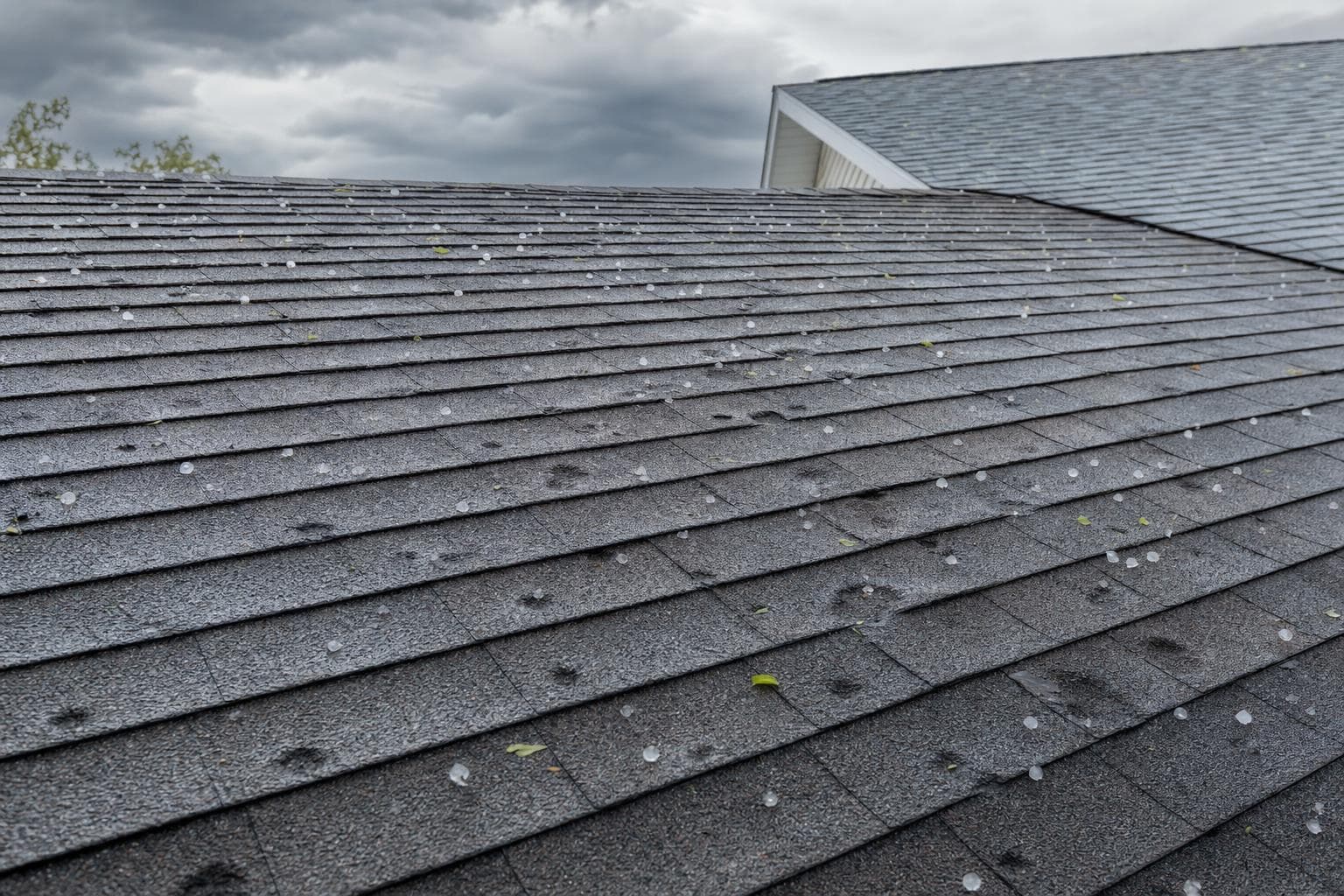
Hail assessment is pattern recognition, not spot counting. The inspection should identify impact direction and distribution, document each roof area and accessory, and distinguish functional damage from cosmetic marks, age, blistering, traffic, and ordinary granule loss. Compare slope-by-slope documentation, accessory damage, repairability, material availability, temporary needs, deck conditions, and the reasoning behind repair or replacement. Impact counts alone do not replace an explanation of what the impacts did.
Work the hail scope should include
- Overview and close-up photographs mapped to every roof area
- Material-specific review of covering, ridge, hips, valleys, seams, and coatings
- Vents, flashing, gutters, and other exposed impact indicators
- Impact direction, distribution, and prior-condition documentation
- Functional, cosmetic, unrelated-wear, and uncertain findings kept separate
- Repairability and replacement logic tied to the documented pattern
Conditions that change repairability and cost
- Inspection access, method, roof-area mapping, and written deliverable
- Material type and the distribution of functional findings
- Damaged ridge, vents, flashing, gutters, seams, or coatings
- Matching material and whether surrounding roofing can accept a repair
- Decking or moisture work discovered with the roof condition
- Optional impact-resistant product cost kept separate from the required scope
Questions to resolve before hail-related roof work
Compare hail findings by location, pattern, material, and observed effect. Close-up photographs should be tied to a roof diagram or slope, and any replacement recommendation should explain why a repair cannot restore the affected assembly.
- A full-roof conclusion is based only on dented gutters or vents
- Close-up photographs are not tied to a slope or roof section
- Every mark is labeled hail without considering material, pattern, or other causes
- A Class 4 label is presented as damage-proof or as a guaranteed insurance credit
- Where is each representative finding located, and what material is affected?
- What observed effect makes the condition functional, cosmetic, or uncertain?
- Can the affected roof areas accept a durable repair?
- What does the proposed impact classification test, and what does it not establish?
Hail-damage cost paths in Montana
Hail does not create one standard bill. The financial decision may be an inspection, a targeted $450-$2,650 repair, or a full replacement when functional damage is distributed across the roof and cannot be restored reliably.
- Documented roof inspection
- The price changes with access, method, and the written deliverable
- $100-$1,450
- Typical targeted repair
- Appropriate only when damage is contained and repairable
- $450-$2,650
- Class 3 replacement reference
- 2,000 sq ft reference roof before project-specific conditions
- $13,118
- Class 4 replacement reference
- Use the exact product and installed upgrade, not the class label alone
- $15,279
Cost ranges are estimates developed from standardized project scopes and reviewed pricing inputs. Government labor and regional cost data are used where applicable. See our Pricing Methodology for the exact sources, calculations, and review date. Actual prices vary by property, scope, materials or equipment, location, and provider.
Rules, claims, and contractor checks
Hail claims can bring door-to-door sales, deductible promises, and offers to manage the entire claim. Review Montana contractor and insurance rules before signing, and keep construction findings separate from the carrier's coverage decision.
Document storm damage before cleanup or repairs
Montana's insurance regulator says you should take photos and document damage before you begin to clean up or repair. It also says you should take steps to prevent further destruction of the property, including covering broken windows and holes in roofs and placing coverings over areas that could get water or wind damage.
Start with your policy and insurer, not a sales pitch
State guidance says you should contact your insurance company and get the claims process started, then review your policy to understand your deductible, what is and is not covered, and your responsibilities. That helps you make repair decisions based on your policy instead of pressure from a contractor.
Montana warns homeowners about high-pressure storm repair tactics
The Montana Commissioner of Securities and Insurance tells homeowners to beware of high-pressure sales tactics, "storm chasers," and unsolicited offers from contractors. The guidance says not to feel rushed to sign a repair contract, to get multiple bids, to check references, and to choose a contractor who will work with you and your insurance adjuster to assess damage and repair costs.
Montana's contractor registration rules matter, but they do not replace your own homework. The state says all construction contractors with employees must register, and it tells homeowners to ask for proof of a contractor's CR and verify it is in good standing. The same source also says the CR certificate is not a license and does not ensure quality of work. The construction contractor program is also changing: beginning January 1, 2026, Montana Contractor's registration program will transition to a license administered by the Montana Department of Labor and Industry. For you, the practical move is simple: ask your roofer for proof of current Montana standing, verify it through the state, get references, and insist on a written contract that spells out scope, materials, timing, payment tied to completed work, and responsibility if the job is not finished. After a storm, the insurance regulator also says to get multiple bids, check references, and avoid feeling rushed into signing.
Sources: Montana Commissioner of Securities and Insurance, Hail consumer guidance · Montana Department of Labor and Industry, Construction Contractor Registration
Common questions about hail damage roofing in Montana
What does hail damage look like on a Montana roof?+
It depends on the material. Asphalt shingles may show displaced granules or mat effects; metal and soft accessories may dent; brittle products can crack. Blisters, foot traffic, age, and manufacturing marks can look similar, so pattern, context, and observed function matter.
What does a Class 4 shingle rating mean?+
Class 4 is the higher classification in a standardized impact test. It helps compare tested products, but it does not make a shingle hail-proof, guarantee a particular field lifespan, or automatically qualify every homeowner for an insurance credit. Verify the exact product and carrier requirements.
Can hail damage be repaired instead of replaced?+
Sometimes. Repairability depends on the affected area, shingle or panel condition, material availability, seal and fastener integrity, accessories, and whether a durable tie-in can be made. Widespread effects or brittle surrounding roofing can make isolated replacement impractical.
Should I file a hail claim before getting an inspection?+
A documented inspection can help you understand whether there is credible functional damage and how the likely scope compares with the deductible. Coverage and filing deadlines depend on the policy, so review it promptly and let the insurer make the coverage decision.
Which Montana rules should I check before signing a hail damage contract?+
Start with the verified state guidance on this page, including Document storm damage before cleanup or repairs; Start with your policy and insurer, not a sales pitch; Montana warns homeowners about high-pressure storm repair tactics. Then confirm the permit authority and any local contractor requirement for the property address. Insurance coverage and policy interpretation remain separate from the roofing contract.
What should Montana homeowners know about impact-resistant roofing?+
If you are considering Class 4 impact-resistant shingles in Montana, ask the carrier whether the exact product qualifies for a premium credit and what documentation it requires. The cited Montana guidance does not establish a statewide credit or amount, so treat any savings as policy-specific. A roofing contractor can provide product and installation records, but the insurer decides eligibility and any credit.
Hail Damage across 7 Montana cities
Use the nearest Montana city page for local hail and material context. A nearby storm report can support timing, but only a property inspection can show what happened to your roof.
