Updated July 27, 2026

3D Roofs Editorial Team
Editorial Standards
Yes, homeowners insurance may cover a roof replacement in Illinois when the damage comes from a covered event like hail or wind and the roof has functional damage. For does insurance cover roof replacement in Illinois, coverage depends on the policy language, cause of loss, exclusions, and the insurer's decision; verify those terms in your own documents. In Illinois, that difference matters because roofs take hits from warm-season thunderstorms, damaging straight-line winds, heavy snow loads, ice dams, and repeated freeze-thaw swings. If you think a storm damaged your roof, the key question is not whether the roof is old. The key question is whether the storm caused direct damage that affects how the roof performs.
Does homeowners insurance cover roof replacement in Illinois?
Yes, it can, if a covered storm caused enough damage to justify replacement. Insurance is generally there for sudden, accidental loss, not for gradual wear. On an Illinois roof, functional storm damage can include hail bruising that shortens shingle life, wind that creases or lifts shingles, or damage around flashing and seams that creates a path for water. By contrast, brittle shingles, long-term granule loss from age, old flashing, and maintenance issues are the kinds of problems that are commonly treated as wear instead of a covered loss. A roofing contractor you are considering can document what is storm-related and what looks like age-related so you can make a cleaner claim.
What counts as functional storm damage versus normal wear?
Functional storm damage means the roof's ability to shed water has been harmed by a specific event. In plain terms, that can mean shingles are torn, creased, punctured, displaced, or bruised in a way that leaves the roof more likely to leak or fail early. In Illinois, hail and straight-line wind are common triggers, and winter can make a damaged roof worse by pushing water into weak points during freeze-thaw cycles. Normal wear is different. That is the slow aging every roof goes through from sun, heat, humidity, temperature swings, and time. Insurance adjusters and roofers are trying to separate those two causes. If the issue is storm-caused and functional, you may have a claim. If it is mostly age and maintenance, you may be paying out of pocket.
- Covered-loss examples often involve hail impact, wind-lifted or creased shingles, and storm damage that affects water shedding.
- Wear examples often involve aging shingles, long-term deterioration, old seal strips, and maintenance-related problems.
- Mixed cases happen often, especially on older Illinois roofs. A storm may damage part of a roof that already had wear, which is why photos and a clear inspection matter.
Will insurance cover a full roof replacement or just a repair?
It depends on how much covered damage exists. If the storm damage is limited and repairable, the insurer may only pay for a repair. For current Illinois planning prices related to does insurance cover roof replacement, use the cost guide and calculator, then compare the contractor's property-specific written scope. If the covered damage is widespread or the roof cannot be restored properly with a smaller fix, replacement may be the outcome. For does insurance cover roof replacement in Illinois, ask the contractor to put the expected working days and weather plan in writing; timing depends on roof size, material, access, crew scheduling, and conditions found after tear-off. If you want broader local numbers, full local pricing lives on the Illinois cost page and the calculator.
Talk to a roofer today
Planning ranges, scope details, and a direct path to request a roofing quote.
How does the deductible affect a roof insurance claim?
Your deductible is your share of the loss, and it can change whether a claim makes sense. If the repair cost is close to your deductible, filing may not help much. If the damage is large enough for a full replacement, the deductible still comes out of your side of the settlement. In Illinois, your roofer cannot pay your deductible, or promise to rebate it to win the job. Illinois's Home Repair and Remodeling Act (815 ILCS 513/18) bars a contractor from advertising or promising to pay or rebate any part of your insurance deductible to win the job, and it bars them from representing you on a roofing insurance claim. They can give you an estimate, meet with your adjuster, and walk you through options, but they cannot turn your deductible into a sales gimmick.
What is the roof insurance claim process in Illinois?
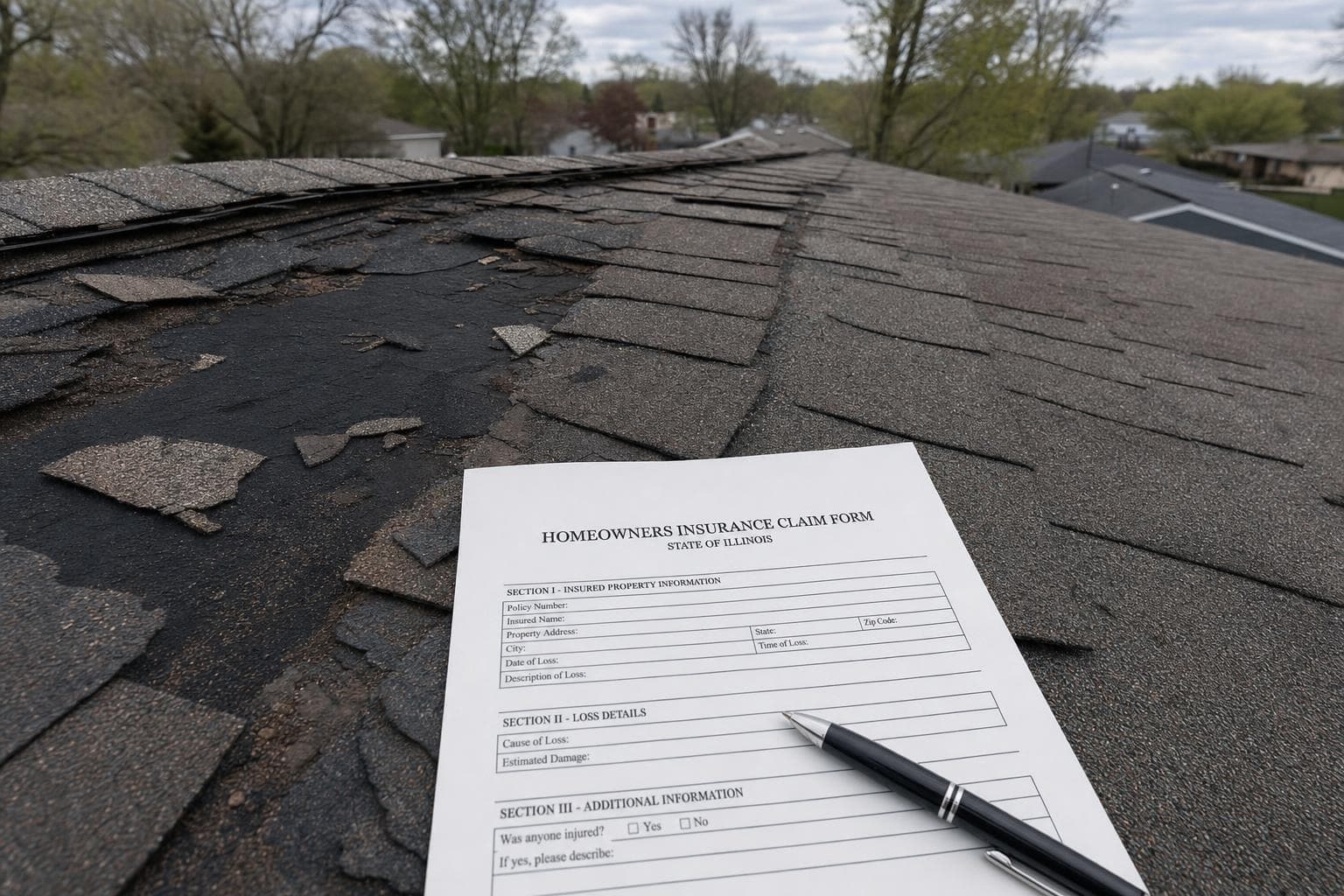
The usual flow is simple: document the damage, get the roof inspected, file the claim with your insurer, meet the adjuster, compare the scope, and then decide on repair or replacement. Start by taking clear photos of shingles, flashing, interior water spots, gutters, and anything hit by the same storm. Then have a roofing contractor you are considering inspect the roof and give you an estimate or scope. After you file, the insurer sends an adjuster or arranges an inspection. Your roofer can meet with the adjuster and point out damage, but cannot run the claim for you. For does insurance cover roof replacement in Illinois, ask the insurer and state insurance regulator for the current notice, proof-of-loss, inspection, acknowledgment, and decision deadlines that apply to the claim.
- Take date-stamped photos as soon as it is safe.
- Save any notes about the storm, leaks, or fallen debris.
- Ask your roofer for a written scope that separates storm damage from age-related wear where possible.
- Review the insurer's scope carefully before work starts, especially materials, flashing, ventilation, and cleanup.
What should you know before signing with an Illinois roofer?
Get everything in writing, and verify the roofer's state license yourself. Under the Illinois Roofing Industry Licensing Act (225 ILCS 335), anyone doing roofing work in Illinois must hold a state roofing contractor license issued by the Illinois Department of Financial and Professional Regulation. For any home repair or remodeling job over an amount that must be confirmed for the written scope, Illinois requires a written contract spelling out the cost, materials, and the contractor's contact details, plus a signed copy of the state's "Home Repair: Know Your Consumer Rights" brochure. A roofing contractor you are considering should be ready to give you a clear scope and license number so you can confirm the status is active and unexpired. That step helps you avoid storm-chaser pitches and keeps the job grounded in a real paper trail.
Is a Class 4 shingle upgrade worth it after an Illinois claim?
It can be worth comparing if your home has meaningful hail exposure, but do not assume it is automatically covered or automatically discounted. Class 4 shingles are often considered because Illinois roofs see hail, wind, humidity, and freeze-thaw stress. For does insurance cover roof replacement in Illinois, any insurance credit depends on the carrier, policy, address, and exact product; get the amount and documentation requirements from the insurer in writing. Still, the rating does not guarantee freedom from all damage or establish a policy credit. Ask the carrier in writing about product eligibility, documentation, cosmetic-damage terms, and any separate wind or hail deductible before choosing the upgrade.
When should you file a claim, and when should you just pay for the roof yourself?
File a claim when you have evidence of sudden, covered storm damage and the cost is likely to be meaningfully above your deductible. Pay out of pocket when the issue is mostly wear, maintenance, or a small repair that does not clear your deductible by much. That is why an honest inspection matters first. In Illinois, climate can blur the line because old shingles may be pushed over the edge by hail, wind, snow, or ice. A good inspection helps you decide whether you are looking at a true covered loss or a roof that has simply reached the point where replacement is your responsibility.
If you suspect storm damage, start with a documented inspection and a written scope. Then compare that scope with your policy terms and deductible before you file. If replacement ends up being the right move, you can use 2026 market pricing as a planning baseline and review fuller local numbers on the Illinois cost page and the calculator. The goal is simple: separate storm damage from wear, follow the claim flow cleanly, and make sure the roof you pay for is the roof your home actually needs.
Sources reviewed
- Illinois Insurance Code – claim practices (215 ILCS 5/154.6)
- Home Repair and Remodeling Act, Sec. 18 (815 ILCS 513/18)
- Georgia Attorney General Consumer Protection Division: Beware of Roofers Scamming Storm Victims
- Illinois Department of Financial and Professional Regulation: Find a Licensed Roofer: State Law and Consumer Guidance
- Arizona Department of Insurance and Financial Institutions: Homeowners Insurance
Plan with current pricing
Related services
Updated July 27, 2026
3D Roofs Editorial Team
Editorial Standards