
Updated July 10, 2026

3D Roofs Editorial Team
Editorial Standards
When a Illinois roof needs temporary cover
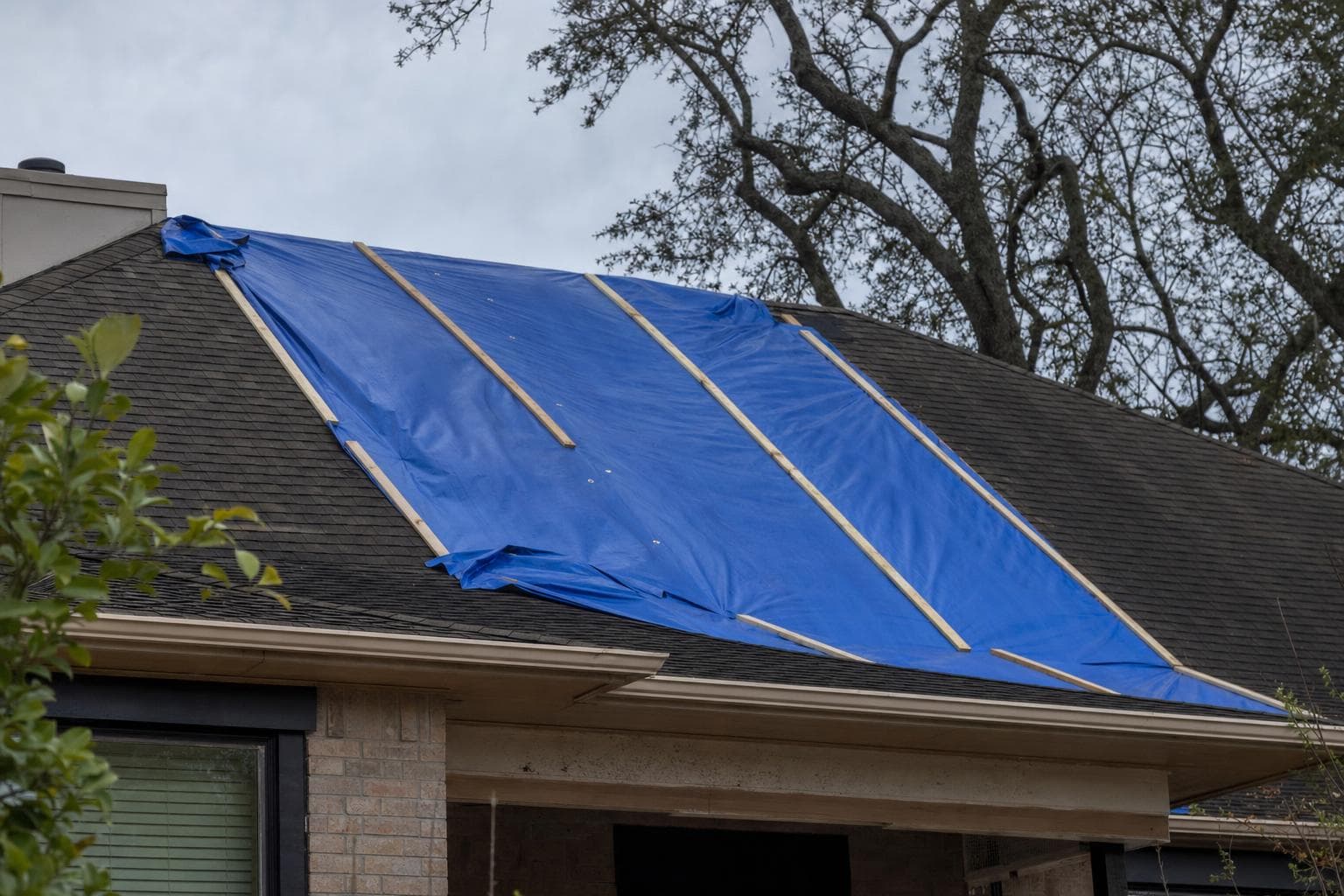
A tarp has to work with gravity and wind. It should extend beyond the opening, lie so water runs off rather than beneath it, and be secured without creating avoidable new damage. The crew should photograph conditions before covering them and make clear which parts of the roof could not be inspected.
Ask how long the installation is expected to remain serviceable under current conditions, when it should be checked, and who is responsible if it moves. Schedule the permanent diagnosis promptly because ultraviolet exposure, wind, ponding, and fastener movement can reduce temporary protection.
How Illinois weather affects a temporary tarp
Illinois roofs get worked from both ends of the calendar. Warm-season thunderstorms drive hail and damaging straight-line winds that bruise shingles and strip granules, and the state ranks among the most tornado-prone in the country. Then winter takes over with heavy snow loads, ice dams along the eaves, and repeated freeze-thaw swings that pry at seams, flashing, and any shingle that is already worn. Humid summers add heat and moisture that age a roof faster, so ventilation and flashing detail matter as much as the shingle you pick.
Tarp selection and anchoring in Illinois depend on wind exposure, rain or snow load, roof slope, temperature, surface condition, and how long permanent materials may take to arrive. The method that protects a small shingle opening may not be appropriate for metal panels, tile, a low-slope membrane, or a large missing section.
What should happen during a roof-tarping call
A roof tarp has one job: keep weather out until permanent work can begin. The scope should identify the opening, extend protection beyond it, anchor the material against wind, preserve drainage, and set a clear plan for inspection and removal. The crew should confirm the protected area, preparation, anchoring, water-shedding path, photographs, inspection limitations, and follow-up plan. Those details show whether the temporary system is ready for the next weather event and what still needs permanent work.
What the temporary protection should include
- Open-area and active-leak assessment
- Photo documentation before the damage is covered
- A tarp sized past the damaged area
- Wind-rated anchoring that sheds water downslope
- A plan for the permanent repair or replacement
Conditions that can change the installation
- Size of the area that needs cover
- Roof pitch and access in storm conditions
- After-hours or storm-surge timing
- Anchoring method and tarp grade
- Whether debris removal is needed first
What to confirm before the crew leaves
Before the crew leaves, confirm what area was covered, how the tarp is anchored, which roof areas could not be inspected, and when it should be checked or removed. The immediate decision is whether the opening is protected safely; the permanent repair can be diagnosed once the roof is stable and conditions allow a complete inspection.
- The tarp stops at the damage edge instead of extending past it
- No documentation is taken before the roof is covered
- The tarp traps water instead of shedding it downslope
- The contractor treats the tarp as the final fix
- When should this tarp be checked, and after what weather?
- Will you photograph the damage before covering it?
- How is the tarp anchored against wind?
- When should the tarp be checked or removed, and when will the permanent inspection happen?
What roof tarping costs in Illinois
For planning, professional roof tarping often falls between $600-$2,650 in Illinois. When water is entering or the roof is open, the first question is whether a crew can reach it safely and stabilize the opening. Protected area, pitch, stories, access, anchoring, weather, and response timing determine the final charge.
- Small accessible opening
- One limited roof area with straightforward access and anchoring
- $300-$1,250
- Standard tarp installation
- Typical protected area on an average residential roof
- $600-$2,650
- Large, steep, or high roof
- More material, time, anchors, and difficult access
- $1,500-$7,800
Cost ranges are estimates developed from standardized project scopes and reviewed pricing inputs. Government labor and regional cost data are used where applicable. See our Pricing Methodology for the exact sources, calculations, and review date. Actual prices vary by property, scope, materials or equipment, location, and provider.
Rules, claims, and contractor checks
Temporary work can affect claim evidence and may still be governed by local safety or contract rules. Preserve photographs and receipts, tell the insurer what was done when a claim is involved, and verify who will remove the tarp before permanent work begins.
Illinois actually licenses roofers, and the license is required
Under the Illinois Roofing Industry Licensing Act (225 ILCS 335), anyone doing roofing work in Illinois must hold a state roofing contractor license issued by the Illinois Department of Financial and Professional Regulation (IDFPR). Licenses come in two flavors: Limited (residential buildings of eight units or fewer) and Unlimited (residential, commercial, and industrial). Working without one is illegal and can draw fines and cease-and-desist orders, so this is a real, checkable credential, not a marketing word.
Your roofer can't pay your deductible, or run your claim for you
Illinois's Home Repair and Remodeling Act (815 ILCS 513/18) bars a contractor from advertising or promising to pay or rebate any part of your insurance deductible to win the job, and it bars them from representing you on a roofing insurance claim. They can give you an estimate, meet with your adjuster, and walk you through options, but a "free roof, we'll eat your deductible" pitch is against the law and a classic storm-chaser red flag.
Get it in writing, and know your insurer's clock
For any home repair or remodeling job over $1,000, Illinois requires a written contract spelling out the cost, materials, and the contractor's contact details, plus a signed copy of the state's "Home Repair: Know Your Consumer Rights" brochure. On the claim side, the Illinois Insurance Code (215 ILCS 5/154.6) requires your insurer to handle hail and wind claims with reasonable promptness, generally acknowledging communications within about 15 working days and investigating without unreasonable delay.
Because Illinois issues a real state roofing license, vetting starts with one concrete step: get the contractor's IDFPR roofing contractor license number and verify it yourself on the IDFPR License Lookup. Confirm the status is active and unexpired, the name matches, and there is no disciplinary history, then check that they carry the general-liability and property-damage insurance the state requires. From there, look for a local track record and references, manufacturer certifications, and a written scope that covers tear-off, decking, underlayment, flashing, ventilation, and cleanup.
Sources: IDFPR – Roofing Contractor licensing · IDFPR – License Lookup (verify a roofer) · Home Repair and Remodeling Act, Sec. 18 (815 ILCS 513/18) · Illinois Insurance Code – claim practices (215 ILCS 5/154.6)
Common questions about roof tarping in Illinois
How should a roof tarp be installed in Illinois?+
The method depends on roof type and conditions, but the tarp should extend onto sound areas, shed water downslope, resist expected wind, and avoid loose pockets that collect water. The installer should document the roof before covering it and explain any new attachment holes.
How long can a roof tarp stay on?+
There is no universal safe duration. Material grade, ultraviolet exposure, wind, rain, snow, temperature, anchoring, and roof movement all matter. Treat the tarp as short-term protection, inspect it after severe weather, and schedule permanent work as soon as the scope is clear.
Can I tarp my own roof after a Illinois storm?+
Roof access during or after a storm can be dangerous because surfaces are wet, materials are loose, and electrical or structural hazards may be hidden. Protect the interior from below when safe and use a qualified crew for roof access rather than risking a fall.
Does a tarp prove that I need roof replacement?+
No. Tarping only shows that an area needed temporary protection. After conditions are safe, the roof still needs a documented inspection to determine whether the permanent answer is a targeted repair, replacement of one area, or broader roof work.
Which Illinois rules should I check before signing a tarping contract?+
Start with the verified state guidance on this page, including Illinois actually licenses roofers, and the license is required; Your roofer can't pay your deductible, or run your claim for you; Get it in writing, and know your insurer's clock. Then confirm the permit authority and any local contractor requirement for the property address. Insurance coverage and policy interpretation remain separate from the roofing contract.
Tarping across 30 Illinois cities
Use the nearest Illinois city page for local service coverage and storm context. Tarping availability can tighten after a regional event, so prioritize safe protection and a written permanent-work plan.
