
Updated July 10, 2026

3D Roofs Editorial Team
Editorial Standards
How to choose the right roof inspection in Maine
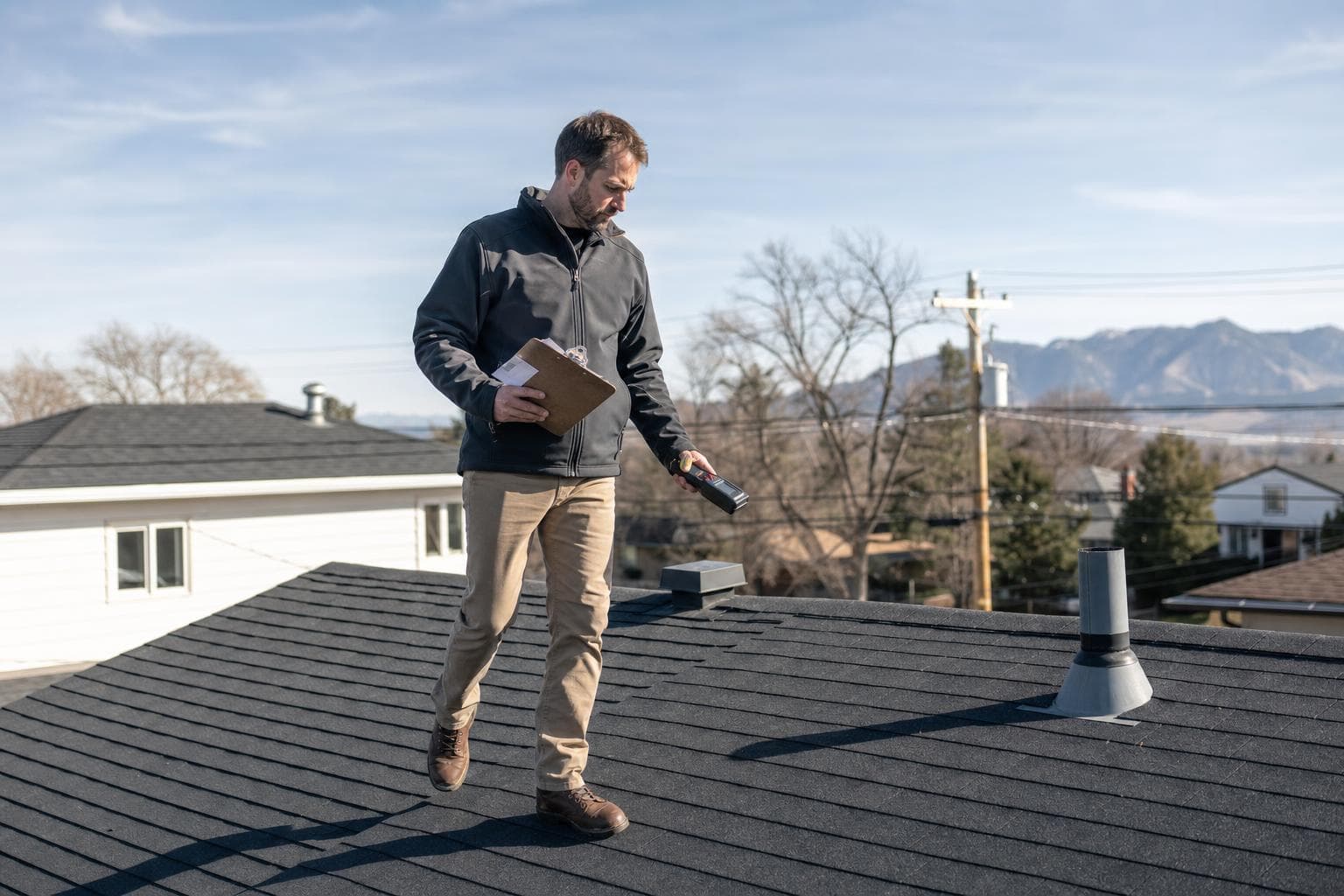
Before scheduling, state the purpose of the inspection and ask what the deliverable includes. A useful review identifies roof areas and materials, documents edges, ridges, valleys, flashing, penetrations, drainage, and accessible attic or interior conditions, and separates observations from diagnosis. Recommendations should be ranked by urgency and supported with photographs.
Confirm whether the inspector will walk the roof, use alternate access when walking is unsafe, review the attic, provide a written report, and bid the resulting work. For a transaction or dispute, consider whether you need an independent inspector with no financial interest in the repair.
How Maine exposure changes a roof inspection
Maine roofs deal with snow load, wind-driven rain, freeze-thaw cycles, and storm debris. Those conditions can loosen shingles, open pathways for water at flashing and roof penetrations, and turn small defects into interior leaks. In coastal areas, wind exposure and salt air can add more wear. In wooded parts of the state, falling limbs and tree impact are also part of the risk picture. If you are replacing a roof here, it makes sense to focus on durable materials, clean flashing details, and attic ventilation that helps manage moisture and winter ice issues.
Roof inspections in Maine should reflect the hazards that actually affect the property and season. The inspector may need to look for wind attachment, hail patterns, drainage, heat or moisture stress, freeze-thaw effects, wildfire exposure, salt air, or tree damage without assuming all of them apply statewide.
What a useful roof inspection should cover
An inspection is only as useful as the question it is built to answer. Leak diagnosis, storm documentation, maintenance planning, real-estate due diligence, and specialized moisture or structural evaluation require different access, tools, and deliverables. Compare the inspection purpose, access, roof areas, attic and interior review, photographs, testing, written findings, limitations, and next-step recommendations. A verbal opinion from the driveway is not equivalent to a documented condition report.
Areas and evidence to define
- A stated inspection purpose and decision the report must support
- Accessible covering, ridge, edges, valleys, drainage, flashing, penetrations, and prior-work review
- Relevant attic, decking, insulation, and interior evidence when accessible
- Photographs located by slope or roof area with direct-observation and access limits
- Written findings that separate defects, maintenance, monitoring, and uncertain conditions
- Recommendations tied to evidence, timing, and any need for another qualified specialist
Conditions that change the inspection
- Inspection purpose and whether a written report is required
- Quote visits, storm checks, transaction reports, and specialized evaluations
- Roof size, pitch, and stories
- Documentation depth, photos, slope maps, written findings
- Attic and interior access
What to confirm before scheduling an inspection
Before booking, compare what is inspected, whether attic and interior areas are included, what photographs and written findings you receive, and whether the inspector also sells the recommended work. A verbal opinion from the driveway is not a condition report.
- The 'inspection' happens from the driveway
- No photos or written findings are provided
- Every inspection ends in a full replacement pitch
- Storm damage and normal wear are lumped together
- What decision is this inspection designed to support?
- Which roof, attic, and interior areas will be reviewed, and how will access limits be recorded?
- Will photographs be located by roof area and observations kept separate from diagnosis?
- How will urgent defects, maintenance, monitoring, and uncertain findings be classified?
- Does this purpose require an independent or differently qualified professional?
What a roof inspection costs in Maine
Professional roof inspections commonly range from $100-$1,400 in Maine. The method and deliverable matter: a visual condition check, drone survey, moisture scan, leak investigation, and documented real-estate or storm report are different services.
- Visual or ladder inspection
- A routine accessible-roof review with a defined set of findings
- $125-$450
- Drone inspection
- Useful when height, pitch, fragility, or access limits walking the roof
- $175-$625
- Infrared or moisture scan
- Specialized investigation for suspected trapped moisture or hidden leak paths
- $325-$1,400
- Documented report add-on
- Photographs, locations, and written findings for a transaction or claim file
- $100-$425
Cost ranges are estimates developed from standardized project scopes and reviewed pricing inputs. Government labor and regional cost data are used where applicable. See our Pricing Methodology for the exact sources, calculations, and review date. Actual prices vary by property, scope, materials or equipment, location, and provider.
Rules, claims, and contractor checks
Inspection credentials and report requirements can vary by purpose and jurisdiction. A contractor may be well suited to scope a repair, while a real-estate, engineering, appraisal, or insurance question may require a different qualified professional under Maine rules.
Wind damage is generally covered, but water coverage can depend on how the opening happened
Maine says homeowners and property insurance generally cover storm damage, including wind. For roof losses, homeowners policies generally will cover wind damage to the roof. Coverage for interior water damage can depend on the policy type. The most common policy will cover the interior water damage, while another type will only cover water damage to the structure if the wind has made an actual opening through the roof or wall. Water damage to personal belongings caused by a windstorm is generally only covered if there is an actual opening through the roof or wall, unless you purchased additional coverage.
You need to make temporary repairs and document the damage
Maine says most policies require you to mitigate your damages by making reasonable and necessary repairs to protect the property temporarily from further damage. Temporary repairs can include boarding up broken windows and covering holes in the roof. Keep your receipts to document to your insurer the cost of materials and labor. Permanent repairs must wait until the insurance adjuster has had a chance to inspect the damage, or the claim may be denied. If possible, take photos or videos before making repairs.
Claim payments may start at actual cash value, with replacement cost paid later if you bought that coverage
Maine explains that a claim may be subject to depreciation and describes actual cash value as replacement cost minus depreciation. If the policy includes replacement cost coverage, ask the carrier what proof of repair or replacement is required, whether depreciation can be recovered, and what deadline applies. Keep contracts, receipts, invoices, and completion records so the carrier can evaluate any additional payment under the policy.
In Maine, general contractors, and trades such as roofing and framing, are not licensed or regulated by the state. That makes your own screening process important. Start with a detailed written estimate that clearly spells out cost, scope of work, and materials. If your project costs more than {{PRICE_UNAVAILABLE}}, make sure you get the written contract Maine requires, with the total price, estimated start and end dates, description of work and materials, and warranty language required by state guidance. Ask that any change in scope or price be handled in a written change order signed by both sides. If storm damage is involved, ask your roofer for line-item detail that matches what your insurer will need. Maine says estimates and invoices should be detailed so the insurer can see that the work is in line with policy coverage. You should also keep photos, receipts, and all claim documents in one file.
Sources: Maine Bureau of Insurance, Storm Related Claims FAQs · Maine Bureau of Insurance, Homeowners/Renters Claims · Maine Attorney General, Home Construction and Repair
Common questions about roof inspections in Maine
What should a roof inspection cover in Maine?+
The scope should identify roof areas and materials and review accessible covering, ridges, edges, valleys, flashing, penetrations, drainage, attachments, and relevant attic or interior evidence. The report should include photographs, limitations, and prioritized recommendations.
Is a contractor quote visit the same as an independent inspection?+
No. A quote visit is designed to price work and may be enough for a straightforward repair. An independent condition, transaction, engineering, or dispute report has a different purpose and may require separate credentials, testing, documentation, and financial independence.
How often should a Maine roof be inspected?+
Use roof age, material, exposure, prior repairs, manufacturer guidance, and insurer requirements to set the interval. Inspection also makes sense after a significant event, before buying or selling, or when stains, missing material, drainage problems, or unusual attic moisture appear.
What should the inspector say when the roof is still serviceable?+
The report should say so, identify maintenance worth planning, and distinguish conditions to monitor from defects requiring action. A useful inspection reduces uncertainty; it should not turn every aging detail into an emergency replacement.
Which Maine rules should I check before signing a inspections contract?+
Start with the verified state guidance on this page, including Wind damage is generally covered, but water coverage can depend on how the opening happened; You need to make temporary repairs and document the damage; Claim payments may start at actual cash value, with replacement cost paid later if you bought that coverage. Then confirm the permit authority and any local contractor requirement for the property address. Insurance coverage and policy interpretation remain separate from the roofing contract.
Inspections across 7 Maine cities
Open the nearest Maine city page to see the local climate and storm questions an inspection should address. The report should still be based on the property's materials, geometry, exposure, and condition.
