
Updated July 10, 2026

3D Roofs Editorial Team
Editorial Standards
How to handle an emergency roof problem in Georgia
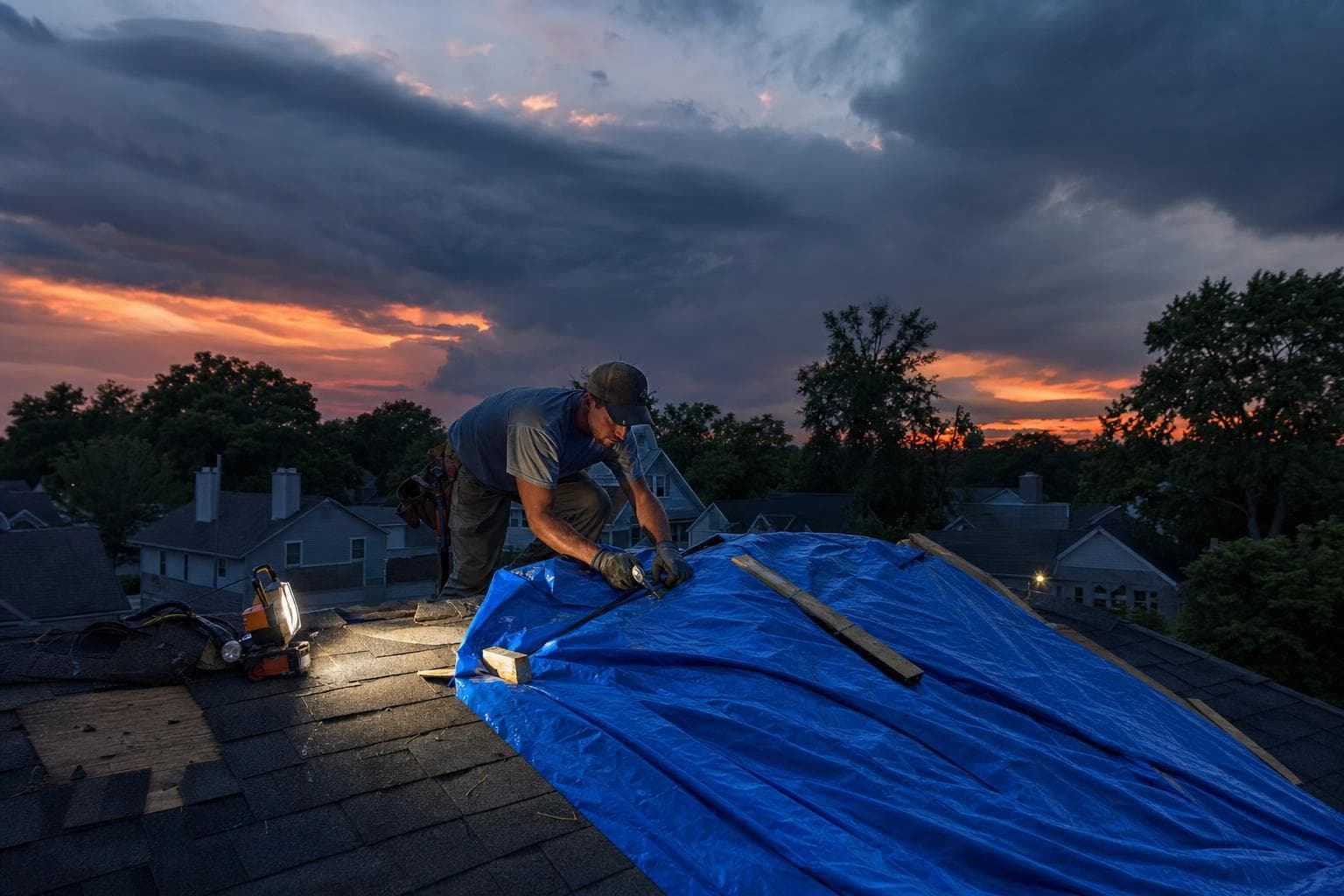
Active water entry, an open roof, a fallen limb, loose material, or a sagging interior can require immediate action. Safety comes first, followed by photographs and temporary protection that sheds water without hiding more evidence than necessary. The permanent repair belongs in a separate written scope once access, weather, and materials allow a real diagnosis.
Before authorizing work, ask what the emergency charge covers, how the roof will be protected, how long that protection is expected to function, and whether any portion is credited toward permanent work. Keep the emergency invoice, photographs, and follow-up estimate together.
How Georgia weather changes the emergency response
Georgia roofs take their worst beating from severe thunderstorms that bring hail and damaging straight-line winds, with the Atlanta metro and north Georgia seeing repeated hail seasons and the whole state exposed to tornado risk. Long, hot, humid summers add a second kind of wear: heat ages shingles faster than in cooler climates, and the moisture feeds the dark algae streaking you see on so many southern roofs. North Georgia can pick up occasional winter ice that stresses flashing and gutters, and the Savannah coast can catch wind and wind-driven rain from tropical systems. The right roof for your home depends on which of these your area actually sees.
Emergency access in Georgia depends on wind, lightning, rain, snow, ice, heat, daylight, and the stability of the damaged assembly. A responsible roofer may protect the interior first and delay roof access until conditions are safe. That is a safety decision, not a reason to leave the permanent scope undefined.
What an emergency roof response should accomplish
Emergency work has two scopes, immediate protection and the permanent fix. Keeping them separate prevents an urgent tarp or temporary seal from turning into an unexamined replacement contract while rain is still entering the home. Compare the response charge, temporary material, anchoring method, covered area, documentation, return schedule, and permanent-repair handoff. The emergency visit should make the next decision clearer rather than using urgency to bypass it.
Immediate work to define
- Active leak containment
- Emergency tarping when a permanent fix can't happen immediately
- Damage photos before anything is covered
- Temporary sealing of openings and punctures
- A permanent repair or replacement scope with pricing
Conditions that change the response
- After-hours or storm-week timing
- Whether water is actively coming in
- Size of the opening and tarp coverage needed
- Roof pitch, height, and wet-condition access
- Whether the permanent fix is a repair or a replacement
What to confirm before the emergency visit ends
During the first visit, compare response time, access and safety plan, temporary materials, anchoring method, documentation, and the fee for protection. Compare permanent repair proposals later, once the damage can be inspected in safe conditions.
- The contractor pushes a full replacement contract during the emergency visit
- No photos are taken before the damage is covered
- The emergency charge is vague or quoted only verbally
- A loose tarp is thrown on without anchoring that sheds water
- What will tonight's visit accomplish, protection or permanent repair?
- Is the emergency charge credited toward the permanent fix?
- Will you document the damage before covering it?
- When can the permanent repair happen, and what will it cost?
What emergency roof work costs in Georgia
Emergency pricing separates the urgent protection visit from the permanent work. A temporary response commonly falls around $300-$1,350 in Georgia; the follow-up repair is then priced from the damage found after safe access is available.
- Emergency protection visit
- Response, documentation, and temporary protection before the permanent diagnosis
- $300-$1,350
- Standard roof tarp
- Protected area, pitch, height, anchoring, and timing drive the number
- $450-$1,900
- Typical permanent repair
- Priced separately once the failed component and repair boundary are known
- $400-$2,400
- Repair with limited decking replacement
- Contained carpentry plus restoration of the roofing assembly above it
- $1,100-$6,700
Cost ranges are estimates developed from standardized project scopes and reviewed pricing inputs. Government labor and regional cost data are used where applicable. See our Pricing Methodology for the exact sources, calculations, and review date. Actual prices vary by property, scope, materials or equipment, location, and provider.
Rules, claims, and contractor checks
Storm contracts, cancellation rights, deductible rules, licensing, and claim representation can vary in Georgia. Do not sign a broad assignment or full replacement agreement simply because a crew arrived during the emergency; review the written scope after the home is protected.
A "licensed roofer" doesn't mean much on its own in Georgia
Georgia does not issue a standalone roofing license, so there is no state roofing credential to check. Roofing falls under the general contractor system run by the State Licensing Board for Residential and General Contractors at the Georgia Secretary of State, and a contractor only needs a residential or general contractor license once a job tops $2,500 in combined labor and materials. That means most full roof replacements should be done by a licensed contractor, but "licensed" alone says little about quality, so verify the rest before you sign.
Your roofer can't pay your deductible, and shouldn't offer to
Under Georgia law (O.C.G.A. Sec. 33-24-9.1, from House Bill 423), it is unlawful for a contractor to pay, waive, rebate, or absorb your insurance deductible to get you to file a claim or buy their services. The Georgia Insurance Commissioner's Bulletin 18-EX-3 spells out that doing so is insurance fraud, and both the contractor and the homeowner can be exposed. So a roofer pitching a "free roof" by eating your deductible is steering you toward fraud, not handing you a deal.
Your insurer is on a clock once you file
Georgia regulates how fast carriers handle first-party property claims. After you submit a completed proof of loss, your insurer generally has to confirm or deny the claim within 15 days, and within 30 days of the claim being reported if no proof of loss is required. Many Georgia policies follow the state's standard fire-policy language and ask for that proof of loss within 60 days of the loss, so document hail and wind damage early. If a carrier mishandles your claim, you can file a complaint with the Georgia Office of Commissioner of Insurance and Safety Fire.
Because Georgia has no standalone roofing license, vet a roofer on what you can actually verify. Confirm the company holds the right residential or general contractor license for a replacement (jobs over $2,500), and ask for proof of current general-liability and workers'-compensation insurance so you are not on the hook if someone is hurt on your roof. Then check a real local track record: references, recent addresses you can drive past, and manufacturer certifications. Be especially wary of out-of-town "storm chasers" who appear right after a hail or wind event, push you to sign fast, and offer to handle your whole claim. The Georgia Attorney General's Consumer Protection Division warns about exactly this after every major storm.
Sources: Georgia Secretary of State (State Licensing Board for Residential and General Contractors) · Georgia Secretary of State (Public Adjusters, Roofing Contractors and Homeowners; HB 423 / deductible law) · Georgia Office of Commissioner of Insurance and Safety Fire (file a consumer complaint) · Georgia Attorney General's Consumer Protection Division (storms and fraud / storm chasers)
Common questions about emergency roof repair in Georgia
What counts as a roofing emergency in Georgia?+
Active interior water, a roof opening, a fallen tree or limb, loose material threatening people or property, a sagging ceiling, or water near electrical systems can require urgent action. Call emergency services or the utility first when life safety or power is involved.
Should emergency work be temporary or permanent?+
It depends on safe access, weather, material availability, and whether the source is clear. Temporary protection is appropriate when permanent work cannot be completed correctly. The contractor should label it as temporary and provide the next inspection or repair step in writing.
Will insurance reimburse emergency roof work in Georgia?+
Possibly, but reimbursement depends on the cause of loss, policy, limits, and whether the expense was reasonable and necessary. Photograph conditions when safe, keep invoices and receipts, notify the carrier promptly, and ask how temporary work should be submitted.
What should I avoid signing during an emergency visit?+
Avoid an unclear full-roof contract, assignment of benefits, claim-representation agreement, or open-ended authorization you have not reviewed. Approve only the protection you understand, keep a copy, and compare the permanent scope after the immediate risk is controlled.
Which Georgia rules should I check before signing a emergency repair contract?+
Start with the verified state guidance on this page, including A "licensed roofer" doesn't mean much on its own in Georgia; Your roofer can't pay your deductible, and shouldn't offer to; Your insurer is on a clock once you file. Then confirm the permit authority and any local contractor requirement for the property address. Insurance coverage and policy interpretation remain separate from the roofing contract.
Emergency Repair across 20 Georgia cities
Choose the nearest Georgia city page to find local storm context and service coverage. During a widespread event, ask for a realistic response window rather than an unsupported arrival promise.
