Updated July 27, 2026

3D Roofs Editorial Team
Editorial Standards
If your roof problem is small and contained, repair usually makes sense. If the damage is spread out, the roof is older, or the weak spots keep stacking up, replacement is often the better buy. In California, that decision also depends on what is wearing your roof out. Heavy sun and heat dry out asphalt. Winter atmospheric-river storms push water into weak flashing and worn underlayment. Near the coast, salt air corrodes metal parts faster. In the foothills, mountains, and much of the wildland-urban interface, fire and wind-blown embers matter more than freeze-thaw. The goal is simple: spend the least money that still gives you a reliable roof.
Should you repair or replace your roof in California?
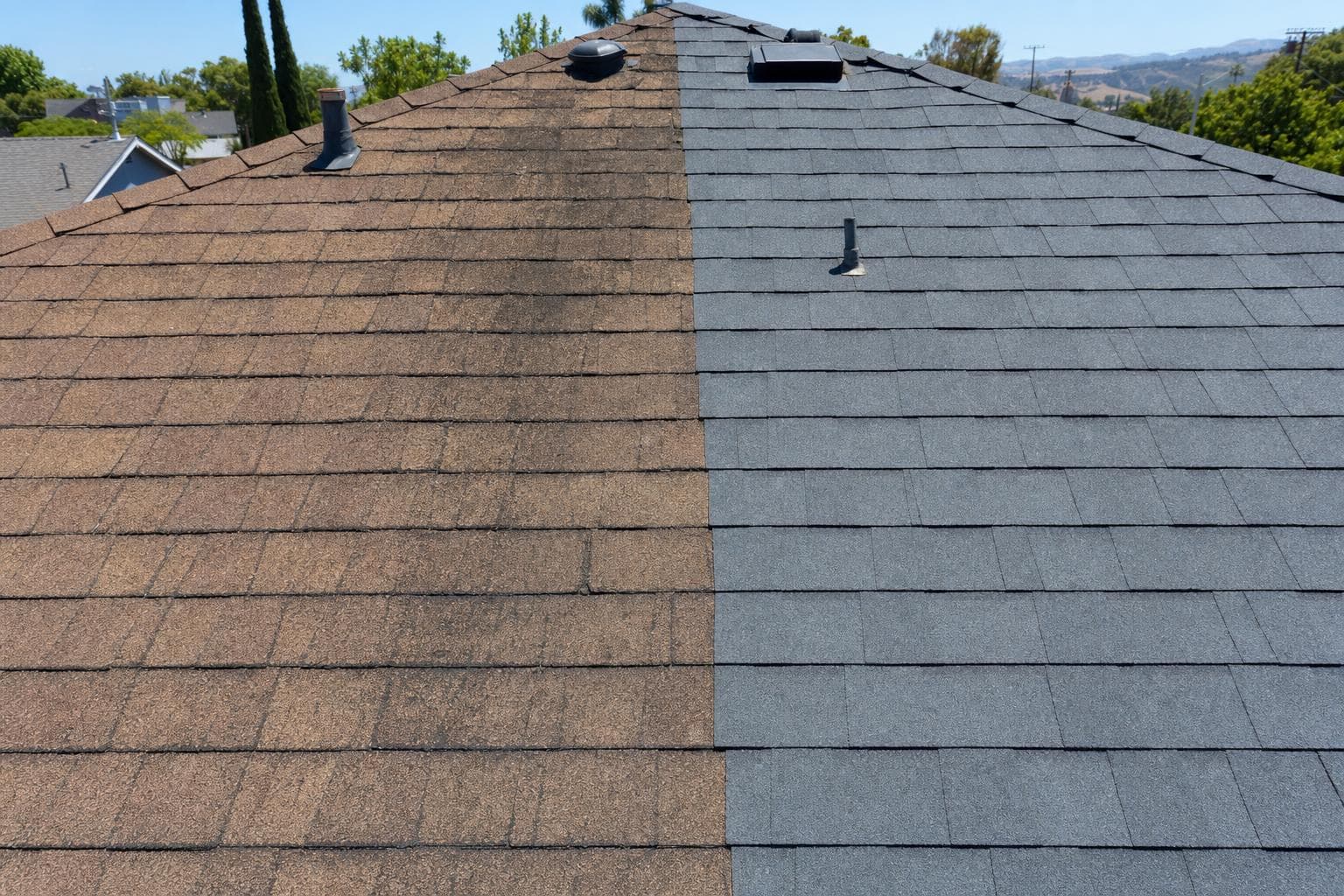
Start with the damage pattern. Repair is usually the right call when the issue is isolated, like a small leak around flashing, a limited patch of missing shingles, or damage confined to one section. Replacement makes more sense when problems show up across multiple slopes or roof components, like recurring leaks, broad shingle wear, failing underlayment, widespread granule loss, or soft decking in more than one area. For current California repair planning related to roof repair vs replacement, use the maintained cost guide, then compare the contractor's measured scope and unit prices. A full replacement costs more up front, but it can stop the cycle of repeat repairs and hidden water damage when the whole system is worn out.
What is a fixed damage threshold for roof repair vs. replacement?
For roof repair vs replacement in California, do not use a fixed damage percentage as the decision rule; compare the repairable area, roof condition, material availability, code requirements, and written scopes. That rule is not a law, it is a practical line. Once damage reaches that level, patching one area often leaves you with other aging sections ready to fail next. You can end up paying for a repair now, then another repair later, and still face replacement soon after.
Does roof age matter more than the current leak?
Yes, age matters because the visible leak is often just the symptom. A newer roof with one storm-related problem is usually a repair candidate. An older roof with dry, brittle shingles, repeated patch history, or wear across several areas is often telling you the system is spent. In California, statewide heavy UV and heat load ages shingles and dries out asphalt faster than in cooler, cloudier climates. That means a roof can look only partly damaged from the ground while the material has already lost the flexibility and sealing ability it needs. If your current leak comes with broad aging signs, replacement is often the safer long-term call.
Talk to a roofer today
Planning ranges, scope details, and a direct path to request a roofing quote.
How does California weather change the repair-or-replace decision?
California weather changes the call because the cause of failure is different from one area to another. If you live where heavy sun and heat are the main stressors, a localized repair can work when the rest of the shingles still have life left. If winter atmospheric-river storms have been pushing wind-driven water into several weak points, widespread replacement becomes more likely because the problem may be in the underlayment and flashing system, not just the top layer. Near the coast, salt air can corrode metal fasteners and components fast, so a leak may point to deeper hardware problems. In fire-prone areas, material choice matters more, and a replacement can be the right time to move to a roof assembly that fits your local exposure better.
- Hot inland areas: UV and heat can dry out asphalt faster, so look for brittleness, curling, and loss of sealing.
- Storm-exposed areas: heavy rain and wind-driven water often expose weak flashing, penetrations, valleys, and worn underlayment.
- Coastal areas: salt air can corrode fasteners and metal components, which can turn a small leak into a broader system issue.
- Foothills, mountains, and WUI areas: fire and embers should shape your replacement material choice, not just the repair bill.
When is a full roof replacement the better value?
Replacement is the better value when you are paying to chase the same roof problem over and over, when damage is widespread, or when code and material upgrades would make a major repair close to replacement territory anyway. It is also the better move when you want a cleaner reset on flashing, underlayment, ventilation, and exposed decking repairs in one project. For roof repair vs replacement in California, ask the contractor to put the expected working days and weather plan in writing; timing depends on roof size, material, access, crew scheduling, and conditions found after tear-off. For roof repair vs replacement in California, treat a steep or difficult-to-access roof as a scope variable that the contractor should measure and price explicitly. For 2026 market pricing in California, Class 3 is $7.50/sq ft ($7.50 on a typical 2,000 sq ft roof), Class 4 is $8.75 ($17,375), and standing seam is $19.50 ($38,812). For a broader breakdown, full local pricing lives on the California cost page and the calculator.
What California code rules can push you toward replacement?
The biggest code triggers are fire rules, energy rules, and permit rules. In fire zones, your roof choice may be dictated by code. In some climate zones, a large re-roof can trigger cool-roof requirements. And because a re-roof needs a permit, the contractor requirements are not optional. These issues matter most when you are replacing a large share of the roof, not doing a small repair.
- Your roofer must hold a California state license (C-39): California licenses contractors at the state level through the Contractors State License Board (CSLB), and roofing is its own classification: the C-39 Roofing Contractor license. A license is required for any job where labor and materials total an amount that must be confirmed for the written scope or more (a threshold raised from an amount that must be confirmed for the written scope by AB 2622 on January 1, 2025), and for any job that needs a building permit, regardless of price. Because a re-roof needs a permit, a legitimate roofer on a full roof must be licensed. "Unlicensed roofer" is not a gray area in California, it is a red flag.
- In fire zones, code dictates your roof: Class A under Chapter 7A. If your home is in a Wildland-Urban Interface (WUI) Fire Area or a high or very-high fire hazard severity zone, California building code (Chapter 7A of the California Building and Residential Codes, enforced through the State Fire Marshal) requires a Class A roof assembly, the highest fire rating tested under ASTM E108 / UL 790. Eaves, valleys, and roof penetrations also have to resist ember intrusion. Most asphalt shingle, concrete or clay tile, and metal roofs qualify, wood shake does not. Check whether your address falls in one of these zones before you choose a material.
- Energy law (Title 24) can require a "cool roof" on a re-roof. California's Building Energy Efficiency Standards (Title 24, Part 6) regulate roofing on a re-roof that replaces 50% or more of the roof surface. In certain climate zones, the standards set minimum solar reflectance and thermal emittance, which a "cool roof" product meets, and any roofing used to comply has to be rated by the Cool Roof Rating Council (CRRC). Whether it applies to you depends on your climate zone and roof slope, so confirm the requirement with your contractor or building department before the tear-off.
Should you choose Class 3, Class 4, or standing seam when you replace?
In California, fire rating usually matters more than hail rating, but your replacement choice still affects cost, durability, and possible insurance savings. If you need a straightforward asphalt replacement, Class 3 is the lower 2026 market pricing point. For roof repair vs replacement in California, any insurance credit depends on the carrier, policy, address, and exact product; get the amount and documentation requirements from the insurer in writing. Standing seam is a bigger investment and may make sense if you want metal for the long run or for specific local conditions. In fire-prone areas, a Class A fire-rated assembly is one of the home-hardening measures that can earn an insurance discount under the state's Safer from Wildfires program. In hotter inland climate zones, a CRRC-rated cool roof can also be required by Title 24 and may lower attic and cooling loads.
How do you make the final call on your roof?
Make the call by weighing four things in order: how much of the roof is affected, how old and worn the system is, what your local California weather has likely done to the hidden components, and whether replacement would trigger code requirements that improve the long-term result. If the issue is isolated and the rest of the roof is in solid shape, repair is usually the smart spend. Before you sign, confirm the scope spells out tear-off, decking, underlayment, flashing, ventilation, and cleanup. If you are comparing options, you can use the California cost page and the calculator to see where local 2026 market pricing lands for your home.
Sources reviewed
- CAL FIRE / State Fire Marshal - Wildland-Urban Interface building standards (Chapter 7A)
- California Dept. of Insurance - Safer from Wildfires (roof & home-hardening discounts)
- Insurance Institute for Business & Home Safety: RICOWI Roof Guide
- Florida Department of Financial Services: Homeowners Insurance Overview
- Insurance Institute for Business & Home Safety: Roof 101
Cost ranges are estimates developed from standardized project scopes and reviewed pricing inputs. Government labor and regional cost data are used where applicable. See our Pricing Methodology for the exact sources, calculations, and review date. Actual prices vary by property, scope, materials or equipment, location, and provider.
Related services
Updated July 27, 2026
3D Roofs Editorial Team
Editorial Standards