Updated July 27, 2026

3D Roofs Editorial Team
Editorial Standards
A roof replacement in Arizona in 2026 usually starts with your roofing material, then shifts based on tear-off, roof pitch, decking repairs, access, and permits. For 2026 Arizona market pricing, Class 3 shingles run $6.25 per sq ft, or $12,401 on a typical 2,000 sq ft roof. Class 4 shingles run $7.25, or $14,503. Standing seam metal runs $16.00, or $32,048. If you want a faster way to compare your home to these numbers, check the full local pricing on the Arizona cost page and the calculator.
How much does a roof replacement cost in Arizona in 2026?
The short answer is that many Arizona homeowners land somewhere around the material rates above, but your real number depends on the roof itself. On a typical 2,000 sq ft roof, 2026 Arizona market prices are $12,401 for Class 3 shingles, $14,503 for Class 4 shingles, and $32,048 for standing seam metal. Those are solid starting points for budgeting, especially if your roof has normal access and no major hidden damage.
Why do Arizona roofs need replacement sooner than homeowners expect?
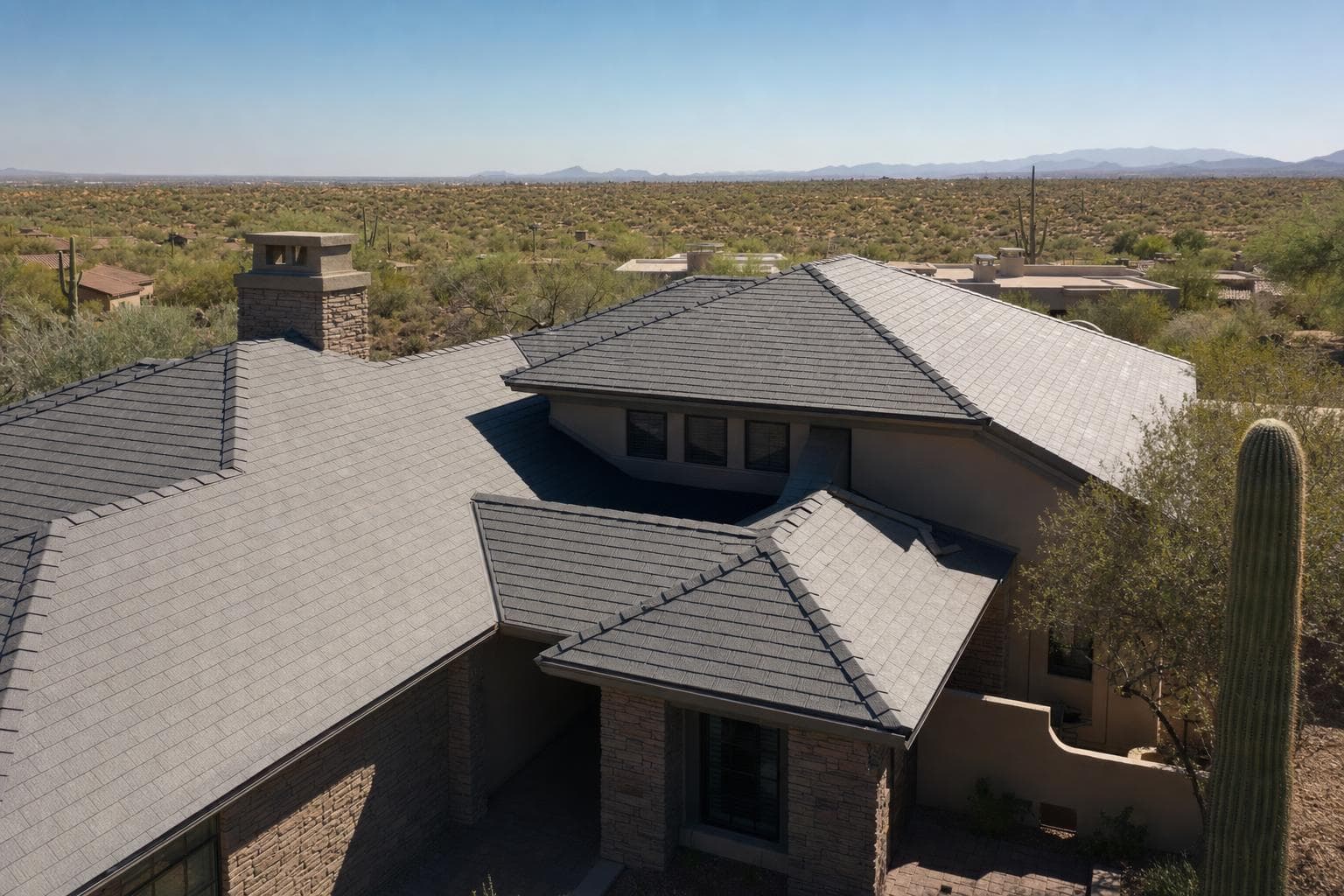
Arizona roofs wear out fast because extreme heat and UV are constant, then monsoon weather tests every weak point. Roof surfaces can top 150 degrees in summer, and that thermal cycling and ultraviolet load break down shingles, sealants, coatings, and the elastomeric topcoat on foam roofs faster than almost anywhere else. Then the monsoon arrives, and microburst winds, wind-driven dust, and intense short downpours find any weak flashing, fastener, or seam, with some areas seeing hail too. Flat and low-slope homes here often run spray-foam or tile systems, and the right roof for your home depends on how much sun, wind, and water it actually takes.
What moves the price of a new roof up or down?
The biggest price movers are pitch, tear-off, decking, access, and permits. For roof replacement cost in Arizona, treat a steep or difficult-to-access roof as a scope variable that the contractor should measure and price explicitly. Tear-off matters because removing old roofing adds labor, cleanup, and dump costs. Decking matters because if the wood below the roof covering is soft, split, or water-damaged, those sections need replacement before the new roof goes on. Access matters because a simple driveway setup is easier than hauling materials through a tight lot or over landscaping. Permits can also change the total, depending on your city and the job scope.
- Pitch: steeper roofs usually cost more because the work is slower and safety setup is greater
- Tear-off: removing old layers adds labor and disposal
- Decking: damaged wood below the roof covering raises the number quickly
- Access: difficult staging, tight lots, or multi-level layouts can increase labor
- Permits: local permit requirements can add cost and paperwork
Talk to a roofer today
Planning ranges, scope details, and a direct path to request a roofing quote.
How much more does a steep roof cost?
That does not mean every steep roof is priced the same, because complexity still matters. A simple steep gable roof is different from a steep roof with dormers, valleys, and hard-to-reach sections. Still, if you are comparing quotes and one roof has a clearly steeper pitch than another, that 10% bump is a useful rule of thumb.
Is it cheaper to repair a roof instead of replacing it?
Sometimes, yes, but only when the problem is limited and the rest of the roof still has life left. For current Arizona repair planning related to roof replacement cost, use the maintained cost guide, then compare the contractor's measured scope and unit prices. But if heat, UV, and repeated monsoon exposure have aged the whole system, repair money can become repeat money. In that case, replacement may cost more upfront but save you from chasing leaks and patchwork.
How long does a roof replacement take in Arizona?
For roof replacement cost in Arizona, ask the contractor to put the expected working days and weather plan in writing; timing depends on roof size, material, access, crew scheduling, and conditions found after tear-off. That is the normal window for many homes once materials are staged and the crew starts. The actual timeline can stretch if the roof is large, steep, cut up, or if hidden decking damage shows up after tear-off. Weather can also interrupt scheduling, especially during monsoon season, when wind and sudden rain can pause work for safety and waterproofing reasons.
Is Class 4 worth the extra cost in Arizona?
For some homes, yes, Class 4 is worth comparing because Arizona sees monsoon wind and, in some areas, hail. The 2026 Arizona market price is $7.25 per sq ft, or $14,503 on a typical 2,000 sq ft roof, compared with $6.25 per sq ft, or $12,401, for Class 3. For roof replacement cost in Arizona, any insurance credit depends on the carrier, policy, address, and exact product; get the amount and documentation requirements from the insurer in writing. That does not guarantee savings on your policy, because any insurance credit is carrier- and policy-specific, so ask the insurer about the exact product and required documentation before using a credit in the budget.
What should you look for in an Arizona roofing quote?
A good quote should tell you exactly what is being removed, installed, and replaced, not just give you a lump sum. You want the scope to spell out tear-off, decking, underlayment, flashing, ventilation, and cleanup. It should also make clear whether permit costs are included and whether decking replacement is included or billed only if needed. If a quote looks much lower than the others, check what has been left out first. A low number often means thin scope, not a better deal.
- Material type and product line
- Whether tear-off is included
- How many layers are being removed
- Underlayment details
- Flashing replacement details
- Decking replacement terms, included or extra as needed
- Ventilation scope
- Cleanup and disposal
- Permit responsibility and whether permit cost is included
- Any assumptions about access or site conditions
What Arizona legal and insurance details should you check before you sign?
First, confirm the contractor is properly licensed for your job, because Arizona requires a contractor license from the Registrar of Contractors for any roofing job of an amount that must be confirmed for the written scope or more, or any job that needs a building permit, no matter the price. Roofing is its own classification: R-42 for residential work, C-42 for commercial, and CR-42 for both. The ROC Recovery Fund only protects you if you hired a licensed contractor. Arizona runs a Residential Contractors' Recovery Fund, paid for by contractor assessments, that can reimburse an owner-occupant harmed by a licensed residential contractor's poor work, abandonment, or failure to perform, up to a statutory maximum of an amount that must be confirmed for the written scope per residence. For roof replacement cost in Arizona, coverage depends on the policy language, cause of loss, exclusions, and the insurer's decision; verify those terms in your own documents. For roof replacement cost in Arizona, review the declarations and endorsements for any wind, hail, hurricane, or named-storm deductible. Ask the insurer to show the policy-specific calculation in writing instead of relying on a generic percentage.
What is the best way to budget for your Arizona roof replacement?
Start with the 2026 market pricing for your material, then add room for the real-world variables that tend to change the total. If you already know there will be tear-off, possible decking repairs, difficult access, or permit requirements, treat those as likely cost drivers, not surprises. For most homeowners, the best next step is to compare a clear written scope against the Arizona cost page and the calculator so you can judge whether a quote is complete, not just whether it is cheap.
Sources reviewed
- Arizona DIFI (homeowners insurance, storms & claims)
- Arizona Registrar of Contractors (license classifications & requirement)
- Asphalt Roofing Manufacturers Association: Residential Asphalt Roofing Manual: Ventilation Best Practices
- CAL FIRE: Home Hardening
- California Department of Insurance: Safer from Wildfires
Cost ranges are estimates developed from standardized project scopes and reviewed pricing inputs. Government labor and regional cost data are used where applicable. See our Pricing Methodology for the exact sources, calculations, and review date. Actual prices vary by property, scope, materials or equipment, location, and provider.
Related services
Updated July 27, 2026
3D Roofs Editorial Team
Editorial Standards