Updated July 27, 2026

3D Roofs Editorial Team
Editorial Standards
For does insurance cover roof replacement in Arizona, coverage depends on the policy language, cause of loss, exclusions, and the insurer's decision; verify those terms in your own documents. That difference matters in Arizona because roofs are exposed to extreme heat and UV before monsoon season ever starts. If a storm created functional damage that lets water in or shortens the roof's ability to protect your home, you may have a claim. If the roof is simply dried out, brittle, slipping, or worn from years of desert exposure, that is usually a maintenance issue, not an insurance loss.
Does homeowners insurance cover roof replacement in Arizona?
Yes, but only when the loss is sudden and covered by your policy. That means a storm-related replacement may be covered when the roof was functioning before the event and the damage came from a specific weather incident. In contrast, Arizona roofs often break down because roof surfaces can top 150 degrees in summer, and that thermal cycling and ultraviolet load wear out shingles, sealants, coatings, and foam topcoats over time.
How does the policy distinguish event damage from wear?
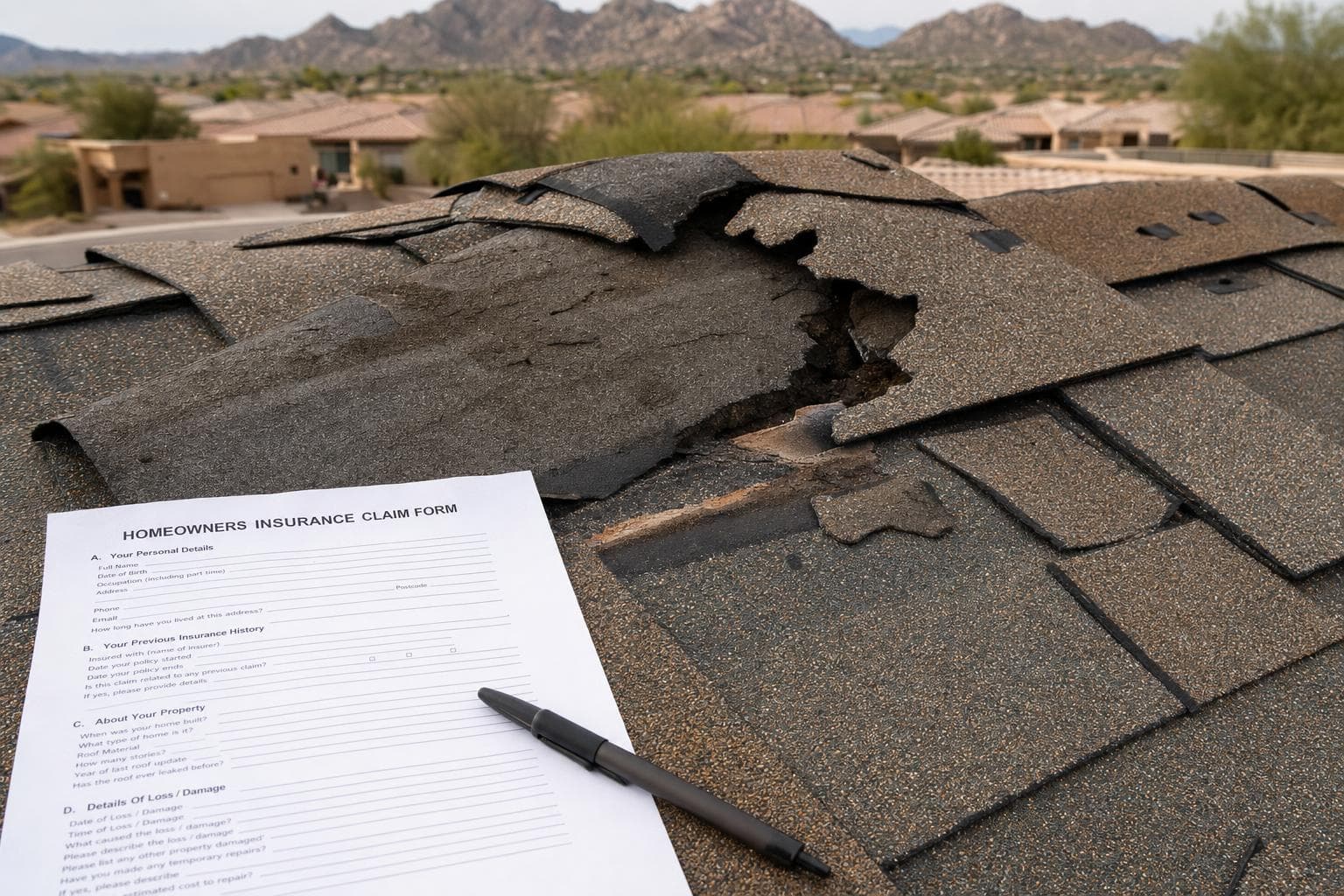
Covered damage is usually functional storm damage. Not covered damage is usually wear and tear. In plain terms, insurance is looking for evidence that monsoon wind, hail, or another covered event caused a real loss. Functional damage can include missing shingles after wind, punctures from hail, torn flashing, lifted seams, or impact damage that compromises the roof system. On flat and low-slope homes, wind-driven rain can expose weak seams and flashing details that were damaged in the storm.
- Usually not covered: aging, heat cracking, UV breakdown, worn sealants, and neglected maintenance
- Usually not covered: flooding, even if the storm that caused it was severe
How do you tell storm damage from normal Arizona roof wear?
The shortest answer is this: storm damage is tied to an event, wear is tied to time. Arizona climate makes that line easy to blur because extreme heat and UV steadily weaken roofing materials, then monsoon wind and dust exploit those weak spots. A claim is stronger when the damage lines up with a recent storm and shows a clear change in condition. It is weaker when the roof shows widespread aging with no clear storm pattern. Your roofer can document what they see, but your insurer will make the coverage decision. Before you commit to a full replacement, it helps to compare current 2026 market pricing on the Arizona cost page and use the calculator so you know the stakes if the claim is approved, partially approved, or denied.
Talk to a roofer today
Planning ranges, scope details, and a direct path to request a roofing quote.
Will your deductible affect whether a roof claim is worth filing?
Yes, your deductible can make or break the value of a claim. For does insurance cover roof replacement in Arizona, review the declarations and endorsements for any wind, hail, hurricane, or named-storm deductible. Ask the insurer to show the policy-specific calculation in writing instead of relying on a generic percentage. That means your out-of-pocket cost for monsoon damage may be higher than you expect if you only remember your base deductible. This is why it is smart to check your declarations page before storm season and again before you file. A smaller repair might not clear the deductible, while a full replacement often does.
- For current Arizona planning prices related to does insurance cover roof replacement, use the cost guide and calculator, then compare the contractor's property-specific written scope.
- For does insurance cover roof replacement in Arizona, treat a steep or difficult-to-access roof as a scope variable that the contractor should measure and price explicitly.
What should you do right after roof damage in Arizona?
Start by documenting the damage and contacting your insurer before you start repairs. That comes straight from Arizona guidance. Take clear photos of the roof, any interior leaks, and debris or visible impacts around the home. Save notes about when the storm hit and what you saw afterward. Then call your insurer and ask about the next steps. Emergency measures to limit further damage are one thing, but major repairs before the claim inspection can create problems. For does insurance cover roof replacement in Arizona, ask the contractor to put the expected working days and weather plan in writing; timing depends on roof size, material, access, crew scheduling, and conditions found after tear-off.
How long does an Arizona roof insurance claim usually take?
Arizona sets some basic claim-handling deadlines. For does insurance cover roof replacement in Arizona, ask the insurer and state insurance regulator for the current notice, proof-of-loss, inspection, acknowledgment, and decision deadlines that apply to the claim. That does not mean every roof claim is simple, because inspections, document requests, and scope disagreements can still affect the timeline. But those deadlines do give you a framework for follow-up if the process stalls. Keep every email, estimate, photo, and claim note in one place so you can respond quickly when the insurer asks for more information.
Should you repair the roof or replace it if insurance pays?
It depends on the extent of the functional damage and whether spot work will restore the roof system. If the storm damage is isolated, a repair may be enough. If the damage is widespread or the roof system cannot be reliably restored, replacement may make more sense. Arizona adds another wrinkle: the roof may already be stressed by heat and UV, so storm damage can push an aging roof past the point where a repair is practical. If you are weighing materials during a replacement, a verified Class 4 shingle may be worth comparing where monsoon hail is a concern. For does insurance cover roof replacement in Arizona, any insurance credit depends on the carrier, policy, address, and exact product; get the amount and documentation requirements from the insurer in writing.
How do you choose the right roofer for an insurance job in Arizona?
In Arizona, checking the contractor's license is not optional. Arizona requires a contractor license from the Registrar of Contractors for any roofing job of an amount that must be confirmed for the written scope or more, or any job that needs a building permit, no matter the price. Roofing classifications include R-42 for residential work, C-42 for commercial, and CR-42 for both. You should look up the contractor on the ROC's free contractor search and confirm the license is active, the classification covers roofing, and the bond is current. The search also shows the qualifying party and any complaint history.
That check also affects your protection if something goes wrong. Arizona runs a Residential Contractors' Recovery Fund that can reimburse an owner-occupant harmed by a licensed residential contractor's poor work, abandonment, or failure to perform, up to a statutory maximum, currently an amount that must be confirmed for the written scope per residence. It only covers contractors who were properly licensed when you signed, paid, or started. Along with that license check, ask your roofer for a written scope that spells out tear-off, decking, underlayment, flashing, ventilation, and cleanup. If you are comparing the insurance outcome to paying out of pocket, your best next step is to review full local pricing on the Arizona cost page and use the calculator to model the numbers.
What is the bottom line for Arizona homeowners?
If your roof was damaged by monsoon wind or hail, insurance may cover the replacement. If your roof is simply worn out from Arizona heat, UV, and age, it usually will not. Your best move is to document the damage, read the deductible section on your declarations page, contact your insurer before major repairs, and have a roofing contractor you are considering inspect the roof and explain whether the issue looks like functional storm damage or normal wear. That gives you a clearer path, whether you file a claim, make a repair, or plan for a full replacement on your own terms.
Sources reviewed
- Arizona DIFI (homeowners insurance, storms & claims)
- Arizona Registrar of Contractors (license classifications & requirement)
- Georgia Attorney General Consumer Protection Division: Beware of Roofers Scamming Storm Victims
- Illinois Department of Financial and Professional Regulation: Find a Licensed Roofer: State Law and Consumer Guidance
- Arizona Department of Insurance and Financial Institutions: Homeowners Insurance
Plan with current pricing
Related services
Updated July 27, 2026
3D Roofs Editorial Team
Editorial Standards