
Updated July 10, 2026

3D Roofs Editorial Team
Editorial Standards
How to diagnose a roof leak in Arizona without guessing
Water can travel along decking, framing, insulation, and fasteners before it becomes visible indoors. That is why a useful leak investigation reviews the room, accessible attic, roof area above the evidence, and every transition that could admit wind-driven rain. The repair should correct the entry detail and check what the water affected on the way inside.
Document when the leak appears, which direction the weather came from, and whether plumbing or condensation could be involved. Ask the roofer to show the suspected entry point, explain how it was tested or inferred, and separate emergency protection from the permanent repair.
How Arizona weather changes the leak path
Arizona roofs fail where the desert hits hardest. Extreme heat and UV are the constant: roof surfaces can top 150 degrees in summer, and that thermal cycling and ultraviolet load break down shingles, sealants, coatings, and the elastomeric topcoat on foam roofs faster than almost anywhere else. Then the monsoon arrives, and microburst winds, wind-driven dust, and intense short downpours find any weak flashing, fastener, or seam, with some areas seeing hail too. Flat and low-slope homes here often run spray-foam or tile systems, and the right roof for your home depends on how much sun, wind, and water it actually takes.
Leak behavior in Arizona changes with storm direction, rainfall intensity, snow or ice, humidity, thermal movement, and how quickly wet materials can dry. A leak that appears only during wind-driven rain points to a different detail than steady moisture below an unvented bath duct or a plumbing line.
What a roof leak diagnosis and repair should cover
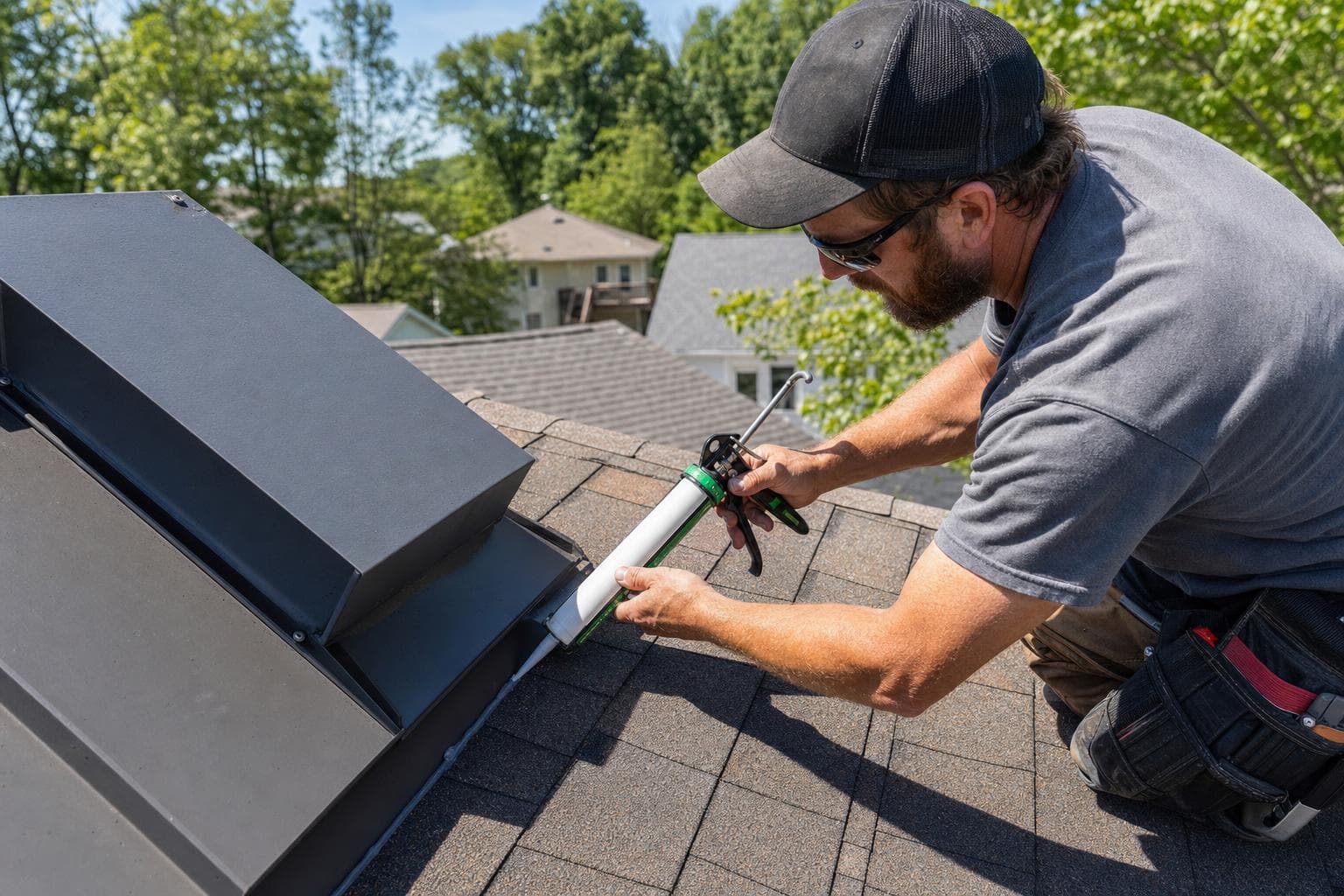
Leak repair should answer three questions in order: where water enters, how far it traveled, and whether the materials around that path remain sound. Skipping any of them turns a repair into a short-lived patch. Compare how each roofer will investigate the path, open the detail, replace damaged materials, integrate flashing or roofing, and verify the result. A tube of sealant may be part of a listed detail, but it should not substitute for a diagnosis.
Work the leak scope should include
- Interior leak review
- Attic moisture check when accessible
- Flashing, pipe boot, vent, valley, skylight, and shingle inspection
- Leak source repair
- Surrounding material check
Conditions that change diagnosis and cost
- Leak location
- Roof accessibility
- Whether water reached decking or insulation
- Whether the leak is from flashing, a penetration, or storm damage
- Whether temporary tarping is needed first
Questions to resolve before the roof is closed
Compare leak proposals by the entry point they identify and the detail they plan to rebuild. A quote that only promises to seal the leak does not tell you whether the roofer checked flashing, pipe boots, valleys, walls, skylights, vents, or wet decking.
- The contractor quotes a leak repair without looking above the leak path
- They only seal the visible stain area
- They cannot explain the actual entry point
- They do not check surrounding materials for hidden damage
- What caused the leak?
- How do you know that is the entry point?
- Will this repair hold through heavy rain?
- Is the rest of the roof still in good shape?
What roof leak repair costs in Arizona
A leak repair commonly lands around $400-$2,400 in Arizona, but the ceiling stain does not set the price. The entry point, roof access, material removed to expose it, and moisture found underneath determine the scope.
- Pipe boot / vent boot replacement
- One accessible penetration on a walkable roof; steep access costs more
- $200-$750
- Flashing repair at a wall or vent
- The transition is opened and correctly rebuilt, not just caulked over
- $350-$1,900
- Valley leak repair
- Both slopes are opened and the water-shedding channel is restored
- $500-$2,950
- Chimney or skylight flashing
- These transitions require careful opening, flashing, and tie-in work
- $750-$4,250
Cost ranges are estimates developed from standardized project scopes and reviewed pricing inputs. Government labor and regional cost data are used where applicable. See our Pricing Methodology for the exact sources, calculations, and review date. Actual prices vary by property, scope, materials or equipment, location, and provider.
Rules, claims, and contractor checks
If a recent event may have caused the leak, preserve photographs and temporary-work receipts before permanent work covers the evidence. Check local permit requirements and let the insurer answer policy questions while the roofer stays focused on diagnosis and construction scope.
In Arizona your roofer has to be licensed, by law
Arizona requires a contractor license from the Registrar of Contractors (ROC) for any roofing job of $1,000 or more, or any job that needs a building permit, no matter the price. Roofing is its own classification: R-42 for residential work, C-42 for commercial, and CR-42 for both. Doing licensed-level work without a license is a Class 1 misdemeanor in Arizona, so a roofer who is not licensed for your job is not a deal, it is a risk.
The ROC Recovery Fund only protects you if you hired a licensed contractor
Arizona runs a Residential Contractors' Recovery Fund (A.R.S. 32-1132), paid for by contractor assessments, that can reimburse an owner-occupant harmed by a licensed residential contractor's poor work, abandonment, or failure to perform, up to a statutory maximum (currently $30,000 per residence). The catch is right there in the statute: it only covers contractors who were properly licensed when you signed, paid, or started. Hire an unlicensed roofer and this safety net does not exist.
Read the deductible and roof terms before monsoon season
Arizona roof coverage depends on the reported cause and the policy's deductible, exclusions, roof provisions, and valuation method. Review the declarations page for any wind or hail deductible, flood exclusion, roof schedule, and replacement-cost or actual-cash-value term. After damage, document visible conditions safely, take reasonable temporary steps required to prevent additional loss, keep receipts, and contact the insurer about notice and inspection requirements before permanent repairs. Ask the Arizona Department of Insurance and Financial Institutions for consumer assistance if the carrier's explanation remains unclear.
Arizona does license roofers, so here "licensed" is something you can verify, and you should. Look the contractor up on the ROC's free contractor search and confirm three things before you sign: the license is active (not expired, suspended, or revoked), the classification covers roofing (R-42, C-42, or CR-42), and the bond is current. The same search shows the qualifying party and any complaint history. Remember the Recovery Fund only backs licensed contractors, so this check is also what protects your recourse if a job goes wrong. Then confirm general-liability insurance, real local references, and a written scope that spells out tear-off, decking, underlayment, flashing, ventilation, and cleanup.
Sources: Arizona Registrar of Contractors (license classifications & requirement) · Arizona Registrar of Contractors (Residential Contractors' Recovery Fund) · Arizona Revised Statutes 32-1132 (recovery fund eligibility) · Arizona DIFI (homeowners insurance, storms & claims)
Common questions about roof leak repair in Arizona
Why is the ceiling stain not directly below the Arizona roof leak?+
Water follows gravity but can run along the roof deck, rafters, fasteners, pipes, and insulation before dropping into the room. The exterior entry is often uphill or beside the visible stain, especially around valleys, walls, vents, chimneys, and other transitions.
What should happen during a roof leak investigation in Arizona?+
The roofer should review the interior evidence, inspect the attic when accessible, examine the roof area above and around the path, photograph likely entry details, and explain how the proposed repair addresses them. Moisture testing or controlled water testing may be appropriate when visual evidence is inconclusive.
Does one roof leak mean the whole roof needs replacement?+
No. A contained flashing, boot, valley, seam, or shingle failure can often be repaired when the surrounding roof is sound. Replacement deserves consideration when leak paths are multiplying, materials cannot accept a tie-in, decking damage is broad, or prior repairs keep failing.
What should I do while a Arizona roof leak is active?+
Keep people away from sagging ceilings and wet electrical areas, contain water when safe, move vulnerable belongings, and photograph the condition. Do not climb onto a wet or storm-damaged roof. Arrange safe temporary protection, then schedule the permanent diagnosis when conditions allow.
Which Arizona rules should I check before signing a leak repair contract?+
Start with the verified state guidance on this page, including In Arizona your roofer has to be licensed, by law; The ROC Recovery Fund only protects you if you hired a licensed contractor; Read the deductible and roof terms before monsoon season. Then confirm the permit authority and any local contractor requirement for the property address. Insurance coverage and policy interpretation remain separate from the roofing contract.
Leak Repair across 21 Arizona cities
Use the nearest Arizona city page to understand local storm and moisture patterns, then give the roofer the timing and location details specific to your leak.
