
Updated July 10, 2026

3D Roofs Editorial Team
Editorial Standards
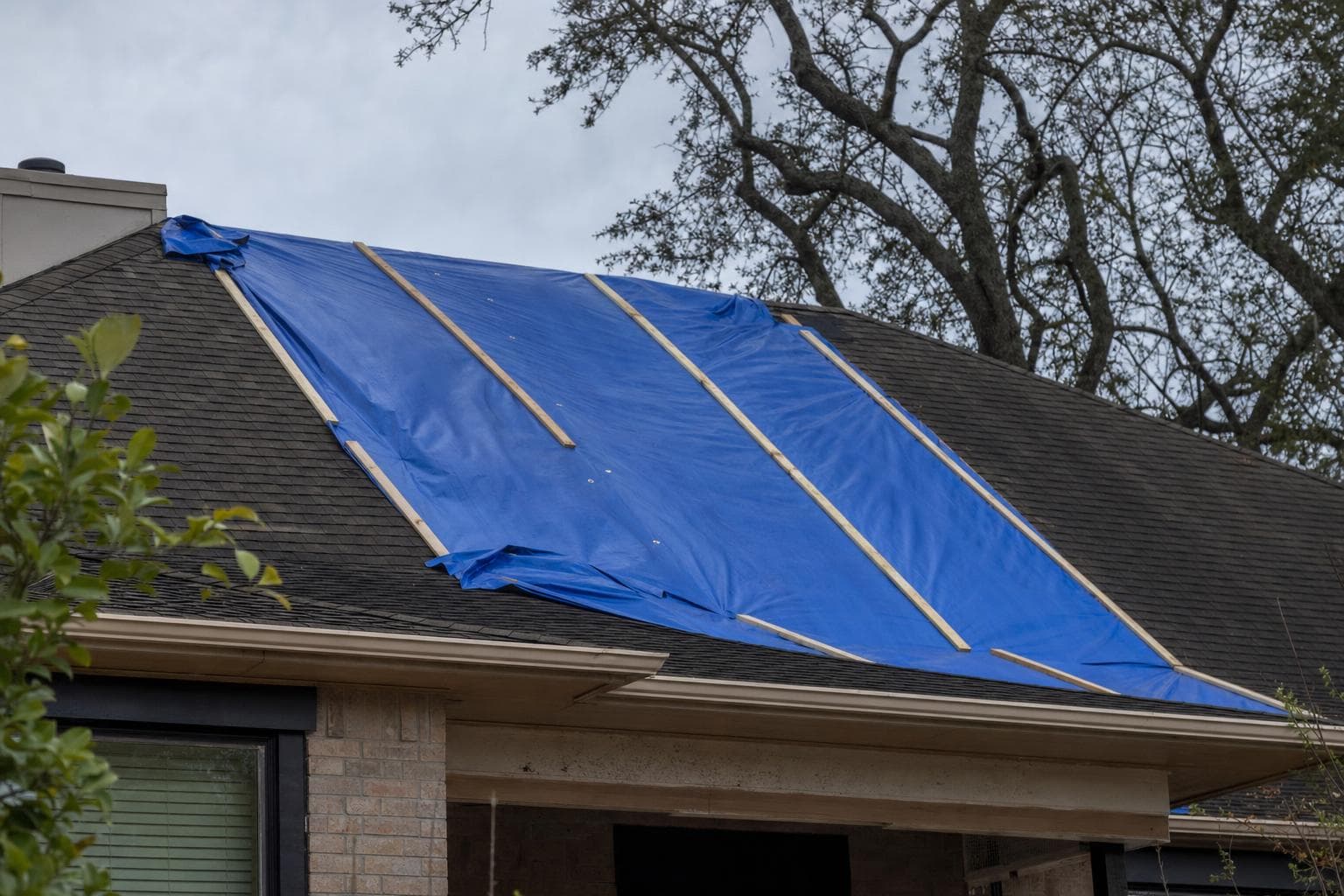
Roof tarping in Vancouver buys time between an open roof and the permanent repair. The tarp has to extend beyond the damage, stay anchored, and keep normal drainage working. Vancouver roofs face Pacific Northwest marine climate with wet, mild winters, dry summers, persistent moss pressure, and low UV. When you call, describe the opening, active water, timing, and current weather so the crew can plan safe access and enough temporary coverage. The complete roof diagnosis follows after the home is protected.
What a roof tarp needs to do in Vancouver
A tarp is successful when it keeps new weather out without creating another drainage problem. It is temporary protection, so the installation and the follow-up repair plan belong in the same conversation.
Cover beyond the visible opening
The protected area should extend uphill and to both sides of the damage because water can enter beyond the missing material. In Vancouver, conditions such as moss and algae growth from constant winter wet can make the opening larger than it appears from the yard.
Anchor for local weather
The tarp should stay taut, resist expected wind, and direct water downslope without feeding a valley, wall, or adjacent penetration. Vancouver roofs face Pacific Northwest marine climate with wet, mild winters, dry summers, persistent moss pressure, and low UV. That is why anchoring and drainage matter as much as the tarp material itself.
Set the permanent-repair handoff
Photographs and the tarp invoice should identify what was covered and any areas that could not be inspected. Schedule the permanent roof and moisture assessment promptly rather than waiting for the temporary cover to loosen or degrade.
What roof tarping costs in Vancouver
For planning, professional roof tarping often falls between $550-$2,400 in Vancouver. When water is entering or the roof is open, the first question is whether a crew can reach it safely and stabilize the opening. Protected area, pitch, stories, access, anchoring, weather, and response timing determine the final charge.
- Small accessible opening
- One limited roof area with straightforward access and anchoring
- $300-$1,100
- Standard tarp installation
- Typical protected area on an average residential roof
- $550-$2,400
- Large, steep, or high roof
- More material, time, anchors, and difficult access
- $1,300-$7,000
Cost ranges are estimates developed from standardized project scopes and reviewed pricing inputs. Government labor and regional cost data are used where applicable. See our Pricing Methodology for the exact sources, calculations, and review date. Actual prices vary by property, scope, materials or equipment, location, and provider.
For a deeper breakdown, open the roof tarping cost guide. Keep the emergency invoice separate from the permanent repair estimate so the protected area, response charge, removal, and next inspection stay clear.
What can complicate roof tarping in Vancouver
Vancouver roofs face Pacific Northwest marine climate with wet, mild winters, dry summers, persistent moss pressure, and low UV. Temporary protection has to account for the active weather, roof surface, drainage path, and whether the crew can reach the damaged area safely.
Conditions the crew needs to assess
- Where the opening begins and how far damage extends beyond what is visible
- Roof pitch, stories, wet surfaces, debris, and safe ladder access
- Whether the surrounding covering and deck can accept temporary anchoring
- Where water must drain without feeding a valley, wall, or another opening
Why the roof type changes the method
Asphalt shingles, metal panels, tile, and low-slope membranes do not use the same temporary attachment. The crew should avoid turning valleys or low areas into collection points and should state when unstable decking, broken material, or continuing weather prevents a complete inspection.
In Vancouver, the crew should also check whether moss and algae growth from constant winter wet or trapped moisture and rot in shaded north slopes opened a wider water path than the damage visible from the yard.
Once the opening is protected, schedule a roof inspection in Vancouver to diagnose the permanent work and any moisture that traveled beyond the opening.
How Vancouver weather affects temporary roof cover
Vancouver, across the Columbia from Portland, sees long wet winters that drive moss and algae growth, occasional windstorms off the Pacific, and rare ice and snow events.
NOAA storm reports logged 3 damaging thunderstorm-wind events and 2 tornadoes in Clark County from 2020 through 2025.
What the crew should account for
Current wind, rain, lightning, temperature, roof slope, wet surfaces, and debris determine whether exterior work can begin safely in Vancouver. The tarp still has to extend beyond the opening, stay taut, and preserve the roof's normal drainage path.
When the tarp needs to be checked
Review the tarp from a safe position after strong wind or heavy rain and call the installer if an edge lifts, water collects, attachment changes, or interior leaking returns. Do not climb onto a wet or storm-damaged roof to adjust it yourself.
What to record before and after
Photograph the uncovered opening when safe access allows, then record the protected area, anchoring method, installation date, inspection limits, and any interior water. Keep that record with the invoice so the permanent Vancouver roof and moisture assessment starts with a clear history.
Documenting roof tarping in Vancouver when insurance may be involved
Temporary protection and insurance coverage are separate questions. Photograph the opening before it is covered when safe access allows, keep the tarping invoice, and record what the crew could not inspect. The insurer decides whether the expense or permanent work is covered under the policy.
Moss damage is maintenance, not a covered claim.
For roof damage reported in Vancouver, coverage depends on the reported cause and the policy's deductible, exclusions, roof provisions, and valuation method; a roofer can document visible construction conditions, but the insurer decides coverage.
Proper ventilation helps prevent moisture-related decking rot.
What Washington law means before you approve emergency roof work
Temporary work can affect claim evidence and still needs clear authorization. Know what you are approving for immediate protection, keep a copy of the invoice, and review any permanent contract separately after the roof is stable.
You have the right to a clear claim explanation, prompt response, and timely claim handling
The Washington Office of the Insurance Commissioner says that as a policyholder, you are entitled to a clear explanation of what is covered, a prompt response from the insurance company, timely payments and a claim decision, and an appraisal if you disagree with the amount of your loss.
Your insurer has claim-response deadlines
The Washington Office of the Insurance Commissioner says your insurer is obligated to respond to your claim. Within 15 business days, after receiving your fully completed forms, the company should accept, deny, or advise you if it needs more time to review the claim. Within 30 days, it should complete the claim investigation if possible. If the claim investigation is not completed within 30 days, the insurer must notify you within 45 days after you file a claim and explain why it needs additional time.
You can choose your own contractor
After covered damage is identified, you have the right to select your own contractor to complete the work on your home. Your insurance company may recommend contractors, but it is not required to provide you with a list of contractors.
Be careful with assignment of benefit forms
The Washington Office of the Insurance Commissioner warns that if a contractor asks you to sign an assignment of benefit, it could affect your rights. The form could allow the contractor to negotiate, make decisions, and settle the claim directly with the insurance company without your approval. The agency says to talk to your agent or company before you sign this form.
Choosing a roof-tarping crew in Vancouver
In Washington, construction contractors must be registered with L&I, and roofing is listed as a specialty that requires contractor registration. A practical first step is to ask your roofer for the business name and contractor registration number, then confirm that registration through the state verification tool referenced by L&I. You should also make sure the business name matches the registration record, because L&I says the contractor must use the exact business name on registration documents. For residential jobs of {{PRICE_UNAVAILABLE}} or more, L&I says the contractor must provide the Model Disclosure Statement Notice to Customer. If you are dealing with an insurance claim, keep control of the claim, read every authorization before you sign it, and avoid handing over settlement authority through an assignment of benefit unless you fully understand the consequences.
Sources: Washington Office of the Insurance Commissioner, Filing a homeowner insurance claim · Washington Department of Labor & Industries, Register as a Contractor
Roof-tarping questions Vancouver homeowners ask
What makes roof tarping different in Vancouver?+
Vancouver roofs face Pacific Northwest marine climate with wet, mild winters, dry summers, persistent moss pressure, and low UV. That means roof tarping in Vancouver should account for the local storm exposure, ventilation, flashing, and material performance documented on the property rather than using one standard scope for every roof.
What should roof tarping include for an insurance claim in Vancouver?+
A roofer should inspect the full roof, document visible storm damage with photos, explain repair-versus-replacement options in plain language, and lay out what evidence tends to matter during a WA claim, so you can tell storm damage from normal age before anything is filed.
How much does roof tarping cost in Vancouver?+
For planning, professional roof tarping often falls between $550-$2,400 in Vancouver. When water is entering or the roof is open, the first question is whether a crew can reach it safely and stabilize the opening. Protected area, pitch, stories, access, anchoring, weather, and response timing determine the final charge. Your exact Vancouver price still depends on roof size, pitch, materials, and how hard the work is to access, a larger or steeper roof costs more, and any decking or code work found during inspection is added separately.
When do I need roof tarping in Vancouver?+
You need roof tarping in Vancouver when shingles, decking, flashing, or roof openings are exposed and rain could enter before permanent repairs happen. Vancouver, across the Columbia from Portland, sees long wet winters that drive moss and algae growth, occasional windstorms off the Pacific, and rare ice and snow events. Tarping helps limit moss and algae growth from constant winter wet while your roofer confirms the full repair scope.
How does roof tarping work in Vancouver?+
Roof tarping in Vancouver usually includes measuring the exposed area, placing a weather barrier, securing it above the damaged section, and documenting the condition with photos, typically $550 to $2,400 for professional work. Algae-resistant architectural shingles. The tarp is temporary, but it can help keep moss and algae growth from constant winter wet from spreading inside.
Is roof tarping enough after storm damage in Vancouver?+
No, roof tarping in Vancouver is a temporary dry-in, not the final repair. Vancouver, across the Columbia from Portland, sees long wet winters that drive moss and algae growth, occasional windstorms off the Pacific, and rare ice and snow events. Your roofer still needs to inspect shingles, flashing, underlayment, and decking for moss and algae growth from constant winter wet before restoring the roof.
