
Updated July 10, 2026

3D Roofs Editorial Team
Editorial Standards
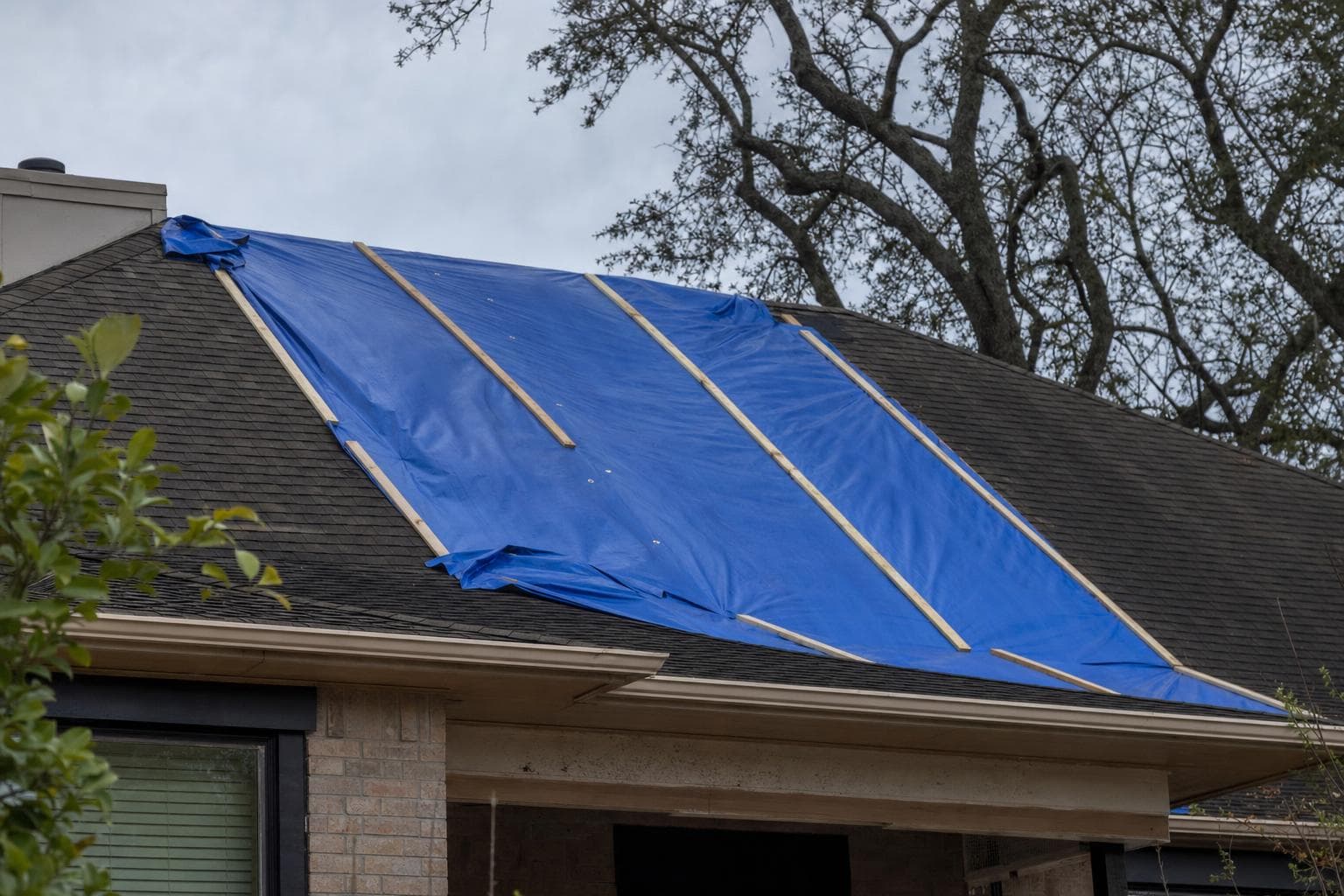
Roof tarping in Ogden buys time between an open roof and the permanent repair. The tarp has to extend beyond the damage, stay anchored, and keep normal drainage working. Ogden roofs face Wasatch Front high-desert climate with intense high-altitude UV, heavy mountain snow, severe freeze-thaw cycling, and dry summers. When you call, describe the opening, active water, timing, and current weather so the crew can plan safe access and enough temporary coverage. The complete roof diagnosis follows after the home is protected.
What a roof tarp needs to do in Ogden
A tarp is successful when it keeps new weather out without creating another drainage problem. It is temporary protection, so the installation and the follow-up repair plan belong in the same conversation.
Cover beyond the visible opening
The protected area should extend uphill and to both sides of the damage because water can enter beyond the missing material. In Ogden, conditions such as heavy mountain snow load and ice damming can make the opening larger than it appears from the yard.
Anchor for local weather
The tarp should stay taut, resist expected wind, and direct water downslope without feeding a valley, wall, or adjacent penetration. Ogden roofs face Wasatch Front high-desert climate with intense high-altitude UV, heavy mountain snow, severe freeze-thaw cycling, and dry summers. That is why anchoring and drainage matter as much as the tarp material itself.
Set the permanent-repair handoff
Photographs and the tarp invoice should identify what was covered and any areas that could not be inspected. Schedule the permanent roof and moisture assessment promptly rather than waiting for the temporary cover to loosen or degrade.
What roof tarping costs in Ogden
For planning, professional roof tarping often falls between $450-$1,950 in Ogden. When water is entering or the roof is open, the first question is whether a crew can reach it safely and stabilize the opening. Protected area, pitch, stories, access, anchoring, weather, and response timing determine the final charge.
- Small accessible opening
- One limited roof area with straightforward access and anchoring
- $250-$900
- Standard tarp installation
- Typical protected area on an average residential roof
- $450-$1,950
- Large, steep, or high roof
- More material, time, anchors, and difficult access
- $1,100-$5,700
Cost ranges are estimates developed from standardized project scopes and reviewed pricing inputs. Government labor and regional cost data are used where applicable. See our Pricing Methodology for the exact sources, calculations, and review date. Actual prices vary by property, scope, materials or equipment, location, and provider.
For a deeper breakdown, open the roof tarping cost guide. Keep the emergency invoice separate from the permanent repair estimate so the protected area, response charge, removal, and next inspection stay clear.
What can complicate roof tarping in Ogden
Ogden roofs face Wasatch Front high-desert climate with intense high-altitude UV, heavy mountain snow, severe freeze-thaw cycling, and dry summers. Temporary protection has to account for the active weather, roof surface, drainage path, and whether the crew can reach the damaged area safely.
Conditions the crew needs to assess
- Where the opening begins and how far damage extends beyond what is visible
- Roof pitch, stories, wet surfaces, debris, and safe ladder access
- Whether the surrounding covering and deck can accept temporary anchoring
- Where water must drain without feeding a valley, wall, or another opening
Why the roof type changes the method
Asphalt shingles, metal panels, tile, and low-slope membranes do not use the same temporary attachment. The crew should avoid turning valleys or low areas into collection points and should state when unstable decking, broken material, or continuing weather prevents a complete inspection.
In Ogden, the crew should also check whether heavy mountain snow load and ice damming or intense high-altitude uv degradation opened a wider water path than the damage visible from the yard.
Once the opening is protected, schedule a roof inspection in Ogden to diagnose the permanent work and any moisture that traveled beyond the opening.
How Ogden weather affects temporary roof cover
Ogden, at the base of the Wasatch Mountains north of Salt Lake City, faces heavy mountain snow load, severe ice damming, intense high-altitude UV, and dramatic freeze-thaw cycling.
NOAA storm reports logged 3 hail events, 41 damaging thunderstorm-wind events, and 1 tornado in Weber County from 2020 through 2025.
What the crew should account for
Current wind, rain, lightning, temperature, roof slope, wet surfaces, and debris determine whether exterior work can begin safely in Ogden. The tarp still has to extend beyond the opening, stay taut, and preserve the roof's normal drainage path.
When the tarp needs to be checked
Review the tarp from a safe position after strong wind or heavy rain and call the installer if an edge lifts, water collects, attachment changes, or interior leaking returns. Do not climb onto a wet or storm-damaged roof to adjust it yourself.
What to record before and after
Photograph the uncovered opening when safe access allows, then record the protected area, anchoring method, installation date, inspection limits, and any interior water. Keep that record with the invoice so the permanent Ogden roof and moisture assessment starts with a clear history.
Documenting roof tarping in Ogden when insurance may be involved
Temporary protection and insurance coverage are separate questions. Photograph the opening before it is covered when safe access allows, keep the tarping invoice, and record what the crew could not inspect. The insurer decides whether the expense or permanent work is covered under the policy.
Snow-load roof stress is a maintenance concern, not a claim.
For roof damage reported in Ogden, coverage depends on the reported cause and the policy's deductible, exclusions, roof provisions, and valuation method; a roofer can document visible construction conditions, but the insurer decides coverage.
Proper ventilation helps prevent ice-dam interior damage.
What Utah law means before you approve emergency roof work
Temporary work can affect claim evidence and still needs clear authorization. Know what you are approving for immediate protection, keep a copy of the invoice, and review any permanent contract separately after the roof is stable.
Utah lists timely payment and unfair claim settlement protections
The Utah Insurance Department says home claims information for Utah includes laws on "Timely payment of claims" and "Unfair claim settlement practices." It also lists Rule R590-190, "Unfair Property, Liability and Title Claims Settlement Practices," and says this includes homeowner policies. If your claim starts to stall or the handling seems off, you have state-backed standards to point to and you can contact the Utah Insurance Department for assistance.
Some claim-related premium increases are prohibited
The Utah Insurance Department lists "31A-19a-212 Premium increases prohibited for certain claims or inquiries" as part of its home claims information for Utah. That means Utah identifies protections tied to certain claims or inquiries, even though the page says the listed laws are not meant to be inclusive of all claims-related statutes.
You should make temporary repairs, but hold off on permanent repairs until inspection and agreement
The Utah Insurance Department tells homeowners to make repairs necessary to prevent further damage, such as covering broken windows, leaking roofs, and damaged walls. It also says, "Do not have permanent repairs made until your insurance company has inspected the property and you have reached an agreement on the cost of repairs." Save receipts, including temporary repair receipts covered by your policy.
You can ask the Utah Insurance Department for help with a claim dispute
If you have a dispute with your insurer about the amount or terms of the claim settlement, the Utah Insurance Department says you can contact the department for assistance. The department also says it does not have the authority of a court to settle disputes of unwilling parties, or to order or enforce payment of individual claims, but that many problems are successfully resolved during its regulatory investigation.
Choosing a roof-tarping crew in Ogden
In Utah, start by confirming your roofer holds the right Utah contractor license and use the state verify-a-license tool. The Utah licensing page for specialty contractors says applicants must complete a pre-license course, obtain a general liability insurance certificate meeting the state's listed minimum coverage, and register the business if operating as a corporation, LLC, LLP, or partnership. For you as a homeowner, the practical move is simple: verify the contractor's Utah license status first, then compare written estimates and read every document before you sign. The Utah Insurance Department warns you to be wary of door-to-door roof inspection offers after a storm, out-of-state contractors approaching you after disasters, pressure to quickly sign electronic documents, especially Assignment of Benefit forms, and requests for upfront payment. It also tells homeowners to get at least three written estimates, work with the insurer, and require copies of invoices sent to the insurer.
Sources: Utah Insurance Department, Home Claims Information · Utah Department of Commerce, Specialty Contractor License · Utah Insurance Department, Contractor Fraud
Roof-tarping questions Ogden homeowners ask
What makes roof tarping different in Ogden?+
Ogden roofs face Wasatch Front high-desert climate with intense high-altitude UV, heavy mountain snow, severe freeze-thaw cycling, and dry summers. That means roof tarping in Ogden should account for the local storm exposure, ventilation, flashing, and material performance documented on the property rather than using one standard scope for every roof.
What should roof tarping include for an insurance claim in Ogden?+
A roofer should inspect the full roof, document visible storm damage with photos, explain repair-versus-replacement options in plain language, and lay out what evidence tends to matter during a UT claim, so you can tell storm damage from normal age before anything is filed.
How much does roof tarping cost in Ogden?+
For planning, professional roof tarping often falls between $450-$1,950 in Ogden. When water is entering or the roof is open, the first question is whether a crew can reach it safely and stabilize the opening. Protected area, pitch, stories, access, anchoring, weather, and response timing determine the final charge. Your exact Ogden price still depends on roof size, pitch, materials, and how hard the work is to access, a larger or steeper roof costs more, and any decking or code work found during inspection is added separately.
When do I need roof tarping in Ogden?+
You need roof tarping in Ogden when shingles, decking, flashing, or roof openings are exposed and rain could enter before permanent repairs happen. Ogden, at the base of the Wasatch Mountains north of Salt Lake City, faces heavy mountain snow load, severe ice damming, intense high-altitude UV, and dramatic freeze-thaw cycling. Tarping helps limit heavy mountain snow load and ice damming while your roofer confirms the full repair scope.
How does roof tarping work in Ogden?+
Roof tarping in Ogden usually includes measuring the exposed area, placing a weather barrier, securing it above the damaged section, and documenting the condition with photos, typically $450 to $1,950 for professional work. Full ice-and-water shield at eaves and valleys. The tarp is temporary, but it can help keep heavy mountain snow load and ice damming from spreading inside.
Is roof tarping enough after storm damage in Ogden?+
No, roof tarping in Ogden is a temporary dry-in, not the final repair. Ogden, at the base of the Wasatch Mountains north of Salt Lake City, faces heavy mountain snow load, severe ice damming, intense high-altitude UV, and dramatic freeze-thaw cycling. Your roofer still needs to inspect shingles, flashing, underlayment, and decking for heavy mountain snow load and ice damming before restoring the roof.
