Updated July 27, 2026

3D Roofs Editorial Team
Editorial Standards
Yes, homeowners insurance may cover roof replacement in West Virginia when a covered event causes functional damage. In plain terms, that usually means sudden storm damage that affects how your roof sheds water or protects your home. It usually does not mean an old roof that is simply worn out. If wind-driven rain lifts shingles, hail bruises or cracks roofing, or ice-related damage around the eaves leads to leaks after a storm, you may have a claim. If the roof is failing because of age, long-term deterioration, neglected maintenance, or repeated patching at the end of its life, coverage is much less likely.
When does homeowners insurance cover a roof replacement in West Virginia?
Insurance usually covers replacement when the roof has direct, functional damage from a covered loss, not when it just looks old. That distinction matters in West Virginia because your roof has to handle frequent moisture, freeze-thaw cycles, snow load in winter, and wind-driven rain during storms. Those conditions can show up as lifted shingles, granule loss, flashing leaks, ice-related damage around eaves, and faster wear around chimneys, valleys, and vents. In lower-slope or shaded areas, lingering moisture can also make drainage and ventilation more important. A carrier will usually look for evidence that a storm event caused damage that changes the roof's ability to keep water out. Cosmetic marks alone may not be enough, and wear from years of exposure is usually treated differently from sudden storm loss.
How does the policy distinguish event damage from wear?
Covered damage is usually damage from a specific event that leaves the roof unable to perform as intended. Denied damage is usually wear, age, or maintenance issues. If your shingles were creased or torn by wind, if flashing was displaced in a storm, or if hail caused damage that leads to leaks, that points more toward a covered claim. If the roof has widespread aging, brittle shingles, long-term granule loss, recurring leaks around old penetrations, or rot tied to prolonged moisture problems, that points more toward wear and tear.
- Usually more favorable for coverage: wind-lifted or missing shingles after a storm, storm-created flashing failure, hail damage that affects roof performance, sudden leak intrusion tied to a recent weather event
- Usually less favorable for coverage: old shingles at the end of service life, long-term seepage, deferred maintenance, installation defects, gradual deterioration, ventilation or drainage problems that developed over time
Does a leak mean insurance will pay for a new roof?
No, a leak by itself does not mean the policy will pay for a full replacement. The key question is what caused the leak. If a recent storm created an opening, the resulting roof damage may be covered. If water got in because flashing has been failing for years, shingles are worn out, or ice and moisture have been building up around weak areas over time, the carrier may treat it as maintenance or age-related deterioration. This is one reason good documentation matters. Photos from the day of the storm, notes about when the leak started, and a prompt roof inspection can help connect the damage to a covered event instead of a long-running condition.
Talk to a roofer today
Planning ranges, scope details, and a direct path to request a roofing quote.
How do deductibles work on a West Virginia roof claim?
Your deductible is the amount you pay before insurance pays the covered portion of the loss. If the damage is covered, the claim payment is reduced by that deductible. That means a smaller repair may fall close to or below your deductible, while a larger loss is more likely to result in insurance funds. For an insurance-related roof project in West Virginia, begin with documented damage, the policy deductible, and a property-specific repair or replacement scope. For an insurance-related roof project in West Virginia, start with current West Virginia cost data, then test the planning range against a measured proposal that names the complete roof assembly.
Is it better to repair the roof or file an insurance claim?
It depends on whether the damage is storm-related and whether the cost is likely to exceed your deductible by enough to make a claim worthwhile. If the issue is minor and repairable, and the repair cost is close to your deductible, a direct repair may make more sense. If the damage is widespread, affects multiple slopes, or leaves the roof unable to protect the home, a claim may be the better path. A local roofer you have vetted can document whether the damage looks functional and storm-related, then you can compare that scope with your deductible and policy terms before moving forward.
What does the roof insurance claim process usually look like?
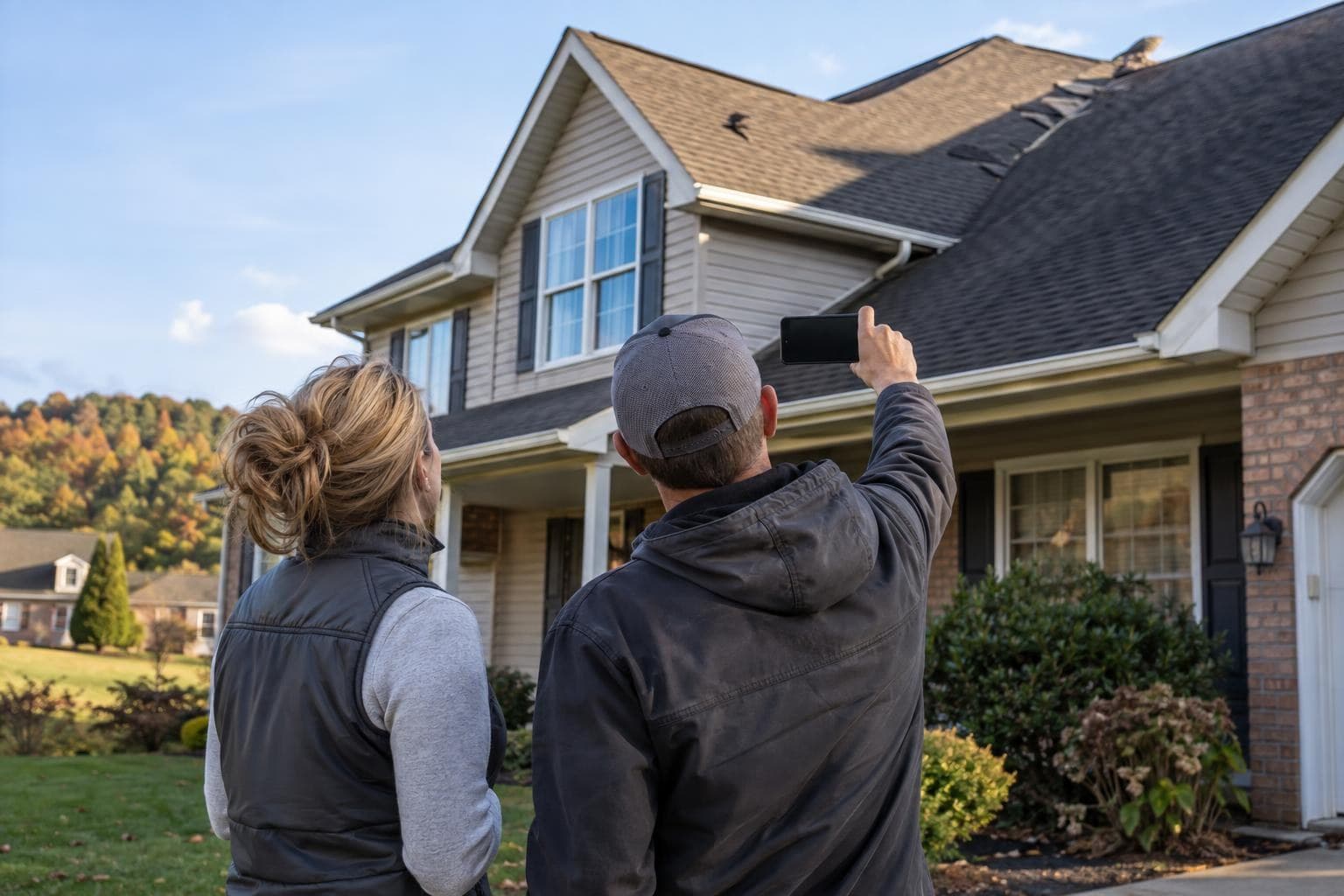
The basic flow is straightforward: document the damage, get the roof inspected, notify your carrier, meet the adjuster, review the scope, and then complete the work if the claim is approved. Start by taking clear photos of missing shingles, lifted tabs, flashing damage, interior water staining, and any storm debris. Then have a qualified local roofing contractor inspect the roof and explain whether the damage appears sudden and functional or more consistent with wear. After you open the claim, the carrier may send an adjuster to inspect. If the carrier approves replacement, your roofer can align the work scope with the claim details and schedule the job. For an insurance-related roof project in West Virginia, require the written schedule to account for roof geometry, access, weather protection, material handling, inspections, and possible deck work.
What if the insurance company delays or denies the roof claim?
If the claim is delayed or denied and you believe the issue is with claim handling, you can raise it with the state insurance office. West Virginia's Property and Casualty Consumer Services Unit helps consumers with homeowners insurance questions and concerns. The office says it can help with insurance complaints involving sales and policyholder services, premium rates and refunds, cancellations and non-renewals, and claim delays and denials. You may file a complaint online or by paper form, and the office will investigate once you authorize it to proceed.
The state also explains what that process can and cannot do. It says it can protect you by enforcing West Virginia laws and help with insurance complaints. It also says it cannot give legal advice, act as your lawyer, interfere with a pending lawsuit, recommend an insurance company or agent, or decide disputes based on who is negligent or at fault. After you file, you will receive an acknowledgement letter with the file number and the name of your complaint specialist. State guidance says a copy of your complaint will be forwarded to the appropriate parties, and the Offices of the Insurance Commissioner will respond with the results. Check the current complaint instructions and processing information with the West Virginia Offices of the Insurance Commissioner before relying on a timeline.
What if you cannot get homeowners insurance for the home?
West Virginia has a backstop option if you cannot secure property insurance in the voluntary market. State guidance says the West Virginia FAIR Plan began operating in 1986 to make basic property insurance available to persons with an insurable interest in real or tangible personal property located in West Virginia who have been unable to secure such insurance from the voluntary insurance market. The source also says the Plan issues a simplified language policy on habitational and commercial property for direct loss caused by limited perils. That is not the first stop for most homeowners, but it matters if coverage availability becomes the problem before you can even address the roof.
Can a Class 4 roof help with insurance after replacement?
It can, but you should confirm the details with your carrier before you buy. For an insurance-related roof project in West Virginia, treat any impact-resistant roof credit as unconfirmed until the insurer identifies the eligible product, required documentation, premium portion, and amount in writing. Discounts and underwriting rules are set by the carrier, so you should confirm eligibility and required documentation before installation. Your roofer can also help you gather the product information your carrier asks for.
What should you do before signing for roof work after a claim?
Get the scope in writing, confirm who is doing what, and keep your records organized. Ask your roofer for the exact business name they use for licensing records, confirm the record in the public search, and keep copies of the contract, scope, and any claim correspondence. If a dispute comes up over contractor conduct, you can use the board's complaint process. If the dispute is with your homeowners carrier, use the insurance complaint process through the state insurance office. That simple paper trail can make the claim smoother and reduce confusion once work starts.
Sources
- National Association of Insurance Commissioners: What You Need to Know When Filing a Homeowners Claim
- National Association of Insurance Commissioners: Actual Cash Value Coverage and Replacement Cost Coverage
- West Virginia Offices of the Insurance Commissioner, Consumer Services P&C
- WV Division of Labor, Licensing
Reviewed technical references for West Virginia
Related West Virginia roofing guides
Related services
Updated July 27, 2026
3D Roofs Editorial Team
Editorial Standards