Updated July 27, 2026

3D Roofs Editorial Team
Editorial Standards
If the damage is small and isolated, repair is usually the better call. If the damage is spread across multiple areas, the roof is older, or key components are failing together, replacement often saves you from paying twice. In New Mexico, that decision matters even more because intense UV, dry heat, wind-driven rain, hail, mountain snow in some areas, and wildfire conditions can turn a minor weakness into a bigger leak after the next storm.
Should you repair or replace your roof in New Mexico?
Start with the simplest answer: repair when the problem is limited, replace when the problem is widespread. A few missing shingles, one leak around flashing, or a small area of storm damage can often be fixed without tearing off the whole roof. For a repair-versus-replacement decision in New Mexico, compare a diagnosed repair scope with a measured replacement proposal; both should identify affected slopes, flashing, deck conditions, and exclusions. Replacement becomes the stronger option when the roof has multiple leak points, broad shingle wear, repeated patch history, failing flashing in several areas, or visible aging across the whole slope.
How do you know if the damage is isolated or widespread?
Look at pattern, not just the worst spot. Isolated damage stays in one section and usually ties back to one event or one detail, like a branch strike, a small flashing failure, or a limited hail hit. Widespread damage shows up as repeated problems across many areas: granule loss on multiple slopes, lifted or brittle shingles, several soft spots, more than one leak path, or water entry tied to wind-driven rain in different roof sections. New Mexico weather is hard on roofs in layers. UV and dry heat can dry out materials. Wind can loosen edges and stress fasteners. Hail can bruise or crack vulnerable areas. Snow in higher elevations can expose weak flashing and drainage details. When several of those stressors have piled up, a repair can become a short-term bandage.
When is roof damage too widespread for a repair?
When the affected area is large on a New Mexico roof, ask for repair and replacement scopes in writing and compare what each option fixes, what aging material remains, and how future work would be handled. The reason is simple. Once damage reaches that scale, the roof is often past the point where patching one area restores reliable performance across the whole system. This is especially true in New Mexico, where sun exposure and heat can age the surrounding materials even if the leak is only showing up in one spot today.
Talk to a roofer today
Planning ranges, scope details, and a direct path to request a roofing quote.
Does roof age change the decision?
Yes, age changes the math fast. If your roof is relatively newer and the damage is limited, repair is often the smart move. If the roof is older and already showing broad wear, replacement is usually the safer investment. That is because older roofs in New Mexico have often been through years of intense UV exposure, dry heat, wind, and storm cycles that weaken sealants, flashing, and shingle flexibility. Even if one repair solves today's leak, another weak spot may open up in the next season. When your roofer shows you signs of overall aging, not just one bad area, take that seriously.
How does New Mexico weather change the repair vs replacement call?
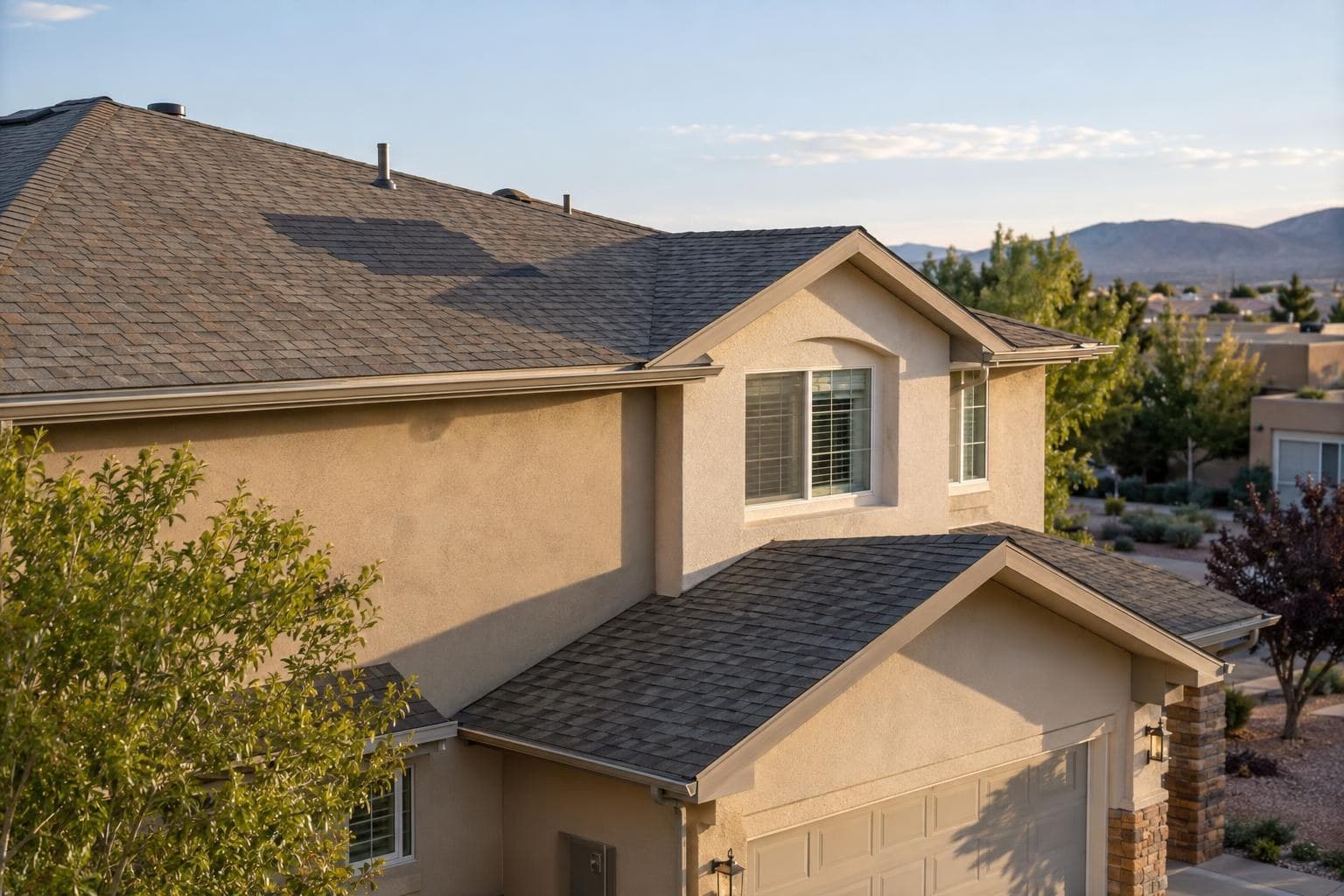
It pushes many borderline roofs closer to replacement. In a milder climate, a patch might hold for a long time. In New Mexico, a roof may have to handle intense UV exposure, dry heat, wind-driven rain, hail, mountain snow in some areas, and wildfire conditions in many parts of the state. That mix can dry out roofing materials, stress sealants and flashing, and make small weak spots turn into leaks after a storm. If your roof is older, storm-worn, or surrounded by combustible debris, those issues can affect both performance and insurability. In plain terms, if your roof is already struggling, New Mexico weather is not likely to be gentle with it.
When is replacement the better financial choice?
Replacement is the better financial choice when you are facing repeat repairs, broad wear, or a roof that is unlikely to hold up through the next few weather cycles. For an early budget on a repair-versus-replacement decision in New Mexico, compare the New Mexico cost page with a proposal that identifies measurements, products, accessories, and exclusions. The schedule for a repair-versus-replacement decision in New Mexico should explain access, material staging, weather protection, inspections, and the process for discovered deck work. When comparing a repair-versus-replacement decision in New Mexico, use a written insurer response rather than a sales estimate for any impact-resistant roof credit. Ask your carrier directly before you buy, because carriers set their own discounts and eligibility rules, and you should not assume a Class 4 label automatically changes your premium.
Can insurance affect whether you repair or replace?
Yes, but keep the claim process separate from the roofing sales conversation. If storm damage is covered and the scope supports replacement, that can change your decision. If the damage is limited or the roof has a lot of age-related wear, you may still be looking at a repair or at paying more out of pocket for a full replacement. New Mexico homeowners should also know a few basics. The Consumer Assistance Bureau says it assists consumers who are having difficulty with an insurance issue and accepts complaints involving policy issuance, cancellation, and the processing of claims. The Bureau also says it processes complaints in a fair and impartial manner, but it does not act as your lawyer, cannot give legal advice, and cannot make settlement decisions on your behalf. The homeowners insurance guidance says companies shall give policyholders at least ten days notice prior to the date of cancellation and 30 days notice prior to the date of non-renewal. If you cannot get coverage in the normal market, the guidance says there is a FAIR Plan path for qualified applicants in the State of New Mexico who are unable to secure such insurance in the normal market.
How should you choose a roofer for a repair or replacement?
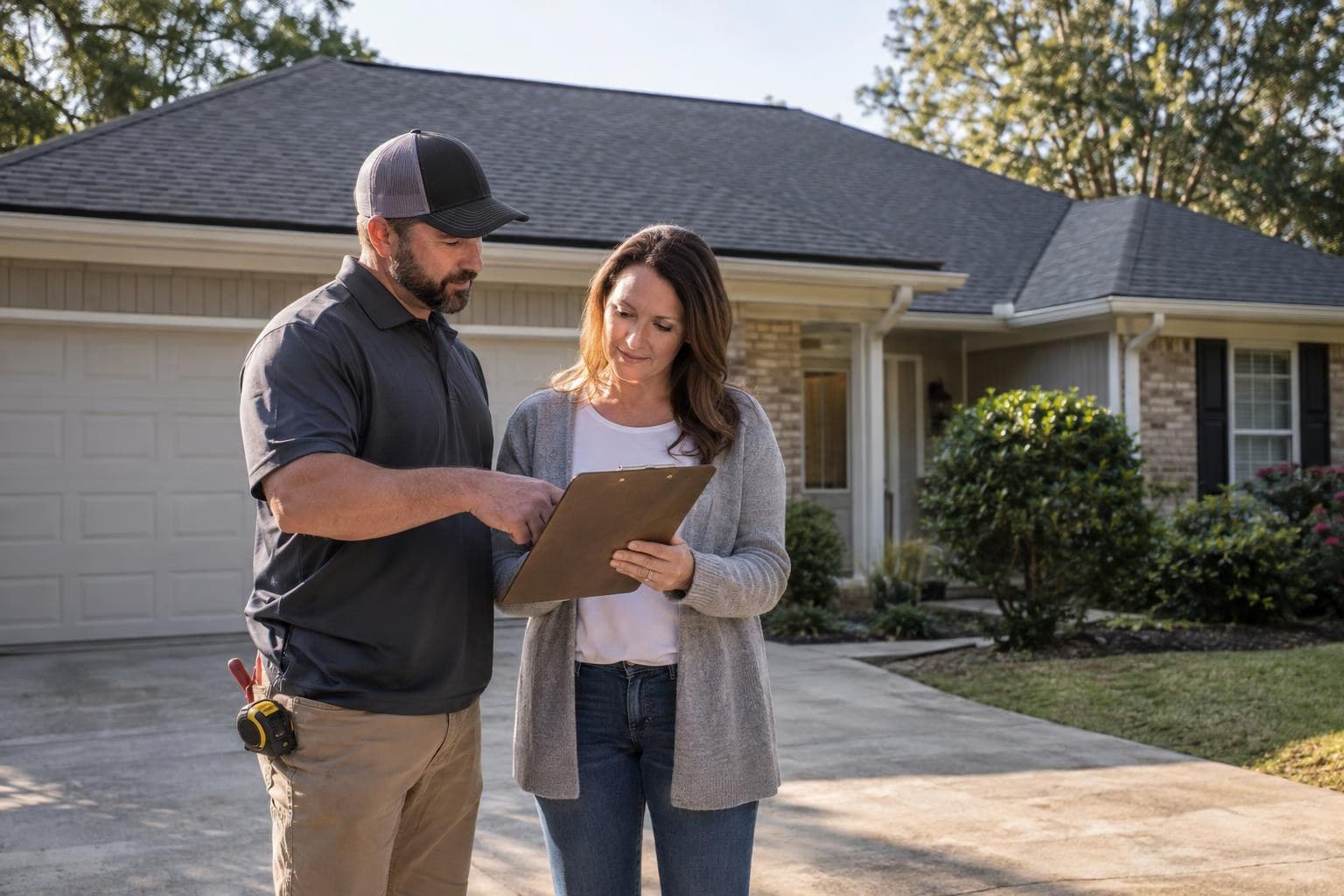
Start with a basic screening step: verify your roofer through the state license lookup before you sign anything. Then ask for the exact scope, materials, ventilation changes, flashing details, permit needs, cleanup plan, and who will handle any inspection steps. That matters on both repairs and replacements because the details decide whether the fix lasts. If a contractor conversation starts drifting into claim handling promises, keep the paper trail clear and make sure your insurer decisions come through the proper insurance channels. A local contractor whose credentials you verified should be able to explain whether your issue is truly isolated or whether you are looking at a roof system that is wearing out as a whole.
What is the smartest next step if you are on the fence?
- Choose repair if the damage is limited to a small area and the rest of the roof is in solid shape.
- For roof repair vs replacement in New Mexico, do not use a fixed damage percentage as the decision rule; compare the repairable area, roof condition, material availability, code requirements, and written scopes.
- Give extra weight to age in New Mexico, because UV, heat, wind, hail, and snow can weaken the whole system, not just the leaking spot.
- Compare repair cost against the risk of needing another fix soon after.
- Ask whether a Class 4 upgrade makes sense for hail resilience, then confirm any discount or underwriting benefit directly with your carrier.
- Review full local pricing on the New Mexico cost page and the calculator so you can compare repair costs against current planning prices for replacement.
If you are on the fence, the best answer is usually the honest one: do not force a repair onto a roof that is already worn out across large areas, and do not pay for a full replacement when one section really is the only problem. Base the repair decision in New Mexico on mapped damage, remaining roof condition, material compatibility, water-control details, and repair history rather than a percentage shortcut. Once you look at those four factors together, the decision usually gets much clearer.
Sources
Reviewed technical references for New Mexico
Related New Mexico roofing guides
Related services
Updated July 27, 2026
3D Roofs Editorial Team
Editorial Standards