
Updated July 10, 2026

3D Roofs Editorial Team
Editorial Standards
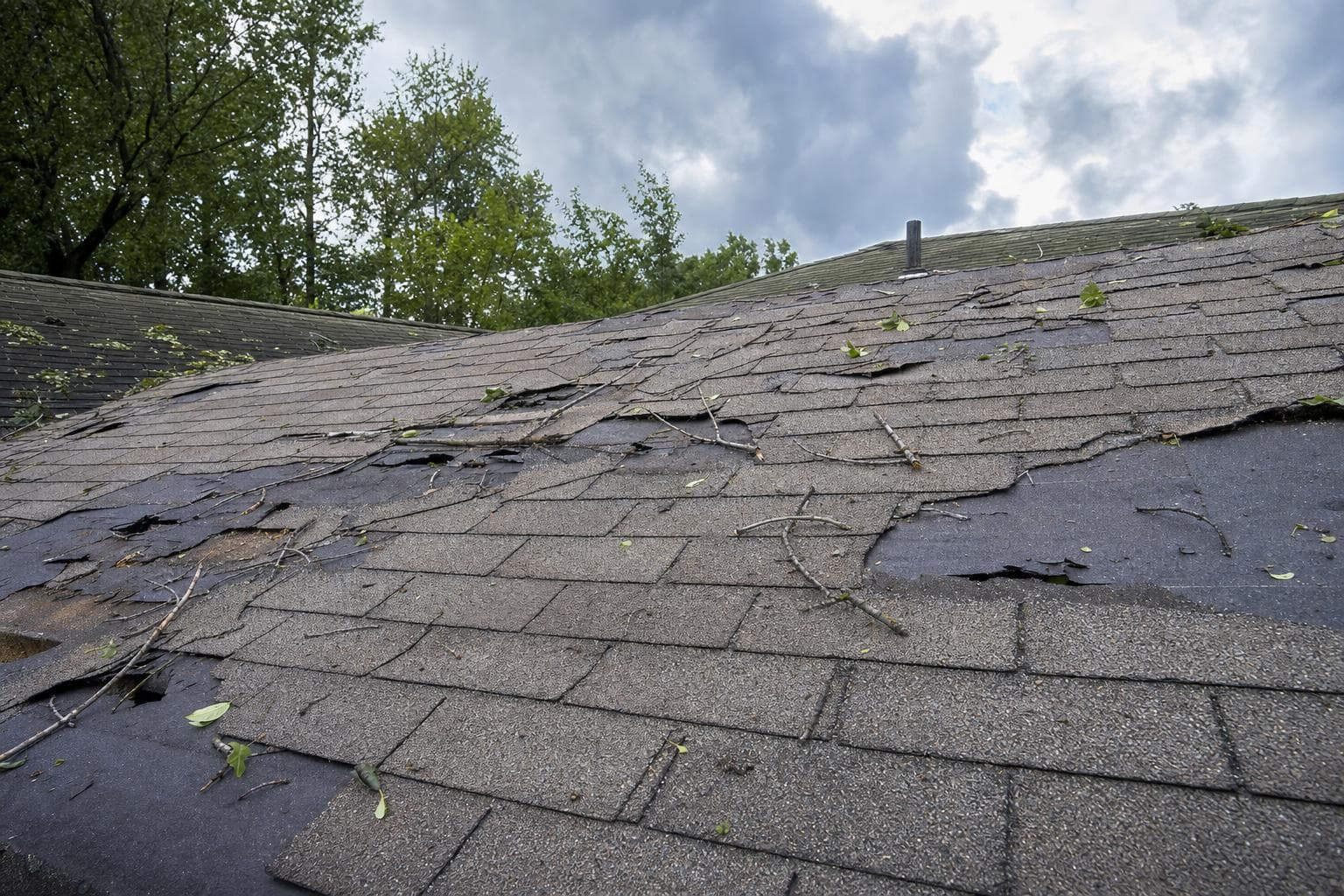
Storm-damage roof repair ranges widely by severity: minor damage such as a few shingles or one leak can run an amount that must be confirmed for the written scope to an amount that must be confirmed for the written scope, while large torn-off sections, decking, or structural work can run an amount that must be confirmed for the written scope to an amount that must be confirmed for the written scope. A roof that cannot be restored with a repair moves into replacement pricing. Document conditions before permanent work when it is safe. If a claim is involved, coverage and the homeowner's share depend on the policy, deductible, covered scope, valuation, limits, exclusions, and insurer review.
What it costs
$450 – $2,700
what a typical storm-damage roof repair costs, by severity
Severity drives the construction cost. Minor storm damage, such as a few lifted shingles or one flashing leak, can run $350 to $1,600. Large torn-off sections, soaked decking, or structural damage can run $2,900 to $15,200 before replacement is considered. If a claim is involved, the homeowner's share depends on the policy deductible, covered scope, valuation, limits, and exclusions; the insurer makes the coverage decision. Photograph conditions before permanent work when it is safe.
| Storm damage | Typical cost | What it involves |
|---|---|---|
| Minor (a few shingles, one leak) | $450–$2,700 | Spot repairs before the damage spreads |
| Moderate (section + flashing) | $450–$2,700 | Re-shingling a slope, resealing transitions |
| Major (structural / decking) | $1,200–$7,500 | Carpentry plus roofing over a large area |
| Emergency tarp first | $450–$2,700 | Stop-the-water cover until repairs begin |
| Total loss to replacement | $450–$2,700 | When a repair can no longer restore the roof |
Typical 2026 national storm-damage ranges by severity, drawn from industry cost data. Document damage with photos before any work for your insurance claim.
Cost ranges are estimates developed from standardized project scopes and reviewed pricing inputs. Government labor and regional cost data are used where applicable. See our Pricing Methodology for the exact sources, calculations, and review date. Actual prices vary by property, scope, materials or equipment, location, and provider.
What affects storm damage roof repair cost
Storm damage repair spans a wide range because storms don't damage roofs evenly, the bill tracks how much of the roof took a hit and how hard it is to reach. These are the factors that move the number.
- Extent of the damage, a few lifted shingles is a low-end repair; widespread hits across slopes is a different scope entirely
- Type of damage, wind-lifted shingles, hail-bruised mats, dented accessories, and punctures each carry different repair work
- Whether water already got in, soaked decking and insulation add carpentry on top of the roofing
- Roof pitch, height, and access, steep and multi-story roofs are slower and riskier to work
- Material and color match, matching discontinued shingles can force a larger repair area
- Storm-week demand, after a regional wind or hail event every crew is booked and pricing reflects it
When storm damage means replacement, not repair
A localized hit on a healthy roof is a repair every time. But severe storms can damage a roof beyond what a patch can hold, and at that point more repairs just delay an inevitable replacement. Here's when the math flips toward a new roof, anchored to the roughly an amount that must be confirmed for the written scope a typical 2,000 sq ft replacement starts at.
- Damage is spread across multiple slopes, not concentrated in one repairable area
- Hail has bruised or fractured the shingle mats across the field, not just dinged a few shingles
- Damage is distributed across roof areas or surrounding material cannot accept a durable repair
- The shingles were already brittle or near end of life and the storm just exposed it
- A limb or impact broke through the decking over a wide area
- An adjuster scopes a replacement because spot repairs won't restore the roof to pre-storm condition
The insurance side: deductibles, ACV, and RCV
Storm damage is where homeowners insurance actually earns its keep, but how much you net depends on your deductible and whether your roof is covered at replacement cost or actual cash value. Understand these before you file.
- Wind and hail often carry a separate deductible, frequently 1-2% of your dwelling coverage, not a flat dollar amount
- A percentage wind/hail deductible is calculated from the dwelling limit shown in the policy and can exceed a smaller repair entirely
- RCV (replacement cost value) pays to replace the roof, often in two checks, with withheld depreciation released once the work is done
- ACV (actual cash value) subtracts depreciation for the roof's age and wear, so an older roof nets less
- Coverage depends on the reported cause and the policy's deductible, exclusions, roof provisions, and valuation method; ask the insurer to explain its decision in writing
- Compare your likely deductible against the repair cost before deciding whether a claim is worth filing
Documenting damage and separating storm from age
A storm claim separates the reported event from age, wear, prior repairs, and maintenance. Clear photographs, locations, dates, and construction scopes help the homeowner and carrier understand the condition before permanent work changes it.
- Photograph the damage by slope before any repair or tarp covers it
- Get a slope-by-slope inspection that separates fresh storm damage from normal age and wear
- Record the reported storm date and when the damage or interior water was first observed
- If a claim is filed, coordinate permanent work with the carrier process while protecting active openings promptly
- Check the policy and carrier instructions for duties to prevent additional damage
- Keep receipts for temporary protection and ask the carrier whether the expense is eligible under the policy and loss circumstances
A worked example: the same storm, a repair or a replacement
A wind-and-hail storm rolls through and a homeowner has shingles in the yard. If a slope-by-slope inspection finds a few lifted shingles and a dented vent on one accessible slope, that's a low-end repair, $350 to $1,600, and with a flat an amount that must be confirmed for the written scope deductible it may be cheaper to fix out of pocket than to file. But the same storm tells a different story if the inspection finds hail-bruised mats across three slopes and softened decking under the worst of it: now spot repairs won't restore the roof, an adjuster is likely to scope a replacement, and you're looking at the roughly $13,500 where a typical 2,000 sq ft Class 3 roof starts, minus a wind/hail deductible that might be 1-2% of your dwelling value. Same storm, two very different outcomes, which is exactly why the inspection that separates storm damage from age comes before any decision about repairing, replacing, or filing.
Common questions
How much does storm damage roof repair cost?+
Most storm damage roof repairs fall between an amount that must be confirmed for the written scope and an amount that must be confirmed for the written scope, lifted or missing shingles, a damaged ridge, dented vents, and flashing fixes. The price tracks how widespread the damage is and how hard it is to reach. Severe storm damage across multiple slopes often means a full replacement instead, which starts around an amount that must be confirmed for the written scope for a typical 2,000 sq ft roof. A slope-by-slope inspection is what tells you which one you're dealing with.
When does storm damage mean a full roof replacement?+
Replacement deserves a closer look when functional damage is distributed across roof areas rather than concentrated in one repairable spot, when a limb or debris damaged decking over a broad area, when matching material is unavailable, or when surrounding roofing cannot accept a durable tie-in. Ask for repair and replacement scopes when both are reasonable, then compare what each option restores and what condition it leaves behind.
How does my insurance deductible work for storm damage?+
Wind and hail often carry a separate deductible, frequently 1-2% of your dwelling coverage rather than a flat dollar amount. A percentage wind/hail deductible is calculated from the dwelling limit shown in the policy and can be more than a smaller repair costs, so it's worth comparing your deductible against the repair before filing. Exact deductible structure varies by policy and state, so check your declarations page.
What's the difference between ACV and RCV for a storm claim?+
RCV (replacement cost value) pays to replace the damaged roof, often in two checks, with the withheld depreciation released once you complete the work and submit proof. ACV (actual cash value) subtracts depreciation for the roof's age and wear up front, so an older roof nets less. Which one applies is set by your policy, and it can make a large difference in what you actually receive, so read your roof coverage before you file.
Will insurance cover my storm-damaged roof?+
Coverage depends on the cause of loss and the policy, including deductibles, limits, exclusions, valuation, roof-surface provisions, and the insurer's investigation. Document the condition by roof area, record the reported storm date, protect active openings when it is safe, and separate observed storm effects from age, wear, prior repairs, and maintenance. The roofer can explain construction scope; the insurer decides coverage.
What should I do first after a storm damages my roof?+
Protect people and active openings first when conditions allow safe work. Photograph the roof and interior before temporary protection hides the condition, record the reported storm date, and keep invoices. Check the policy and carrier instructions for duties after a loss and ask whether temporary expenses are eligible. Then get a roof-area-by-roof-area inspection that separates observed storm effects from age, wear, and prior repairs before approving permanent work.
Get a Quote for Your Roof
Call to discuss your project, or use the calculator to explore estimated roofing costs.
