
Updated July 10, 2026

3D Roofs Editorial Team
Editorial Standards
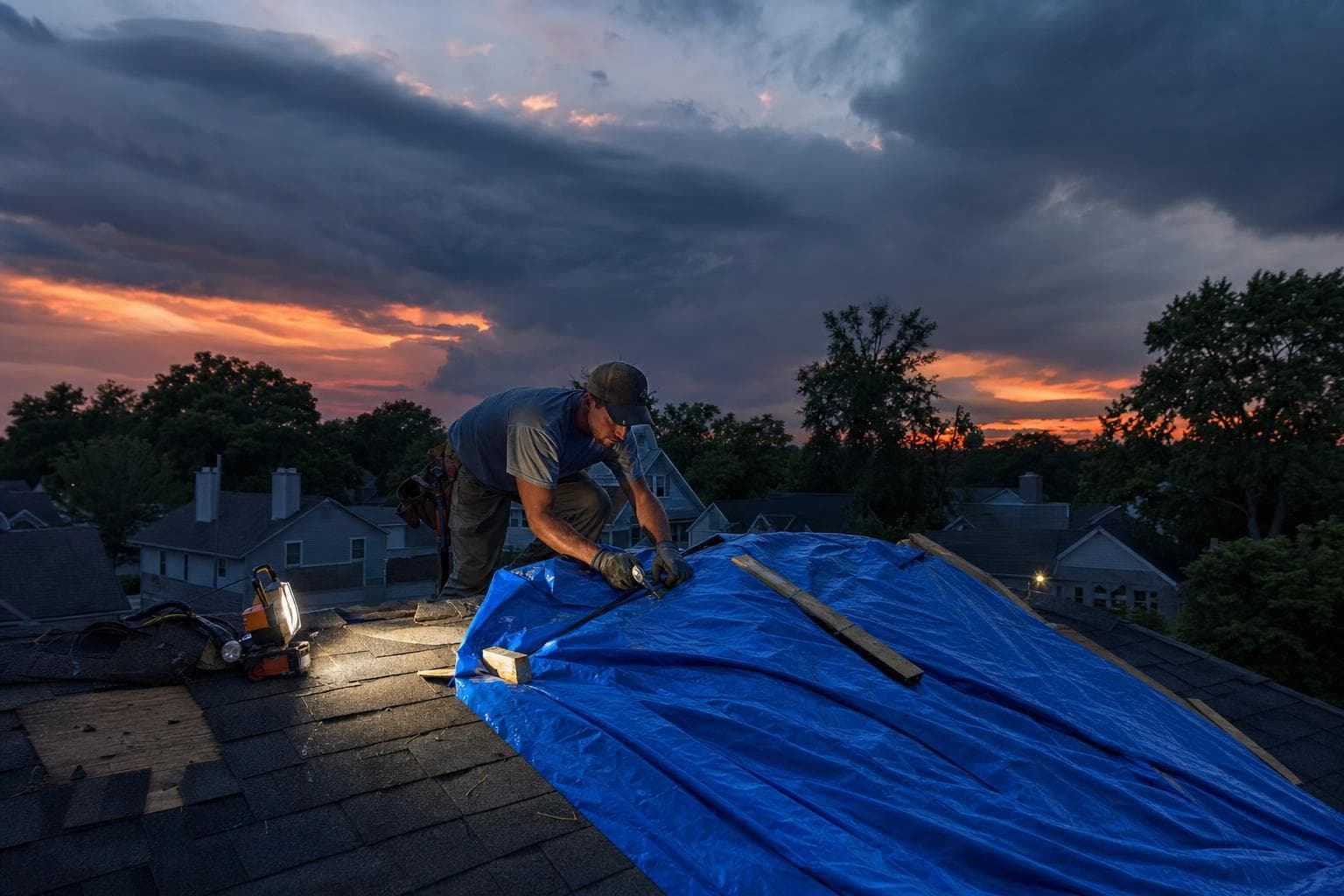
Emergency roof repair in Helena has one immediate goal: protect the home safely. The permanent repair decision comes after the opening and moisture path can be inspected properly. Helena sits in a mountain valley at the foot of the Big Belt and Elkhorn ranges, so your roof faces cold, snowy winters, strong valley and downslope wind, and bright high-elevation sun that combine to wear shingles and work loose flashing over the seasons. The first visit should document the uncovered condition, state what can be protected safely, and keep the temporary work separate from the permanent roof and moisture assessment.
What an emergency roof visit should accomplish in Helena
An emergency visit is for stabilization, not a rushed decision about the entire roof. The first scope should protect the home, preserve useful evidence, and create enough time to diagnose the permanent work safely.
Stop additional damage safely
Active water, an open roof, fallen debris, and sagging interior materials need immediate attention, but roof access may be unsafe during wind, lightning, ice, or darkness. The response plan should state what can be protected now and what must wait.
Document before temporary work
Photograph the opening, displaced roofing, heavy snow loads stacking on lower-pitch roofs, dormers, and porch additions, interior water, and any access limits before a tarp or temporary seal hides the condition. The invoice should describe only the emergency work actually completed.
Return for a permanent diagnosis
Once conditions improve, inspect the covering, flashing, deck, structure, and moisture path. Then compare repair and replacement only if both are reasonable, with the emergency charge kept separate from the permanent proposal.
What emergency roof work costs in Helena
Emergency pricing separates the urgent protection visit from the permanent work. A temporary response commonly falls around $350-$1,500 in Helena; the follow-up repair is then priced from the damage found after safe access is available.
- Emergency protection visit
- Response, documentation, and temporary protection before the permanent diagnosis
- $350-$1,500
- Standard roof tarp
- Protected area, pitch, height, anchoring, and timing drive the number
- $500-$2,100
- Typical permanent repair
- Priced separately once the failed component and repair boundary are known
- $450-$2,650
- Repair with limited decking replacement
- Contained carpentry plus restoration of the roofing assembly above it
- $1,200-$7,300
Cost ranges are estimates developed from standardized project scopes and reviewed pricing inputs. Government labor and regional cost data are used where applicable. See our Pricing Methodology for the exact sources, calculations, and review date. Actual prices vary by property, scope, materials or equipment, location, and provider.
For a deeper breakdown, open the emergency roof repair cost guide. Keep the response charge, temporary protection, removal, permanent repair, and any interior drying or restoration as separate line items so an urgent visit does not hide the final project cost.
What can complicate emergency roof work in Helena
The Helena response plan has to account for current weather, roof access, the size and location of the opening, and whether exterior work can begin without creating another hazard.
What the crew needs to know on the first call
- Whether water is actively entering and which rooms or attic areas are affected
- What opened or displaced the roof and when the damage occurred
- Roof height, pitch, access limits, fallen debris, and visible structural movement
- Current rain, wind, lightning, darkness, or other conditions that can limit safe access
What temporary protection should accomplish
The immediate work should cover beyond the visible opening, preserve normal drainage, and remain clearly temporary. In Helena, the crew should account for heavy snow loads stacking on lower-pitch roofs, dormers, and porch additions. It should also check ice dams and refreeze leaks at cold eaves after thaw-and-freeze cycles. The invoice should identify what was protected and what could not yet be inspected.
- Photographs before and after temporary work
- A named protected area and attachment method
- A separate date or trigger for the permanent inspection
An emergency visit is successful when the home is safer and the next roof decision is clearer. It should not force a replacement decision before the damage can be inspected properly.
How Helena conditions change an emergency roof response
Helena catches heavy mountain snowfall and gusty winter winds funneling through the valley, then trades them for spring and summer thunderstorms that can drop hail and drive rain, and the sharp day-to-night freeze-thaw swings keep valleys, vents, and eaves under steady stress.
NOAA storm reports logged 8 hail events and 33 damaging thunderstorm-wind events in Lewis and Clark County from 2020 through 2025.
Safe access can be the limiting factor
Wind, lightning, wet roofing, unstable decking, steep access, and darkness can prevent exterior work even while water is entering. The crew should explain what can be done safely now and what has to wait for conditions to improve.
Temporary work still has to drain
A tarp or temporary seal should direct water downslope and away from valleys, walls, penetrations, and other openings. Covering the visible hole without following the drainage path can move the leak instead of controlling it.
The protected area needs a handoff
After the immediate weather passes, review the temporary work from a safe position and schedule the permanent roof and moisture inspection. Record any renewed leaking, lifted protection, collected water, or interior change rather than climbing onto the roof yourself.
Recording emergency roof work in Helena when insurance may be involved
Emergency mitigation and policy coverage are separate questions. Keep photographs of the uncovered condition when safe, the temporary-work invoice, the reported loss date, and the permanent estimate. The roofer documents construction and mitigation; the insurer decides whether any expense is covered.
Keep dated photos of snow depth on the roof and any interior leaks so a winter-storm or ice-dam claim is easy to support.
Ask your agent whether Class 4 impact-resistant shingles qualify for a Montana premium credit, since Helena sees both wind and hail.
Wind and hail damage is handled differently than gradual wear, so a pre-claim inspection protects you before you file.
What Montana law means before you authorize emergency roof work
Urgency does not make the written scope less important. Confirm the immediate work, charge, cancellation terms, access limits, and authorization separately from any later repair or replacement contract.
Document storm damage before cleanup or repairs
Montana's insurance regulator says you should take photos and document damage before you begin to clean up or repair. It also says you should take steps to prevent further destruction of the property, including covering broken windows and holes in roofs and placing coverings over areas that could get water or wind damage.
Start with your policy and insurer, not a sales pitch
State guidance says you should contact your insurance company and get the claims process started, then review your policy to understand your deductible, what is and is not covered, and your responsibilities. That helps you make repair decisions based on your policy instead of pressure from a contractor.
Montana warns homeowners about high-pressure storm repair tactics
The Montana Commissioner of Securities and Insurance tells homeowners to beware of high-pressure sales tactics, "storm chasers," and unsolicited offers from contractors. The guidance says not to feel rushed to sign a repair contract, to get multiple bids, to check references, and to choose a contractor who will work with you and your insurance adjuster to assess damage and repair costs.
Use written bids and a written contract, and do not pay in full before completion
State guidance says to always get written bids before authorizing work to begin, get a written contract, and never pay in full for work before it is completed. It also says to pay with a check or credit card, never cash, and not to pay for work that has not yet been completed.
Choosing an emergency roof crew in Helena
Montana's contractor registration rules matter, but they do not replace your own homework. The state says all construction contractors with employees must register, and it tells homeowners to ask for proof of a contractor's CR and verify it is in good standing. The same source also says the CR certificate is not a license and does not ensure quality of work. The construction contractor program is also changing: beginning January 1, 2026, Montana Contractor's registration program will transition to a license administered by the Montana Department of Labor and Industry. For you, the practical move is simple: ask your roofer for proof of current Montana standing, verify it through the state, get references, and insist on a written contract that spells out scope, materials, timing, payment tied to completed work, and responsibility if the job is not finished. After a storm, the insurance regulator also says to get multiple bids, check references, and avoid feeling rushed into signing.
Sources: Montana Commissioner of Securities and Insurance, Hail consumer guidance · Montana Department of Labor and Industry, Construction Contractor Registration
Emergency roof questions Helena homeowners ask
What counts as a roofing emergency in Helena?+
Active water entering the home, exposed decking, a puncture or missing roof section, fallen debris, or a condition that can worsen before normal scheduling can justify emergency help. A sagging ceiling, electrical exposure, fire, or structural movement also creates a safety issue; keep people away and contact the appropriate emergency or utility service when needed.
What should I do while waiting for an emergency roofer in Helena?+
Stay off the roof and keep people away from sagging ceilings, wet electrical areas, broken glass, or unstable debris. If it is safe indoors, move belongings, collect dripping water, photograph visible conditions, and note when the damage began. Do not enter an attic or touch electrical equipment when water or structural movement makes the area unsafe.
Can emergency roof work happen while it is still raining or windy in Helena?+
Only the work that can be completed safely should proceed. Wind, lightning, wet roofing, darkness, steep access, or unstable decking may limit exterior work, so the first response may focus on interior protection or a safe temporary measure. The crew should explain what can happen now and what must wait.
What should the first emergency roof visit include in Helena?+
The visit should assess immediate hazards, document the opening and interior water before covering them, install appropriate temporary protection when safe, and provide an invoice that names the protected area and work completed. It should also set a clear return plan for the permanent roof and moisture inspection.
How much does emergency roof repair cost in Helena?+
The 3D Roofs planning model puts an emergency protection visit in Helena around $350-$1,500, with a typical permanent repair around $450-$2,650 after the failed component can be inspected. Ask for the response charge, temporary materials, removal, permanent roofing, and any interior drying or restoration as separate line items.
Is an emergency tarp or temporary seal the final roof repair?+
No. Temporary protection is meant to limit additional weather entry until the roof can be inspected and repaired in suitable conditions. Schedule the permanent assessment promptly, keep the photographs and invoice, and report any renewed leaking or lifted protection from a safe location rather than climbing onto the roof.
