
Updated July 10, 2026

3D Roofs Editorial Team
Editorial Standards
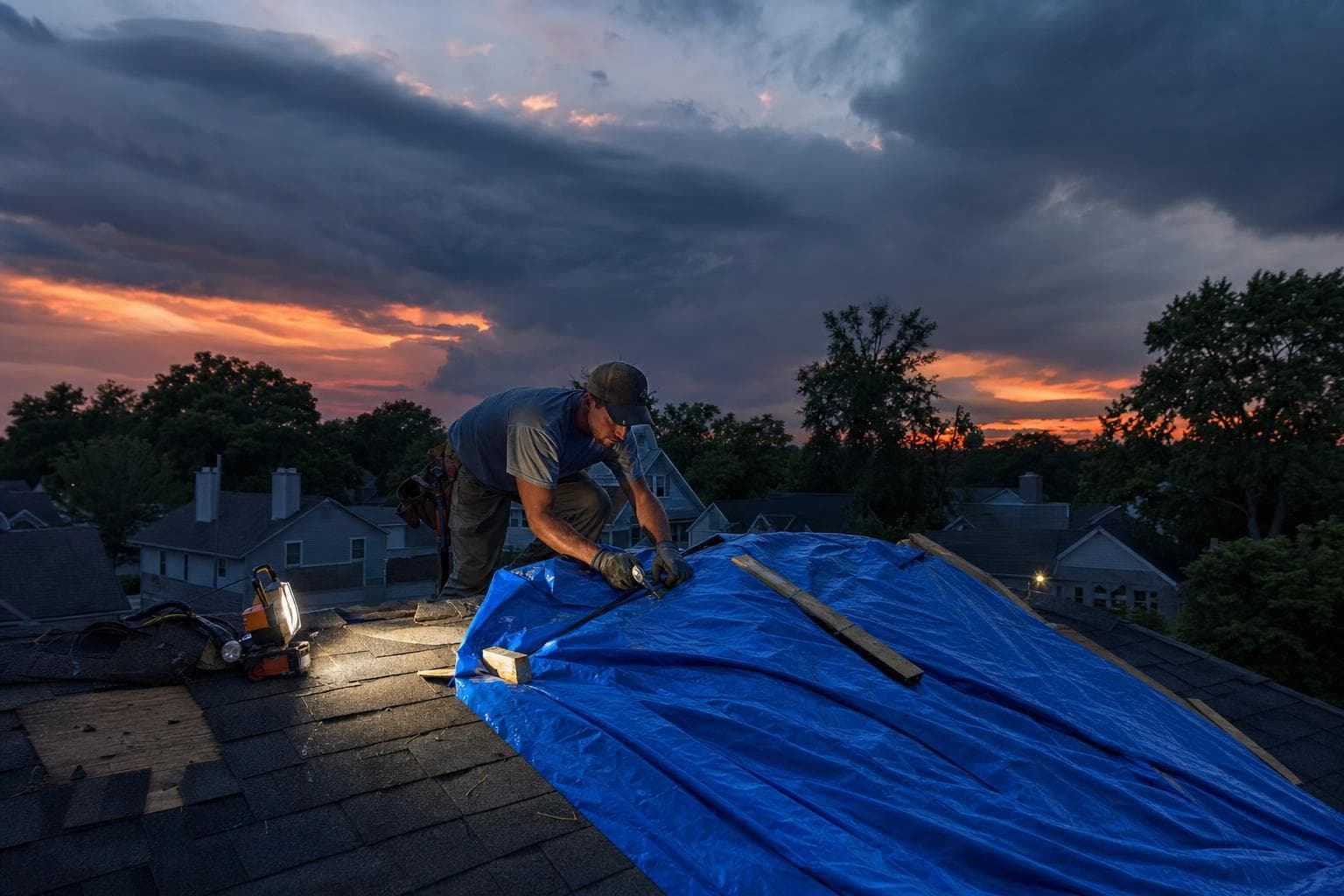
Emergency roof repair in Coral Springs has one immediate goal: protect the home safely. The permanent repair decision comes after the opening and moisture path can be inspected properly. Coral Springs roofs endure hot, humid inland conditions with strong year-round UV, frequent summer thunderstorms, and the lasting moisture exposure that breeds algae streaking and quietly degrades flashing across this master-planned northwest Broward city. The first visit should document the uncovered condition, state what can be protected safely, and keep the temporary work separate from the permanent roof and moisture assessment.
What an emergency roof visit should accomplish in Coral Springs
An emergency visit is for stabilization, not a rushed decision about the entire roof. The first scope should protect the home, preserve useful evidence, and create enough time to diagnose the permanent work safely.
Stop additional damage safely
Active water, an open roof, fallen debris, and sagging interior materials need immediate attention, but roof access may be unsafe during wind, lightning, ice, or darkness. The response plan should state what can be protected now and what must wait.
Document before temporary work
Photograph the opening, displaced roofing, shingle uplift and lost ridge caps during tropical-storm wind gusts, interior water, and any access limits before a tarp or temporary seal hides the condition. The invoice should describe only the emergency work actually completed.
Return for a permanent diagnosis
Once conditions improve, inspect the covering, flashing, deck, structure, and moisture path. Then compare repair and replacement only if both are reasonable, with the emergency charge kept separate from the permanent proposal.
What emergency roof work costs in Coral Springs
Emergency pricing separates the urgent protection visit from the permanent work. A temporary response commonly falls around $300-$1,350 in Coral Springs; the follow-up repair is then priced from the damage found after safe access is available.
- Emergency protection visit
- Response, documentation, and temporary protection before the permanent diagnosis
- $300-$1,350
- Standard roof tarp
- Protected area, pitch, height, anchoring, and timing drive the number
- $450-$1,900
- Typical permanent repair
- Priced separately once the failed component and repair boundary are known
- $400-$2,400
- Repair with limited decking replacement
- Contained carpentry plus restoration of the roofing assembly above it
- $1,100-$6,900
Cost ranges are estimates developed from standardized project scopes and reviewed pricing inputs. Government labor and regional cost data are used where applicable. See our Pricing Methodology for the exact sources, calculations, and review date. Actual prices vary by property, scope, materials or equipment, location, and provider.
For a deeper breakdown, open the emergency roof repair cost guide. Keep the response charge, temporary protection, removal, permanent repair, and any interior drying or restoration as separate line items so an urgent visit does not hide the final project cost.
What can complicate emergency roof work in Coral Springs
The Coral Springs response plan has to account for current weather, roof access, the size and location of the opening, and whether exterior work can begin without creating another hazard.
What the crew needs to know on the first call
- Whether water is actively entering and which rooms or attic areas are affected
- What opened or displaced the roof and when the damage occurred
- Roof height, pitch, access limits, fallen debris, and visible structural movement
- Current rain, wind, lightning, darkness, or other conditions that can limit safe access
What temporary protection should accomplish
The immediate work should cover beyond the visible opening, preserve normal drainage, and remain clearly temporary. In Coral Springs, the crew should account for shingle uplift and lost ridge caps during tropical-storm wind gusts. It should also check wind-driven rain leaking at valleys, skylights, and wall flashing. The invoice should identify what was protected and what could not yet be inspected.
- Photographs before and after temporary work
- A named protected area and attachment method
- A separate date or trigger for the permanent inspection
An emergency visit is successful when the home is safer and the next roof decision is clearer. It should not force a replacement decision before the damage can be inspected properly.
How Coral Springs conditions change an emergency roof response
Hurricanes and tropical storms are the main threat, pushing wind-driven rain into roof transitions and lifting shingles across Coral Springs' many gated and tree-lined communities, while afternoon storms and falling limbs add steady wear between systems.
NOAA storm reports logged 26 hail events, 60 damaging thunderstorm-wind events, and 12 tornadoes in Broward County from 2020 through 2025.
Safe access can be the limiting factor
Wind, lightning, wet roofing, unstable decking, steep access, and darkness can prevent exterior work even while water is entering. The crew should explain what can be done safely now and what has to wait for conditions to improve.
Temporary work still has to drain
A tarp or temporary seal should direct water downslope and away from valleys, walls, penetrations, and other openings. Covering the visible hole without following the drainage path can move the leak instead of controlling it.
The protected area needs a handoff
After the immediate weather passes, review the temporary work from a safe position and schedule the permanent roof and moisture inspection. Record any renewed leaking, lifted protection, collected water, or interior change rather than climbing onto the roof yourself.
Recording emergency roof work in Coral Springs when insurance may be involved
Emergency mitigation and policy coverage are separate questions. Keep photographs of the uncovered condition when safe, the temporary-work invoice, the reported loss date, and the permanent estimate. The roofer documents construction and mitigation; the insurer decides whether any expense is covered.
A wind mitigation inspection can unlock real premium savings on Coral Springs policies when it documents straps, deck attachment, and a secondary water barrier.
Florida carriers frequently decline or non-renew roofs past about 15 years, so aging shingle roofs should be replaced proactively.
Many Coral Springs HOAs require approved colors and materials, so confirm community guidelines before your roof goes on.
What Florida law means before you authorize emergency roof work
Urgency does not make the written scope less important. Confirm the immediate work, charge, cancellation terms, access limits, and authorization separately from any later repair or replacement contract.
The strictest roofing code in the country, and it is strictest in South Florida
Florida builds to the Florida Building Code, and Miami-Dade and Broward counties sit in the High-Velocity Hurricane Zone (HVHZ), which carries the toughest wind-resistance roofing rules in the United States. In the HVHZ, every shingle, tile, underlayment, and fastener has to carry a Miami-Dade Notice of Acceptance or Florida Product Approval rated for that zone, and installs follow stricter fastening and underlayment standards. Whoever roofs your home has to pull a permit and meet the code for your area, so confirm they do.
You no longer always have to replace the whole roof to fix part of it
Until 2022, Florida's "25% rule" generally forced a full roof replacement if more than 25% of the roof was repaired or replaced in a year. SB 4-D changed that: if your roof was built to the 2007 Florida Building Code or later (roughly, permitted on or after March 1, 2009), now only the repaired section has to be brought up to current code, not the entire roof. That can be the difference between a repair and a tear-off, so it is worth knowing where your roof stands.
A wind-mitigation inspection can cut your premium, and the discount is required by law
Florida law (Statute 627.0629) requires home insurers to give premium credits for verified wind-resistant features, things like a hip roof shape, a sealed roof deck, and code-rated shingle attachment. A licensed inspector documents them on the state's Uniform Mitigation Verification form (OIR-B1-1802), and the windstorm savings can be substantial. If you are replacing or upgrading a roof, get the wind-mitigation inspection afterward so you actually capture the credit you are owed.
Coral Springs sits on the Florida coast
Along the Florida coast, windstorm risk drives everything. Homeowners who cannot get wind coverage on the private market often turn to Citizens Property Insurance Corporation, the state-backed insurer of last resort, which can write wind-only or multi-peril policies but does not cover flood, so you still need separate flood insurance. A code-compliant roof and a clean wind-mitigation inspection are your best levers on both eligibility and price here, and in Miami-Dade and Broward your roof must meet the HVHZ rules. Make sure a coastal roofer builds to your county's wind code and sets you up to claim the wind-mitigation credit.
Choosing an emergency roof crew in Coral Springs
Florida does license roofers at the state level, so here "licensed" means something you can check. Verify it: state-certified roofing contractors carry a license starting with "CCC," and registered (local) ones start with "RC," and you can confirm status and any complaints free at the Department of Business and Professional Regulation (myfloridalicense.com). Then confirm current general-liability and workers'-compensation insurance, real local references, and hands-on experience with your area's code and wind-mitigation requirements. A roofer who knows the HVHZ rules and how to set you up for the wind-mitigation discount is worth far more than one who does not.
Sources: Florida Building Commission / Florida Building Code (HVHZ) · Florida Office of Insurance Regulation (wind-mitigation premium discounts) · Florida DBPR (verify a roofing contractor's license) · Citizens Property Insurance Corporation (state insurer of last resort)
Emergency roof questions Coral Springs homeowners ask
What counts as a roofing emergency in Coral Springs?+
Active water entering the home, exposed decking, a puncture or missing roof section, fallen debris, or a condition that can worsen before normal scheduling can justify emergency help. A sagging ceiling, electrical exposure, fire, or structural movement also creates a safety issue; keep people away and contact the appropriate emergency or utility service when needed.
What should I do while waiting for an emergency roofer in Coral Springs?+
Stay off the roof and keep people away from sagging ceilings, wet electrical areas, broken glass, or unstable debris. If it is safe indoors, move belongings, collect dripping water, photograph visible conditions, and note when the damage began. Do not enter an attic or touch electrical equipment when water or structural movement makes the area unsafe.
Can emergency roof work happen while it is still raining or windy in Coral Springs?+
Only the work that can be completed safely should proceed. Wind, lightning, wet roofing, darkness, steep access, or unstable decking may limit exterior work, so the first response may focus on interior protection or a safe temporary measure. The crew should explain what can happen now and what must wait.
What should the first emergency roof visit include in Coral Springs?+
The visit should assess immediate hazards, document the opening and interior water before covering them, install appropriate temporary protection when safe, and provide an invoice that names the protected area and work completed. It should also set a clear return plan for the permanent roof and moisture inspection.
How much does emergency roof repair cost in Coral Springs?+
The 3D Roofs planning model puts an emergency protection visit in Coral Springs around $300-$1,350, with a typical permanent repair around $400-$2,400 after the failed component can be inspected. Ask for the response charge, temporary materials, removal, permanent roofing, and any interior drying or restoration as separate line items.
Is an emergency tarp or temporary seal the final roof repair?+
No. Temporary protection is meant to limit additional weather entry until the roof can be inspected and repaired in suitable conditions. Schedule the permanent assessment promptly, keep the photographs and invoice, and report any renewed leaking or lifted protection from a safe location rather than climbing onto the roof.
