
Updated July 10, 2026

3D Roofs Editorial Team
Editorial Standards
How to organize a roof claim in Florida without crossing roles
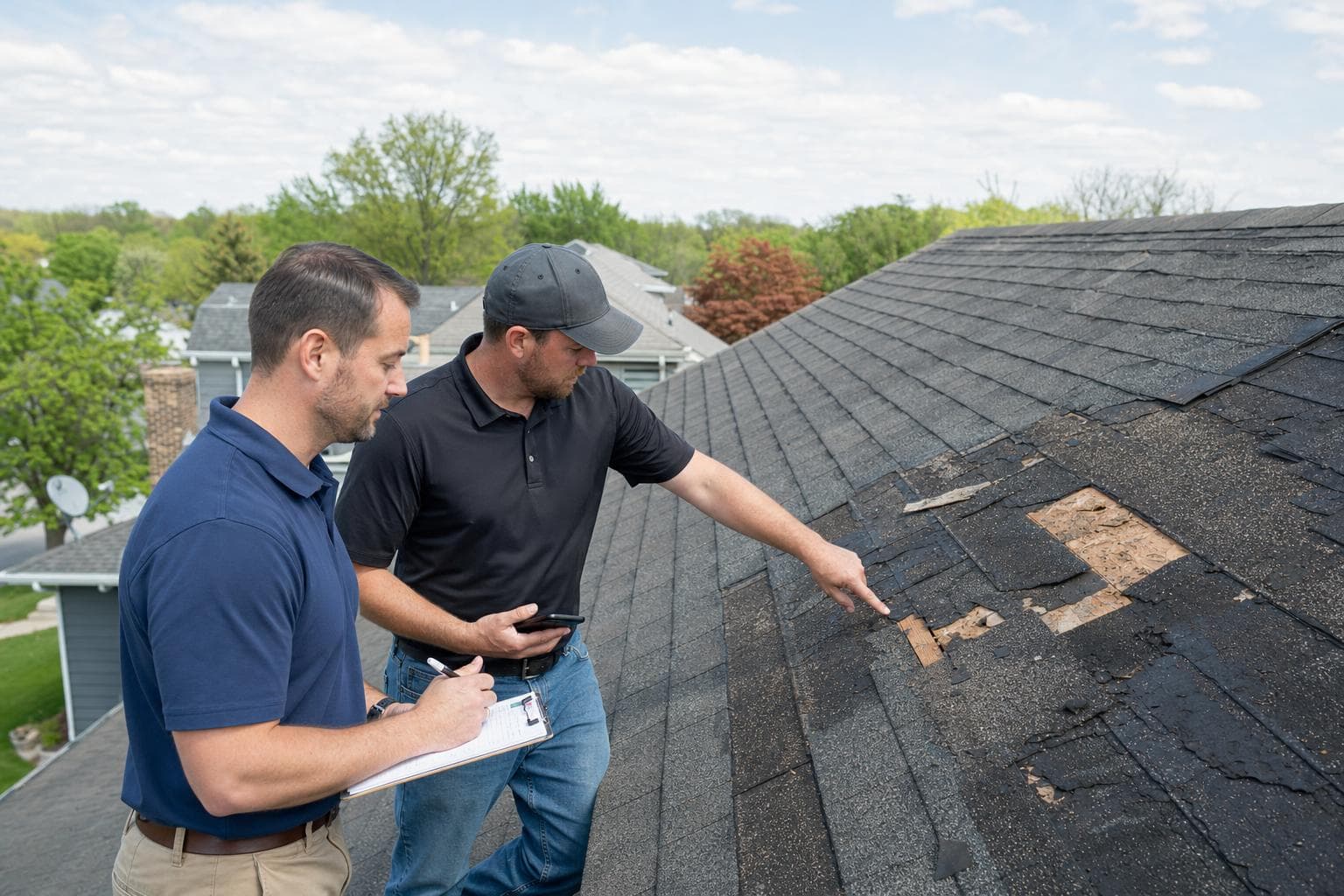
Build one claim file with the event date, exterior and interior photographs, temporary-work receipts, contractor estimates, carrier correspondence, adjuster estimate, and any revised scope. Compare the documents line by line for tear-off, decking assumptions, flashing, ventilation, accessories, code items, and depreciation instead of treating the carrier total as the roof specification.
Read the declarations, deductible, valuation terms, exclusions, roof-surface provisions, and deadlines before assuming how a loss will be paid. Ask the insurer to explain coverage questions in writing. Let the roofer explain construction quantities and methods, not policy meaning.
How Florida rules and weather shape the claim record
Florida roofs live and die by wind and water. Hurricanes and tropical systems drive wind uplift and wind-driven rain that find any weak fastener, seam, or edge, and that risk runs highest near the coast. On top of that, near-constant sun, heat, humidity, and heavy summer rain age shingles and grow algae faster than in most of the country, and salt air along the shore is hard on metal and flashing. The right roof for your home depends on how exposed you are to all of it.
Claims in Florida still turn on the event at the address and the policy in force, even when a storm affected an entire region. Documentation should separate sudden conditions from age, maintenance, manufacturing marks, and prior repairs, then show how the proposed work relates to the observed roof.
What useful roof-claim documentation should include
A roof claim has a construction track and a coverage track. The contractor documents conditions and writes the repair or replacement scope; the insurer interprets the policy and decides what is covered. Keeping those roles clear protects the homeowner from promises neither side can support. Compare the contractor estimate, insurer estimate, photographs, measurements, material, code items, deductible, depreciation, supplements, and elective upgrades. The goal is to identify assumption differences before work or payment milestones create a dispute.
Evidence and construction records to define
- Dated photographs and locations for roof areas, accessories, exterior conditions, and interior water
- Temporary-protection scope, photographs, invoices, and a record of what was covered
- Measurements, product identification, observed conditions, repairability findings, and access limits
- A construction estimate with labor operations, materials, quantities, assumptions, and exclusions
- Written rules for concealed work, scope revisions, change orders, completion records, and warranties
- Clear separation between contractor construction work and insurer or licensed-professional policy decisions
What changes construction cost and out-of-pocket exposure
- Measured repair or replacement scope and the exact installed roof system
- Temporary protection, access, height, slope, staging, and property protection
- Tear-off, disposal, flashing, ventilation, permits, inspections, and code-required construction
- Concealed deck or structural work found after removal and the contract's unit-price rules
- Deductible, valuation, limits, exclusions, and carrier decisions that affect out-of-pocket cost rather than construction price
- Elective upgrades or work outside any carrier scope
What to reconcile before authorizing roof work
Compare claim help by the quality of inspection, photographs, measurements, construction detail, revision process, and communication. Avoid anyone who promises an outcome, controls the claim without clear authority, or disguises the deductible in the contract.
- A contractor offers to hide, absorb, or misrepresent the deductible
- A contractor promises approval, payment, replacement, or a specific claim outcome
- Policy interpretation or claim representation is offered without explaining authority and licensing
- Permanent work is pushed before evidence and scope are preserved, except for necessary temporary protection
- The roofing contract uses only the carrier total and never states products, quantities, exclusions, or change rules
- An assignment, direction-to-pay, or financing document is presented before its effect is explained
- What did you observe on each roof area, and which photographs and measurements support the construction recommendation?
- Which temporary work is needed now, and how will the uncovered condition be documented?
- Which estimate items describe construction, and which coverage questions must go to the insurer or a licensed professional?
- How do your measurements, materials, labor operations, flashing, ventilation, and deck assumptions differ from the carrier estimate?
- How are concealed work, code-required construction, supplements, elective upgrades, and change orders documented?
- What contract price, payment schedule, completion records, and warranty responsibilities apply regardless of claim timing?
Roof claim cost context in Florida
The roof scope and the homeowner's out-of-pocket amount are not the same number. Use the repair and replacement references below to understand construction cost, then read the policy deductible, valuation, limits, exclusions, and carrier scope to understand the claim.
- Documented inspection
- Confirm the deliverable and whether any fee is credited toward later work
- $75-$1,300
- Temporary roof protection
- Keep photographs and the invoice when an insurance claim may follow
- $450-$1,900
- Typical targeted repair
- Review the construction estimate alongside the deductible and policy terms
- $400-$2,400
- Class 3 replacement reference
- 2,000 sq ft reference roof, before policy and property-specific adjustments
- $12,429
Cost ranges are estimates developed from standardized project scopes and reviewed pricing inputs. Government labor and regional cost data are used where applicable. See our Pricing Methodology for the exact sources, calculations, and review date. Actual prices vary by property, scope, materials or equipment, location, and provider.
Claim roles, state rules, and contractor checks
Florida may regulate deductible rebates, public adjusting, assignments, contract cancellation, licensing, and how a contractor participates in a claim. Verify those roles before signing, especially when one company offers to control the roof work and the insurance negotiation.
The strictest roofing code in the country, and it is strictest in South Florida
Florida builds to the Florida Building Code, and Miami-Dade and Broward counties sit in the High-Velocity Hurricane Zone (HVHZ), which carries the toughest wind-resistance roofing rules in the United States. In the HVHZ, every shingle, tile, underlayment, and fastener has to carry a Miami-Dade Notice of Acceptance or Florida Product Approval rated for that zone, and installs follow stricter fastening and underlayment standards. Whoever roofs your home has to pull a permit and meet the code for your area, so confirm they do.
You no longer always have to replace the whole roof to fix part of it
Until 2022, Florida's "25% rule" generally forced a full roof replacement if more than 25% of the roof was repaired or replaced in a year. SB 4-D changed that: if your roof was built to the 2007 Florida Building Code or later (roughly, permitted on or after March 1, 2009), now only the repaired section has to be brought up to current code, not the entire roof. That can be the difference between a repair and a tear-off, so it is worth knowing where your roof stands.
A wind-mitigation inspection can cut your premium, and the discount is required by law
Florida law (Statute 627.0629) requires home insurers to give premium credits for verified wind-resistant features, things like a hip roof shape, a sealed roof deck, and code-rated shingle attachment. A licensed inspector documents them on the state's Uniform Mitigation Verification form (OIR-B1-1802), and the windstorm savings can be substantial. If you are replacing or upgrading a roof, get the wind-mitigation inspection afterward so you actually capture the credit you are owed.
Florida does license roofers at the state level, so here "licensed" means something you can check. Verify it: state-certified roofing contractors carry a license starting with "CCC," and registered (local) ones start with "RC," and you can confirm status and any complaints free at the Department of Business and Professional Regulation (myfloridalicense.com). Then confirm current general-liability and workers'-compensation insurance, real local references, and hands-on experience with your area's code and wind-mitigation requirements. A roofer who knows the HVHZ rules and how to set you up for the wind-mitigation discount is worth far more than one who does not.
Sources: Florida Building Commission / Florida Building Code (HVHZ) · Florida Office of Insurance Regulation (wind-mitigation premium discounts) · Florida DBPR (verify a roofing contractor's license) · Citizens Property Insurance Corporation (state insurer of last resort)
Common questions about roof insurance claim help in Florida
What should I document before a Florida roof claim?+
When safe, photograph roof areas, accessories, exterior damage, and interior water evidence; note when the event and damage were discovered; save temporary-work receipts; and keep estimates and carrier communications together. Do not delay necessary protection merely to preserve evidence.
Why can the roofer and insurer estimates differ?+
They may use different measurements, damage assumptions, material, labor operations, flashing details, code items, decking allowances, waste, or valuation. Compare line items and supporting photographs, then ask each party to explain its scope rather than arguing from the totals alone.
Who decides what roof work is covered in a Florida claim?+
The insurer interprets the policy and makes the coverage decision. A roofer can document observed conditions, explain repairability and construction methods, and write an estimate. Keep those roles separate, and direct policy advice, settlement negotiation, or representation to the carrier or a professional properly licensed for that role in Florida.
Can a roofer negotiate my claim in Florida?+
A roofer can document conditions and explain construction scope. Policy interpretation, settlement negotiation, or representing a homeowner may require a public-adjuster or other license depending on Florida law. Verify the role before authorizing representation.
Can a contractor cover my roof deductible?+
Treat any offer to hide, absorb, rebate, or misrepresent the deductible as a serious warning. Rules vary by state and policy, so require an accurate contract and invoice and verify your responsibility with the carrier or Florida insurance regulator.
What should I do when the carrier estimate omits roof work?+
Identify the exact measurement, material, labor operation, flashing detail, ventilation item, deck allowance, permit, or code requirement that differs. Ask the contractor to support construction items with photographs, quantities, invoices, or written requirements, and ask the carrier to explain its review or supplement process. A scope difference is not a promise of additional payment.
How do depreciation and supplements affect a Florida roof project?+
Depreciation is part of the insurer's valuation, and whether an amount is recoverable depends on the policy and claim. A supplement asks the carrier to review documented scope or price information that was not included earlier. Confirm timing and document requirements with the carrier before relying on either amount to fund the roofing contract.
Which Florida rules should I check before signing a roof insurance claims contract?+
Start with the verified state guidance on this page, including The strictest roofing code in the country, and it is strictest in South Florida; You no longer always have to replace the whole roof to fix part of it; A wind-mitigation inspection can cut your premium, and the discount is required by law. Then confirm the permit authority and any local contractor requirement for the property address. Insurance coverage and policy interpretation remain separate from the roofing contract.
Local roofing and storm context in Florida
State-level rules control this page, while the roof evidence is local. Use your nearest Florida city page for storm and material context, then keep the claim decision tied to the documented property condition and policy.
