Updated July 10, 2026

3D Roofs Editorial Team
Editorial Standards
If a storm hits your Oregon roof, your first job is simple: stay safe, stop active water entry if you can do it safely, and document everything before temporary repairs hide the evidence. In Oregon, rain, wind, tree impact, ice, snow load, and freeze-related water problems all matter. Wind can tear off shingles or drop branches and trees onto a roof. Snow and ice can add weight, and sudden cold can contribute to ice dam or burst-pipe damage that affects the roof system and interior. Because Oregon weather can damage only part of a roof, many claims and repair decisions focus on the specific damaged area, not automatically a full replacement.
What should you do in the first 48 hours after storm damage?
Start with safety, then water control, then proof. If you see a fallen tree, sagging roofline, exposed decking, active leaks near electrical fixtures, or ceiling bulges holding water, get out of the affected area and call for help. If the situation is stable, take clear photos and video from the ground, inside the attic if accessible, and inside the home where water shows up. Put a bucket under drips, move valuables, and use towels or plastic to protect floors and furniture. If a tarp is needed, do not climb onto a wet or steep roof yourself. Call a roofer whose credentials and written scope you checked for emergency tarping so you can reduce further damage without risking injury.
- Take wide photos of each roof slope from the ground
- Photograph missing shingles, lifted flashing, fallen limbs, gutters, siding, and windows
- Inside, photograph wet drywall, stained ceilings, attic moisture, insulation, and personal property damage
- Write down the date of the storm and when you first noticed the damage
- Save receipts for tarping, cleanup, and emergency protection materials
How do you document roof damage for an insurance claim?
Use organized, time-stamped evidence and keep it simple. Insurers want to see what happened, where it happened, and how the damage affected the home. Create one folder on your phone or computer with photos, videos, notes, receipts, and any conversations with your carrier or roofer. Take overview photos first, then close-ups. If shingles blew off one slope, document that specific area clearly. Oregon’s storm guidance says if wind blows a few shingles off your house, homeowners insurance will likely replace the damaged shingles, but will not provide an entire new roof. It also says insurers pay to repair damage from a covered loss, and if wind damage is only on one side of the roof, the insurer normally will pay only for the one slope of the roof to be replaced.
Should you tarp the roof right away?
Yes, if water can get in, temporary protection is usually the right move. Tarping helps prevent a smaller storm claim from turning into a larger interior loss. The key is doing it safely and documenting the damage before the tarp goes on whenever possible. Ask your roofer to photograph the damaged area before and after tarping. That gives you a record of the original opening and the temporary fix. In Oregon, sudden and accidental events from an ice dam on the roof or pipes bursting due to freezing may be covered. Policies generally will not cover groundwater seepage or water damage from backed-up drains or sewers, though some insurers offer limited coverage or endorsements for water backup.
Talk to a roofer today
Planning ranges, scope details, and a direct path to request a roofing quote.
How can you tell storm damage from normal roof age?
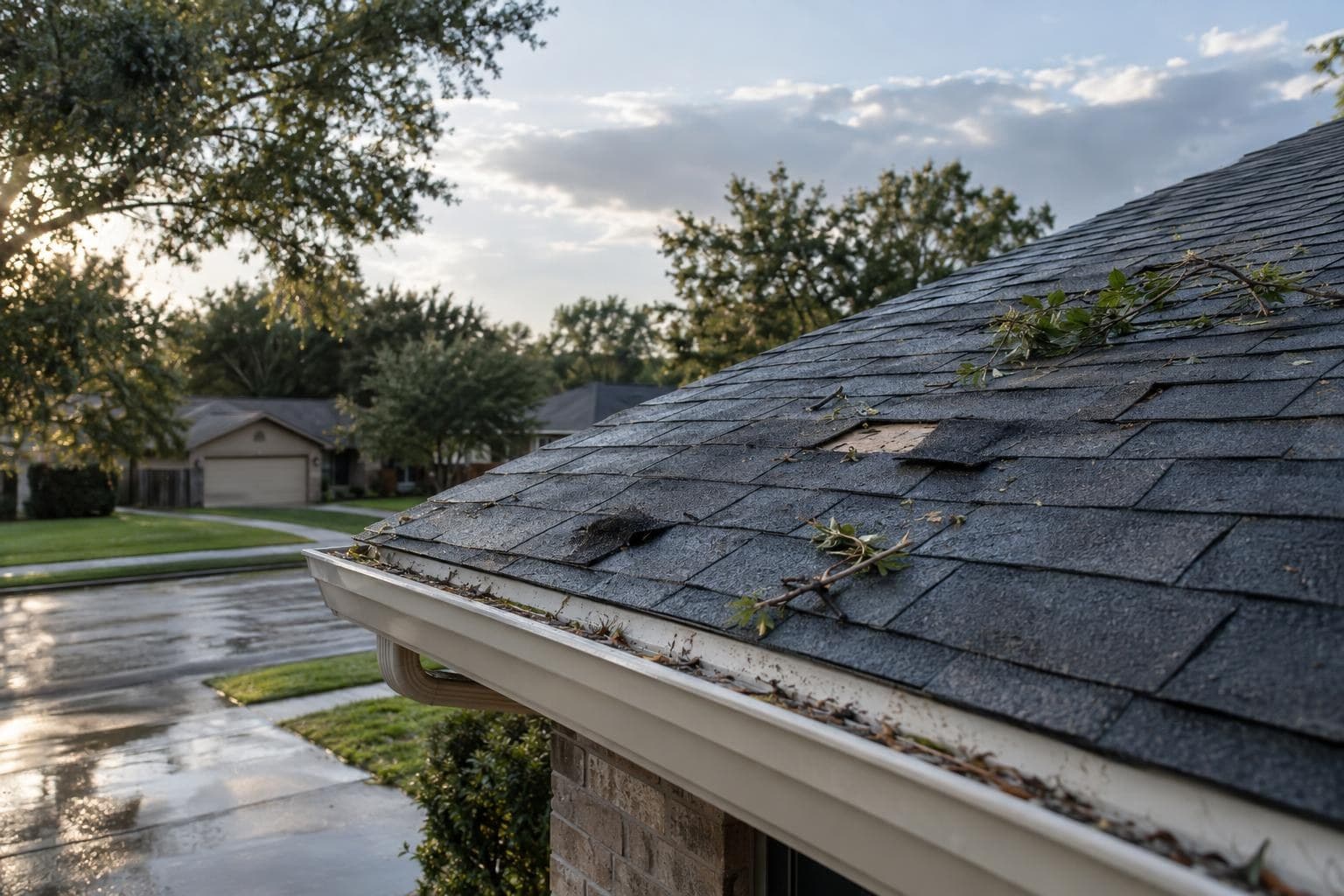
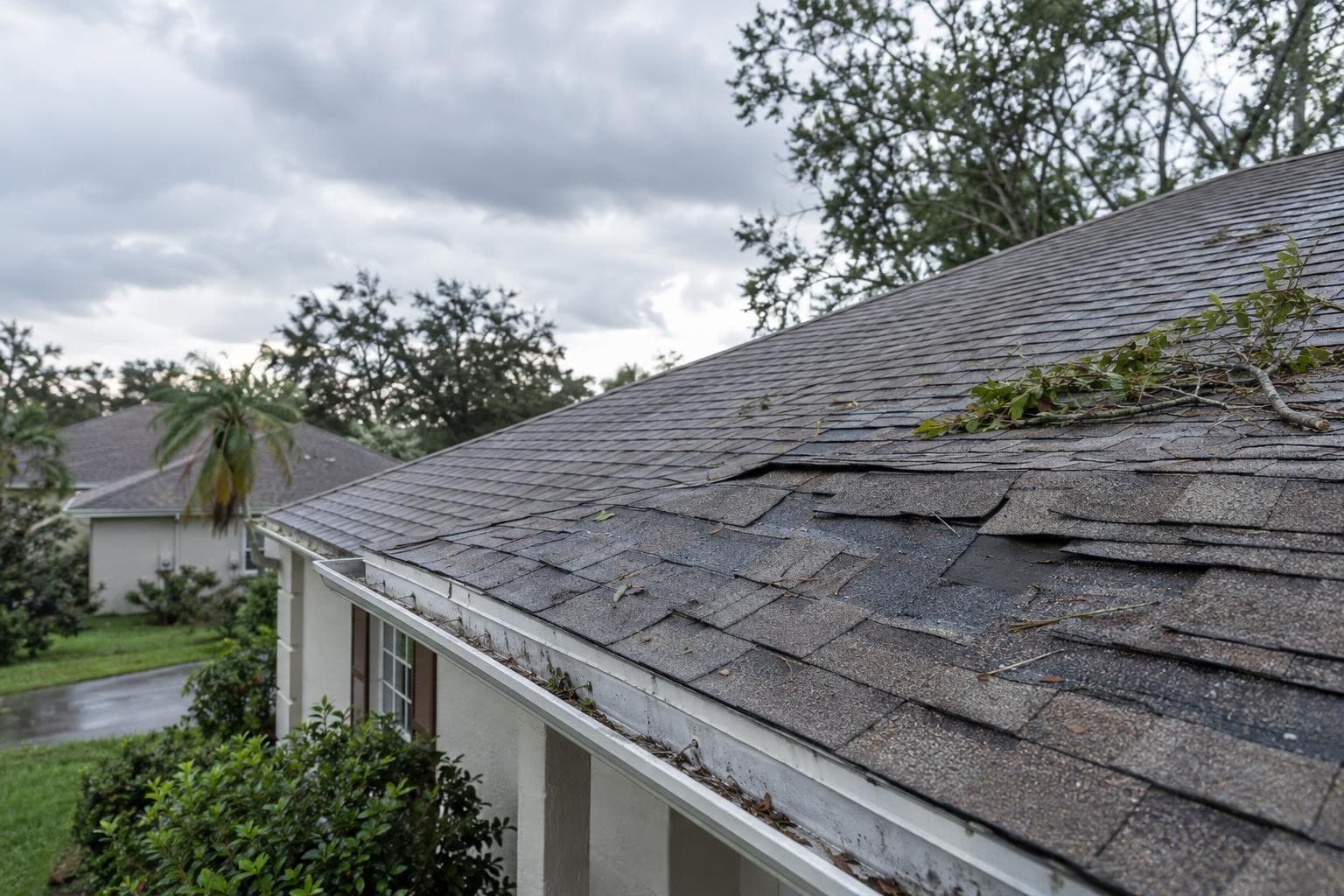
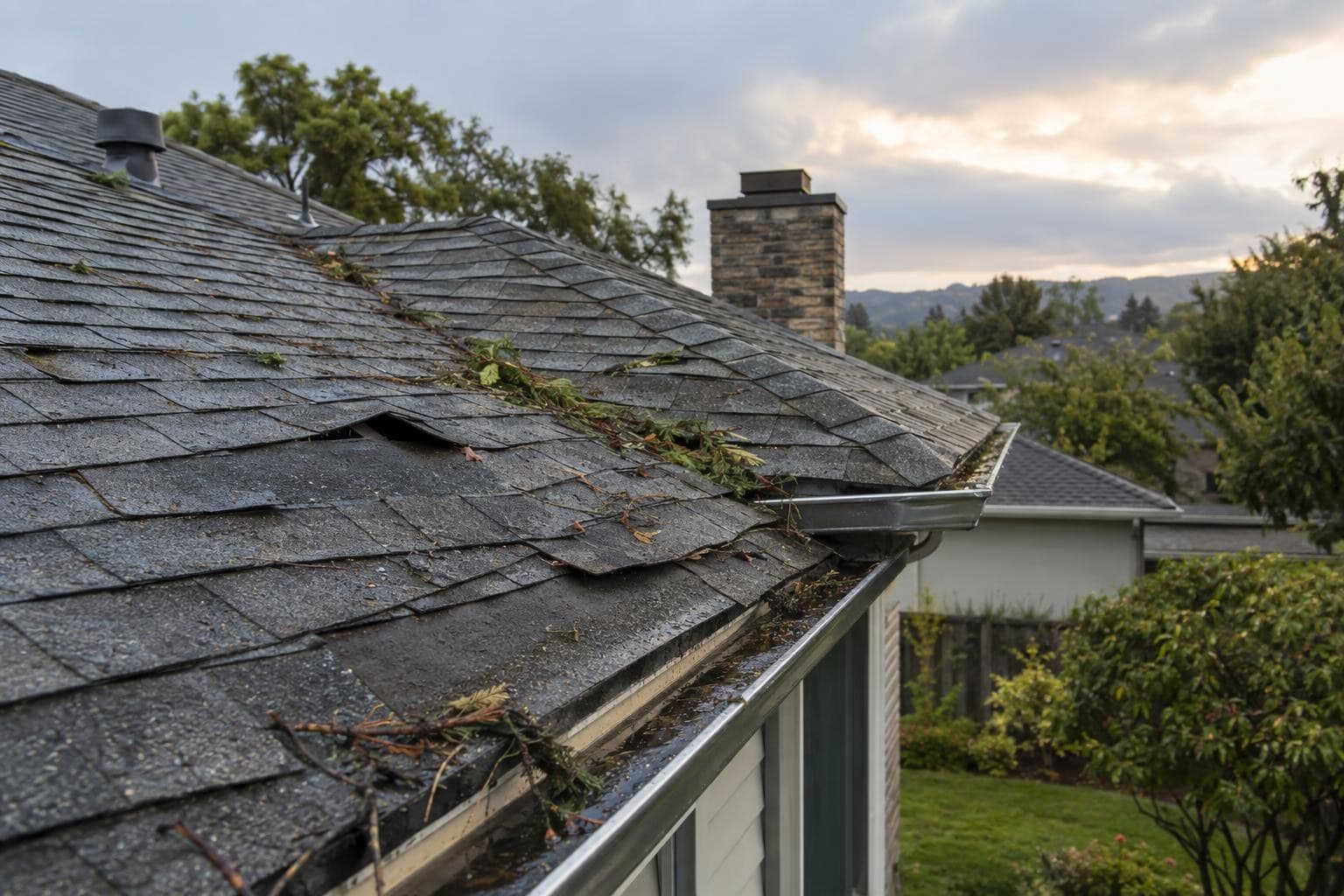
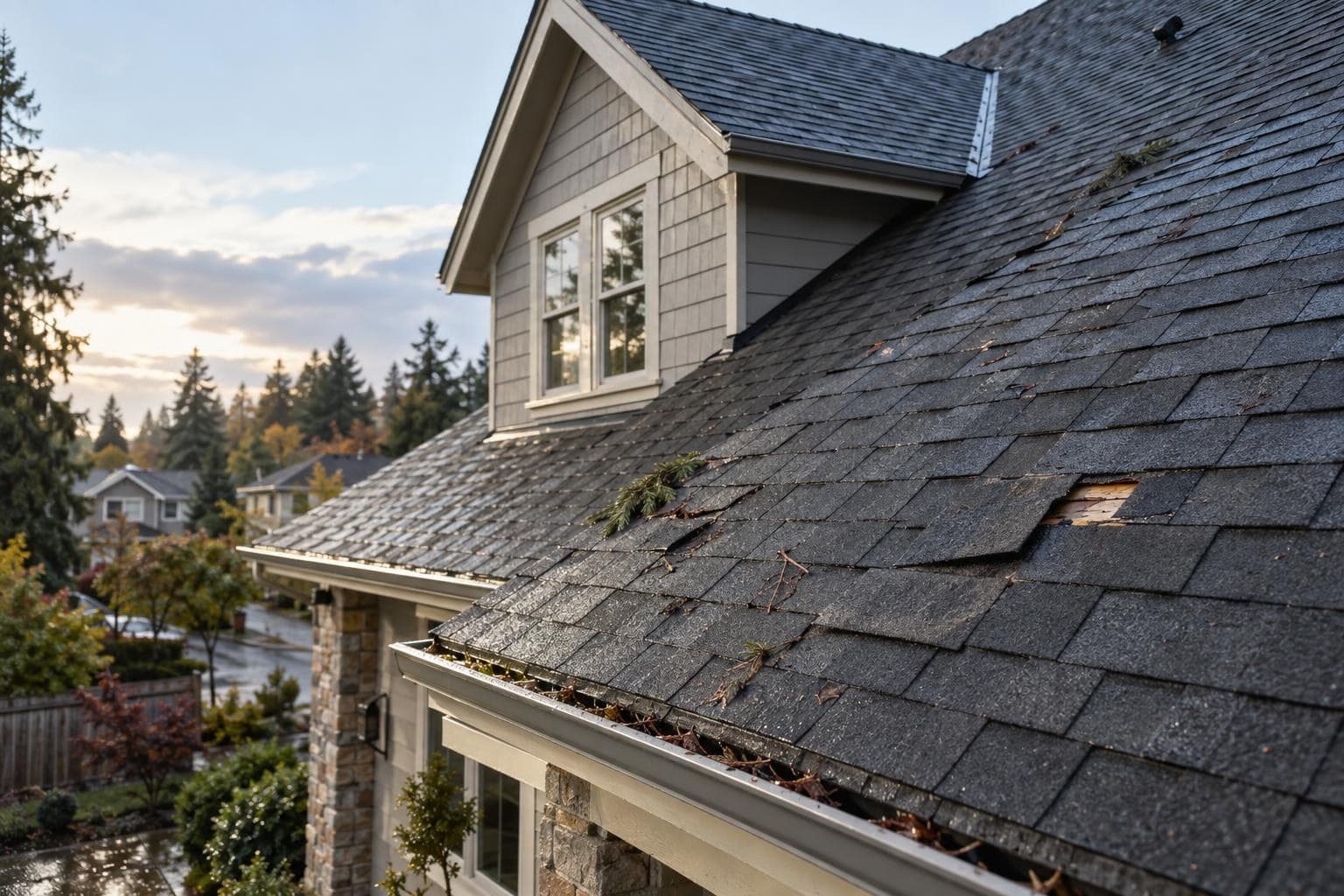
Look for change, pattern, and timing. Storm damage usually appears as a distinct event, missing shingles after a windstorm, a puncture from a branch, bent metal, fresh granule loss below a newly damaged area, or water entry that starts right after a storm. Age-related wear tends to look gradual, widespread, and consistent across the roof, curling, uniform granule loss, brittle shingle edges, old sealant failure, and repeated minor leaks in the same trouble spots. In Oregon, this matters because only the damaged area may be part of the claim decision. A local roofer you have vetted can document whether the problem is storm-created, age-related, or a mix of both, which is common on older roofs.
- Storm clues: missing tabs, creased shingles, fresh punctures, impact marks, displaced flashing, torn ridge caps
- Age clues: uniform fading, widespread brittleness, general granule loss, old patchwork, long-term moss or wear patterns
- Mixed clues: an older roof with one newly damaged slope or one fresh leak path after a storm
Should you file a claim or pay for the repair yourself?
Treat it as a cost-benefit decision, not an automatic next step. Oregon’s Division of Financial Regulation tells homeowners to weigh the benefits of filing a claim against the costs, including your deductible. The state also warns that a reported claim could affect your future premium or ability to get coverage. If the damage is limited and the repair falls near or below your deductible, paying out of pocket may make more sense. For a storm-damage roof project in Oregon, begin with documented damage, the policy deductible, and a property-specific repair or replacement scope. If the damage is broader, involves structural impact, or includes interior water damage, a claim may be worth pursuing. If you need help understanding the claims process or your consumer options, the Division of Financial Regulation provides free help, and if phone help does not resolve the issue, a consumer can file a complaint.
When does storm damage mean repair, and when does it mean replacement?
Most Oregon storm losses start with a repair discussion, not a full reroof. Because Oregon weather often damages only part of a roof, repair decisions commonly focus on the specific damaged area. A replacement usually comes up when the damaged area is too extensive to repair cleanly, the roof system has widespread issues, or matching and performance concerns make a partial fix a poor long-term option. Check current Oregon cost data for a storm-damage roof project in Oregon, then replace the range with an assembly-specific proposal based on measured conditions. Before approving a storm-damage roof project in Oregon, have the bidder connect timing to roof complexity, crew access, material handling, weather, inspections, and concealed conditions.
What roof problems are common in Oregon storms?
Wind and water are the biggest short-term threats, but they are not the only ones. In Oregon, wind can tear off shingles or drop branches and trees onto a roof. In wildfire-prone areas, ember exposure and debris management also matter. Not every storm-related water problem is handled the same way by insurance, and not every loss tied to weather falls under a standard homeowners policy. Oregon’s storm guidance says most homeowners and renters policies do not cover flood damage. It also says a homeowners policy does not cover earth movement, including landslides, mudflows, and erosion.
How do you choose a roofer after storm damage?
Move quickly, but verify before you sign. In Oregon, roofing is work that generally requires a Construction Contractors Board license. The state warns that anyone can pretend to be a contractor and tells consumers to check licenses. That means you should confirm your roofer has an active CCB license before work starts, and make sure the business name on the contract matches the license record. Ask who will supervise the job and whether the business is set up for residential roofing work under the proper endorsement structure. A qualified local roofing contractor should also be willing to provide a clear scope of work, explain what is temporary versus permanent, and separate storm-created damage from old wear in plain language.
Should you upgrade to a Class 4 roof after a storm?
If you are replacing the roof anyway, it is worth comparing the upgrade cost and asking your carrier about discounts. A Class 4 rating does not establish a policy credit in Oregon; the carrier and policy determine eligibility, documentation, and savings. Ask your carrier whether it offers a discount for a Class 4 rated product and what documentation it requires. If you want to compare those options side by side, check the Oregon cost page and the calculator.
The bottom line is this: in the first 48 hours, good photos, fast water control, and a clear separation between storm damage and old wear can shape the whole outcome. You do not need to decide everything on day one. You do need to protect the home, document what changed, and get a local contractor whose credentials you verified to inspect the roof before small openings turn into bigger repairs.
Sources
Reviewed technical references for Oregon
Related Oregon roofing guides
Related services
Updated July 10, 2026
3D Roofs Editorial Team
Editorial Standards