Updated July 27, 2026

3D Roofs Editorial Team
Editorial Standards
After a storm hits your Florida roof, act fast: protect the inside of your home, document what you can safely see, and get a roofing contractor you are considering involved before small openings turn into major water damage. In Florida, that urgency matters because roofs here take a constant beating from wind and water. Hurricanes and tropical systems drive wind uplift and wind-driven rain that find any weak fastener, seam, or edge, and that risk runs highest near the coast. On top of that, near-constant sun, heat, humidity, and heavy summer rain age shingles and grow algae faster than in most of the country, and salt air along the shore is hard on metal and flashing.
What should you do in the first 48 hours after a storm?
Start with safety and leak control. If you see active dripping, move furniture, put down buckets, and relieve any bulging ceiling areas only if you can do it safely. Then take photos and video from the ground and inside the attic or top floor if you can get there without risk. Do not climb onto a wet roof. Your next move is to arrange a roof inspection and temporary dry-in, usually tarping, if the roof has exposed decking, missing shingles, lifted metal, broken tile, or any opening that can keep letting water in.
- Check ceilings, attic spaces, vents, and light fixtures for water stains or active leaks
- Photograph exterior damage from the ground, including fallen branches, displaced roofing, gutters, screens, and fence damage that helps show storm direction
- Take clear interior photos of stains, wet insulation, peeling paint, and damaged belongings
- Write down the storm date and the time you first noticed damage
- Keep any roofing pieces you find on the ground if they are safe to collect
- Call a roofing contractor you are considering for emergency protection and a damage assessment
How do you document roof storm damage the right way?
Document broadly, then specifically. You want a simple record that shows the storm event, the visible roof effects, and the interior water path. That means wide shots of each roof slope from the ground, close-ups of anything visible, and indoor photos that connect roof damage to leaks. If a branch hit the house, leave it in place until your roofer sees it, unless it creates an immediate safety hazard. The goal is to preserve evidence, not to clean up too early and lose the story of what happened.
Good documentation also helps separate new storm damage from wear that was already there. Date-stamped photos from before the storm, past repair receipts, inspection reports, and permit records can all help. If your roof was built to the 2007 Florida Building Code or later, roughly, permitted on or after March 1, 2009, that can matter if only part of the roof needs work. As Florida law changed, you no longer always have to replace the whole roof to fix part of it. That can be the difference between a repair and a tear-off.
When does your Florida roof need a tarp?
A tarp is needed when the roof cannot keep water out right now. If shingles blew off, flashing pulled loose, tile broke open, metal panels lifted, or a limb punched into the roof, temporary covering should happen as soon as conditions allow. In Florida, wind-driven rain can force water into very small openings, and heavy summer rain can turn a minor exposed area into soaked decking, insulation, and drywall in one afternoon.
Tarping is not the final repair. It is a short-term step to limit further interior damage while you wait for materials, weather, and a full repair plan. Take photos before the tarp goes on if you can do that safely, then keep the receipt and service notes. That record helps show you acted quickly to prevent further loss.
Talk to a roofer today
Planning ranges, scope details, and a direct path to request a roofing quote.
How can you tell storm damage from old roof age?
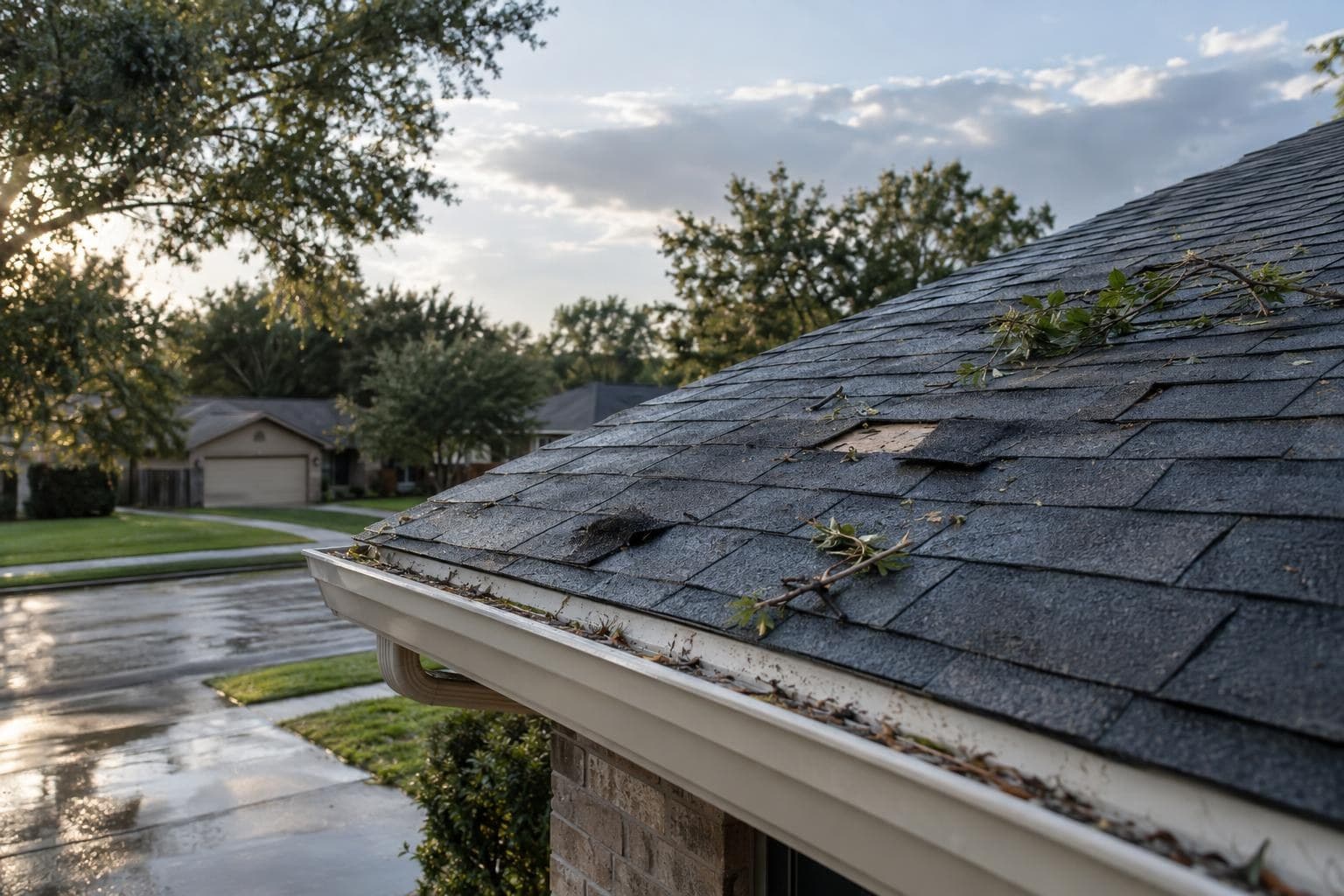
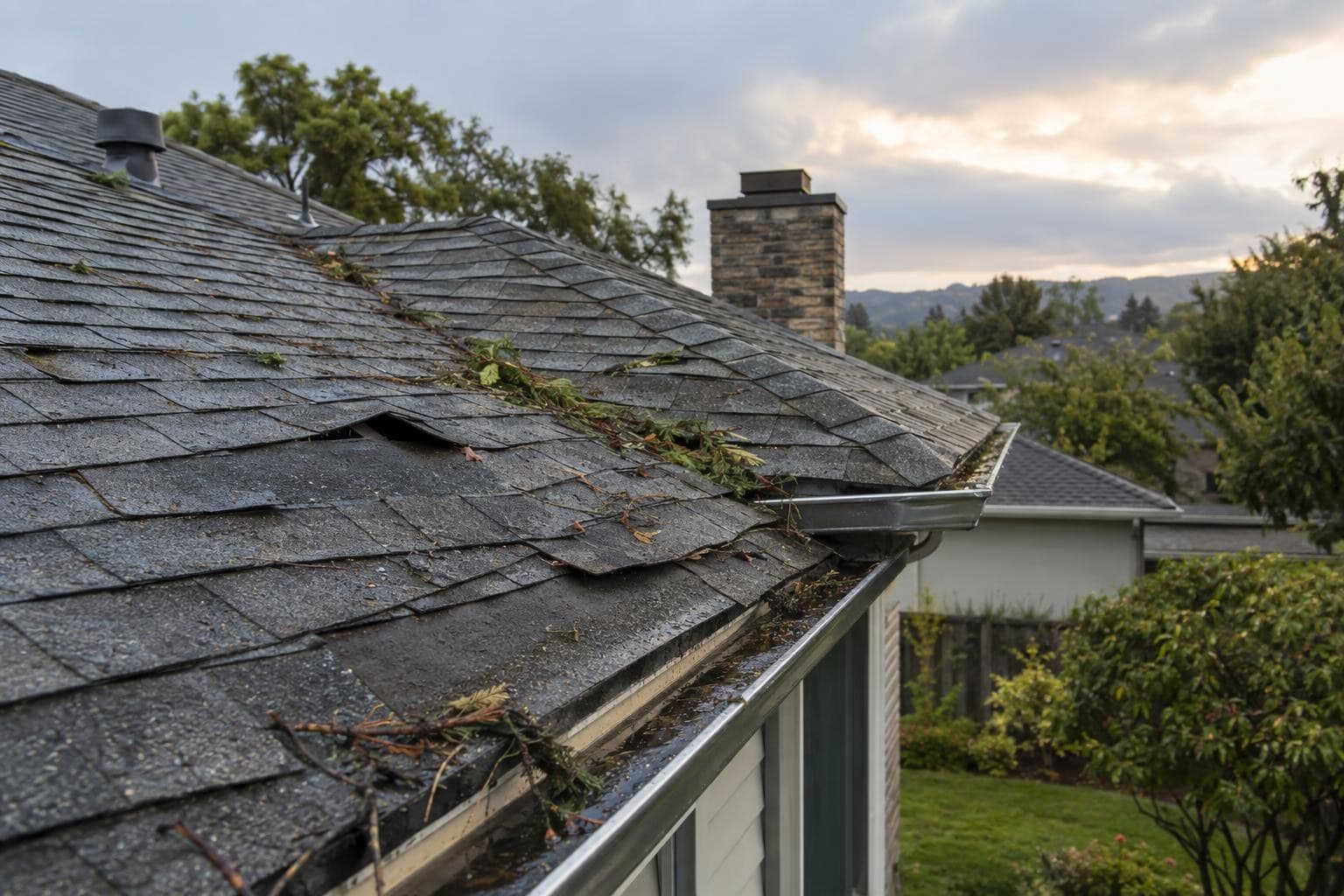
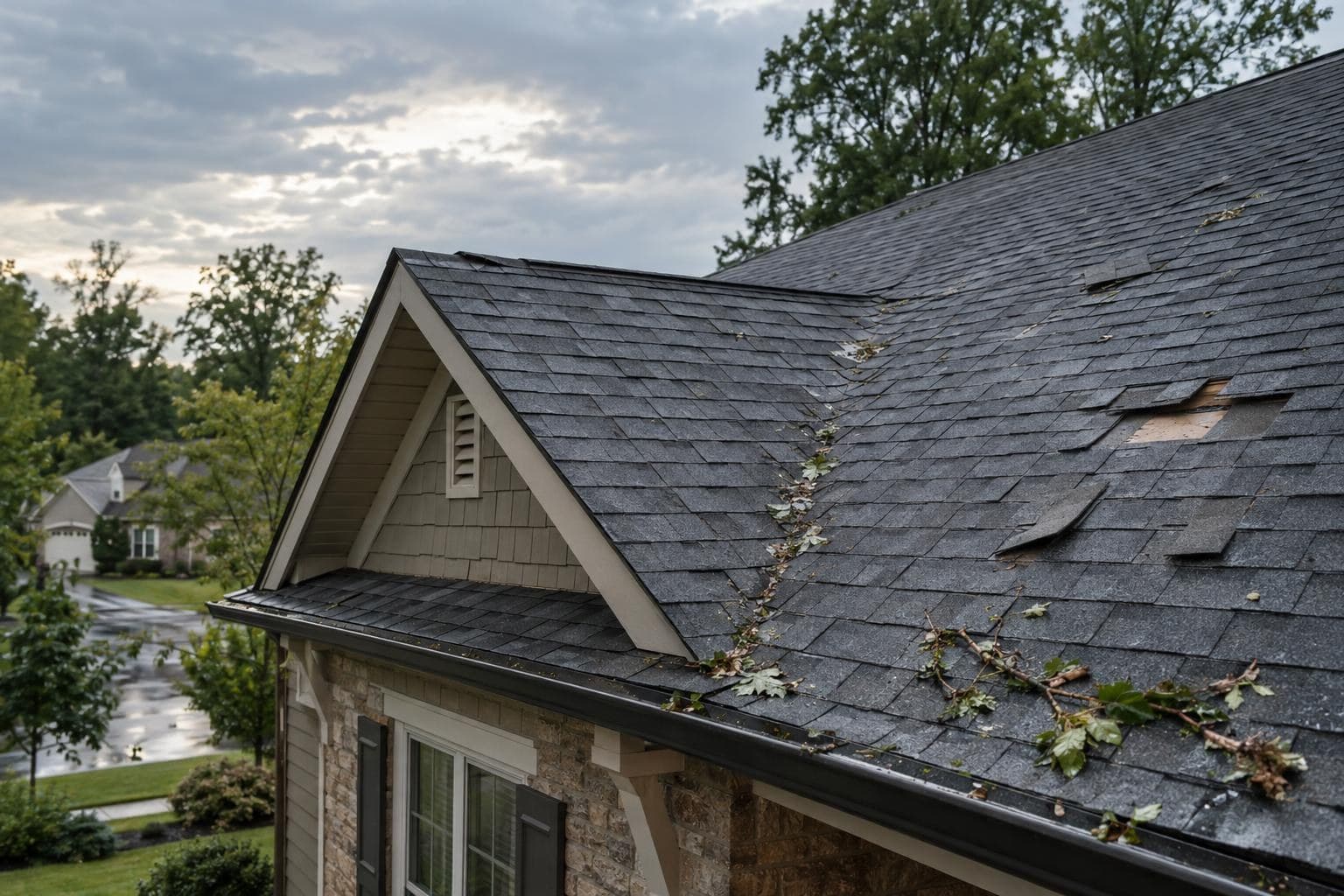
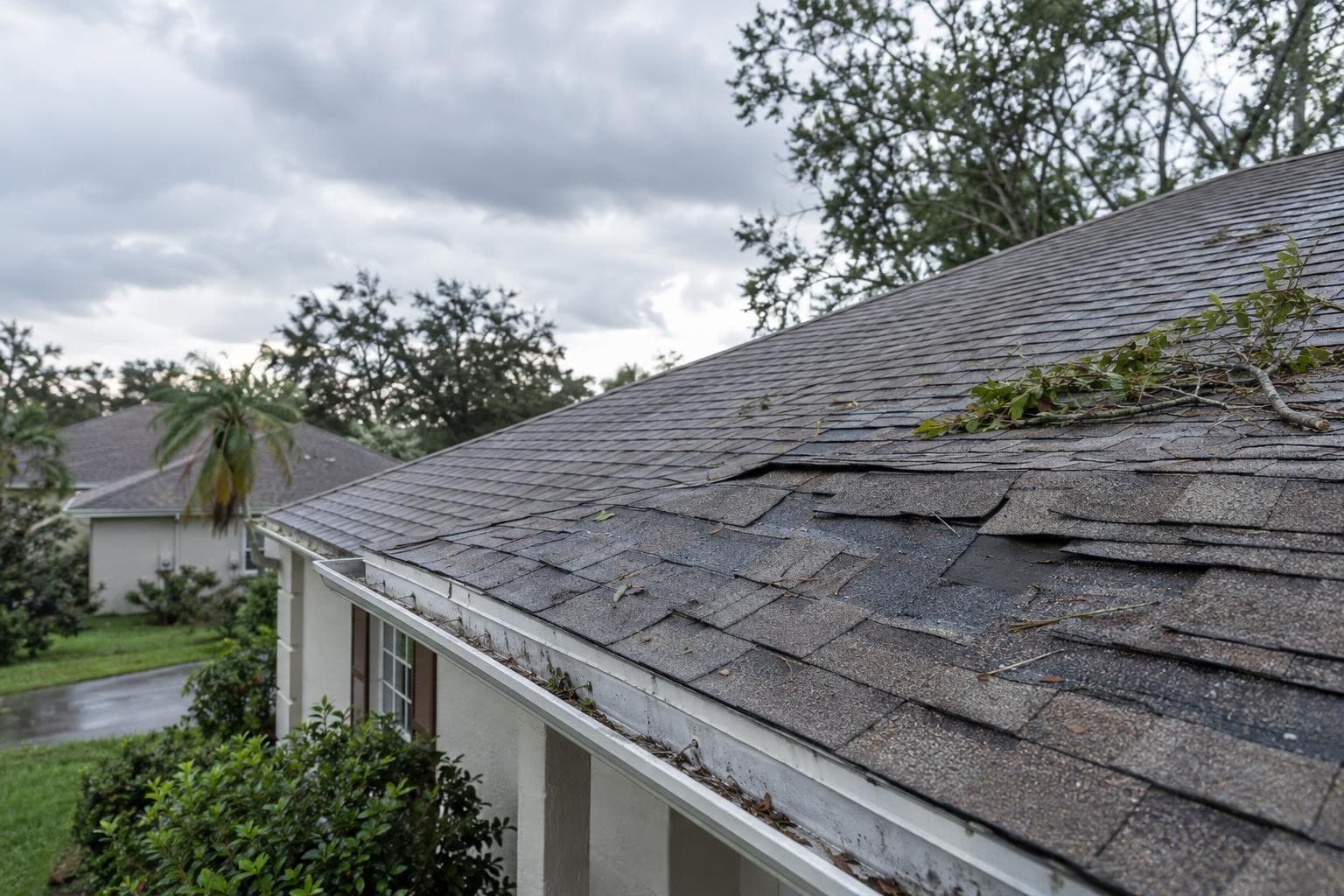
Storm damage usually looks sudden and directional, while age looks general and spread out. A storm often leaves a clear pattern: missing tabs on one slope, creased shingles where wind bent them back, displaced ridge pieces, fresh granule loss below a specific area, bent flashing, or impact marks near a fallen branch. Age, by contrast, tends to show up as even wear, widespread granule loss, brittle shingle edges, old repairs, sun cracking, algae streaking, rusted fasteners, and dried sealant that failed over time.
- Storm signs: missing shingles in a concentrated area, lifted edges, fresh creases, punctures, torn flashing, newly exposed underlayment
- Age signs: uniform fading, widespread granule loss, brittle shingles, repeated patching, long-term algae growth, sealant shrinkage
- Storm signs on metal: lifted seams, fresh dents tied to a known event, displaced trim, loose fasteners after high wind
- Age signs on metal: corrosion, faded finish, old fastener back-out, long-term movement at penetrations, salt-air wear near the shore
Florida makes this distinction harder because weathering is constant. Near-constant sun, heat, humidity, and heavy summer rain can make an older roof look rough even before a storm. Salt air along the shore can also wear down metal and flashing. That is why a roof can have both conditions at once, existing age and fresh storm damage. Your roofer should identify what is newly caused by the storm and what is simply the roof reaching the end of its life.
Can you repair part of the roof, or do you need full replacement?
Sometimes a localized repair is enough, and sometimes it is not. For current Florida planning prices related to storm damage roof, use the cost guide and calculator, then compare the contractor's property-specific written scope. If the storm exposed larger weak areas, broke field shingles across multiple slopes, or hit an already aging roof, replacement may make more sense. For storm damage roof in Florida, ask the contractor to put the expected working days and weather plan in writing; timing depends on roof size, material, access, crew scheduling, and conditions found after tear-off.
Florida code can also affect the answer. Florida builds to the Florida Building Code, and Miami-Dade and Broward counties sit in the High-Velocity Hurricane Zone, which carries the toughest wind-resistance roofing rules in the United States. In the HVHZ, every shingle, tile, underlayment, and fastener has to carry a Miami-Dade Notice of Acceptance or Florida Product Approval rated for that zone, and installs follow stricter fastening and underlayment standards. Whoever roofs your home has to pull a permit and meet the code for your area, so confirm they do.
What does a Florida roof replacement cost after storm damage?
If storm damage pushes you to replacement, use 2026 market pricing as your baseline. Full local pricing lives on the Florida cost page, and you can compare scenarios with the calculator.
If you are replacing because of wind exposure, ask about wind-rated and impact-resistant options that fit your county. Wind-rated and impact-resistant materials matter more in Florida than almost anywhere. Products approved for the High-Velocity Hurricane Zone are engineered to survive extreme wind, and stronger roof attachment and sealing are exactly the features the state's wind-mitigation discount rewards.
How can a new roof help with Florida insurance costs?
A new roof can help if it adds verified wind-resistant features. Florida law, Statute 627.0629, requires home insurers to give premium credits for verified wind-resistant features, things like a hip roof shape, a sealed roof deck, and code-rated shingle attachment. A licensed inspector documents them on the state's Uniform Mitigation Verification form, OIR-B1-1802, and the windstorm savings can be substantial. If you are replacing or upgrading a roof, get the wind-mitigation inspection afterward so you actually capture the credit you are owed.
For storm damage roof in Florida, any insurance credit depends on the carrier, policy, address, and exact product; get the amount and documentation requirements from the insurer in writing. That does not mean every home saves the same amount, but it is worth asking how your roof system will score on the wind-mitigation form before you sign.
Who should you call after storm damage hits your roof?
Call a roofing contractor you are considering who knows your area's code, wind exposure, and product requirements. In Florida, details matter. Ask which roofing systems carry the right Florida Product Approval or Miami-Dade Notice of Acceptance for your county, and ask how the install will score on the wind-mitigation form before you sign. If your home is in South Florida, that matters even more because the HVHZ rules are stricter.
The bottom line is simple: in the first 48 hours, protect the home, document the damage, and dry the roof in fast. Then sort out the real issue, fresh storm damage, old age, or both, before you decide on repair or replacement. If you want to understand your next step, start with local 2026 market pricing on the Florida cost page and use the calculator to compare repair and replacement paths.
Sources reviewed
- Florida Office of Insurance Regulation (wind-mitigation premium discounts)
- Citizens Property Insurance Corporation (state insurer of last resort)
- National Weather Service: Severe Thunderstorm Safety
- Federal Trade Commission: Four Ways to Avoid Scams After a Weather-Related Disaster
- Georgia Attorney General Consumer Protection Division: Beware of Roofers Scamming Storm Victims
Plan with current pricing
Related services
Updated July 27, 2026
3D Roofs Editorial Team
Editorial Standards