Updated July 27, 2026

3D Roofs Editorial Team
Editorial Standards
If a storm hits your Georgia roof, your first job is to protect the house and document what changed. Georgia roofs take their worst beating from severe thunderstorms that bring hail and damaging straight-line winds, with the Atlanta metro and north Georgia seeing repeated hail seasons and the whole state exposed to tornado risk. Long, hot, humid summers also age shingles faster than in cooler climates, which makes it harder to tell whether a problem came from one storm or years of wear. In the first 48 hours, focus on safety, photos, temporary dry-in, and a clear inspection from a roofing contractor you are considering.
What should you do first after storm damage hits your Georgia roof?
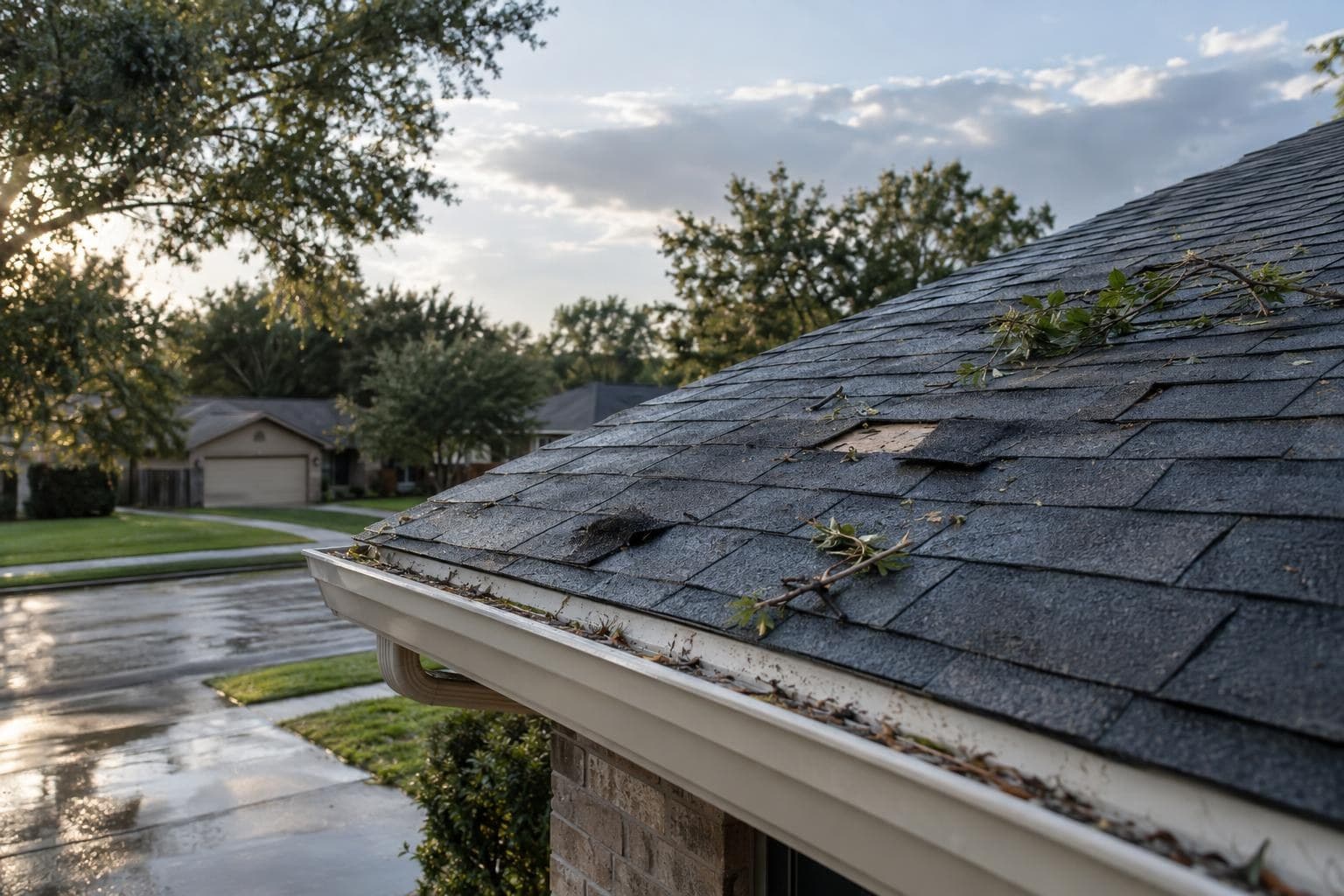
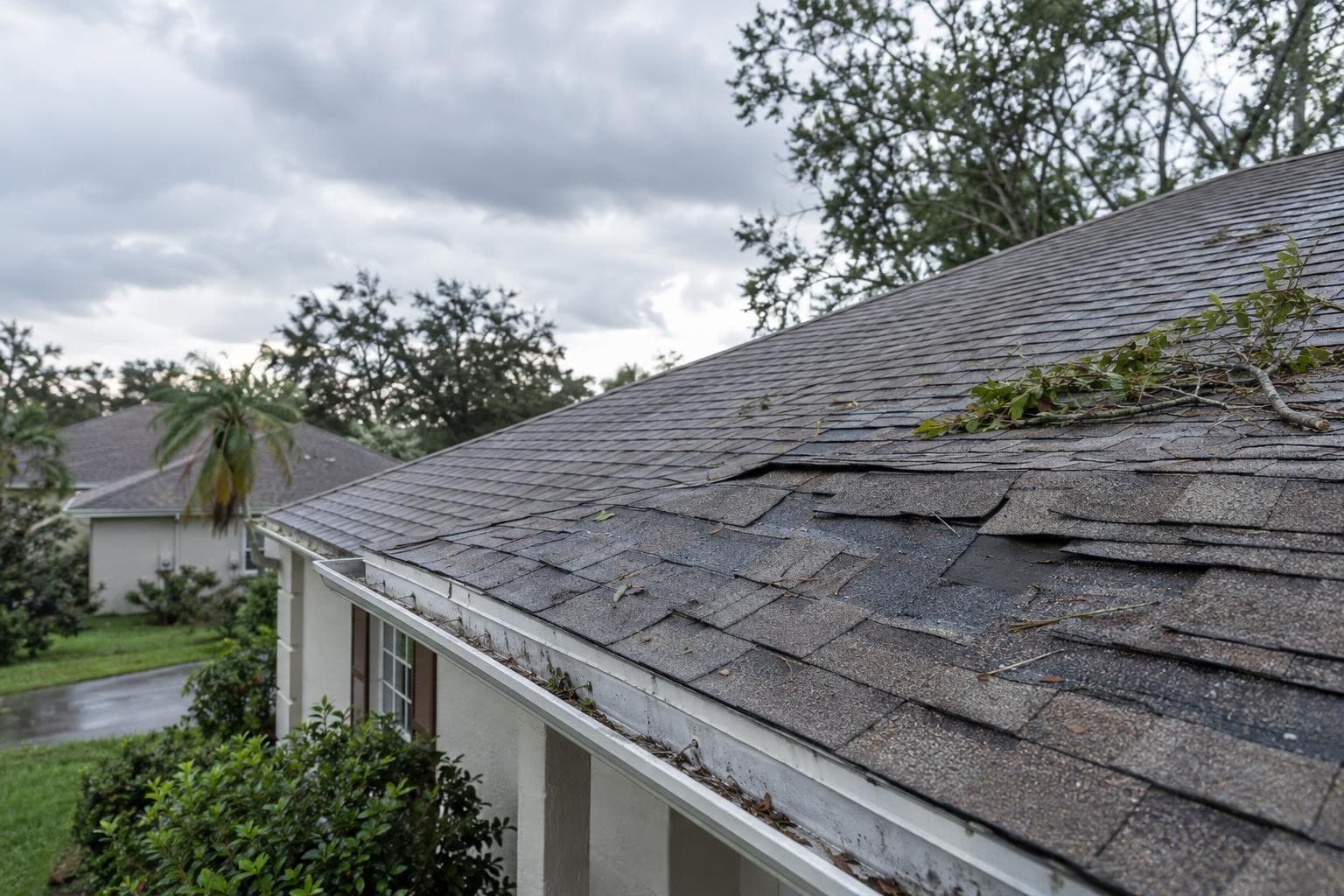
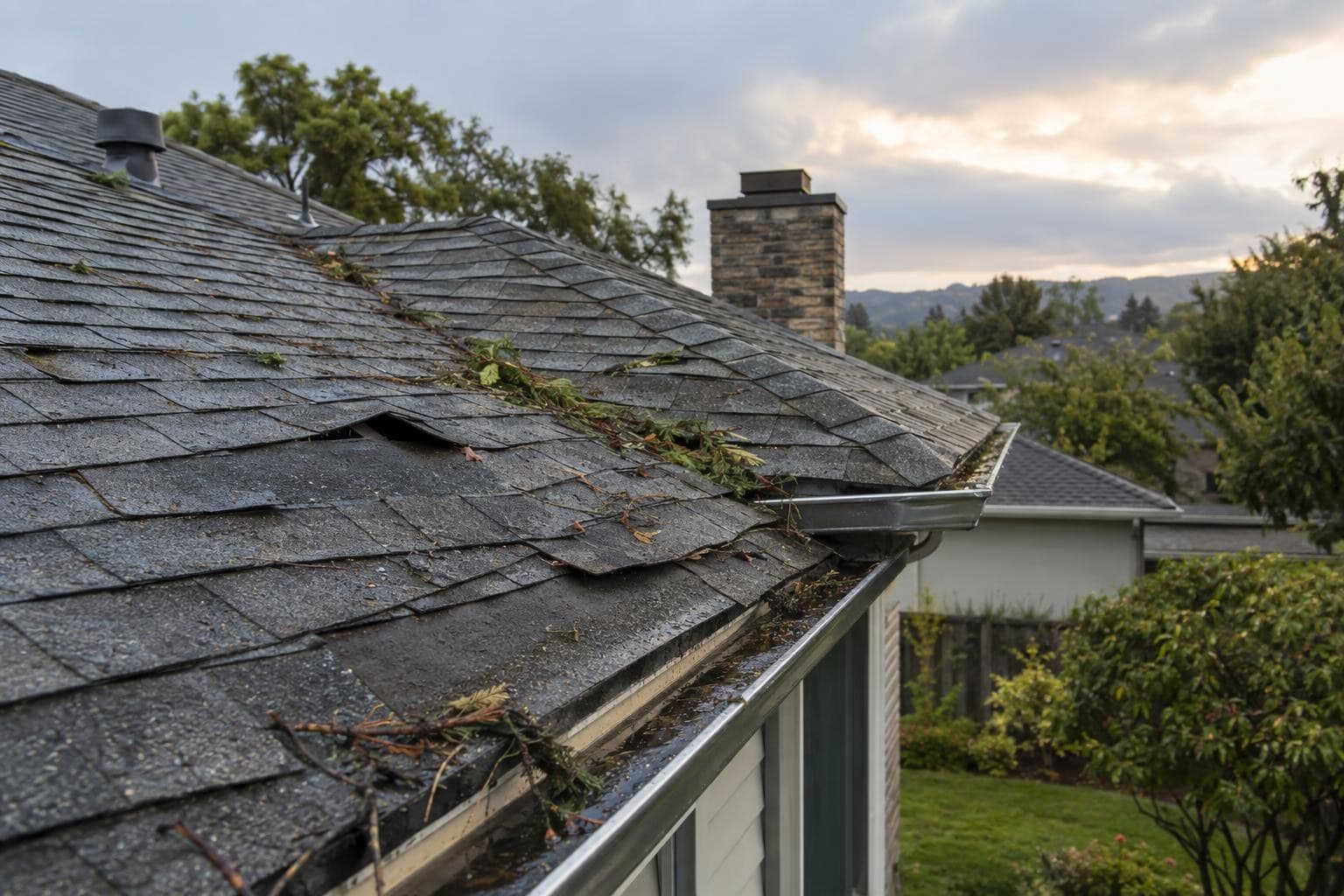
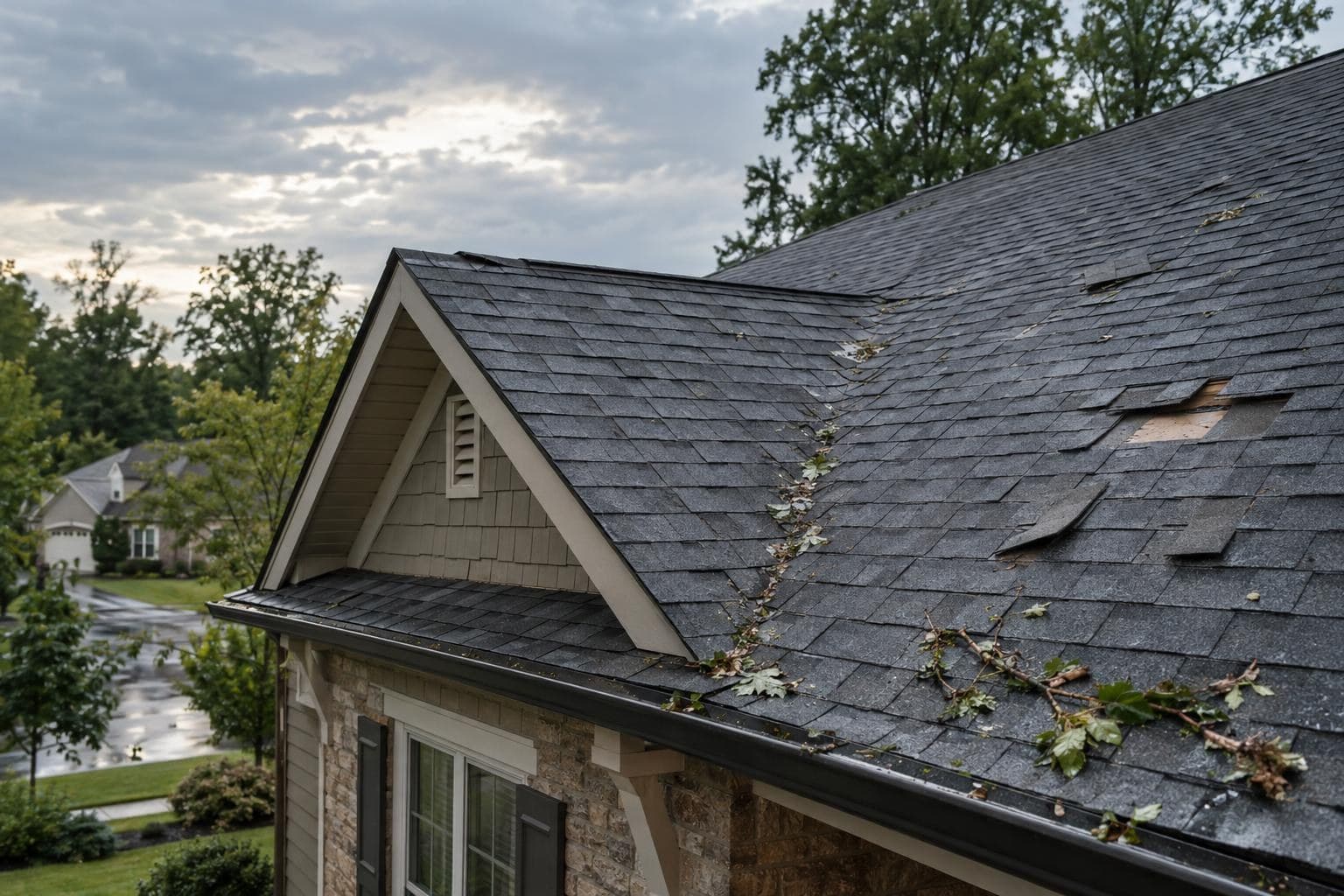
Start by making the house safe, then document damage before anything gets cleaned up. If water is coming in, move furniture, electronics, rugs, and valuables away from the leak. Put containers under drips, and take clear photos of ceiling stains, wet insulation, wet drywall, and any debris that fell inside. Outside, look from the ground for missing shingles, exposed underlayment, bent gutters, fallen branches, dented metal, or anything that looks newly damaged after the storm. Do not climb on a wet roof or get on a roof that may be structurally compromised. Call a roofing contractor you are considering for an inspection and, if needed, emergency tarping.
- Take wide and close-up photos of every affected area inside and outside
- Write down the date of the storm and what you noticed first
- Save loose pieces of roofing material if they fell into the yard
- Do only simple interior protection you can handle safely
- Avoid pressure washing, sweeping off marks, or making non-emergency repairs before damage is documented
How do you document roof storm damage for an insurance claim?
The best documentation is dated, specific, and done before conditions change. Take photos from multiple angles, and make a room-by-room list of interior damage, then match it to exterior signs where you can. Include dents on vents, gutters, downspouts, and metal flashing, because those details can help show hail or wind impact. If a branch hit the roof, photograph the branch before it is cut up and hauled away. Keep receipts for emergency supplies and temporary dry-in work. Georgia regulates how fast carriers handle first-party property claims. After you submit a completed proof of loss, your insurer generally has to confirm or deny the claim within 15 days, and within 30 days of the claim being reported if no proof of loss is required. Many Georgia policies follow the state's standard fire-policy language and ask for that proof of loss within 60 days of the loss, so document hail and wind damage early.
When should you tarp a storm-damaged roof?
Tarp the roof as soon as active leaks or exposed roof areas threaten the interior. Tarping is not the final repair, but it can stop a small opening from turning into soaked decking, ruined insulation, and stained ceilings. In Georgia, that matters because humid conditions and wind-driven rain can keep feeding damage after the storm passes. A tarp should cover the damaged section fully and extend past it so water sheds away instead of under the edge. If the roof is steep, high, slick, or visibly unstable, do not try to do it yourself. Have your roofer handle the temporary dry-in safely.
- Use tarping when shingles are missing, flashing is lifted, or a branch opened the roof system
- Treat tarping as a short-term protection step, not a substitute for repair
- Photograph the damage before and after the tarp goes on
- Keep the tarp invoice and any related receipts with your claim file
Talk to a roofer today
Planning ranges, scope details, and a direct path to request a roofing quote.
How can you tell storm damage from an old roof in Georgia?
The key is whether the damage is concentrated, recent-looking, and tied to the storm pattern, versus uniform wear spread over the whole roof. Storm damage usually has a direction and a story. Wind may crease or lift shingles on one slope more than the others, or tear tabs in a pattern that lines up with gust direction. Hail may leave fresh impact marks on soft metals, dislodge granules in more random hits, or bruise asphalt shingles. Age, by contrast, tends to show up as broad granule loss, dried-out shingle surfaces, curling, shrinking, and general brittleness across the roof. In Georgia, long, hot, humid summers add a second kind of wear: heat ages shingles faster than in cooler climates, and the moisture feeds the dark algae streaking you see on so many southern roofs. Those algae streaks look bad, but they are not the same thing as hail damage.
What storm signs are common on Georgia roofs?
The most common signs are wind-lifted shingles, missing tabs, creases near shingle edges, punctures from debris, dented metal roof parts, and leaks that show up around flashing. Georgia roofs also deal with occasional winter ice in north Georgia that stresses flashing and gutters, and the Savannah coast can catch wind and wind-driven rain from tropical systems. That means your damage pattern may depend on where you live. A mountain-area roof may show flashing and gutter stress after winter weather, while a coastal roof may show rain-driven intrusion around penetrations and edges after a tropical event. The right inspection looks at the whole roof system, not just the field shingles.
Should you repair the roof or replace it after a storm?
If damage is limited and the rest of the roof is still in solid shape, repair is often the practical next step. For current Georgia planning prices related to storm damage roof, use the cost guide and calculator, then compare the contractor's property-specific written scope. If damage is widespread, or if the roof was already near the end of its service life, replacement may make more sense than patching one problem area after another. For storm damage roof in Georgia, ask the contractor to put the expected working days and weather plan in writing; timing depends on roof size, material, access, crew scheduling, and conditions found after tear-off. For storm damage roof in Georgia, treat a steep or difficult-to-access roof as a scope variable that the contractor should measure and price explicitly. If you are comparing materials after a claim or paying out of pocket, full local pricing lives on the Georgia cost page and the calculator.
Is a Class 4 roof worth considering in Georgia hail areas?
Yes, if your area sees repeated hail seasons, Class 4 is worth a serious look. A Class 4 impact-resistant roof, rated under UL Standard 2218, the highest of four classes, is built to take Georgia hail. For storm damage roof in Georgia, treat Class 4 as a laboratory impact classification for the exact product, not a promise that the installed roof will resist every hail event or avoid damage. For storm damage roof in Georgia, any insurance credit depends on the carrier, policy, address, and exact product; get the amount and documentation requirements from the insurer in writing. Ask your insurance company what they actually discount before you count on savings. If you are replacing after a storm, this is a good time to compare the upfront cost against the added impact resistance in your part of Georgia.
What should you know before signing with a roofer after a Georgia storm?
Move carefully, especially if someone knocks your door right after a storm and pushes you to sign fast. Because Georgia has no standalone roofing license, verify what actually applies to your job. Georgia does not issue a standalone roofing license, so there is no state roofing credential to check. Roofing falls under the general contractor system run by the State Licensing Board for Residential and General Contractors at the Georgia Secretary of State, and a contractor only needs a residential or general contractor license once a job tops an amount that must be confirmed for the written scope in combined labor and materials. That means most full roof replacements should be done by a licensed contractor, but "licensed" alone says little about quality, so verify the rest before you sign. Ask for a clear scope, recent local references, and proof the company can handle the work they are proposing.
Can a roofer waive your deductible in Georgia?
No. Your roofer can't pay your deductible, and shouldn't offer to. Georgia insurance regulators warn consumers to treat a contractor's promise to pay, waive, rebate, or absorb the deductible as a serious red flag. Because statutes and bulletins can change, confirm the current rule with your insurer or the Georgia Office of Insurance and Safety Fire before signing. If someone promises a free roof by making the deductible disappear, that is a red flag, not a benefit.
What does a smart 48-hour plan look like?
A smart plan is simple: protect the interior, document everything, get a roofing contractor you are considering to inspect the roof, and secure temporary dry-in if leaks are active. Then file your claim promptly and keep your records organized. In Georgia, separating fresh storm damage from heat aging, algae staining, and older wear is often the make-or-break part of the process. The cleaner your photos, notes, and inspection details are, the easier it is to show what the storm actually did. If the roof needs more than a patch, use 2026 market pricing to compare your options, and check the Georgia cost page and the calculator for full local numbers before you decide.
Sources reviewed
- Georgia Attorney General's Consumer Protection Division (storms and fraud / storm chasers)
- Georgia Office of Commissioner of Insurance and Safety Fire (file a consumer complaint)
- National Weather Service: Severe Thunderstorm Safety
- Federal Trade Commission: Four Ways to Avoid Scams After a Weather-Related Disaster
- Georgia Attorney General Consumer Protection Division: Beware of Roofers Scamming Storm Victims
Plan with current pricing
Related services
Updated July 27, 2026
3D Roofs Editorial Team
Editorial Standards