Updated July 27, 2026

3D Roofs Editorial Team
Editorial Standards
If a storm just hit your Texas roof, start with safety, photos, and leak control. The first 48 hours matter because they shape your repair plan, your insurance paperwork, and whether small water entry turns into bigger interior damage. In Texas, roof damage shows up differently by region. North and Central Texas sit in hail country, where spring storms drive granule loss and bruising. The whole state carries a heavy UV and heat load that ages shingles faster than in cooler climates. Along the Gulf coast, hurricanes and tropical systems add wind uplift and wind-driven rain on top of the hail risk. That mix is why you need to document what happened right away and separate fresh storm damage from wear that was already there.
What should you do first after a Texas roof storm?
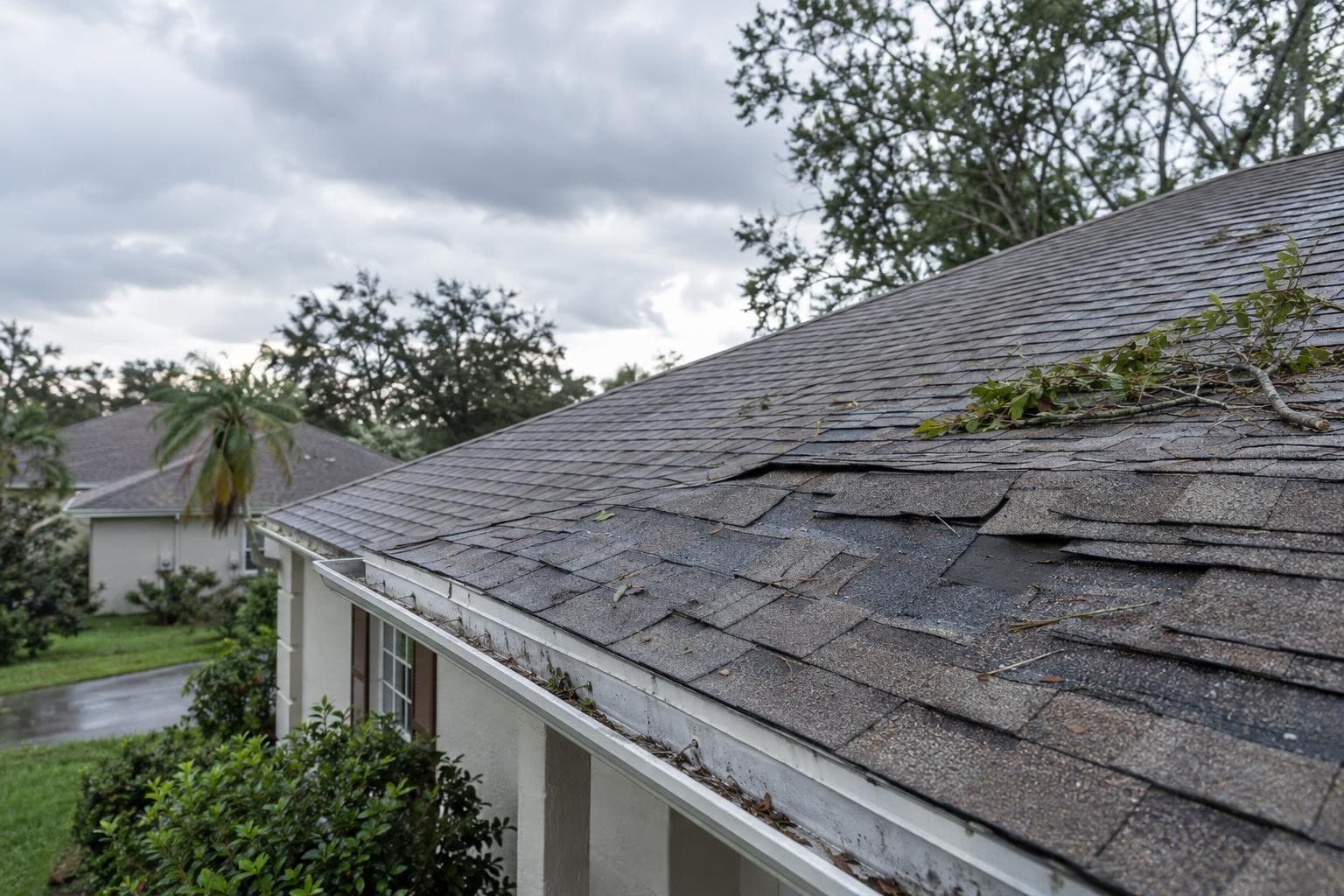
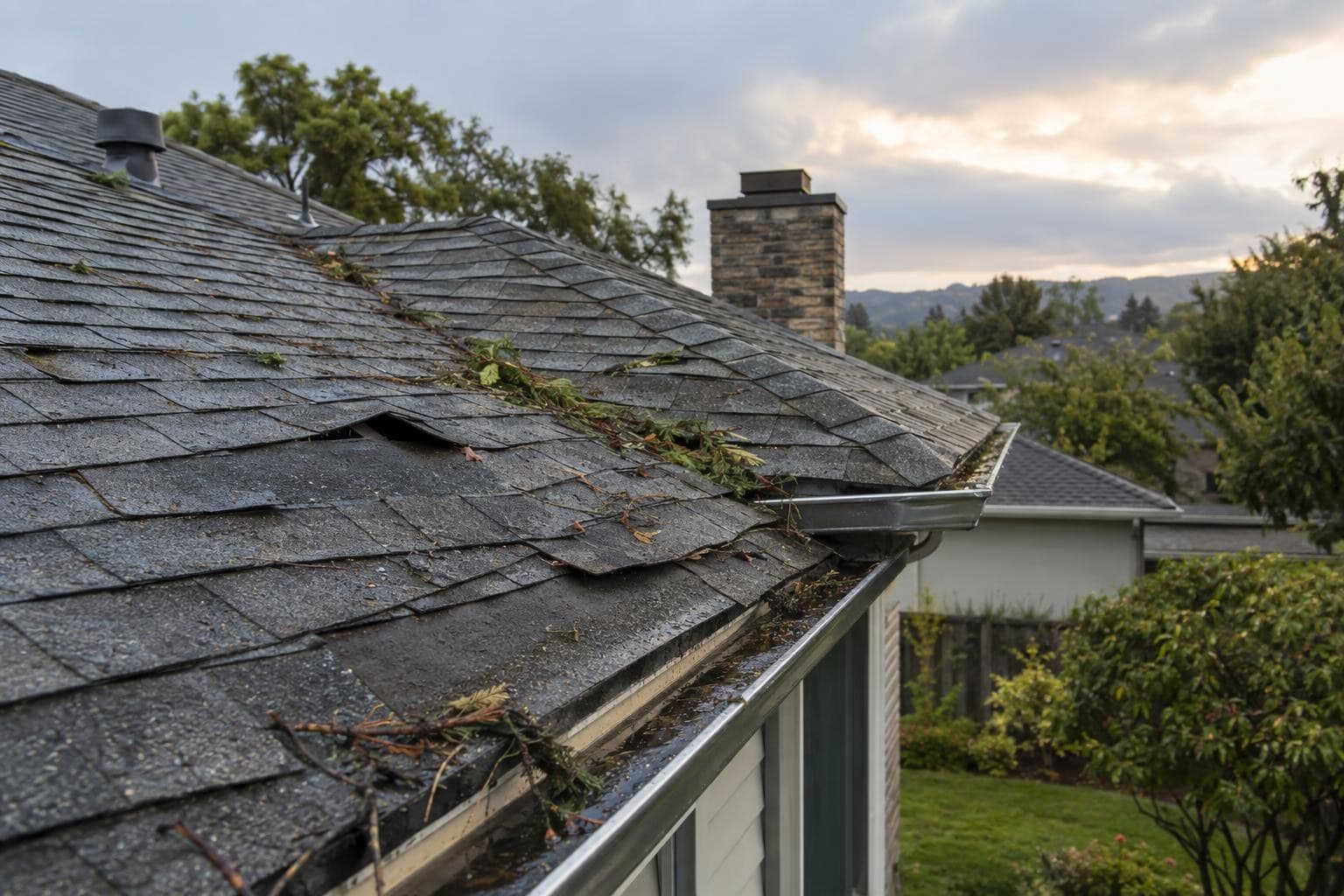
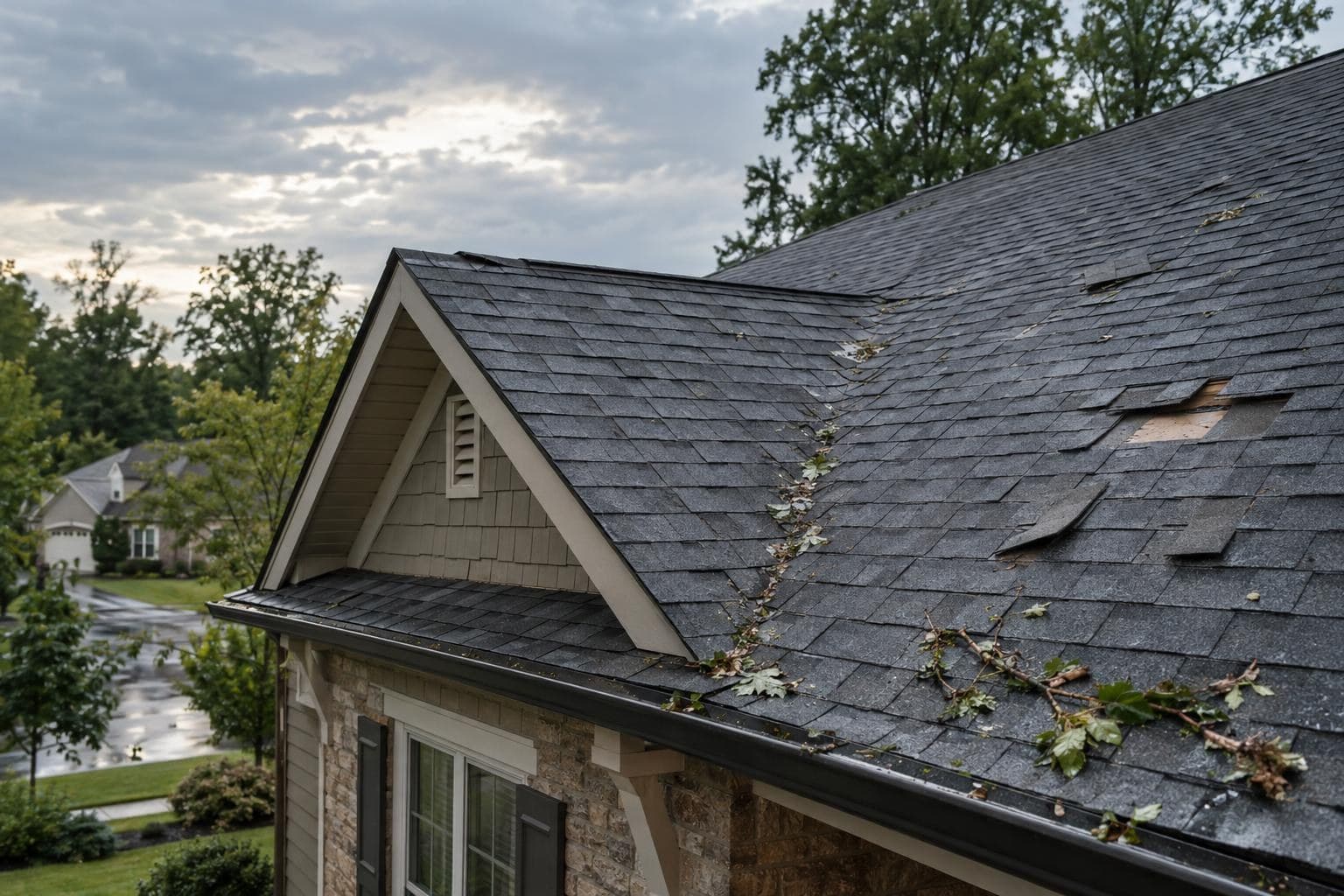
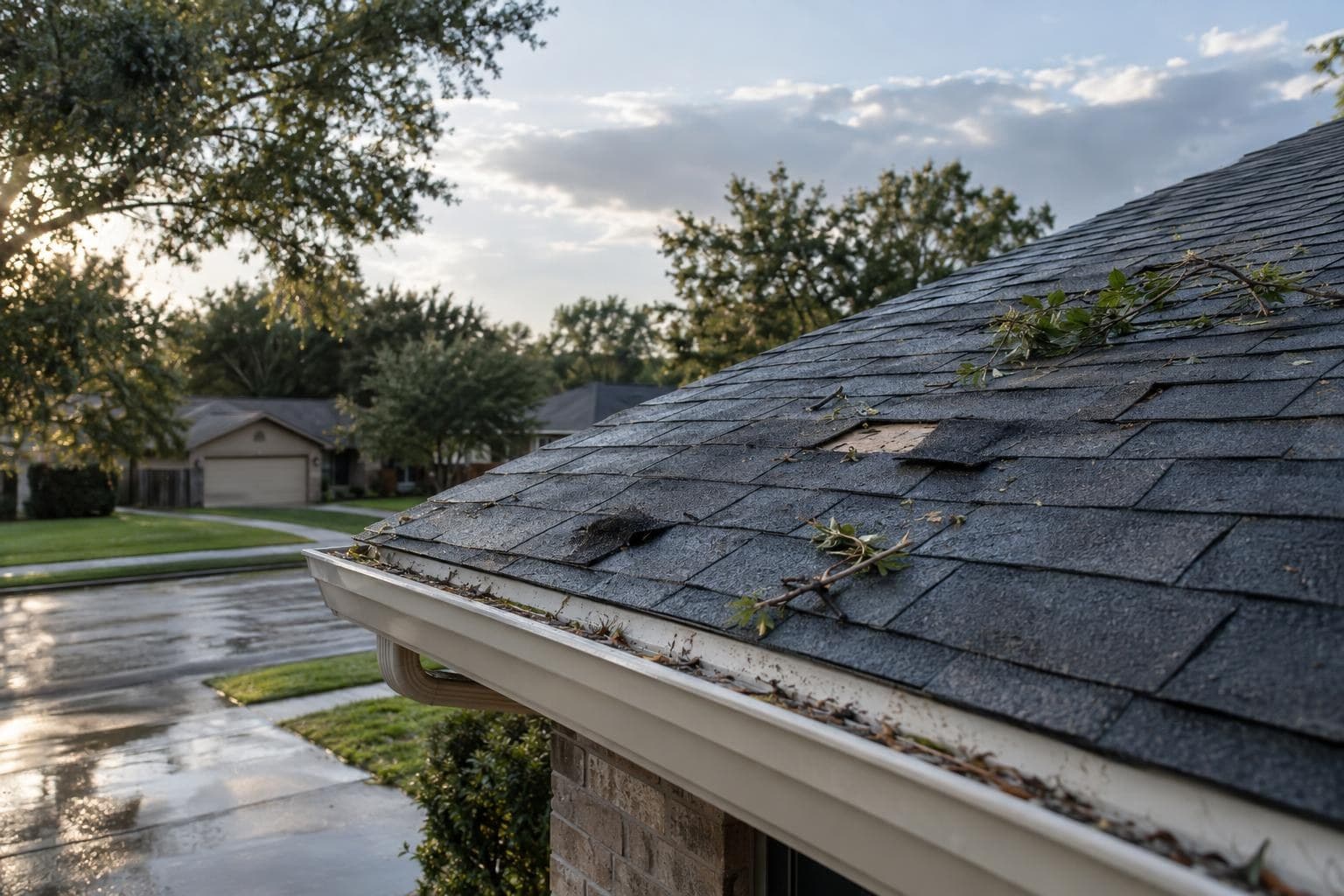
Start by protecting people and property, then document what you can from the ground. If you see a fallen power line, major structural movement, or a ceiling bulge holding water, stay clear and deal with the immediate hazard first. If water is coming in, move furniture, place buckets, and take photos before you disturb anything. Then walk the outside of your home from ground level and look for obvious signs like missing shingles, bent gutters, fallen branches, displaced flashing, or metal pieces on the lawn. Do not climb onto the roof in the dark, during high winds, or while surfaces are wet. Your next step is to call a roofing contractor you are considering for an inspection and temporary protection if needed.
How do you document roof storm damage the right way?
Take wide and close photos immediately, and keep them organized by area. Photograph every roof slope you can see from the ground, all elevations of the house, gutters, downspouts, vents, siding, window screens, outdoor furniture, fence lines, and any vehicles that were hit. Inside, photograph ceiling stains, active drips, wet insulation, bubbling paint, and damaged personal property. If you find shingle pieces or metal fragments in the yard, photograph them where they landed before you collect them, then save a few pieces in a bag. Write down the date of the storm, when you first noticed damage, and every step you take afterward. Good documentation helps show what is fresh storm damage and what may be older age-related wear.
Should you put a tarp on the roof right away?
Yes, if the roof is actively leaking or open to weather, temporary drying-in should happen fast. Tarping helps limit interior damage while you sort out repairs or replacement. It is not a final fix, and it should not cover up conditions before they are documented. Take photos first if you can do so safely, then have your roofer install a tarp or other temporary protection. Keep records of the work, including photos before and after, because that shows you acted to limit damage instead of letting the problem spread. If the storm only caused minor cosmetic issues and there is no leak, a tarp may not be necessary, but an inspection still is.
Talk to a roofer today
Planning ranges, scope details, and a direct path to request a roofing quote.
How can you tell storm damage from an old roof wearing out?
Fresh storm damage usually has a pattern, a direction, and a recent timeline. Age-related wear looks more uniform. On asphalt shingles, hail damage can show up as localized bruising, fresh granule loss, exposed asphalt, or sharp-edged marks that look newer than the surrounding roof. Wind damage often shows up as creased, lifted, or missing tabs, especially along edges and ridges where uplift hits first. By contrast, an older roof often shows broad, even granule loss, curling, brittleness, sun-baked cracking, and general fading across large sections. In Texas, heavy UV and heat load age shingles faster than in cooler climates, so many roofs already have wear before a storm arrives. That is why the timing of photos, the direction of the storm, and the location of damage matter.
- Storm damage often appears on one or two slopes more than the rest
- Wind damage can line up with roof edges, ridges, and exposed corners
- Hail marks often affect soft metals too, like vents, gutters, and downspouts
- Age wear is usually more even across the roof and matches overall brittleness or fading
- A leak that starts right after a storm is a clue, but it still needs inspection to confirm the cause
Do you need repair or full replacement after storm damage?
The answer depends on how widespread the damage is and whether the roof can still shed water reliably. For current Texas planning prices related to storm damage roof, use the cost guide and calculator, then compare the contractor's property-specific written scope. If damage is isolated to a small area and the surrounding roof is still in serviceable condition, repair may be enough. If multiple slopes are affected, shingles are creased or missing across broad sections, or the roof was already near the end of its life, replacement may make more sense. For storm damage roof in Texas, ask the contractor to put the expected working days and weather plan in writing; timing depends on roof size, material, access, crew scheduling, and conditions found after tear-off. For storm damage roof in Texas, treat a steep or difficult-to-access roof as a scope variable that the contractor should measure and price explicitly. For broader budgeting, mention naturally that full local pricing lives on the Texas cost page and the calculator.
What does storm roof replacement cost in Texas in 2026 market pricing?
Those numbers help when a storm pushes you from patching into full replacement. They also help when you compare impact resistance in hail-prone parts of the state versus a standard shingle option.
Is Class 4 worth it on a Texas home after hail?
For storm damage roof in Texas, coverage depends on the policy language, cause of loss, exclusions, and the insurer's decision; verify those terms in your own documents. Class 4 shingles are worth comparing on Texas homes with meaningful hail exposure. UL 2218 Class 4 is the highest classification in that impact test, but it does not make a roof damage-proof or establish how a policy treats cosmetic damage. For storm damage roof in Texas, any insurance credit depends on the carrier, policy, address, and exact product; get the amount and documentation requirements from the insurer in writing. Ask your carrier in writing whether the exact product qualifies for a credit, which part of the premium is affected, and what documentation it requires. Texas does not set one statewide credit amount.
What insurance rules should Texas homeowners know before signing anything?
Two rules matter right away: you must pay your deductible, and your roofer cannot act as your claims adjuster on the same job. In Texas it is a crime for a contractor to waive, rebate, or absorb your insurance deductible (Business and Commerce Code Sec. 27.02). Texas insurance-claim roofing contracts must state in writing that you are responsible for paying the deductible. A roofer pitching a "free roof" by eating your deductible is breaking the law, so treat it as a red flag, not a deal. Texas law (Insurance Code Sec. 4102.163) bars a contractor from acting as a public adjuster, negotiating or settling your claim, on a job they are also doing. The Texas Supreme Court upheld this in 2024. If a roofer offers to "handle the whole claim with your insurance company," that crosses a legal line. Also, hail and wind claims fall under Insurance Code Chapter 542A (from HB 1774). Your insurer generally has to accept or reject the claim within 15 business days of getting everything it needs to finalize the loss, with a possible extension, and a little more time after a declared catastrophe. If a weather claim ever heads to court, you have to give the insurer written notice at least 61 days first.
How do you choose a roofer after a storm in Texas?
Choose a roofing contractor you are considering with a clear written scope and a real local track record. Texas does not issue a statewide roofing license, so "licensed roofer" means little here on its own. Focus on what your roofer will actually do and put in writing: tear-off, decking, underlayment, flashing, ventilation, and cleanup. Ask how they will document storm damage versus age, what temporary protection they recommend, and what materials they propose if replacement is needed. This is also where local pricing context helps, since you can compare the scope against the Texas cost page and the calculator before you commit.
What should the first 48 hours look like, step by step?
- Hour 1: Make sure everyone is safe, move belongings away from leaks, and avoid the roof
- Hour 2-6: Take exterior and interior photos, save any fallen roof pieces, and write down what happened
- Hour 6-12: Call a roofing contractor you are considering for inspection and temporary tarping if the roof is open or leaking
- Hour 12-24: Keep receipts, keep a photo log, and list every damaged area inside and outside the home
- Hour 24-48: Review the inspection findings, compare repair versus replacement, and confirm any insurance-related paperwork before signing a contract
The short version is simple: document first, dry in fast, and do not confuse storm damage with an old roof finally showing its age. In Texas, hail, UV, heat, and coastal wind all push roofs in different ways, so the right answer depends on where you live and what the storm actually did. If you act quickly in the first 48 hours, you give yourself a better shot at limiting water damage, making a clear repair decision, and avoiding bad contract mistakes.
Sources reviewed
- Texas Windstorm Insurance Association (coverage eligibility)
- Texas Department of Insurance: What to know about insurance and your roof
- National Weather Service: Severe Thunderstorm Safety
- Federal Trade Commission: Four Ways to Avoid Scams After a Weather-Related Disaster
- Georgia Attorney General Consumer Protection Division: Beware of Roofers Scamming Storm Victims
Plan with current pricing
Related services
Updated July 27, 2026
3D Roofs Editorial Team
Editorial Standards