Updated July 27, 2026

3D Roofs Editorial Team
Editorial Standards
Yes, homeowners insurance in Oregon may cover roof replacement when a covered event causes functional damage. For does insurance cover roof replacement in Oregon, coverage depends on the policy language, cause of loss, exclusions, and the insurer's decision; verify those terms in your own documents. In many Oregon claims, the bigger question is not whether the roof has damage, but whether that damage came from a covered loss and whether the carrier owes for a repair to one area or a full replacement.
When does homeowners insurance cover an Oregon roof replacement?
It covers roof replacement when a covered event causes enough functional damage that replacement is the right repair. In Oregon, rain, wind, tree impact, ice, snow load, and freeze-related water problems all matter. Wind can tear off shingles or drop branches and trees onto a roof. Snow and ice can add weight, and sudden cold can contribute to ice dam or burst-pipe damage that affects the roof system and interior. In wildfire-prone areas, ember exposure and debris management also matter. Because Oregon weather can damage only part of a roof, you should expect many claims and repair decisions to focus on the specific damaged area, not automatically a full replacement.
Does insurance pay for storm damage or just the damaged section?
Often, it pays for the damaged section, not the whole roof. Oregon’s storm guidance says if wind blows a few shingles off your house, homeowners insurance will likely replace the damaged shingles, but will not provide an entire new roof. It also says insurers pay to repair damage from a covered loss, and if wind damage is only on one side of the roof, the insurer normally will pay only for the one slope of the roof to be replaced. That means a claim can be valid and still end with a repair or partial reroof instead of a full replacement.
Does insurance cover an old roof with leaks or wear?
Usually not. Insurance is designed for sudden, accidental, covered damage, not an old roof reaching the end of its life. If missing shingles, cracked materials, exposed fasteners, worn flashing, or recurring leaks tie back to age or lack of maintenance, you should expect pushback on coverage. The key difference is cause. If a wind event tore materials loose yesterday, that is different from long-term wear that slowly let water in over time.
Talk to a roofer today
Planning ranges, scope details, and a direct path to request a roofing quote.
What kinds of water damage may be covered in Oregon?
Some water losses may be covered, others usually are not. Oregon’s storm guidance says sudden and accidental events from an ice dam on the roof or pipes bursting due to freezing may be covered. It also says policies generally will not cover groundwater seepage or water damage from backed-up drains or sewers, though some insurers offer limited coverage or endorsements for water backup. It also helps to remember that flood and earth movement are separate issues from standard homeowners coverage. Oregon’s storm guidance says most homeowners and renters policies do not cover flood damage. It also says a homeowners policy does not cover earth movement, including landslides, mudflows, and erosion. The same guidance notes that earthquake coverage can usually be added for an additional premium, but earthquake insurance does not cover a loss caused by landslides or erosion.
How do deductibles affect whether a roof claim makes sense?
Your deductible can decide whether filing is worth it. Oregon’s Division of Financial Regulation tells homeowners to weigh the benefits of filing a claim against the costs, including your deductible. The state also warns that a reported claim could affect your future premium or ability to get coverage. For an insurance-related roof project in Oregon, begin with documented damage, the policy deductible, and a property-specific repair or replacement scope. If the damage is broad enough to require major work, the math can look very different. Check current Oregon cost data for an insurance-related roof project in Oregon, then replace the range with an assembly-specific proposal based on measured conditions.
What is the roof insurance claim flow in Oregon?
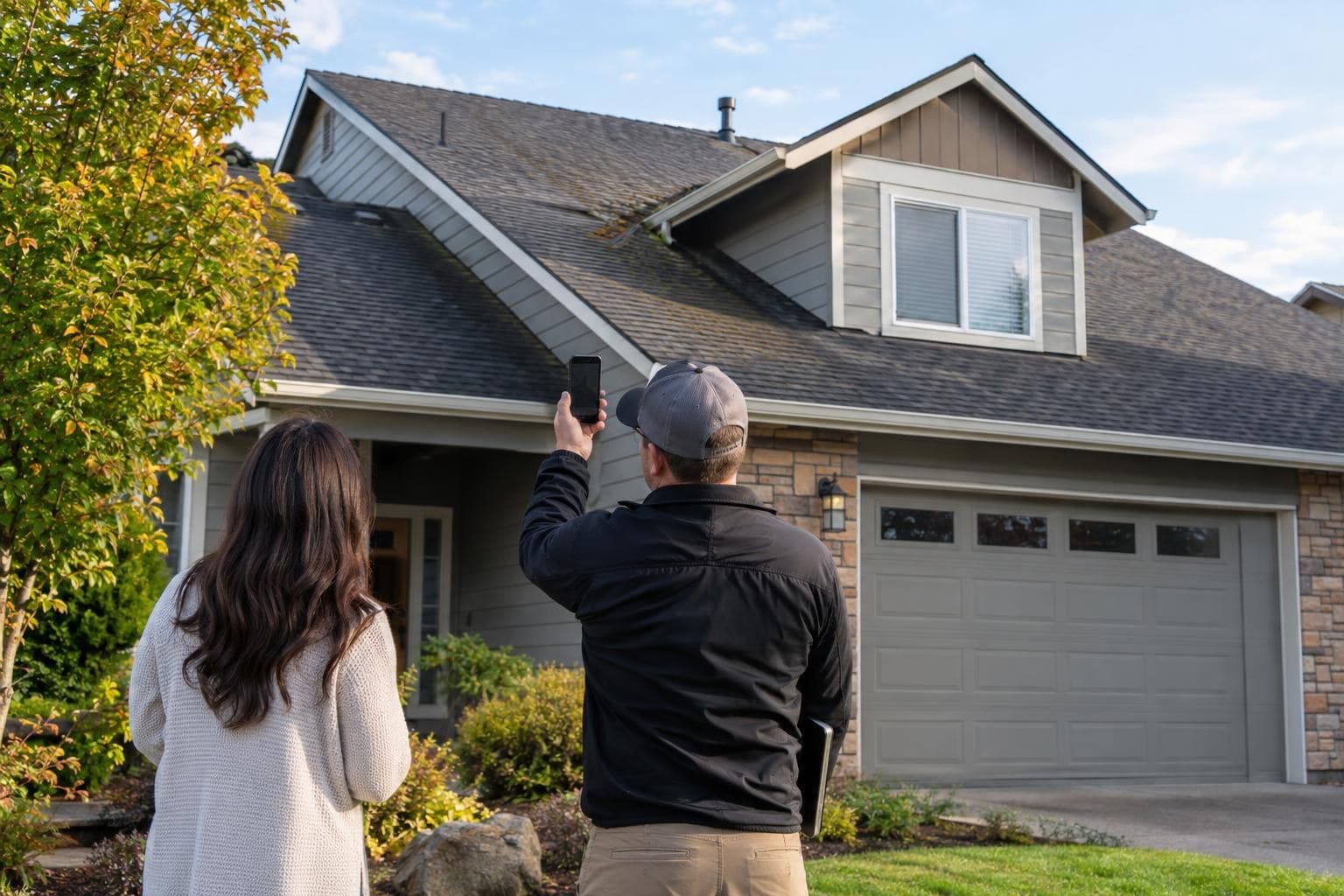
The basic flow is simple: document the damage, prevent further loss, contact your carrier, meet the adjuster, and compare the scope of loss to what your roofer sees. Take clear photos of missing shingles, dents, torn flashing, interior staining, fallen limbs, and any damaged personal property. Use temporary protection if needed to stop active leaks. Then open the claim with your insurer and be specific about the date and cause of loss if you know it. After that, the adjuster inspects the property and writes a scope. Your roofer can then review whether the scope matches the actual functional damage. If something was missed, you can ask for a supplement with supporting photos and notes.
- Document visible exterior and interior damage right away
- Take reasonable steps to prevent more damage
- Start the claim with the carrier and keep records of every call and email
- Meet the adjuster and make sure all damaged areas are inspected
- Have your roofer compare the insurer’s scope to site conditions
- Request a supplement if covered damage was missed
How long does roof work take after an approved claim?
Before approving an insurance-related roof project in Oregon, have the bidder connect timing to roof complexity, crew access, material handling, weather, inspections, and concealed conditions. Repairs are often faster, depending on the scope. Timing after a claim depends on how fast the inspection, approval, and any scope updates move. If the carrier approves a repair to one slope instead of the full roof, the job may move faster than a full replacement.
Should you upgrade to Class 4 after a covered loss?
It can be worth asking about, especially if you want more impact resistance going forward. A Class 4 rating does not establish a policy credit in Oregon; the carrier and policy determine eligibility, documentation, and savings. In Oregon, the sources provided do not give a state-specific Oregon rule on Class 4 roof discounts. If you are considering an impact-resistant roof, ask your carrier whether it offers a discount for a Class 4 rated product and what documentation it requires. Carriers set their own underwriting rules and discounts.
What should you do if you disagree with the insurance decision?
Start by asking for a clear explanation of what was covered, what was denied, and why. Then compare the insurer’s scope to photos, measurements, and notes from your roofer. If the dispute is about whether damage is functional storm damage or simple wear, detailed documentation matters. Oregon’s Division of Financial Regulation provides free help if you need help understanding the claims process or your consumer options, and if phone help does not resolve the issue, a consumer can file a complaint. If you move ahead with repairs or replacement, make sure you confirm your roofer has an active CCB license before work starts, and make sure the business name on the contract matches the license record.
Sources
- National Association of Insurance Commissioners: What You Need to Know When Filing a Homeowners Claim
- National Association of Insurance Commissioners: Actual Cash Value Coverage and Replacement Cost Coverage
- Oregon Division of Financial Regulation, Storm damage guidance
- Oregon Construction Contractors Board, CCB License
Reviewed technical references for Oregon
Related Oregon roofing guides
Related services
Updated July 27, 2026
3D Roofs Editorial Team
Editorial Standards