
Updated July 10, 2026

3D Roofs Editorial Team
Editorial Standards
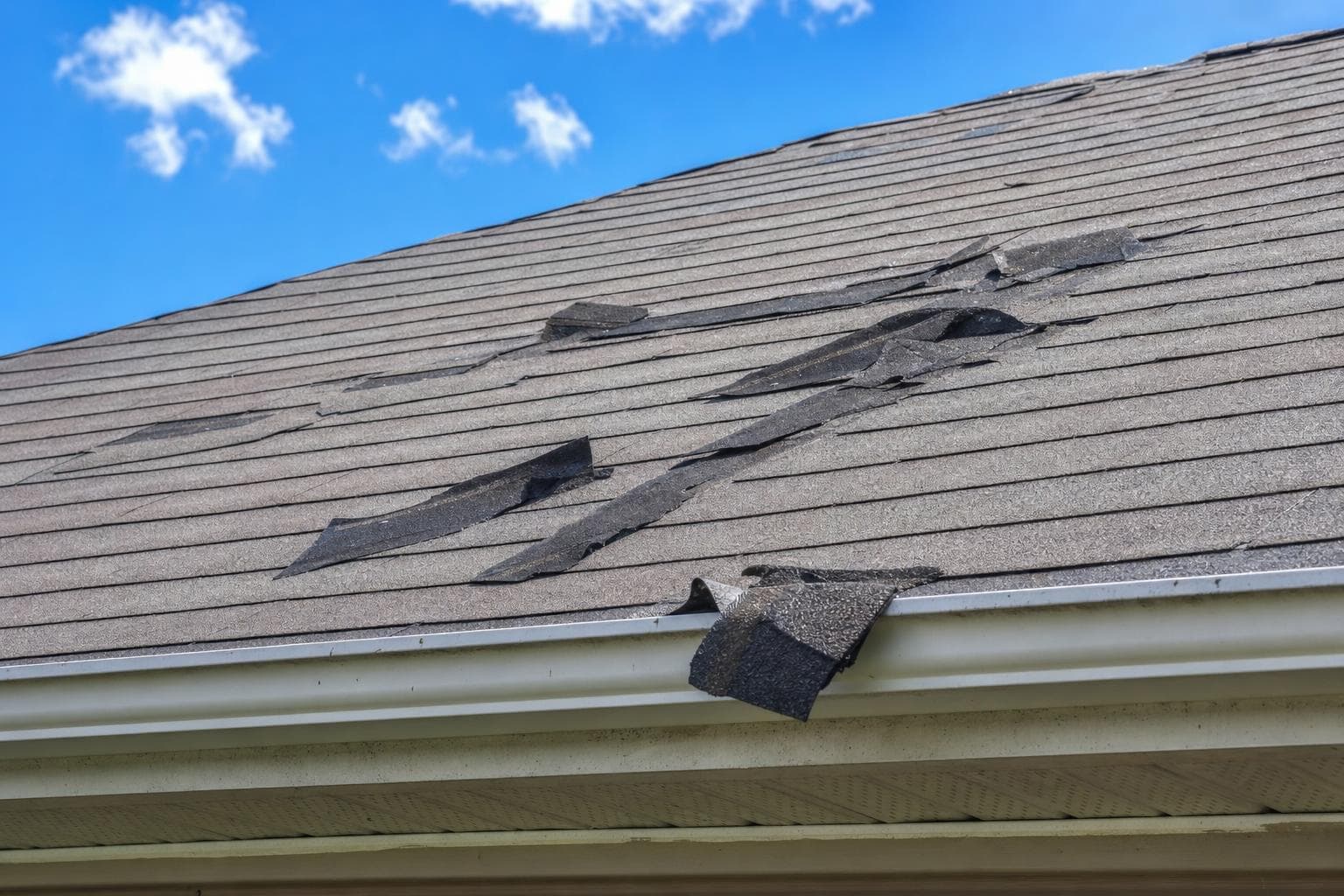
Wind damage repair in Greenburgh should look beyond missing shingles. Creases, broken seals, displaced ridge or edge details, loose flashing, and wind-driven rain can extend into neighboring roof areas. Greenburgh has a humid continental climate in the lower Hudson Valley, with cold, snowy winters, freeze-thaw swings, hot humid summers, and exposure to nor'easters and the rainy remnants of tropical systems. The inspection should document each affected roof area, follow any wind-driven rain path, and show whether adjacent roofing, edge metal, flashing, and decking can support a durable repair.
How to scope wind damage repair in Greenburgh
Wind can remove roofing, but it can also crease shingles, break seals, loosen ridge and edge details, move flashing, and drive rain through a weakness that settles back into place afterward.
Map the wind path
Inspect every affected roof area plus ridge, rakes, eaves, vents, flashing, debris impacts, and interior water. Greenburgh roofs get hit from two directions: winter nor'easters bring heavy wet snow, ice, and wind, while late-summer and fall tropical remnants drive intense rain that exposes tired flashing, clogged valleys, and aging shingles. Missing material is only one part of that pattern. Creased shingles and broken seals may settle back down while remaining unable to resist the next gust.
Test the surrounding attachment
A repair should replace creased or displaced material and tie into shingles, panels, edge metal, and flashing that remain secure. Ask how the roofer checked adjacent seals and whether matching material is available.
Separate the repair from the coverage decision
The contractor should document construction conditions and explain the proposed repair or replacement. The insurer decides coverage, while the homeowner compares the deductible, policy documents, and written roofing scope. Keep any material upgrade and uncovered work clearly separated from the storm-restoration scope.
What wind-damage repair costs in Greenburgh
Wind repair commonly starts around $400-$1,850 for a contained area and reaches $1,400-$7,700 when a larger section, ridge, edge metal, or flashing needs restoration. Decking or structural work sits above that range.
- Missing or creased shingles
- A contained area with serviceable matching material around it
- $400-$1,850
- Roof section plus flashing
- A wider repair with displaced transitions or broken seals
- $1,400-$7,700
- Ridge cap or vent damage
- Accessory replacement and tie-in at the roof peak
- $500-$3,000
- Decking or structural damage
- Carpentry plus roofing after wind exposes or moves the substrate
- $3,400-$17,600
Cost ranges are estimates developed from standardized project scopes and reviewed pricing inputs. Government labor and regional cost data are used where applicable. See our Pricing Methodology for the exact sources, calculations, and review date. Actual prices vary by property, scope, materials or equipment, location, and provider.
For a deeper breakdown, open the wind damage roof repair cost guide. If the inspection finds distributed damage that cannot accept a durable repair, use the Greenburgh roof replacement cost guide as a separate planning reference rather than mixing replacement into the repair charge.
Where wind damage hides on Greenburgh roofs
Wind repair in Greenburgh should follow the roof areas that receive the highest uplift and driven rain instead of stopping at the first missing shingle visible from the yard.
Roof areas that need a close look
- Ridge caps, rakes, eaves, starter courses, and edge metal
- Creased or lifted shingles that settled back down after the gust
- Wall, chimney, vent, and penetration flashing moved by wind
- Attic or interior evidence showing where driven rain crossed the assembly
What decides whether a repair can hold
The repair boundary has to reach material that is still attached and serviceable. In Greenburgh, the inspection should account for wind-driven rain intrusion during nor'easters and tropical remnants. It should also check ice dams and freeze-thaw damage at eaves on shaded north slopes. Either condition can extend beyond the visible opening, so the roofer should test adjacent seals, check the deck, and confirm that matching material can be tied in without breaking neighboring courses.
- Sound adjacent shingles, panels, flashing, and deck
- Matching material that can be installed without damaging the surrounding roof
- A contained damage pattern rather than repeated failure across roof areas
A missing shingle is evidence, not the complete diagnosis. The written scope should identify every repaired roof area and the condition that supports a durable tie-in.
How Greenburgh wind exposure changes the repair
Greenburgh roofs get hit from two directions: winter nor'easters bring heavy wet snow, ice, and wind, while late-summer and fall tropical remnants drive intense rain that exposes tired flashing, clogged valleys, and aging shingles.
NOAA storm reports logged 14 hail events and 77 damaging thunderstorm-wind events in Westchester County from 2020 through 2025.
Start where uplift is strongest
Ridge, corners, rakes, eaves, and roof transitions on a Greenburgh roof can see different pressure than the middle of a slope, so each area should be documented separately.
Follow the path of wind-driven rain
Wind can move water sideways and uphill at lifted edges, loose flashing, vents, walls, and valleys. The repair should connect exterior findings to attic or interior evidence rather than assuming the closest missing shingle caused the leak.
Check what settled back into place
A shingle or edge detail can lie flat after the storm while its seal, fastener, or crease remains damaged. Ask the roofer to photograph those conditions before repair and explain how the completed work restores attachment and drainage.
Documenting wind damage in Greenburgh when insurance may be involved
The construction question and the coverage question stay separate. A roofer can photograph each affected roof area, distinguish observed wind effects from age or prior repairs, and write the repair scope. The insurer interprets the policy and decides coverage.
Photograph wind, ice, and water damage and save dates before any temporary repair when it is safe.
Insurers may consider roof age, material, condition, and documentation during underwriting or renewal; ask your carrier how the specific roof affects eligibility and terms.
After a nor'easter or tropical remnant, a documented inspection helps prove sudden storm damage rather than gradual wear.
What New York law means before you approve storm-related roof work
Keep the wind inspection, temporary work, permanent repair, deductible, and any uncovered upgrades clearly separated in writing. State contract and claim rules still apply when a storm creates urgency.
There is no statewide roofing license, so the rule lives in your town
New York does not issue a single statewide roofing or contractor license. Instead, home-improvement licensing is handled locally, and a Home Improvement Contractor license is required in New York City (through the Department of Consumer and Worker Protection), Nassau, Suffolk, Westchester, Putnam, and Rockland counties, and the City of Buffalo. In New York City, doing residential roofing without that license is illegal. Because the requirement depends on where you live, confirm a roofer holds the license your county or city demands, and that they pull the local permit, before you sign.
Your roofer can't pay your deductible, or take a deposit up front
Under New York's roofing-contractor law (General Business Law Sec. 771-b), a roofing contractor cannot advertise or promise to pay or rebate all or any part of your insurance deductible to win the job, and that includes dressing it up as an allowance, discount, gift, or referral fee. The same law bars a roofer from requiring a deposit for the work and materials before they start. So a "free roof" pitch that eats your deductible, or a demand for money up front, is a red flag and a violation of state law, not a deal.
Your insurer is on a clock once you file
New York's claim-handling rules (Insurance Regulation 64, 11 NYCRR 216) require your insurer to acknowledge a claim within 15 business days, begin investigating it within 15 business days, and tell you in that same window what forms and proof it will need. Doing these things improperly and often enough is an unfair claims-settlement practice under the Insurance Law. New York also requires a written contract for any home-improvement work over $500, so get the full scope and price in writing, and if a carrier mishandles a storm claim you can file a complaint with the Department of Financial Services.
Greenburgh sits on the New York coast
Along the New York coast, in New York City, and across Long Island, windstorm exposure can affect the deductible written into a homeowners policy. Some policies in the five boroughs, Nassau and Suffolk counties, and coastal Westchester use a separate hurricane deductible based on dwelling coverage. The exact amount and trigger are policy-specific. Under the Department of Financial Services rule effective February 2, 2026, the hurricane definition and trigger window are tied to National Weather Service determinations. Read the declarations and deductible disclosure, and remember that standard homeowners coverage generally does not replace separate flood insurance.
Choosing a wind-damage roofer in Greenburgh
Because New York has no statewide roofing license, what counts as "licensed" depends entirely on where you live, so start there. If your home is in New York City, Nassau, Suffolk, Westchester, Putnam, or Rockland county, or the City of Buffalo, confirm the contractor holds the required Home Improvement Contractor license for that jurisdiction and verify it with the local consumer-affairs or licensing office, and make sure they pull the local permit. Then vet what you can verify anywhere: current general-liability and workers'-compensation insurance, a real local track record and references, manufacturer certifications, and a written contract (required over $500) that spells out tear-off, decking, underlayment, ice-and-water shield at the eaves and valleys, flashing, ventilation, and cleanup. Be wary of out-of-town trucks that knock on doors right after a snow or wind event and push you to sign on the spot.
Sources: NY Dept. of Financial Services (homeowners insurance: windstorm & hurricane deductibles) · New York General Business Law Sec. 771-b (roofing contractor responsibilities; deductible & deposit rules) · NY State Attorney General (contractors & home maintenance; local HIC licensing) · NYC Dept. of Consumer and Worker Protection (Home Improvement Contractor license)
Wind-damage questions Greenburgh homeowners ask
What can wind damage look like when no shingles are missing in Greenburgh?+
Wind damage can remain hidden after the roofing settles back into place. Look for creased shingle tabs, broken adhesive seals, raised fasteners, shifted ridge caps, lifted edge metal, loose flashing, or a new attic or ceiling stain. A roofer should inspect those areas directly instead of deciding from a ground-level view.
What should a wind-damage roof inspection document in Greenburgh?+
The record should identify the roof area, slope, ridge, rake, eave, flashing, vent, or penetration affected; show overview and close-up photographs; and connect any interior water to a plausible exterior path. It should also distinguish observed wind effects from age, wear, prior repairs, and unrelated defects, then explain why the proposed repair boundary reaches sound roofing.
Can lifted shingles be repaired on a Greenburgh roof?+
Sometimes. A lifted shingle may be repairable when its mat is not creased or torn, the fastener area and deck remain sound, and the shingle can be restored according to the product requirements. A shingle with a permanent crease, split, missing tab, damaged fastener zone, or unreliable tie-in usually needs replacement rather than a surface dab of sealant.
How much does wind-damage roof repair cost in Greenburgh?+
Wind repair commonly starts around $400-$1,850 for a contained area and reaches $1,400-$7,700 when a larger section, ridge, edge metal, or flashing needs restoration. Decking or structural work sits above that range. The work area, ridge or edge involvement, flashing, safe access, matching material, temporary protection, and any exposed decking determine where the repair lands within or above that planning range.
When does wind damage require roof replacement instead of a repair in Greenburgh?+
Replacement becomes more likely when damage is distributed across roof areas, adjacent shingles are too brittle to lift and tie into, the deck or structure has moved, or repeated attachment failure leaves no sound repair boundary. One missing shingle does not automatically justify replacement, and an unavailable color match is not the same as proof that the entire roof has failed.
What should I do first after wind damages my Greenburgh roof?+
Stay off a wet or unstable roof, photograph visible exterior and interior conditions from safe locations, and arrange temporary protection if water is entering. Keep the inspection and repair scope separate from the insurance decision: check the policy's notice and loss-mitigation instructions, while the roofer documents construction conditions and the insurer decides coverage.
