
Updated July 10, 2026

3D Roofs Editorial Team
Editorial Standards
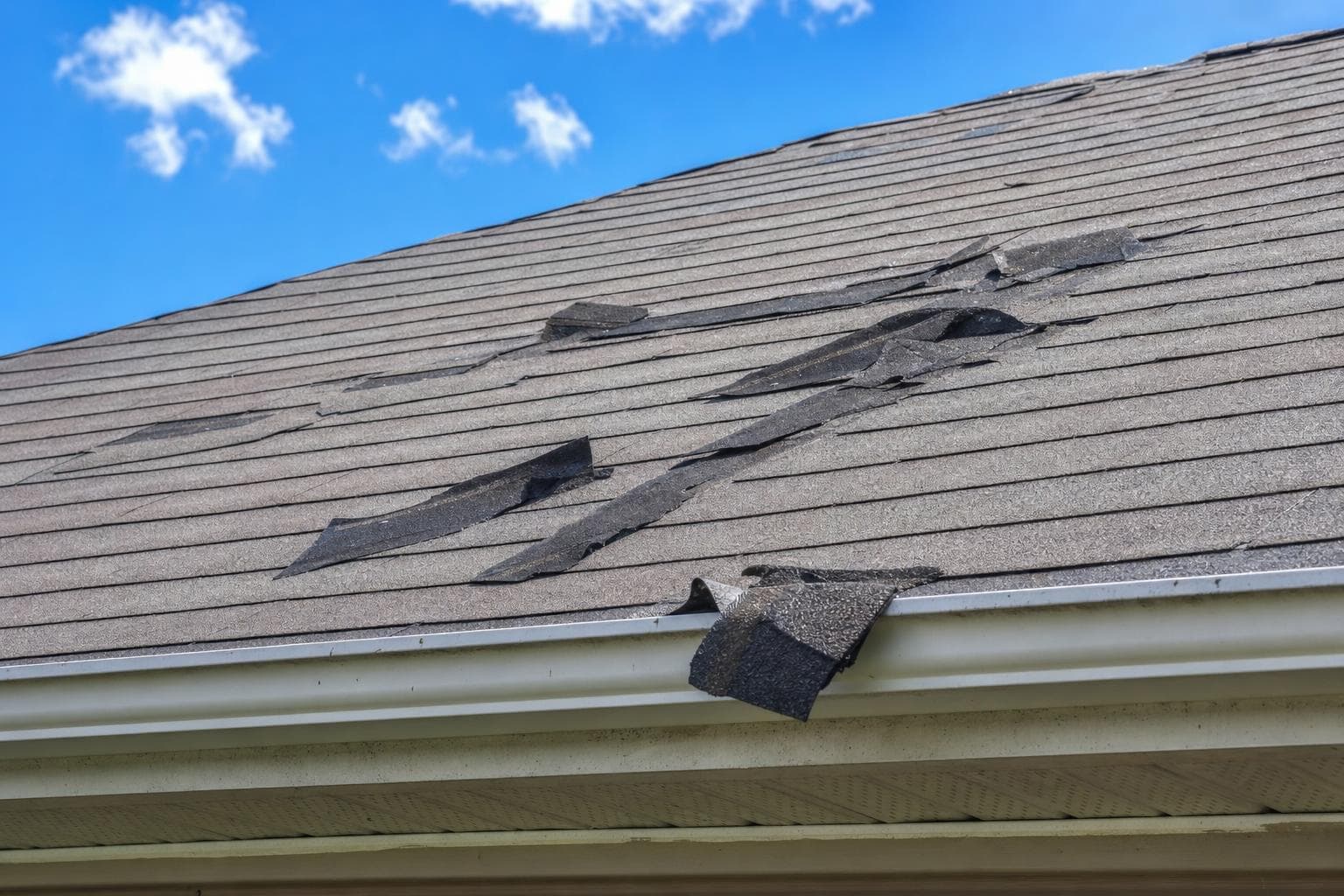
Wind damage repair in Goose Creek should look beyond missing shingles. Creases, broken seals, displaced ridge or edge details, loose flashing, and wind-driven rain can extend into neighboring roof areas. Hot, humid Lowcountry climate with long muggy summers, heavy rainfall, intense coastal UV, and salt-laden air drifting in from the Cooper River and the Charleston Harbor. The inspection should document each affected roof area, follow any wind-driven rain path, and show whether adjacent roofing, edge metal, flashing, and decking can support a durable repair.
How to scope wind damage repair in Goose Creek
Wind can remove roofing, but it can also crease shingles, break seals, loosen ridge and edge details, move flashing, and drive rain through a weakness that settles back into place afterward.
Map the wind path
Inspect every affected roof area plus ridge, rakes, eaves, vents, flashing, debris impacts, and interior water. Goose Creek sits in the Charleston hurricane corridor, so your roof has to ride out tropical storm and hurricane wind bands, wind-driven rain, and salt-air corrosion, with occasional severe summer thunderstorms adding wind gusts and hail. Missing material is only one part of that pattern. Creased shingles and broken seals may settle back down while remaining unable to resist the next gust.
Test the surrounding attachment
A repair should replace creased or displaced material and tie into shingles, panels, edge metal, and flashing that remain secure. Ask how the roofer checked adjacent seals and whether matching material is available.
Separate the repair from the coverage decision
The contractor should document construction conditions and explain the proposed repair or replacement. The insurer decides coverage, while the homeowner compares the deductible, policy documents, and written roofing scope. Keep any material upgrade and uncovered work clearly separated from the storm-restoration scope.
What wind-damage repair costs in Goose Creek
Wind repair commonly starts around $350-$1,550 for a contained area and reaches $1,200-$6,500 when a larger section, ridge, edge metal, or flashing needs restoration. Decking or structural work sits above that range.
- Missing or creased shingles
- A contained area with serviceable matching material around it
- $350-$1,550
- Roof section plus flashing
- A wider repair with displaced transitions or broken seals
- $1,200-$6,500
- Ridge cap or vent damage
- Accessory replacement and tie-in at the roof peak
- $400-$2,550
- Decking or structural damage
- Carpentry plus roofing after wind exposes or moves the substrate
- $2,800-$14,800
Cost ranges are estimates developed from standardized project scopes and reviewed pricing inputs. Government labor and regional cost data are used where applicable. See our Pricing Methodology for the exact sources, calculations, and review date. Actual prices vary by property, scope, materials or equipment, location, and provider.
For a deeper breakdown, open the wind damage roof repair cost guide. If the inspection finds distributed damage that cannot accept a durable repair, use the Goose Creek roof replacement cost guide as a separate planning reference rather than mixing replacement into the repair charge.
Where wind damage hides on Goose Creek roofs
Wind repair in Goose Creek should follow the roof areas that receive the highest uplift and driven rain instead of stopping at the first missing shingle visible from the yard.
Roof areas that need a close look
- Ridge caps, rakes, eaves, starter courses, and edge metal
- Creased or lifted shingles that settled back down after the gust
- Wall, chimney, vent, and penetration flashing moved by wind
- Attic or interior evidence showing where driven rain crossed the assembly
What decides whether a repair can hold
The repair boundary has to reach material that is still attached and serviceable. In Goose Creek, the inspection should account for wind-lifted and torn shingles after tropical storms and hurricane outer bands. It should also check wind-driven rain forcing water under shingles and through tired flashing. Either condition can extend beyond the visible opening, so the roofer should test adjacent seals, check the deck, and confirm that matching material can be tied in without breaking neighboring courses.
- Sound adjacent shingles, panels, flashing, and deck
- Matching material that can be installed without damaging the surrounding roof
- A contained damage pattern rather than repeated failure across roof areas
A missing shingle is evidence, not the complete diagnosis. The written scope should identify every repaired roof area and the condition that supports a durable tie-in.
How Goose Creek wind exposure changes the repair
Goose Creek sits in the Charleston hurricane corridor, so your roof has to ride out tropical storm and hurricane wind bands, wind-driven rain, and salt-air corrosion, with occasional severe summer thunderstorms adding wind gusts and hail.
NOAA storm reports logged 40 hail events, 69 damaging thunderstorm-wind events, and 6 tornadoes in Berkeley County from 2020 through 2025.
Start where uplift is strongest
Ridge, corners, rakes, eaves, and roof transitions on a Goose Creek roof can see different pressure than the middle of a slope, so each area should be documented separately.
Follow the path of wind-driven rain
Wind can move water sideways and uphill at lifted edges, loose flashing, vents, walls, and valleys. The repair should connect exterior findings to attic or interior evidence rather than assuming the closest missing shingle caused the leak.
Check what settled back into place
A shingle or edge detail can lie flat after the storm while its seal, fastener, or crease remains damaged. Ask the roofer to photograph those conditions before repair and explain how the completed work restores attachment and drainage.
Documenting wind damage in Goose Creek when insurance may be involved
The construction question and the coverage question stay separate. A roofer can photograph each affected roof area, distinguish observed wind effects from age or prior repairs, and write the repair scope. The insurer interprets the policy and decides coverage.
Many Lowcountry policies carry a separate wind and hurricane deductible, so know that number before storm season.
Photograph wind, rain, and leak damage from the ground before any temporary tarping when it is safe to do so.
After a named storm, a documented roof inspection helps you file cleanly for wind and water intrusion damage.
What South Carolina law means before you approve storm-related roof work
Keep the wind inspection, temporary work, permanent repair, deductible, and any uncovered upgrades clearly separated in writing. State contract and claim rules still apply when a storm creates urgency.
You should document damage and take steps to prevent more damage
The South Carolina Department of Insurance says that after a storm, if the area is safe, you should take photos of the damage and then take steps to mitigate any further damage. The example it gives is covering a hole in your roof with a tarp to help prevent more interior damage.
File your claim right away and keep your records
The South Carolina Department of Insurance says to immediately file a claim with your insurance company. It also says to keep all photos and receipts because they will be useful in processing your claim.
The state offers consumer help if you have property insurance questions
The South Carolina Department of Insurance says its Office of Consumer Services can help answer your questions about property insurance or other types of insurance. If you run into claim or coverage questions after roof damage, you have a state consumer help channel.
Choosing a wind-damage roofer in Goose Creek
South Carolina has a residential specialty contractor registration category for roofers. The state says a residential specialty contractor includes roofers doing the installation, alteration, and repair of materials that form a watertight, weather resistant surface for roofs and decks, including accessories, flashing, valleys, gravel stops, and roof insulation panels above the roof deck. The state also says this registration applies when undertakings exceed five hundred dollars ({{PRICE_UNAVAILABLE}}). A smart way to vet your roofer is to confirm they fit the roofing scope you need, check the state's licensee lookup or license verification resources, and make sure the work you are hiring for matches the scope the state describes.
Sources: South Carolina Department of Insurance, Severe Weather Recovery · South Carolina Residential Builders Commission, Residential Specialty Contractor Registration
Wind-damage questions Goose Creek homeowners ask
What can wind damage look like when no shingles are missing in Goose Creek?+
Wind damage can remain hidden after the roofing settles back into place. Look for creased shingle tabs, broken adhesive seals, raised fasteners, shifted ridge caps, lifted edge metal, loose flashing, or a new attic or ceiling stain. A roofer should inspect those areas directly instead of deciding from a ground-level view.
What should a wind-damage roof inspection document in Goose Creek?+
The record should identify the roof area, slope, ridge, rake, eave, flashing, vent, or penetration affected; show overview and close-up photographs; and connect any interior water to a plausible exterior path. It should also distinguish observed wind effects from age, wear, prior repairs, and unrelated defects, then explain why the proposed repair boundary reaches sound roofing.
Can lifted shingles be repaired on a Goose Creek roof?+
Sometimes. A lifted shingle may be repairable when its mat is not creased or torn, the fastener area and deck remain sound, and the shingle can be restored according to the product requirements. A shingle with a permanent crease, split, missing tab, damaged fastener zone, or unreliable tie-in usually needs replacement rather than a surface dab of sealant.
How much does wind-damage roof repair cost in Goose Creek?+
Wind repair commonly starts around $350-$1,550 for a contained area and reaches $1,200-$6,500 when a larger section, ridge, edge metal, or flashing needs restoration. Decking or structural work sits above that range. The work area, ridge or edge involvement, flashing, safe access, matching material, temporary protection, and any exposed decking determine where the repair lands within or above that planning range.
When does wind damage require roof replacement instead of a repair in Goose Creek?+
Replacement becomes more likely when damage is distributed across roof areas, adjacent shingles are too brittle to lift and tie into, the deck or structure has moved, or repeated attachment failure leaves no sound repair boundary. One missing shingle does not automatically justify replacement, and an unavailable color match is not the same as proof that the entire roof has failed.
What should I do first after wind damages my Goose Creek roof?+
Stay off a wet or unstable roof, photograph visible exterior and interior conditions from safe locations, and arrange temporary protection if water is entering. Keep the inspection and repair scope separate from the insurance decision: check the policy's notice and loss-mitigation instructions, while the roofer documents construction conditions and the insurer decides coverage.
