
Updated July 10, 2026

3D Roofs Editorial Team
Editorial Standards
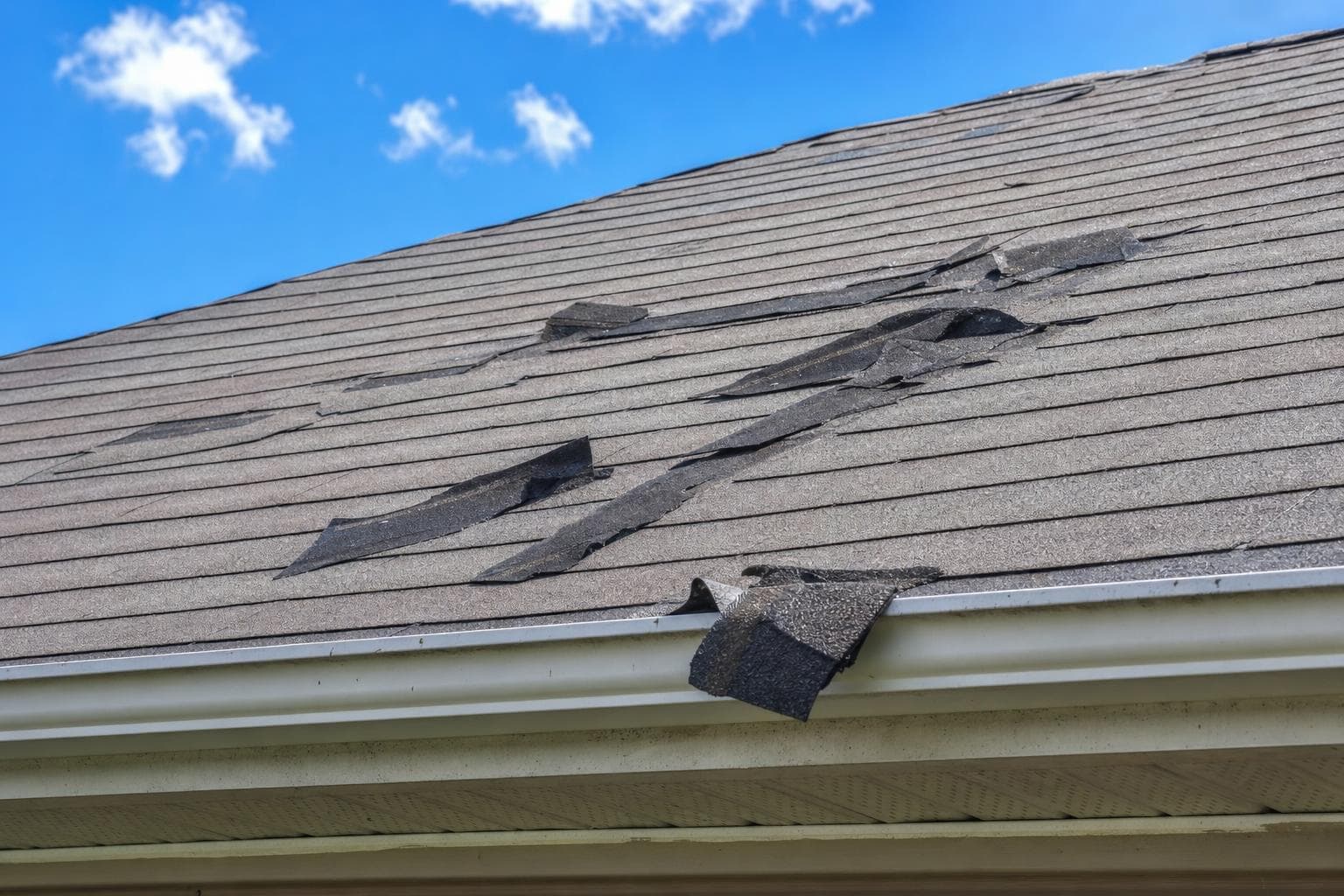
Wind damage repair in Hobbs should look beyond missing shingles. Creases, broken seals, displaced ridge or edge details, loose flashing, and wind-driven rain can extend into neighboring roof areas. Hobbs sits at about 3,650 feet on the Llano Estacado of far southeastern New Mexico in the Chihuahuan Desert, so your roof endures hot, sun-drenched summers, very dry air, and a high UV index that steadily ages shingles, with windy, occasionally snowy winters rounding out the year. The inspection should document each affected roof area, follow any wind-driven rain path, and show whether adjacent roofing, edge metal, flashing, and decking can support a durable repair.
How to scope wind damage repair in Hobbs
Wind can remove roofing, but it can also crease shingles, break seals, loosen ridge and edge details, move flashing, and drive rain through a weakness that settles back into place afterward.
Map the wind path
Inspect every affected roof area plus ridge, rakes, eaves, vents, flashing, debris impacts, and interior water. From June into September, monsoon thunderstorms sweep across the Lea County oil country with hail and brief, intense rain, while the open plains funnel strong wind and blowing dust that strip granules and pry up shingle edges on roofs already hardened by the sun. Missing material is only one part of that pattern. Creased shingles and broken seals may settle back down while remaining unable to resist the next gust.
Test the surrounding attachment
A repair should replace creased or displaced material and tie into shingles, panels, edge metal, and flashing that remain secure. Ask how the roofer checked adjacent seals and whether matching material is available.
Separate the repair from the coverage decision
The contractor should document construction conditions and explain the proposed repair or replacement. The insurer decides coverage, while the homeowner compares the deductible, policy documents, and written roofing scope. Keep any material upgrade and uncovered work clearly separated from the storm-restoration scope.
What wind-damage repair costs in Hobbs
Wind repair commonly starts around $300-$1,400 for a contained area and reaches $1,100-$5,800 when a larger section, ridge, edge metal, or flashing needs restoration. Decking or structural work sits above that range.
- Missing or creased shingles
- A contained area with serviceable matching material around it
- $300-$1,400
- Roof section plus flashing
- A wider repair with displaced transitions or broken seals
- $1,100-$5,800
- Ridge cap or vent damage
- Accessory replacement and tie-in at the roof peak
- $400-$2,250
- Decking or structural damage
- Carpentry plus roofing after wind exposes or moves the substrate
- $2,600-$13,300
Cost ranges are estimates developed from standardized project scopes and reviewed pricing inputs. Government labor and regional cost data are used where applicable. See our Pricing Methodology for the exact sources, calculations, and review date. Actual prices vary by property, scope, materials or equipment, location, and provider.
For a deeper breakdown, open the wind damage roof repair cost guide. If the inspection finds distributed damage that cannot accept a durable repair, use the Hobbs roof replacement cost guide as a separate planning reference rather than mixing replacement into the repair charge.
Where wind damage hides on Hobbs roofs
Wind repair in Hobbs should follow the roof areas that receive the highest uplift and driven rain instead of stopping at the first missing shingle visible from the yard.
Roof areas that need a close look
- Ridge caps, rakes, eaves, starter courses, and edge metal
- Creased or lifted shingles that settled back down after the gust
- Wall, chimney, vent, and penetration flashing moved by wind
- Attic or interior evidence showing where driven rain crossed the assembly
What decides whether a repair can hold
The repair boundary has to reach material that is still attached and serviceable. In Hobbs, the inspection should account for sun-baked, brittle shingles and granule loss from high uv on the open plains. It should also check hail impact damage during summer monsoon thunderstorms. Either condition can extend beyond the visible opening, so the roofer should test adjacent seals, check the deck, and confirm that matching material can be tied in without breaking neighboring courses.
- Sound adjacent shingles, panels, flashing, and deck
- Matching material that can be installed without damaging the surrounding roof
- A contained damage pattern rather than repeated failure across roof areas
A missing shingle is evidence, not the complete diagnosis. The written scope should identify every repaired roof area and the condition that supports a durable tie-in.
How Hobbs wind exposure changes the repair
From June into September, monsoon thunderstorms sweep across the Lea County oil country with hail and brief, intense rain, while the open plains funnel strong wind and blowing dust that strip granules and pry up shingle edges on roofs already hardened by the sun.
NOAA storm reports logged 74 hail events, 63 damaging thunderstorm-wind events, and 4 tornadoes in Lea County from 2020 through 2025.
Start where uplift is strongest
Ridge, corners, rakes, eaves, and roof transitions on a Hobbs roof can see different pressure than the middle of a slope, so each area should be documented separately.
Follow the path of wind-driven rain
Wind can move water sideways and uphill at lifted edges, loose flashing, vents, walls, and valleys. The repair should connect exterior findings to attic or interior evidence rather than assuming the closest missing shingle caused the leak.
Check what settled back into place
A shingle or edge detail can lie flat after the storm while its seal, fastener, or crease remains damaged. Ask the roofer to photograph those conditions before repair and explain how the completed work restores attachment and drainage.
Documenting wind damage in Hobbs when insurance may be involved
The construction question and the coverage question stay separate. A roofer can photograph each affected roof area, distinguish observed wind effects from age or prior repairs, and write the repair scope. The insurer interprets the policy and decides coverage.
Take dated photos of hail dents, scattered granules, and any ceiling stains before repairs so a wind or hail claim is easy to support.
Several New Mexico insurers offer a discount for Class 4 impact-resistant shingles, which is worth confirming before you reroof.
For roof damage reported in Hobbs, coverage depends on the reported cause and the policy's deductible, exclusions, roof provisions, and valuation method; a roofer can document visible construction conditions, but the insurer decides coverage.
What New Mexico law means before you approve storm-related roof work
Keep the wind inspection, temporary work, permanent repair, deductible, and any uncovered upgrades clearly separated in writing. State contract and claim rules still apply when a storm creates urgency.
You can file an insurance complaint with the state
If you run into trouble with a homeowners claim, policy issuance, or cancellation, the Consumer Assistance Bureau says it assists consumers who are having difficulty with an insurance issue. Consumers may submit complaints involving insurance companies concerning the issuance or cancellation of policies and the processing of claims. The Bureau also says it can help with complaints against insurance companies, agents, and adjusters operating within New Mexico.
The state can review complaints, but it does not act as your lawyer
The Consumer Assistance Bureau says it processes complaints by assisting the consumer in resolving disputes in a fair and impartial manner. It also states that the Bureau does not have the regulatory authority to determine damages or make settlement decisions on your behalf, cannot give legal advice, and cannot act as your representative. If a complaint raises concern about possible Insurance Code violations, the Bureau says a referral may be made to the Investigations Bureau or Office of Legal Counsel.
Home insurers must give notice before cancellation or non-renewal
The homeowners insurance guidance says companies shall give policyholders at least ten days notice prior to the date of cancellation and 30 days notice prior to the date of non-renewal. It also explains that cancellation and non-renewal are different, and lists examples of reasons a company can cancel a policy, including failure to pay premium, fraud or serious misrepresentations, and certain hazard-increasing acts or violations.
If you cannot get coverage in the normal market, there is a FAIR Plan path
The homeowners insurance guidance says the New Mexico Property Insurance Program is the underwriting association for the New Mexico F.A.I.R. plan and that the FAIR Plan Act was enacted to provide essential property insurance to qualified applicants in the State of New Mexico who are unable to secure such insurance in the normal market. The guidance says applicants may apply directly to the program for coverage or use a representative or insurance agent to act on the applicant’s behalf.
Choosing a wind-damage roofer in Hobbs
Start with the state licensing reality. The Construction Industries Division says it requires licensure for any person practicing or offering to practice construction contracting, and it offers tools to obtain, verify, or renew a license, plus a complaint option. For you, that means a basic screening step is simple: verify your roofer through the state license lookup before you sign anything. Then ask your roofer to explain the exact scope, materials, ventilation changes, flashing details, permit needs, cleanup plan, and who will handle any inspection steps. On the insurance side, the state insurance office also provides a way to look up a licensee and file a complaint if an issue involves an insurance company, agent, or adjuster. If a contractor conversation starts drifting into claim handling promises, keep the paper trail clear and make sure your insurer decisions come through the proper insurance channels.
Sources: New Mexico OSI Consumer Assistance · New Mexico OSI Homeowners Insurance · New Mexico Regulation and Licensing Department, Construction Industries Division
Wind-damage questions Hobbs homeowners ask
What can wind damage look like when no shingles are missing in Hobbs?+
Wind damage can remain hidden after the roofing settles back into place. Look for creased shingle tabs, broken adhesive seals, raised fasteners, shifted ridge caps, lifted edge metal, loose flashing, or a new attic or ceiling stain. A roofer should inspect those areas directly instead of deciding from a ground-level view.
What should a wind-damage roof inspection document in Hobbs?+
The record should identify the roof area, slope, ridge, rake, eave, flashing, vent, or penetration affected; show overview and close-up photographs; and connect any interior water to a plausible exterior path. It should also distinguish observed wind effects from age, wear, prior repairs, and unrelated defects, then explain why the proposed repair boundary reaches sound roofing.
Can lifted shingles be repaired on a Hobbs roof?+
Sometimes. A lifted shingle may be repairable when its mat is not creased or torn, the fastener area and deck remain sound, and the shingle can be restored according to the product requirements. A shingle with a permanent crease, split, missing tab, damaged fastener zone, or unreliable tie-in usually needs replacement rather than a surface dab of sealant.
How much does wind-damage roof repair cost in Hobbs?+
Wind repair commonly starts around $300-$1,400 for a contained area and reaches $1,100-$5,800 when a larger section, ridge, edge metal, or flashing needs restoration. Decking or structural work sits above that range. The work area, ridge or edge involvement, flashing, safe access, matching material, temporary protection, and any exposed decking determine where the repair lands within or above that planning range.
When does wind damage require roof replacement instead of a repair in Hobbs?+
Replacement becomes more likely when damage is distributed across roof areas, adjacent shingles are too brittle to lift and tie into, the deck or structure has moved, or repeated attachment failure leaves no sound repair boundary. One missing shingle does not automatically justify replacement, and an unavailable color match is not the same as proof that the entire roof has failed.
What should I do first after wind damages my Hobbs roof?+
Stay off a wet or unstable roof, photograph visible exterior and interior conditions from safe locations, and arrange temporary protection if water is entering. Keep the inspection and repair scope separate from the insurance decision: check the policy's notice and loss-mitigation instructions, while the roofer documents construction conditions and the insurer decides coverage.
