
Updated July 10, 2026

3D Roofs Editorial Team
Editorial Standards
How to assess wind damage in New Hampshire before it is repaired
Wind pressure acts differently at corners, eaves, rakes, ridges, roof-to-wall transitions, and changes in height. A useful inspection reviews those areas by roof slope and distinguishes new displacement or creasing from installation issues, age, thermal movement, and previous repairs. The scope should restore attachment and water shedding, not only replace the most visible piece.
Record the event date, photograph ground-visible conditions and interior water evidence, and protect openings when safe. Ask the roofer to identify affected roof areas, surrounding seal and fastener condition, edge and flashing work, matching material, and how the repair will tie into sound roofing.
How New Hampshire wind and storms change the inspection
New Hampshire roofs deal with snow, ice, wind, heavy rain, and seasonal temperature swings. Those conditions can stress shingles, flashing, roof penetrations, and attic ventilation over time. Wind can damage roof coverings, and water can become a bigger problem when it gets past aging materials or vulnerable details. Flooding is a separate issue from standard homeowners coverage, so if your property has flood exposure, you need to look at that risk separately from roof damage.
Wind exposure within New Hampshire changes with storm type, direction, terrain, building height, roof shape, edge geometry, and local code. The inspection should connect the observed pattern to the actual event and assembly rather than relying only on a reported gust or neighborhood damage.
What a wind-damage repair should document
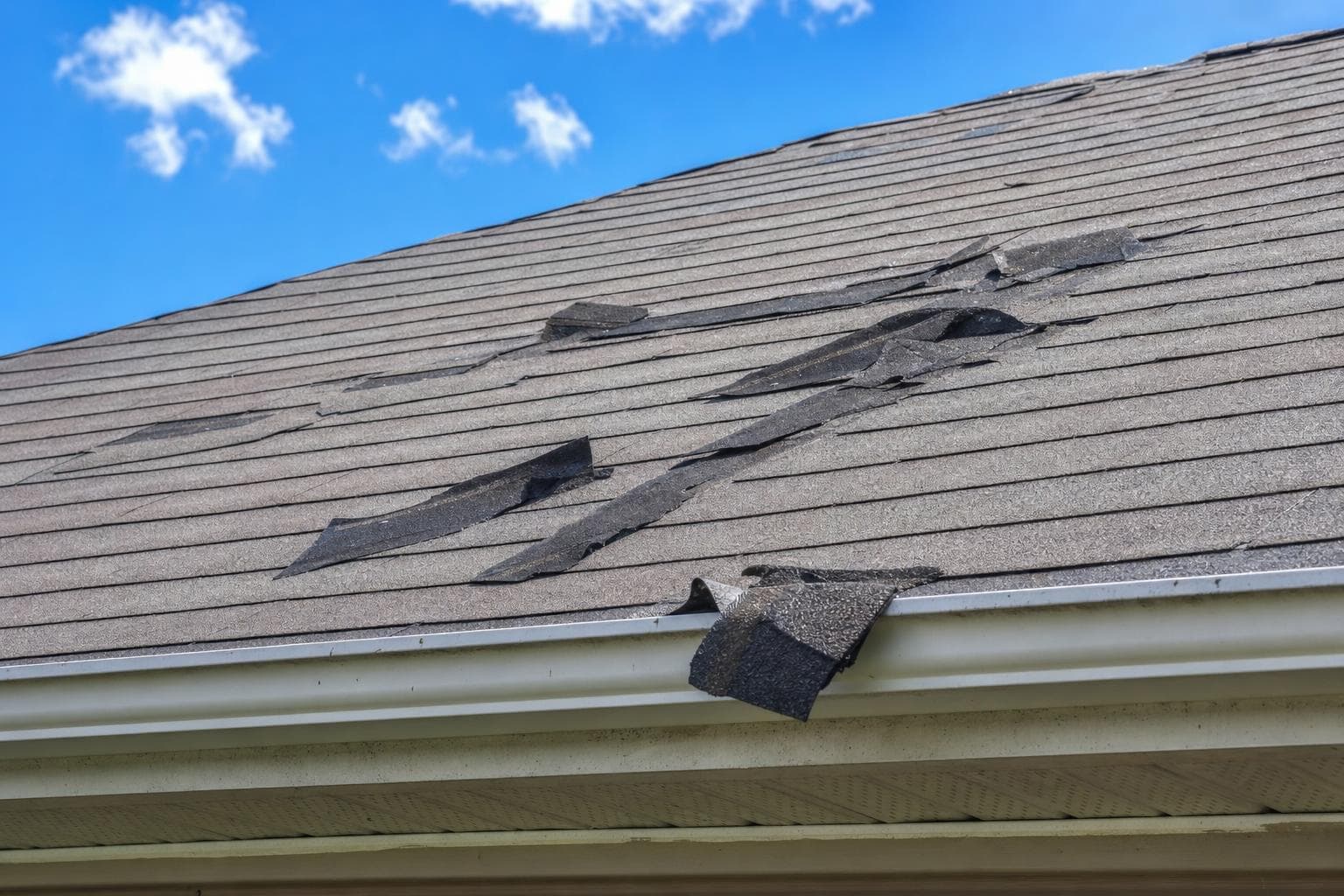
Wind repair should map how uplift moved across the roof. Missing shingles are obvious, but creases, broken seals, lifted ridge, loose edge metal, displaced flashing, and wind-driven rain can extend beyond the area visible from the yard. The repair scope should identify affected roof areas, attachment, edges, ridge, flashing, penetrations, matching material, temporary protection, and completion photographs. A few replacement shingles may not address a failed edge or flashing detail that allowed wind-driven rain inside.
What the repair scope should include
- Inspection by roof area, including slopes, ridge, rakes, eaves, and edges
- Photographs of lifted, creased, missing, or displaced materials before repair
- Flashing, vent, penetration, and interior water-path review
- Named repair areas, matching material, fastening, sealing, and tie-in method
- Temporary protection and completion photographs when those steps are needed
Conditions that change repairability and cost
- Number and distribution of affected roof areas
- Ridge, edge metal, flashing, vent, or penetration work
- Roof pitch, stories, access, debris, and temporary protection
- Matching material and the condition of adjacent seals
- Exposed decking, structural damage, or interior moisture
Questions to resolve before permanent work
Before permanent work, confirm the affected roof areas, damage pattern, tie-in method, matching material, and condition of adjacent seals. The proposal should explain whether one repair restores the roof or whether distributed damage makes repeated spot work unreliable.
- The proposal counts only missing shingles from the ground
- Photographs are not identified by roof area
- The contractor promises an insurance outcome
- The repair does not explain adjacent attachment, edge, or flashing conditions
- Which roof areas show observed wind effects, and what moved in each one?
- Can the surrounding material accept a durable repair without breaking?
- How will the work restore attachment and water shedding?
- Which temporary, concealed, or non-roofing work is priced separately?
What wind-damage repair costs in New Hampshire
Wind repair commonly starts around $350-$1,700 for a contained area and reaches $1,300-$7,000 when a larger section, ridge, edge metal, or flashing needs restoration. Decking or structural work sits above that range.
- Missing or creased shingles
- A contained area with serviceable matching material around it
- $350-$1,700
- Roof section plus flashing
- A wider repair with displaced transitions or broken seals
- $1,300-$7,000
- Ridge cap or vent damage
- Accessory replacement and tie-in at the roof peak
- $450-$2,750
- Decking or structural damage
- Carpentry plus roofing after wind exposes or moves the substrate
- $3,100-$16,000
Cost ranges are estimates developed from standardized project scopes and reviewed pricing inputs. Government labor and regional cost data are used where applicable. See our Pricing Methodology for the exact sources, calculations, and review date. Actual prices vary by property, scope, materials or equipment, location, and provider.
Rules, claims, and contractor checks
When insurance is involved, preserve pre-repair evidence and review New Hampshire rules for storm contracts, deductibles, licensing, and claim representation. The roofer should document construction findings while the insurer determines coverage.
A single valid claim cannot be the only reason for nonrenewal
The New Hampshire Insurance Department says the nonrenewal of a homeowner's insurance policy is not allowed if the nonrenewal is based solely on the insured having filed a single valid claim within any one previous or current policy term.
Flood damage is generally not covered by a standard homeowners policy
The New Hampshire Insurance Department says homeowners policies do not cover most flooding, and that you need a separate flood insurance policy to protect your home and belongings against flood damage. The department also states that the homeowner policy specifically excludes water damage resulting from flood.
Wind damage is usually covered, but roof payment can be limited to the damaged area
The New Hampshire Insurance Department says most homeowner policies cover damages to the dwelling caused by tornadoes or other wind damage. The department also says an insurer is only obligated to pay the cost of repairing the part of your roof that was damaged by a covered peril. If the entire roof needs replacing because of normal wear and tear, you will be responsible for paying the additional cost.
New Hampshire homeowners need to vet roofers carefully because, according to the New Hampshire Department of Justice, contractors do not need to be licensed in the state. That means you should focus on basic consumer protection steps. Get at least three written, itemized estimates. Ask for references from past jobs and suppliers. Ask for proof of insurance. Check the roofer's address and phone number. Make sure you have a written contract before work starts or money changes hands, and confirm that it includes the scope of work, materials, total price, and payment schedule. Be cautious if someone shows up door to door, pushes you to sign right away, asks for a large deposit upfront, wants full payment before completion, insists on cash or electronic payment apps like Zelle or Venmo, or gives a vague proposal.
Sources: New Hampshire Insurance Department, Homeowners and Renters Insurance · New Hampshire Insurance Department, Flood and Storm Information · New Hampshire Department of Justice, Consumer Alert on Home Improvement Scams
Common questions about wind damage roof repair in New Hampshire
Can wind damage a roof without removing shingles?+
Yes. Wind can lift edges, break adhesive seals, crease shingles, loosen ridge or flashing, and drive rain through vulnerable transitions without leaving a large bare area. A close inspection should document those conditions and distinguish them from age or installation problems.
Can wind-damaged shingles be resealed?+
Sometimes a contained repair is possible, but the answer depends on creasing, tears, fastener damage, product condition, surrounding seals, and manufacturer instructions. A visibly flattened shingle is not necessarily restored if its mat or attachment was compromised.
What should a wind repair estimate include?+
It should identify affected roof areas, removal, replacement material, fastening and seal requirements, edge and ridge details, flashing, matching limitations, deck findings, cleanup, photographs, and workmanship coverage. Ask how the repair restores both attachment and water shedding.
Will insurance cover wind repair in New Hampshire?+
Coverage depends on the policy, cause of loss, deductible, exclusions, roof provisions, and insurer's investigation. Document the condition promptly and let the insurer decide coverage; the contractor's role is to explain the observed roof and proposed construction scope.
Which New Hampshire rules should I check before signing a wind damage contract?+
Start with the verified state guidance on this page, including A single valid claim cannot be the only reason for nonrenewal; Flood damage is generally not covered by a standard homeowners policy; Wind damage is usually covered, but roof payment can be limited to the damaged area. Then confirm the permit authority and any local contractor requirement for the property address. Insurance coverage and policy interpretation remain separate from the roofing contract.
Wind Damage across 7 New Hampshire cities
Use the nearest New Hampshire city page for local wind and storm context. The final repair should be based on your roof's geometry, exposure, attachment, and documented damage pattern.
